K-9
"One cop is a hero. The other is a dog."
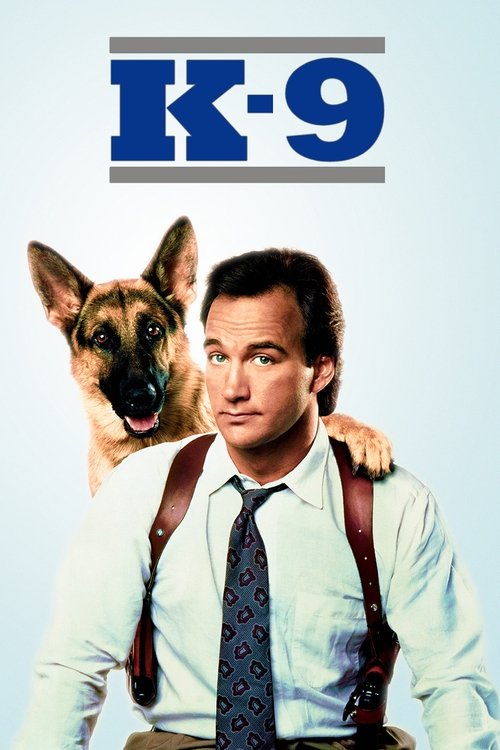
In the high-stakes arms race of late-eighties cinema, Hollywood decided the next logical evolution for the buddy-cop genre wasn't a bigger gun or a faster car, but a four-legged partner who could probably out-act half the Screen Actors Guild. 1989 was, for reasons best left to sociologists, the Year of the Police Dog. While Disney was prepping Tom Hanks for the slightly more sentimental Turner & Hooch, Universal beat them to the punch by three months with K-9, a film that traded "heartwarming" for a gritty, San Diego-flavored cynicism that only Jim Belushi could deliver.
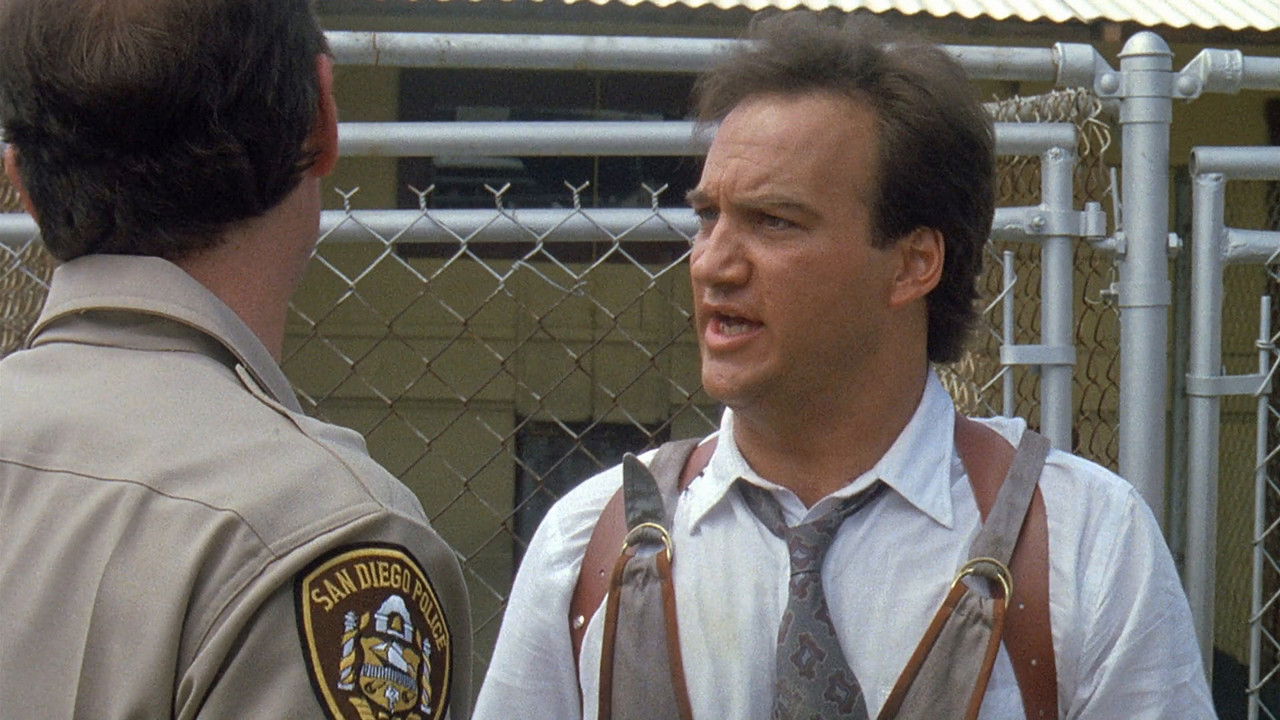
I watched this recently while my apartment’s radiator was clanking like a ghost in a tin can, and honestly, the mechanical rattling paired perfectly with the screeching tires of Mike Dooley’s battered 1966 Mustang. There’s something fundamentally honest about a movie where the hero’s car looks like it’s held together by spite and duct tape.
The Art of the Fur-Covered Middle Finger
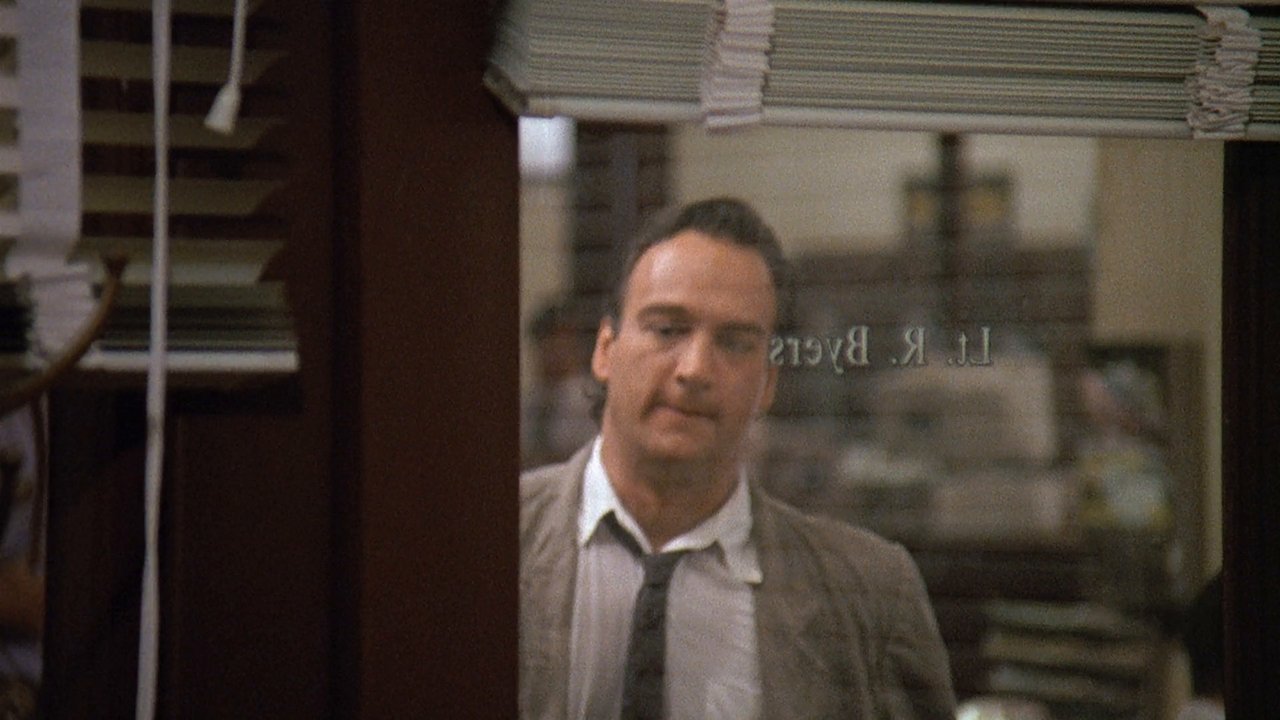
At the center of this mayhem is Jim Belushi as Mike Dooley, a narcotics detective who is basically a walking, talking pile of unwashed laundry and bad attitude. Belushi was in his prime "everyman" era here, channeling a specific kind of blue-collar frustration that made him the perfect foil for a dog that refuses to follow orders. When he’s forced to partner with Jerry Lee—a German Shepherd with a nose for kilos and a soul for chaos—the movie finds its rhythm.
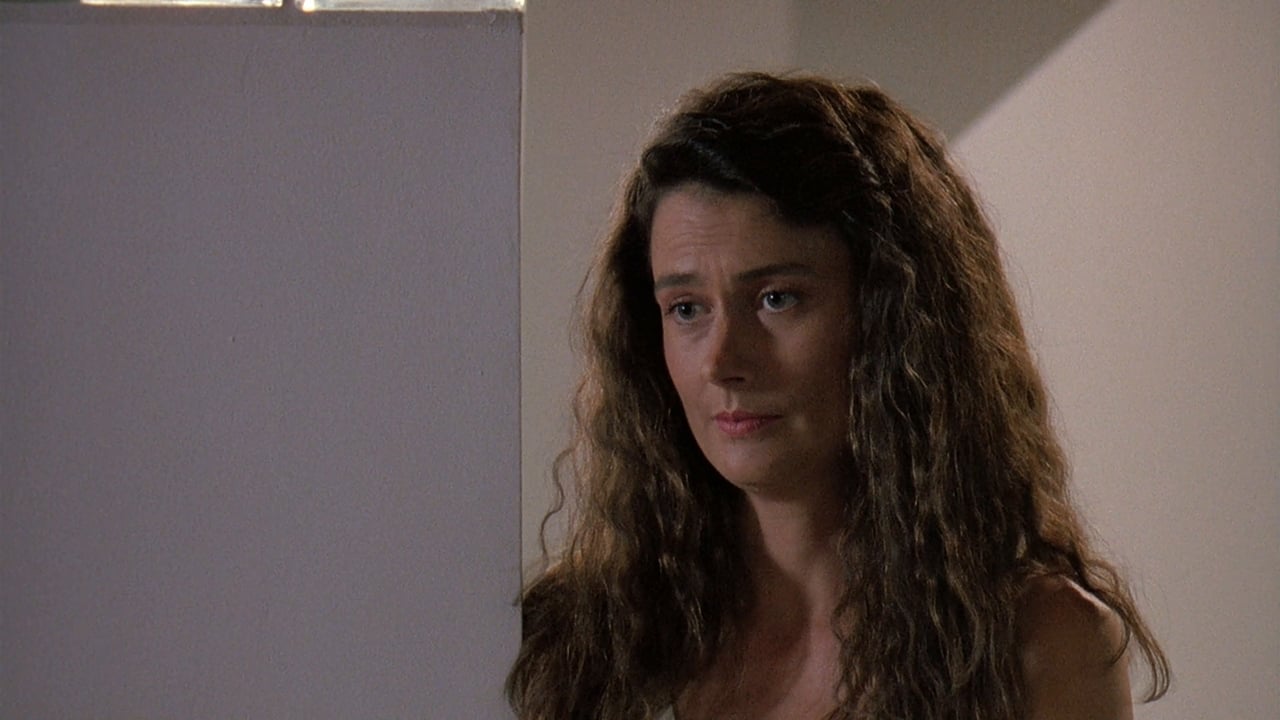
The genius of Jerry Lee (played by a real-life police dog named Koton) is that he isn't a "good boy" in the cinematic sense. He doesn't do backflips to save orphans. He’s a union contractor who only works when there’s steak on the table, and he spends a significant portion of the runtime systematically destroying Dooley’s life. Whether he’s hijacking Dooley’s car radio or ruining a romantic moment with Mel Harris, Jerry Lee is basically a sentient, fur-covered middle finger to police procedure.
The chemistry works because it isn’t cute. It’s a war of attrition. Director Rod Daniel, who already knew a thing or two about animalistic transformations after directing Teen Wolf (1985), keeps the camera low and the pacing tight. He lets the physical comedy breathe, especially in the scene where Dooley tries to "interrogate" the dog in a car, which feels like a weirdly brilliant piece of improvised theater.
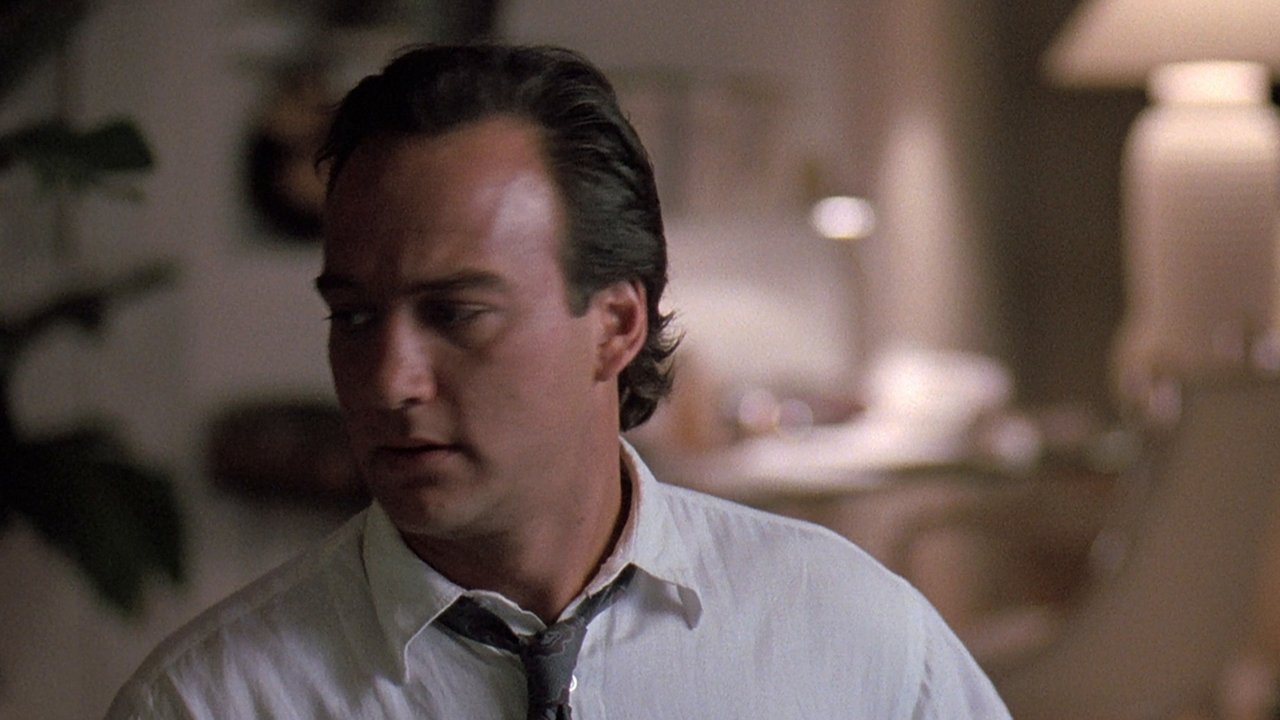
Practical Grime and the VHS Aesthetic
From a technical standpoint, K-9 is a quintessential product of the Lawrence Gordon production house. This is the man who gave us Die Hard and Predator, and you can feel that DNA in the action sequences. There’s a weight to the shootouts and a literal crunch to the car stunts that you just don't get in the digital age. When a warehouse explodes or a vehicle flips, you're seeing actual physics at work, not a rendering.
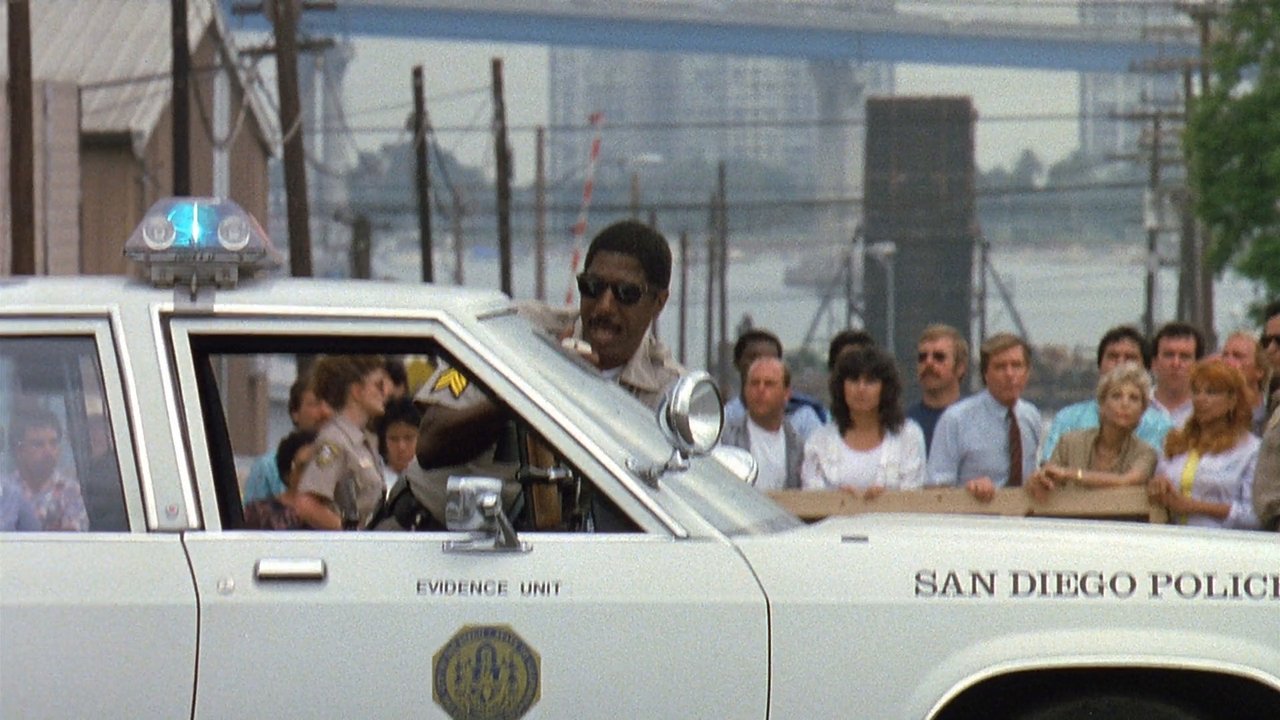
The cinematography by Dean Semler—who would go on to win an Oscar for Dances with Wolves a year later—gives San Diego a sun-bleached, slightly oily texture. It’s the kind of film that looked better on a slightly worn VHS tape rented from a corner store than it does in 4K. There’s a specific "video store" vibe to the color palette—all dusty browns, vibrant blues, and the harsh glare of fluorescent police stations.
We also get a pre-Married... with Children Ed O'Neill as Brannigan. Seeing him play a relatively straight-laced cop before he became the patron saint of disgruntled shoe salesmen is a trip. Meanwhile, Kevin Tighe (who I’ll always love as the villain in Road House) brings a cold, corporate nastiness to the role of the drug kingpin, Lyman. He’s the perfect "80s suit" villain—the kind of guy you desperately want to see bitten in a sensitive area.
The Tragedy Behind the Tail
While the film is a comedy, there’s a bittersweet piece of trivia that changes how I view the final act. Koton, the dog who played Jerry Lee, was an actual working police dog with the Kansas City PD. He reportedly had over 24 felony arrests to his name before he ever stepped onto a film set. Heartbreakingly, just a few years after the film’s release, Koton was killed in the line of duty while attempting to apprehend a murder suspect. Knowing that the "actor" was the real deal—a dog who actually lived the life Dooley and Jerry Lee were parodying—gives his performance a layer of authenticity that transcends the goofy premise.
The film does lean heavily into the tropes of the era—the "angry captain" (James Handy) yelling about property damage, the extravagant villain's mansion, and a score by Miles Goodman that screams "1989 action-comedy." It’s formulaic, sure, but it’s a formula that was perfected in this window of time. It’s a movie that knows exactly what it is: a vehicle for Jim Belushi to yell at a dog while things explode in the background.
K-9 isn't aiming for the pantheon of high art, and that's its greatest strength. It’s a relic of an era when a high-concept pitch and a charismatic animal were all you needed to dominate a weekend box office. It’s fun, it’s loud, and it features a dog that genuinely seems to find Jim Belushi annoying, which is a relatable sentiment for just about anyone. If you’re looking for a dose of practical stunts and "man vs. beast" bickering, this is the top of the heap. Just don't expect your car upholstery to survive the credits.
Keep Exploring...
-
Turner & Hooch
1989
-
48 Hrs.
1982
-
Batman
1966
-
Beverly Hills Cop II
1987
-
Tango & Cash
1989
-
Romancing the Stone
1984
-
The Jewel of the Nile
1985
-

The Golden Child
1986
-
Innerspace
1987
-
Lethal Weapon 2
1989
-
Stripes
1981
-

Midnight Run
1988
-
Red Heat
1988
-
Another 48 Hrs.
1990
-
Taxi
2004
-
Shoot 'Em Up
2007
-
Cop Out
2010
-
Big Mommas: Like Father, Like Son
2011
-

One for the Money
2012
-
Stand Up Guys
2012