When Harry Met Sally...
"Friendship is the longest foreplay in history."

I spent a significant portion of my adult life wondering if I’m a Harry or a Sally, only to realize I’m actually the wagon-wheel coffee table: structurally questionable and eventually discarded for something more modern. I watched this again last night while trying to untangle a pair of wired Apple EarPods—a task that required more patience than Harry waiting for Sally to order a salad—and it struck me how much this film relies on the lost art of the "hang."

In the late 80s, the romantic comedy was in a weird spot. You either had the high-concept gloss of the early 90s beginning to peek through, or the lingering, earnest residue of 70s cynicism. When Harry Met Sally... managed to bridge that gap by being both incredibly smart and unapologetically cozy. It’s a movie that feels like a warm sweater you found in a thrift store that somehow smells like expensive espresso.
The Anatomy of a Perfect Argument
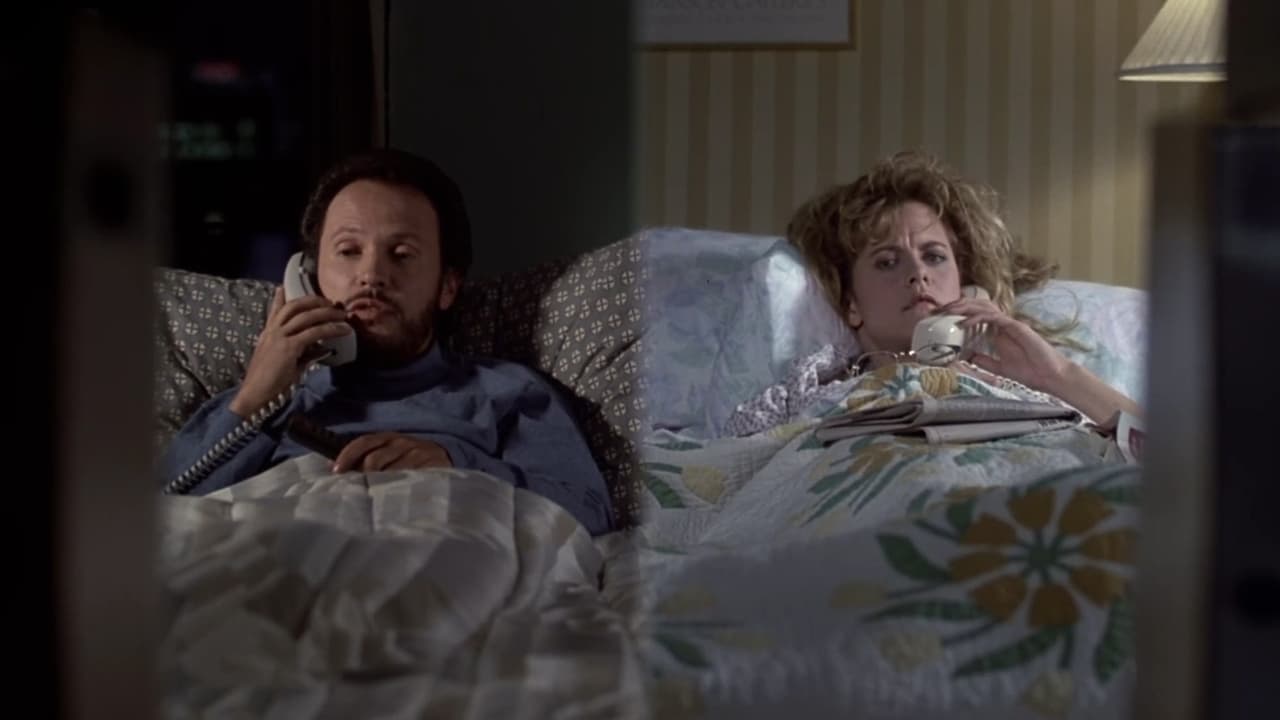
The brilliance of Nora Ephron’s screenplay isn’t just the wit; it’s the structure. We meet Harry and Sally over the course of twelve years, watching them transition from mutual dislike to cautious acquaintance to the kind of friendship that involves 11:00 PM phone calls while watching Casablanca on separate TVs. That split-screen sequence is a masterclass in economy. Rob Reiner (who was on an untouchable heater in the 80s, coming off The Princess Bride and Stand By Me) shot those scenes on a single set with a thin wall between Billy Crystal and Meg Ryan, allowing them to actually hear and react to one another in real-time.
Billy Crystal as Harry Burns is a revelation if you’ve only ever known him as the "City Slickers" guy. He brings a specific, neurotic New York energy that feels like a direct evolution of Woody Allen, but with a more accessible, athletic charm. Let’s be honest: Harry is a borderline insufferable contrarian who only gets away with it because he looks like a cuddly sweater-model. He starts the film with the thesis that men and women can't be friends because "the sex part always gets in the way," and the movie spends the next 90 minutes testing that hypothesis with surgical precision.
The Sidekick Synergy and the VHS Glow
While the central duo gets the glory, the film’s secret weapons are Carrie Fisher and Bruno Kirby. As Marie and Jess, they provide the grounded, hilarious counterpoint to Harry and Sally’s existential spiraling. The scene where they realize they are perfect for each other—over a shared love of a specific kitchen appliance—is just as romantic as the big New Year’s Eve finale. Carrie Fisher, fresh off a decade of being the world’s most famous princess, proves here that she was one of the sharpest comedic minds in the business. Her delivery of "Tell me I’ll never have to be out there again" is the unofficial anthem of every person who has ever been single for more than twenty minutes.
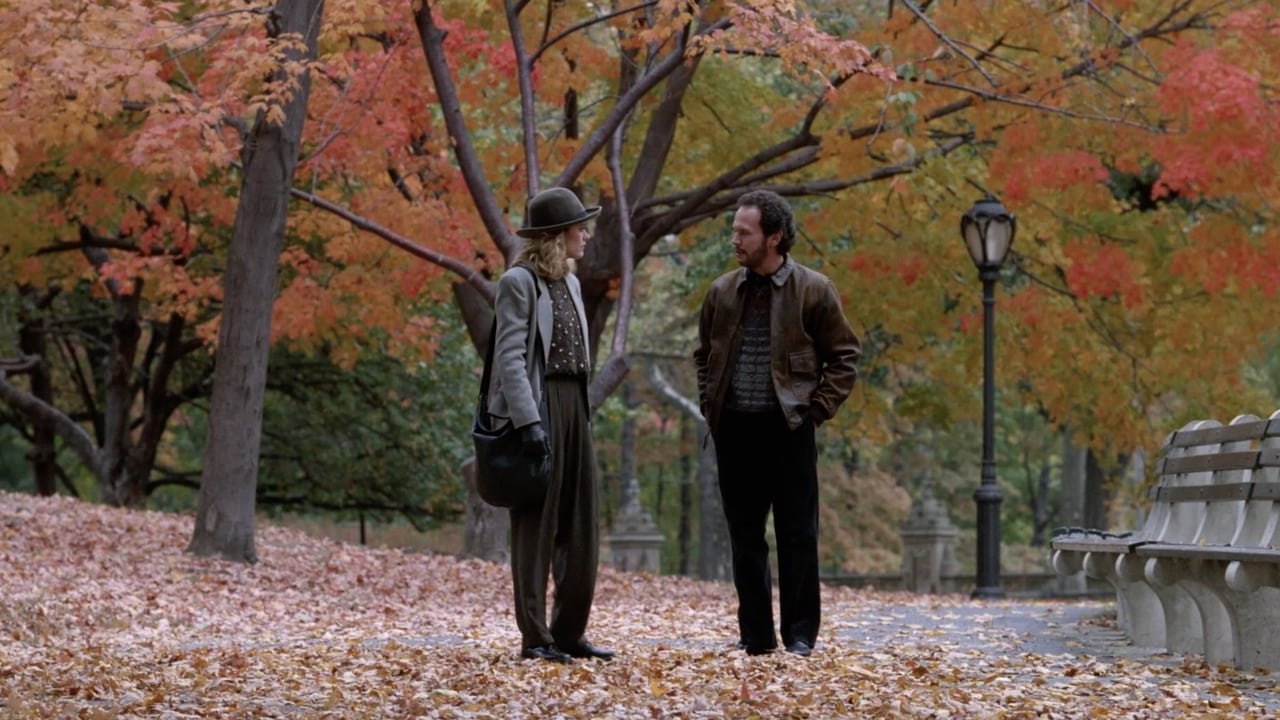
Technically, the film is gorgeous in a way we don’t see much anymore. Barry Sonnenfeld (before he went on to direct Men in Black) captures New York City in a riot of autumnal oranges and crisp winter grays. If you grew up watching this on a VHS tape rented from a local shop, you probably remember the specific texture of those colors. The "Castle Rock" logo appearing on screen was always a seal of quality back then. I remember my family's tape had a slight tracking wobble right during the famous Katz’s Deli scene—the "fake orgasm" sequence—because it had been paused and rewound so many times by curious viewers.
Real Stories and Improvised Magic
One of the reasons this drama-comedy hybrid feels so authentic is that it’s rooted in reality. Those interludes featuring elderly couples telling the stories of how they met? Those weren't actors reading a script; Rob Reiner collected those stories from real people, then had actors recreate them for the film. It adds a layer of documentary-style legitimacy to the central fiction. It tells us that while Harry and Sally’s journey is cinematic, it’s also happening in every brownstone and apartment across the city.

There’s also a wonderful looseness to the performances. The "white man’s overbite" dance Harry does in the department store was completely improvised by Billy Crystal to make Meg Ryan laugh. And the most famous line in the movie—"I’ll have what she’s having"—wasn't even in the original script. It was suggested by Crystal during rehearsals and delivered by Estelle Reiner, the director’s mother. It’s that kind of collaborative, ego-free filmmaking that makes the movie feel alive even decades later.
The film concludes with a frantic run through the streets of New York, a trope that has been beaten to death in the years since, but here it feels earned. When Harry finally lists all the things he loves about Sally—from the way she gets cold when it’s 71 degrees out to the way she takes an hour and a half to order a sandwich—it’s not just a list of quirks. It’s proof of the "sex part" finally being secondary to the "knowing someone" part. It’s a film that respects the audience’s intelligence as much as it respects the characters’ hearts, and that is a rare thing indeed.
Keep Exploring...
-

The Princess Bride
1987
-

The Lost Boys
1987
-
Manhattan
1979
-
Breakfast at Tiffany's
1961
-
Moonstruck
1987
-
Working Girl
1988
-
Say Anything...
1989
-

This Is Spinal Tap
1984
-

Footloose
1984
-
Sixteen Candles
1984
-
Stand by Me
1986
-

Risky Business
1983
-

The Breakfast Club
1985
-
Tango & Cash
1989
-
Sleepless in Seattle
1993
-
The Apartment
1960
-

The Graduate
1967
-
Harold and Maude
1971
-
Annie Hall
1977
-
Hannah and Her Sisters
1986