Back to the Future Part III
"The West has never been this heavy."
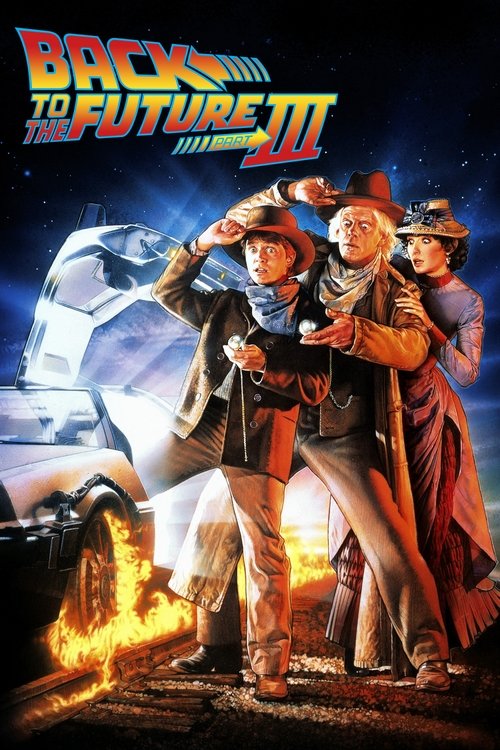
Most trilogies limp toward the finish line, gasping for air while trying to top the stakes of the previous entry, but Robert Zemeckis decided to just go buy some spurs instead. By 1990, the Back to the Future franchise had already turned the space-time continuum into a giant ball of yarn, but the third installment is where the series finally breathes. I watched this on a Tuesday night while my neighbor was very loudly practicing the tuba, which oddly added a certain "frontier brass" quality to the whole experience.
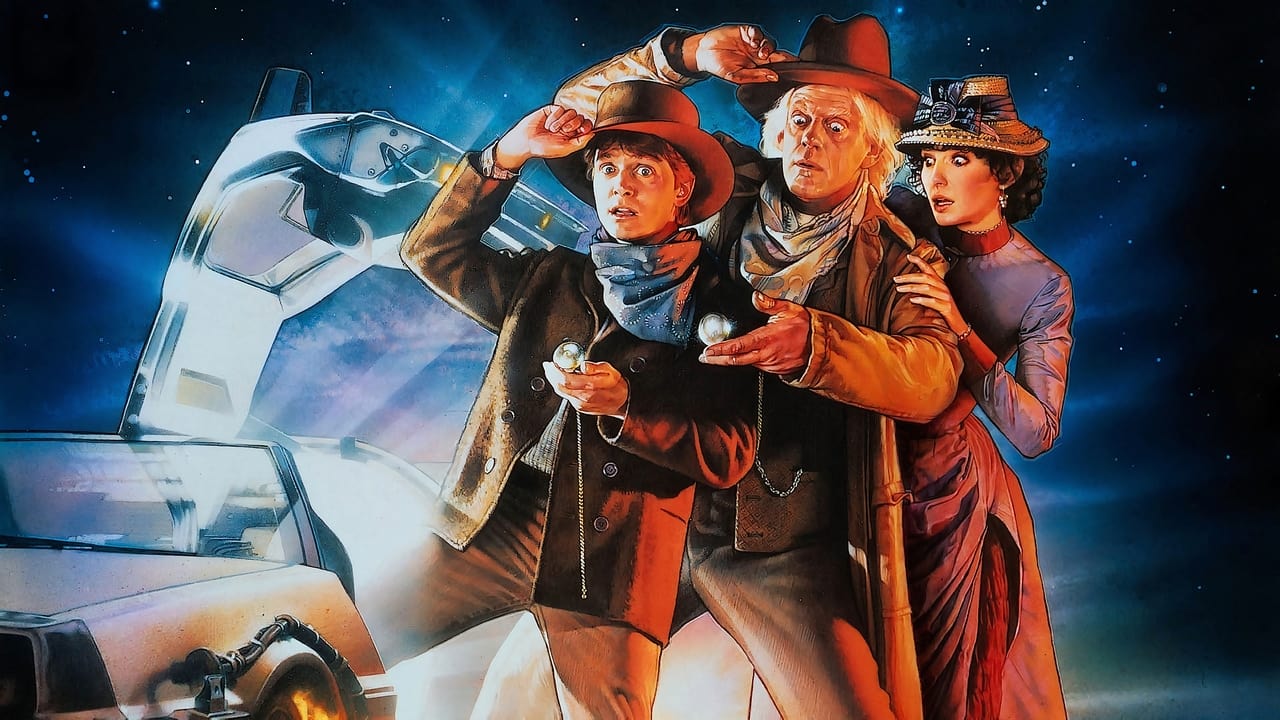
Coming off the heels of the frenetic, neon-drenched dystopia of Part II, Part III feels like a warm, dusty hug. It was filmed back-to-back with its predecessor—a move that was practically unheard of in the late '80s and early '90s but would later become the blueprint for massive franchises like The Lord of the Rings. This gave Zemeckis and writer Bob Gale the freedom to treat the finale not as a desperate escalation, but as a genre-bending character study.
A Love Letter to the Frontier
The "Modern Cinema" era (1990-2014) kicked off with a surprising fascination with the Old West. Between this and Dances with Wolves, 1990 was the year the Western came back from the dead, albeit with a sci-fi twist here. What strikes me now, looking back with a Popcornizer lens, is how much of this film relies on pure, tactile filmmaking. We were right on the cusp of the CGI revolution—Jurassic Park was only three years away—but Part III is a masterclass in practical scale.
When you see that massive 19th-century locomotive barreling down the tracks, that isn't a digital asset; it’s the Sierra No. 3, a real-life "movie star" train that had appeared in everything from High Noon to The Virginian. The physical presence of the DeLorean being pulled by a team of horses or the high-speed train heist in the finale provides a weight that modern green-screen spectacles often lack. The physics of a steam engine hitting 88mph is complete nonsense, but I’m too busy cheering to care.
Doc Brown Gets a Heartbeat
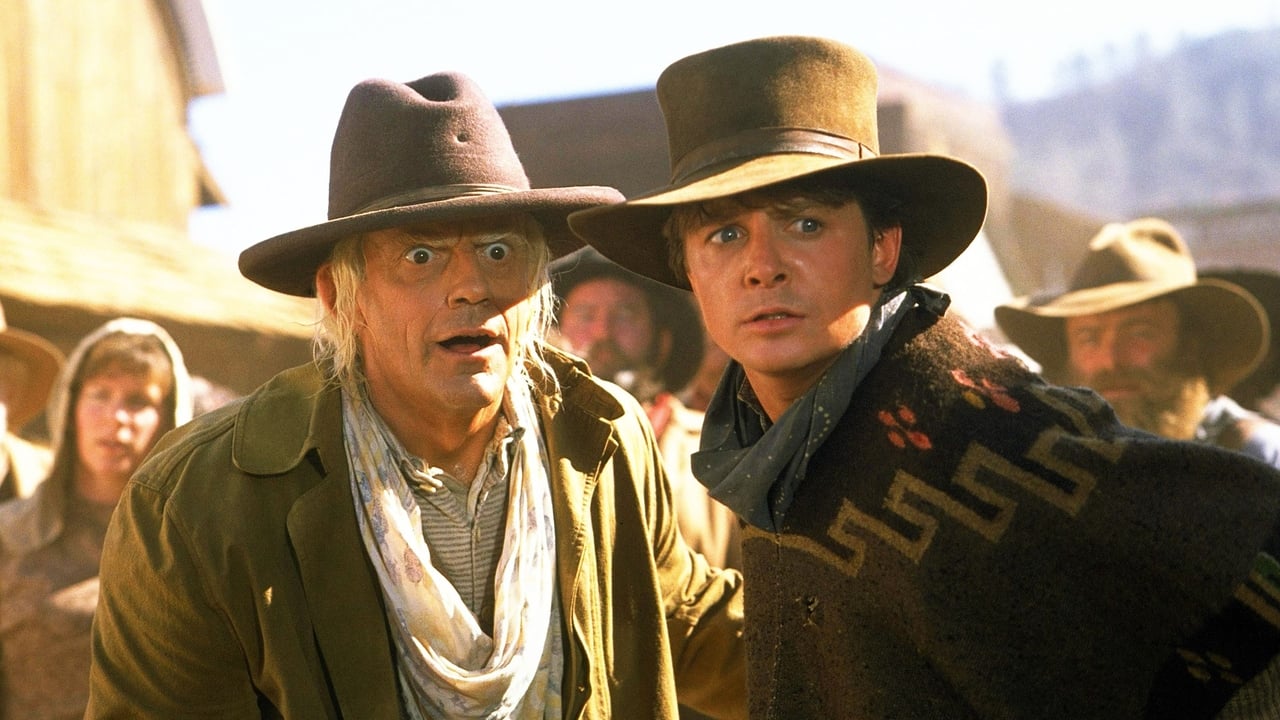
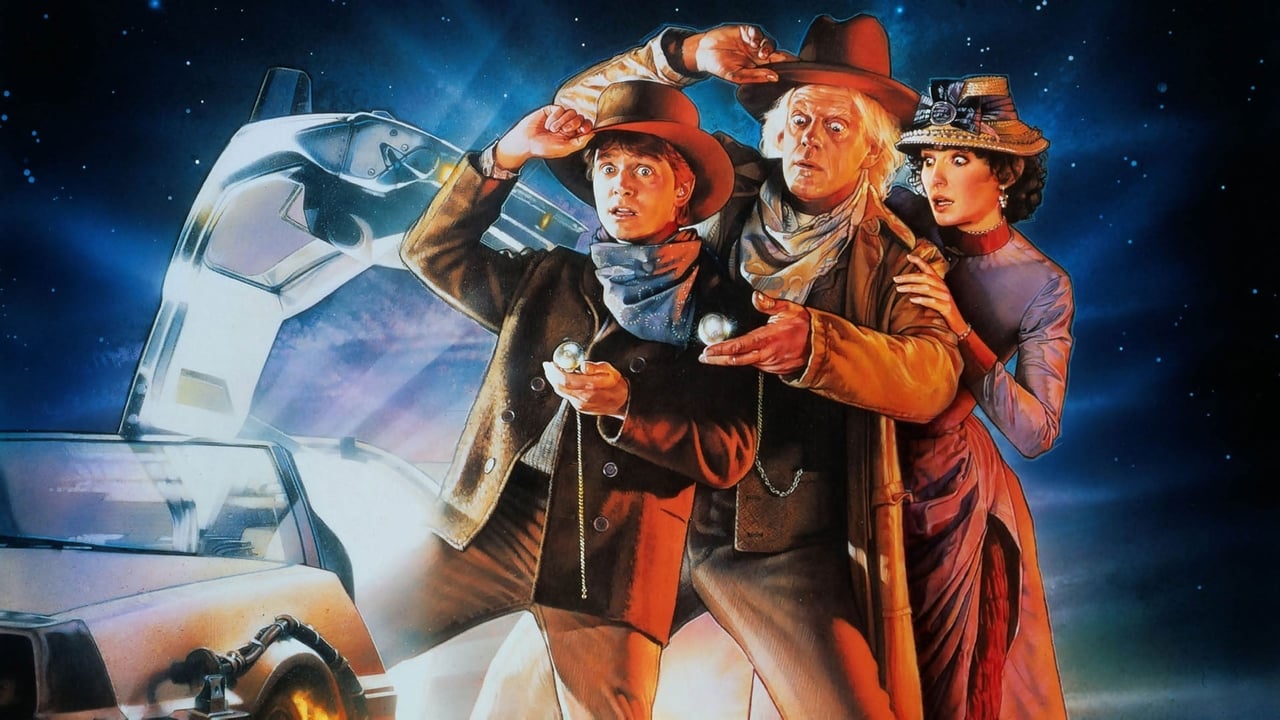
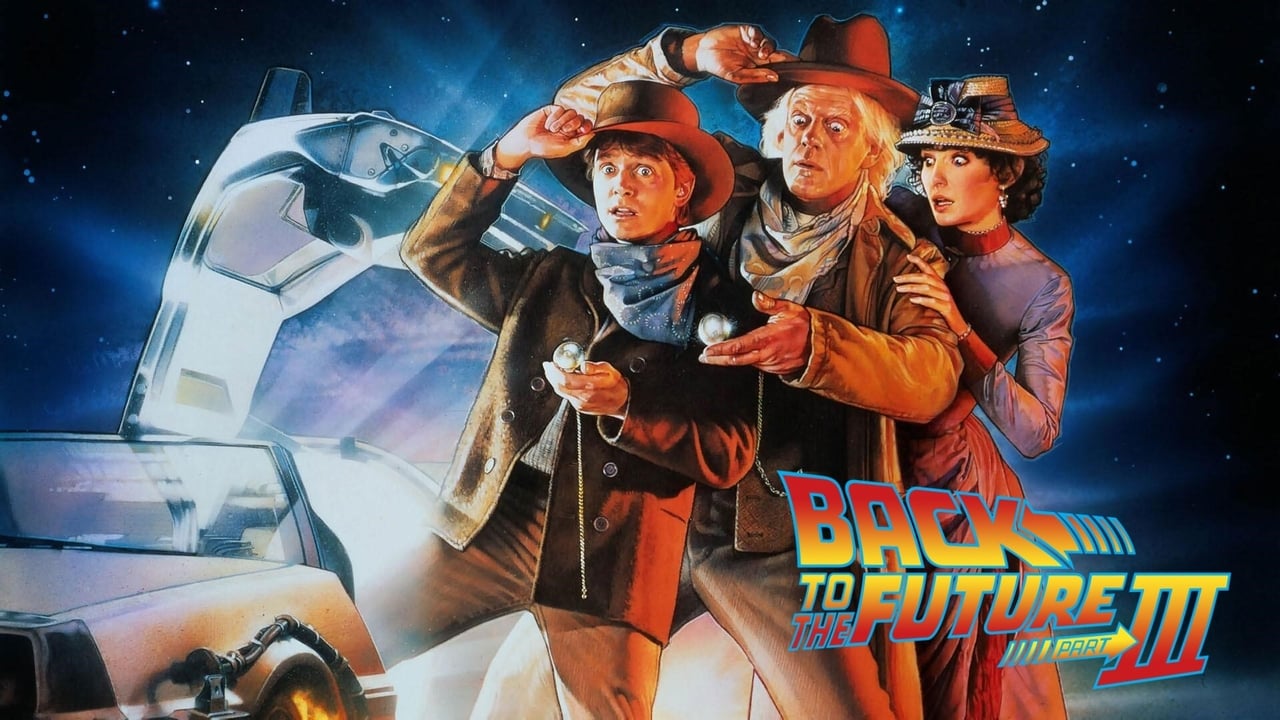
For two movies, Christopher Lloyd played Doc Brown as a manic, bug-eyed source of exposition. He was the human version of a technical manual. In Part III, however, we finally get to see the man behind the flux capacitor. Entering Mary Steenburgen as Clara Clayton was a stroke of genius. She’s perhaps the only person in the entire trilogy who matches Doc’s intellectual frequency, and their romance is genuinely sweet. It’s rare for a blockbuster finale to shift its focus from the young lead to the eccentric mentor, but it works because it grounds the time-travel stakes in something human.
Michael J. Fox is, as always, the perfect comedic foil, but I have a bit of a hot take here: Marty McFly is actually the least interesting person in his own finale. Don't get me wrong, Marty’s growth from a kid who can't handle being called "chicken" to someone who understands that his future hasn't been written yet is the emotional backbone of the series. But in this specific outing, he’s mostly playing second fiddle to Doc’s mid-life crisis and Thomas F. Wilson’s scenery-chewing performance.
Speaking of Thomas F. Wilson, he deserves a gold medal for his work as Buford 'Mad Dog' Tannen. Buford Tannen is a vastly superior villain to Biff because he’s actually willing to murder a teenager in the street. He brings a genuine sense of menace to a movie that could have easily drifted into "theme park" territory.
The Stuff You Didn't Notice
The production of this film was notoriously grueling. Because it was shot simultaneously with Part II, the cast and crew were often exhausted. Michael J. Fox has since mentioned that during the scene where Buford hangs Marty, the stunt went wrong, and he was actually losing consciousness for a few seconds before the crew realized he wasn't just "acting." It’s a terrifying thought for such a lighthearted movie.
On a lighter note, if you look closely at the "ZZ Top" band playing at the Hill Valley festival, you'll notice they’re playing their instruments like they’re in a 1980s music video. That’s because it is actually ZZ Top, and they allegedly hung around on set just because they were fans of the franchise. They even brought their own customized "spinning" fiddles.
The musical score by Alan Silvestri also deserves its flowers. He takes that iconic, brassy Back to the Future theme and rearranges it into a sweeping, orchestral Western epic. It captures the transition from analog to digital perfectly—while the film was shot on traditional stock, the sound design and score were starting to lean into the crispness that the coming DVD era would eventually demand.
Ultimately, Back to the Future Part III is the rare third entry that justifies its existence by being unapologetically different. It trades the headache-inducing timelines of the second film for a straightforward, high-stakes adventure that concludes the only way it could: with a flying steam train and a reminder that our futures are whatever we make of them. It’s a perfect capstone to a decade of blockbuster dominance that paved the way for the franchises we live with today.
It’s the kind of movie that makes me want to go build something in a garage, even if I can’t tell a wrench from a screwdriver. There's a sincerity to the Doc and Marty friendship here that feels earned after three movies of chaos. If you haven't revisited Hill Valley in its 1885 glory lately, it's time to dust off your Stetson and give it another look. Just watch out for the manure.
Keep Exploring...
-
Back to the Future Part II
1989
-

Back to the Future
1985
-
Teenage Mutant Ninja Turtles
1990
-
Men in Black
1997
-
Homeward Bound: The Incredible Journey
1993
-
Toy Story
1995
-
Paul
2011
-
Hook
1991
-
Austin Powers: The Spy Who Shagged Me
1999
-
Spy Kids
2001
-
Spy Kids 2: The Island of Lost Dreams
2002
-

DuckTales: The Movie - Treasure of the Lost Lamp
1990
-
Osmosis Jones
2001
-
The Hitchhiker's Guide to the Galaxy
2005
-

Meet the Robinsons
2007
-
Mr. Peabody & Sherman
2014
-

The SpongeBob SquarePants Movie
2004
-

Wallace & Gromit: The Curse of the Were-Rabbit
2005
-

Who Framed Roger Rabbit
1988
-
Bill & Ted's Bogus Journey
1991