Cry-Baby
"He’s a juvenile delinquent. She’s a square. It’s love."
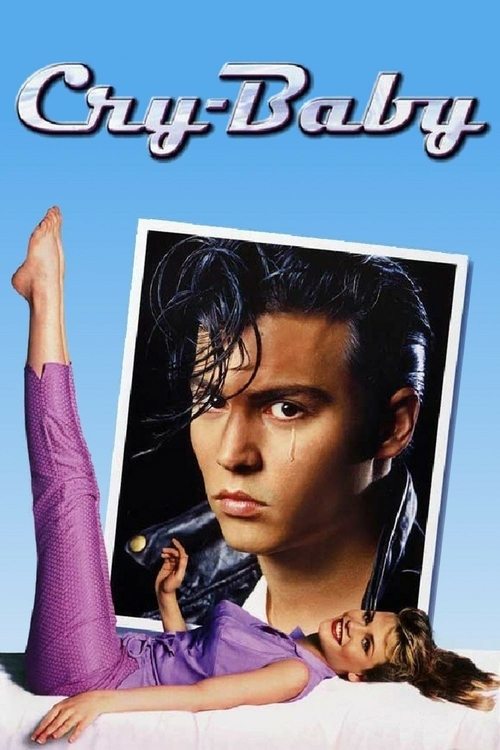
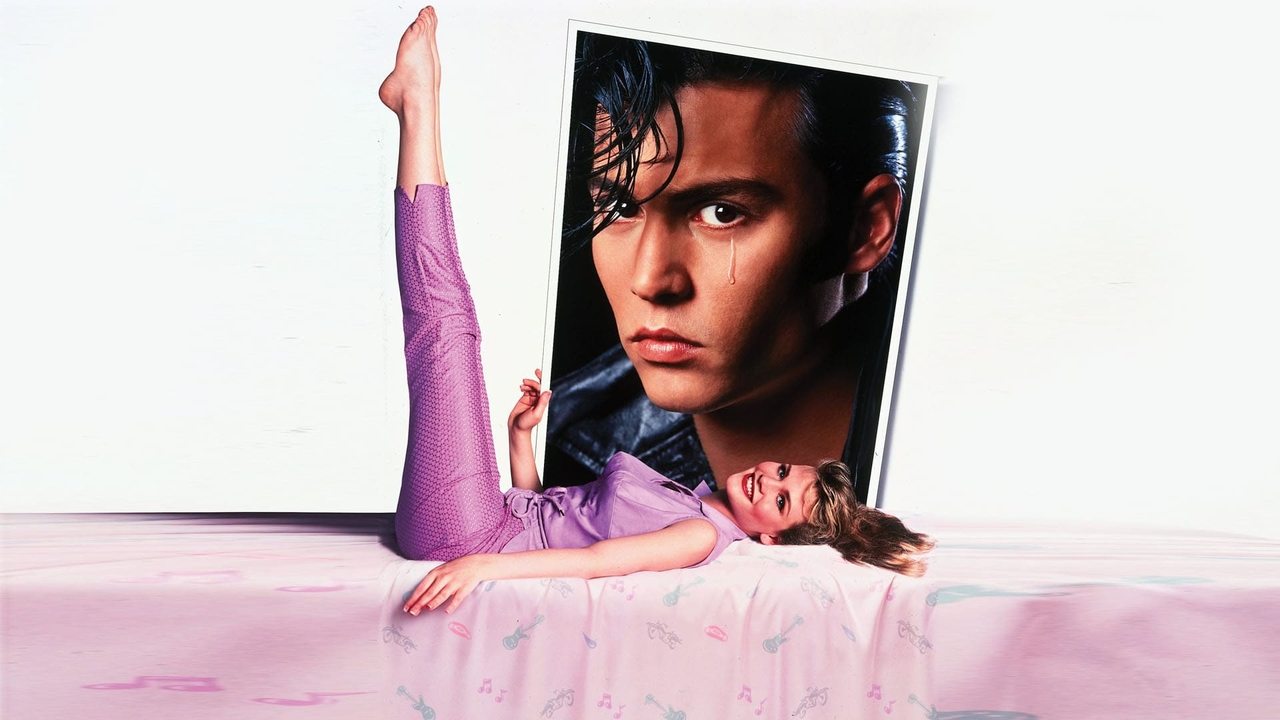
I remember watching Cry-Baby for the first time on a humid Tuesday evening while sitting on a beanbag chair that was slowly leaking its Styrofoam guts across my floor. It felt like the perfect way to consume a John Waters movie: slightly uncomfortable, definitely messy, and entirely weird. At the time, I was mostly just trying to figure out if Johnny Depp was actually that handsome or if it was some kind of elaborate practical effect involving high-contrast lighting and a metric ton of pomade.
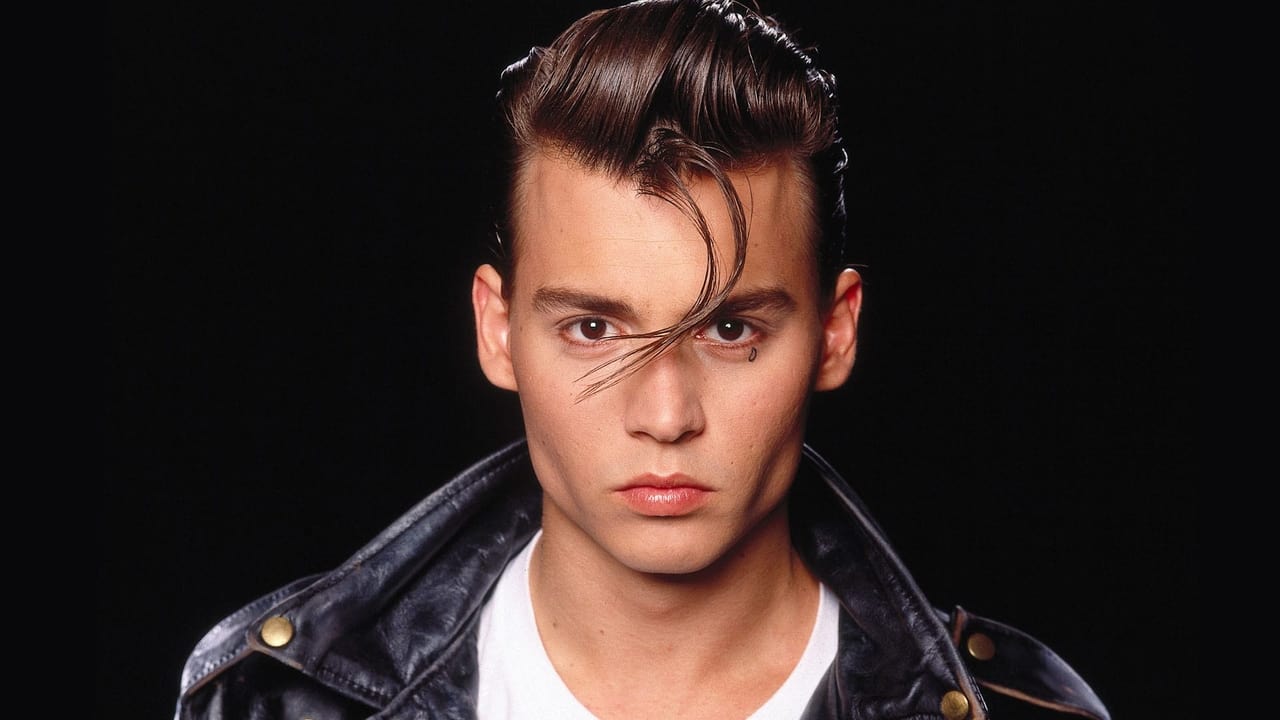
Released in 1990, Cry-Baby arrived at a strange crossroads in cinema. We were shaking off the neon-soaked excess of the '80s and heading into an era where "indie" was about to become a buzzword. Waters, the "Pope of Trash" who had spent decades making people gag with Pink Flamingos, was fresh off the surprising success of Hairspray. Universal Pictures handed him $11 million—a king’s ransom for a guy who once filmed a man eating dog droppings—and told him to go wild. The result is a hyper-stylized, satirical explosion of 1950s teen rebellion that somehow managed to be both too mainstream for the underground and too bizarre for the shopping mall crowd.
The Pope of Trash Takes the Studio’s Money
In retrospect, it’s a miracle this movie exists in the form it does. Waters didn't just make a movie about the 1950s; he made a movie about the movies about the 1950s. It’s a Technicolor fever dream where the "Drapes" (the cool, leather-clad delinquents) and the "Squares" (the cardigan-wearing, moralizing rich kids) engage in a war of hormones and hair grease.
What I love about this era of Waters’ career is how he uses a studio budget to amplify his obsessions rather than dilute them. The production design is aggressively bright, and the cinematography by David Insley makes every leather jacket shine like it was dipped in liquid midnight. It’s a parody of Grease, sure, but it’s meaner, funnier, and significantly more obsessed with facial deformities. Johnny Depp’s jawline was doing more heavy lifting than the actual script, and yet, he leans into the absurdity with total sincerity. He plays Wade "Cry-Baby" Walker—a boy who can shed a single, perfect tear on command—as if he’s starring in a tragic Shakespearean opera rather than a movie featuring a scene where Iggy Pop takes a bath in a galvanized tub.
A Rogues' Gallery of Weirdness
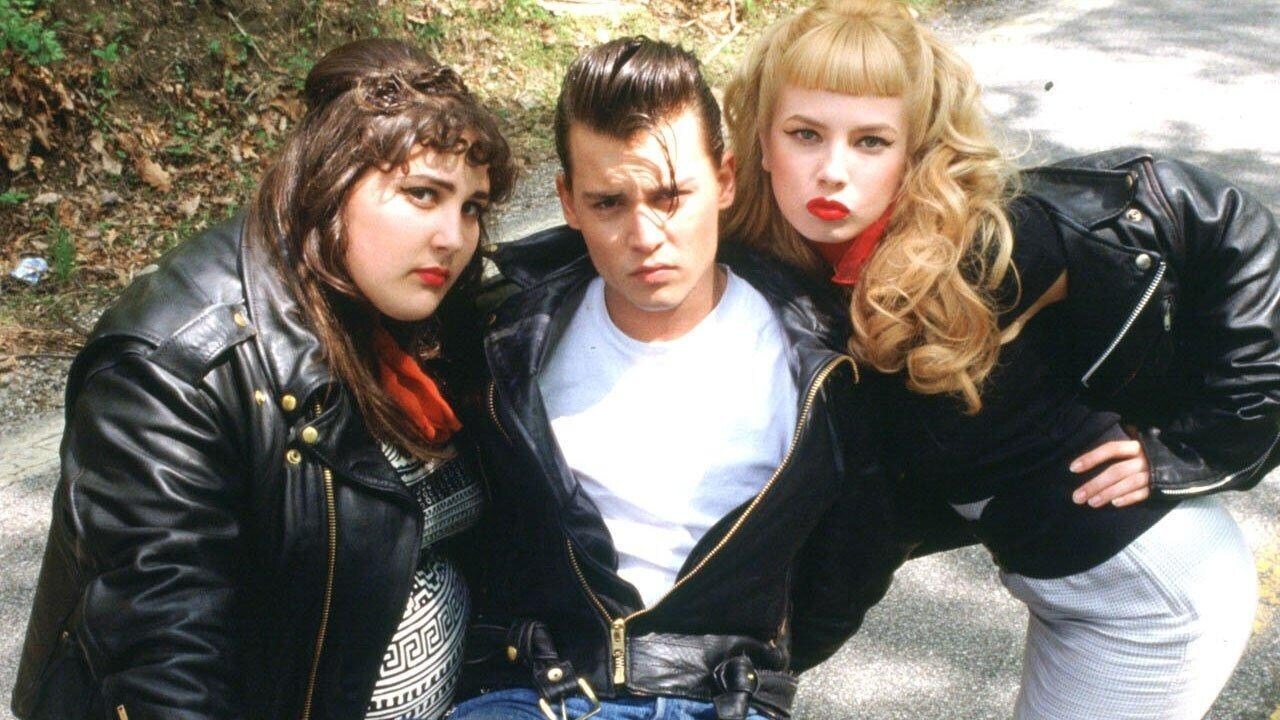
The casting here is legendary, even by today’s standards. This was the moment Johnny Depp decided to intentionally blow up his "teen idol" image from 21 Jump Street. By playing a parody of a heartthrob, he proved he had a sense of humor about his own face, which paved the way for his later collaborations with Tim Burton in films like Edward Scissorhands. He’s joined by Amy Locane as Allison, the square girl who just wants to be bad, and their chemistry is delightfully heightened.
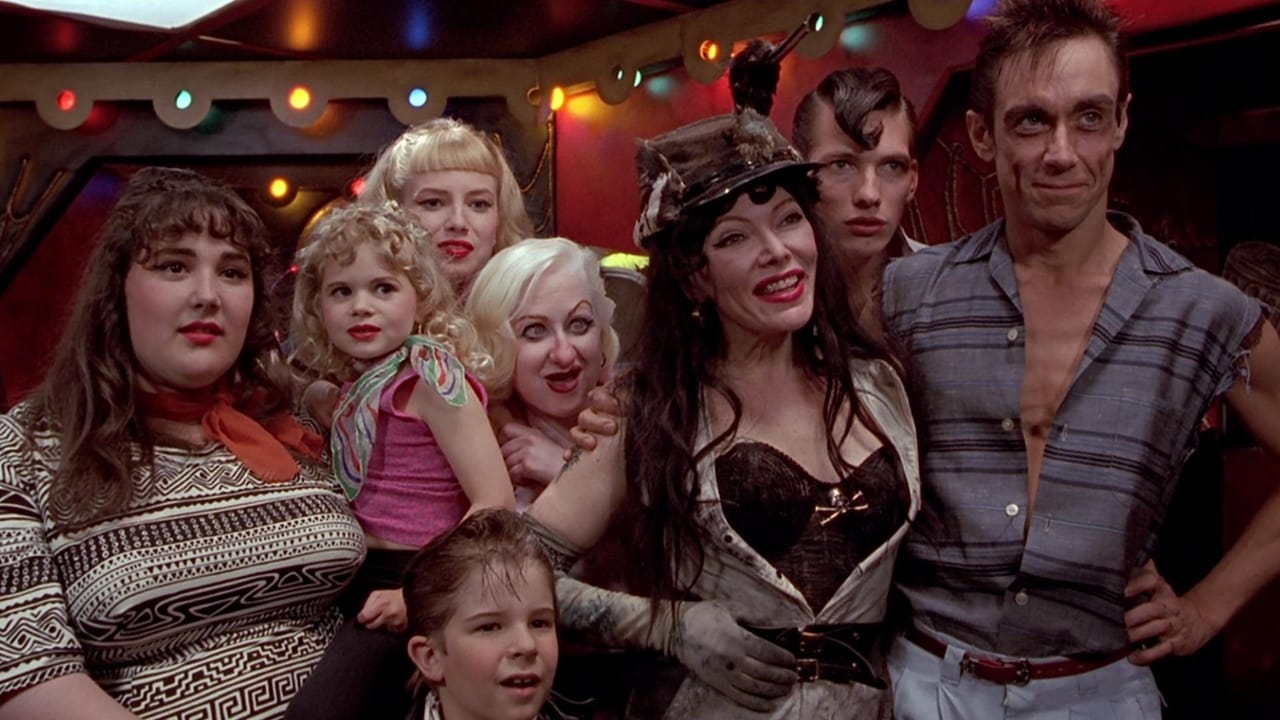
But the real joy of a Waters film is the supporting cast. You have Ricki Lake (before she became the queen of daytime talk) as a pregnant teen, and the legendary Susan Tyrrell as Ramona Rickettes. Then there’s Traci Lords, making one of the most successful "mainstream" transitions in Hollywood history as Wanda Woodward. She is genuinely fantastic here, delivering lines with a deadpan sneer that suggests she’s permanently unimpressed by everything including the laws of physics. Seeing her play off Iggy Pop—who looks like he wandered onto the set from a different planet—is the kind of chaotic energy you just don't get in modern, committee-tested comedies.
Why Did This Flop? (And Why You Should Care)
Despite the star power and the catchy soundtrack, Cry-Baby died at the box office. It made about $8 million against its $11 million budget. Looking back, it’s easy to see why: it was a movie without a clear "home." To the kids who loved Johnny Depp, it was probably too "weird" and satirical. To the hardcore Waters fans, it might have felt too polished. It suffered from being released in a year dominated by Home Alone and Ghost, movies that played it much safer with their sentimentality.
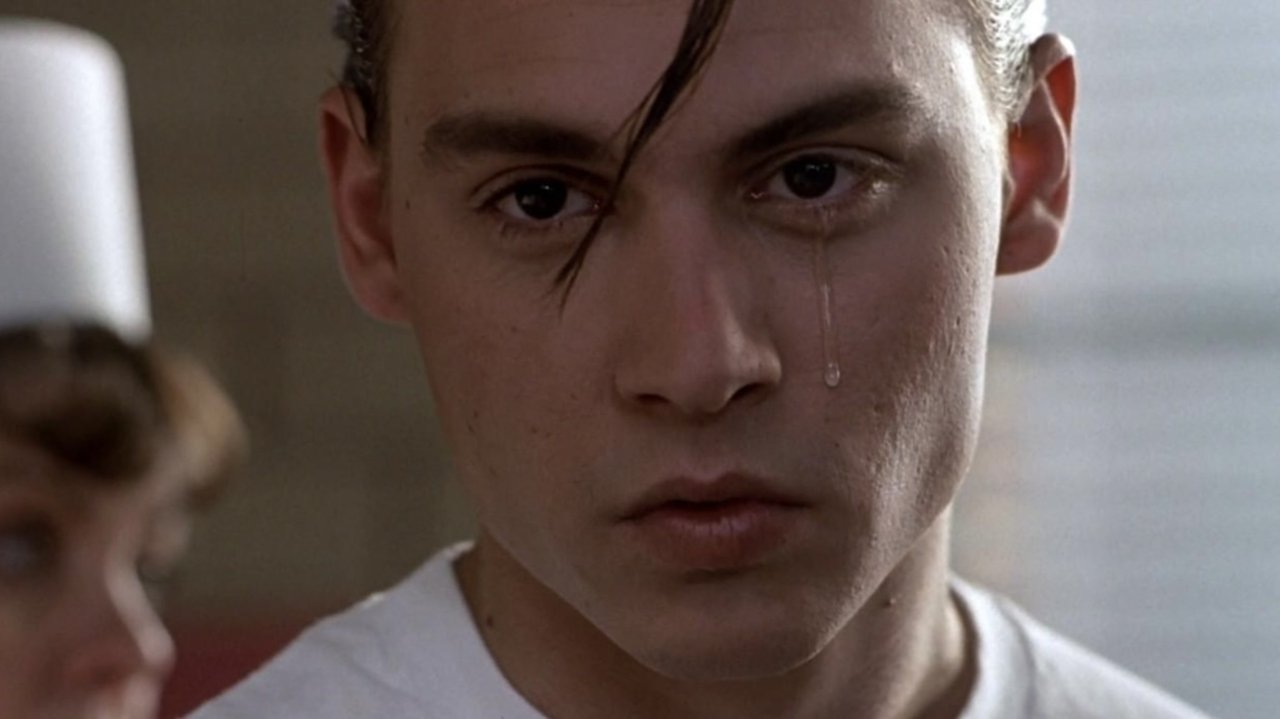
But that obscurity is exactly why it’s worth a revisit. In an age where every comedy feels like it was filmed in a brightly lit Costco with the same three improvised jokes, Cry-Baby is a meticulously choreographed piece of pop-art. It’s a comedy where the jokes are visual, musical, and structural. The "French Fry" scene alone is a masterclass in weirdness that I’m fairly certain would be cut from a studio movie today within thirty seconds of a test screening. It’s effectively the most expensive student film ever made by a man who hates schools.
The music, while dubbed for the lead actors, is a blast of authentic rockabilly energy that captures the transition from 1950s innocence to 1960s rebellion. It’s a film that understands that teenagers have always been the same: desperate to belong, desperate to stand out, and usually covered in some kind of questionable fluid.
Cry-Baby isn't a perfect movie—it occasionally loses its narrative engine in favor of another dance number—but it is a vital piece of '90s cinema history. It represents a brief window where a true outsider artist was given the keys to the kingdom and used them to make a movie about a boy who can cry out of one eye. It’s fun, it’s filthy-adjacent, and it’s a reminder that before he was a pirate or a mad hatter, Johnny Depp was the coolest kid in the detention hall. Give it a spin, and try not to get any grease on your upholstery.
Keep Exploring...
-
Father of the Bride
1991
-
It Could Happen to You
1994
-
A Goofy Movie
1995
-
It Takes Two
1995
-

Mallrats
1995
-

The Little Rascals
1994
-
That Thing You Do!
1996
-
Grosse Pointe Blank
1997
-
A Night at the Roxbury
1998
-

EverAfter
1998
-
Out of Sight
1998
-
Blast from the Past
1999
-
Deuce Bigalow: Male Gigolo
1999
-
Never Been Kissed
1999
-

Heartbreakers
2001
-
Kate & Leopold
2001
-
The Wedding Planner
2001
-
Confessions of a Dangerous Mind
2002
-
National Lampoon's Van Wilder
2002
-

S1m0ne
2002