Bill & Ted's Bogus Journey
"Getting killed was the most excellent thing to happen to them."
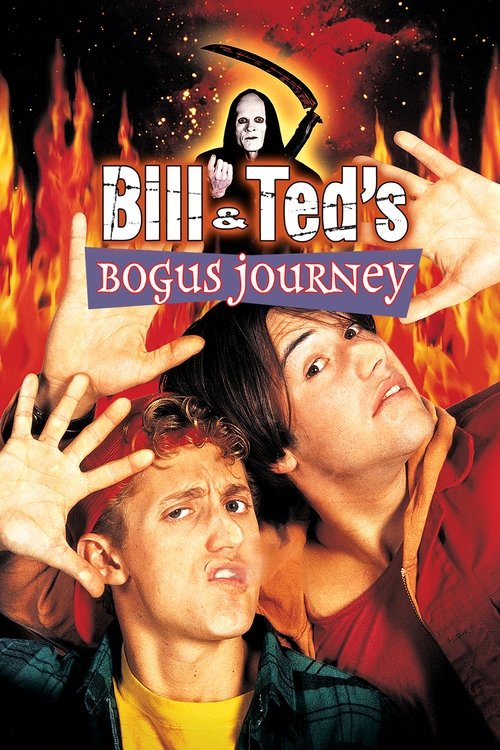
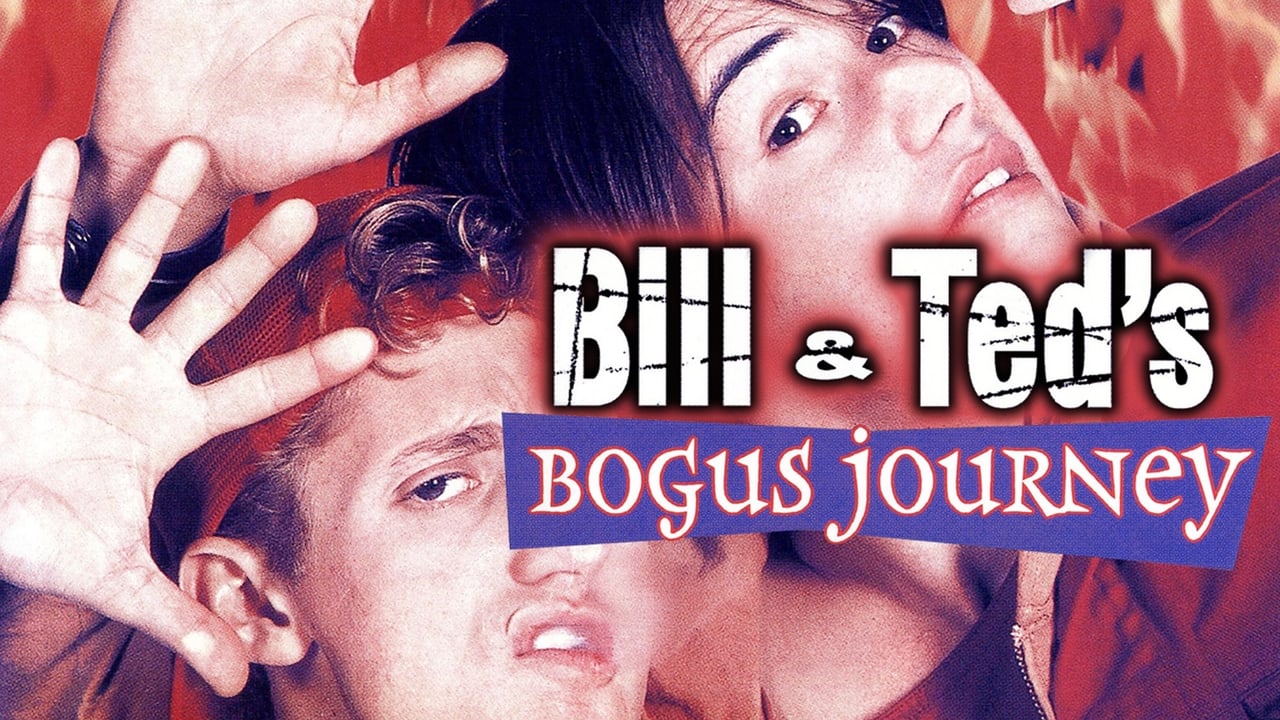
Most sequels are content to just rerun the highlights of the first movie with a slightly bigger budget and a new set of cameos. They play it safe. They stay in the lines. Bill & Ted’s Bogus Journey is not one of those movies. Released in 1991, just as the neon-soaked optimism of the '80s was curdling into the cynical, grunge-fueled '90s, this film looked at the massive success of Excellent Adventure and decided that instead of more time travel, what the world really needed was a surrealist dive into the afterlife featuring a Swedish-accented personification of Death.
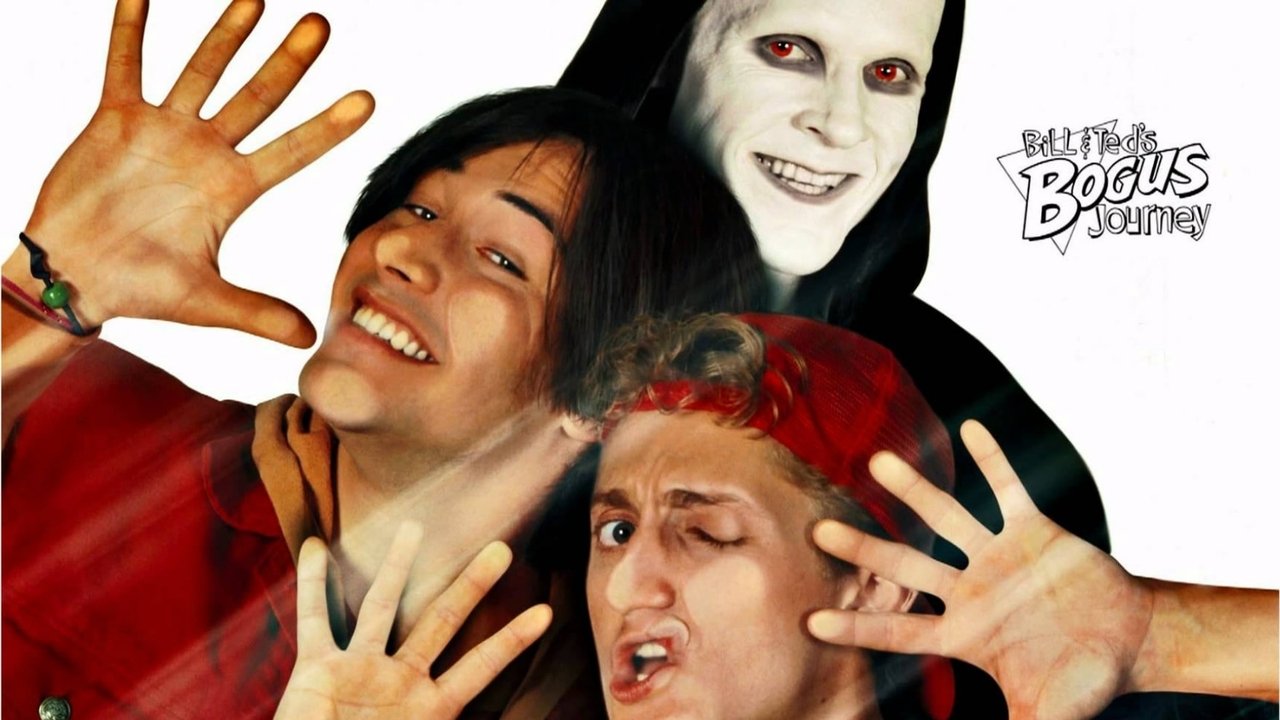
I remember watching this on a grainy VHS in a basement while my roommate was in the next room loudly trying to fix a leaky faucet with a pipe wrench. The rhythmic clank-clank-clank of his struggle ended up syncing perfectly with the heavy metal soundtrack, and for a moment, I wasn't sure if the industrial noise was coming from the plumbing or the futuristic robot doubles on screen. It’s that kind of movie—it blurs the lines between a Saturday morning cartoon and a fever dream.
A Most Triumphant Leap into the Weird
While the first film was a charmingly low-stakes romp through history class, Bogus Journey is a full-on Science Fiction epic that boldly dares to be much weirder than its predecessor. The plot kicks off with a villain from the future, De Nomolos (played with mustache-twirling relish by Joss Ackland, whom you might remember as the "Diplomatic Immunity" guy from Lethal Weapon 2), sending robot duplicates to the past to kill our heroes.
And they actually do it. Bill and Ted are murdered within the first twenty minutes.
From there, the film transforms into a visual odyssey through Hell, Heaven, and the spaces in between. Director Peter Hewitt—making his directorial debut here before moving on to things like The Borrowers—brought a distinctly European, almost expressionistic visual flair to the production. The sequences in Hell aren't just fire and brimstone; they’re personalized nightmares involving terrifying Easter Bunnies and overbearing grandmothers. Looking back, it’s a miracle a major studio funded a sequel that is essentially The Seventh Seal for people who think air-guitar is a valid form of punctuation.
Practical Magic and the "Station" Era
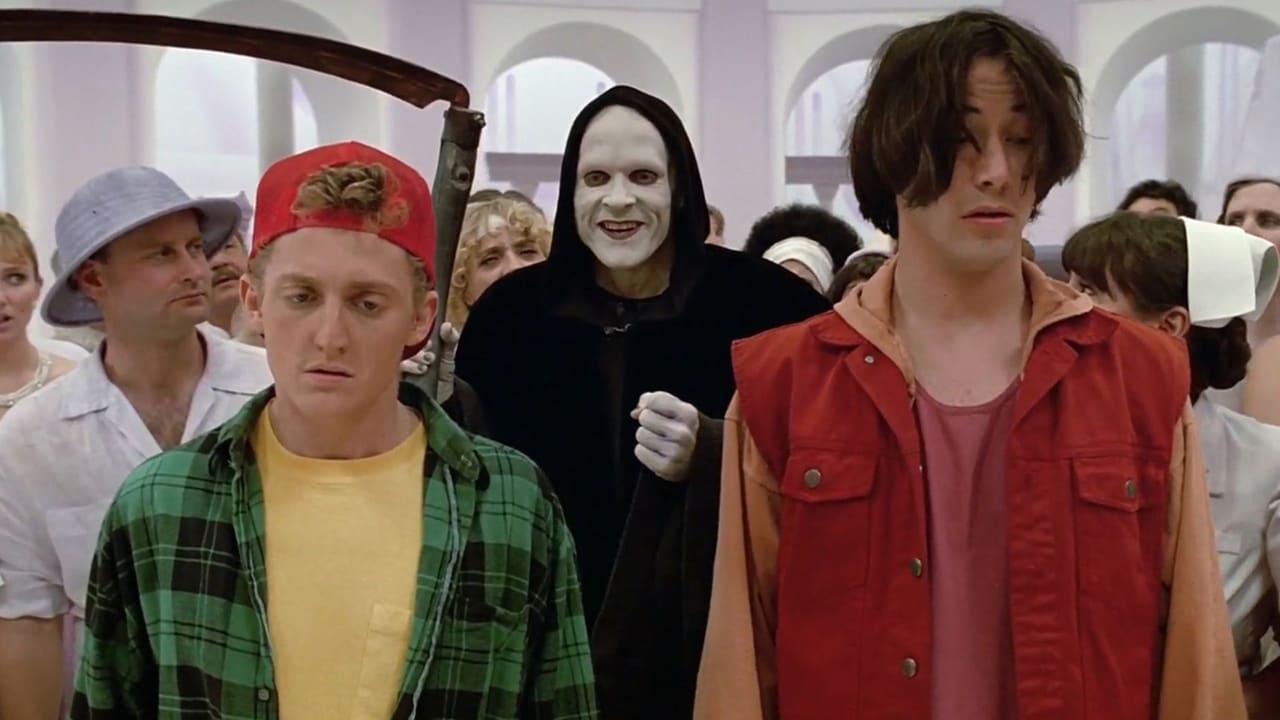
This was the peak of the pre-CGI era, and Bogus Journey is a masterclass in practical ingenuity. The robot doubles of Keanu Reeves and Alex Winter aren't digital constructs; they are intricate animatronics and clever makeup effects. There’s a texture to the world that feels tangible. When the "evil" Bill and Ted are on screen, there’s a jerkiness to their movements and a plasticky sheen to their skin that is genuinely unsettling.
Then there’s "Station." For the uninitiated, Station consists of two small, brilliant alien scientists who eventually merge into one giant, fuzzy creature. It is the pinnacle of 90s creature shop weirdness. These puppets have more personality than most modern CGI characters, and their inclusion speaks to the "anything goes" spirit of the production. The film captures that specific Y2K-adjacent anxiety where technology was starting to feel like it could either save us or replace us entirely—but it treats that anxiety with a shrug and a "party on" attitude.
Alex Winter and Keanu Reeves (hot off Point Break but before Speed made him a global icon) have a chemistry that is impossible to manufacture. They play their "Evil" counterparts with such infectious glee that you almost feel bad when they inevitably get dismantled. Reeves, in particular, displays a comedic timing that people often unfairly overlooked during his later "stoic action star" phase.
The Grim Reaper Steals the Show
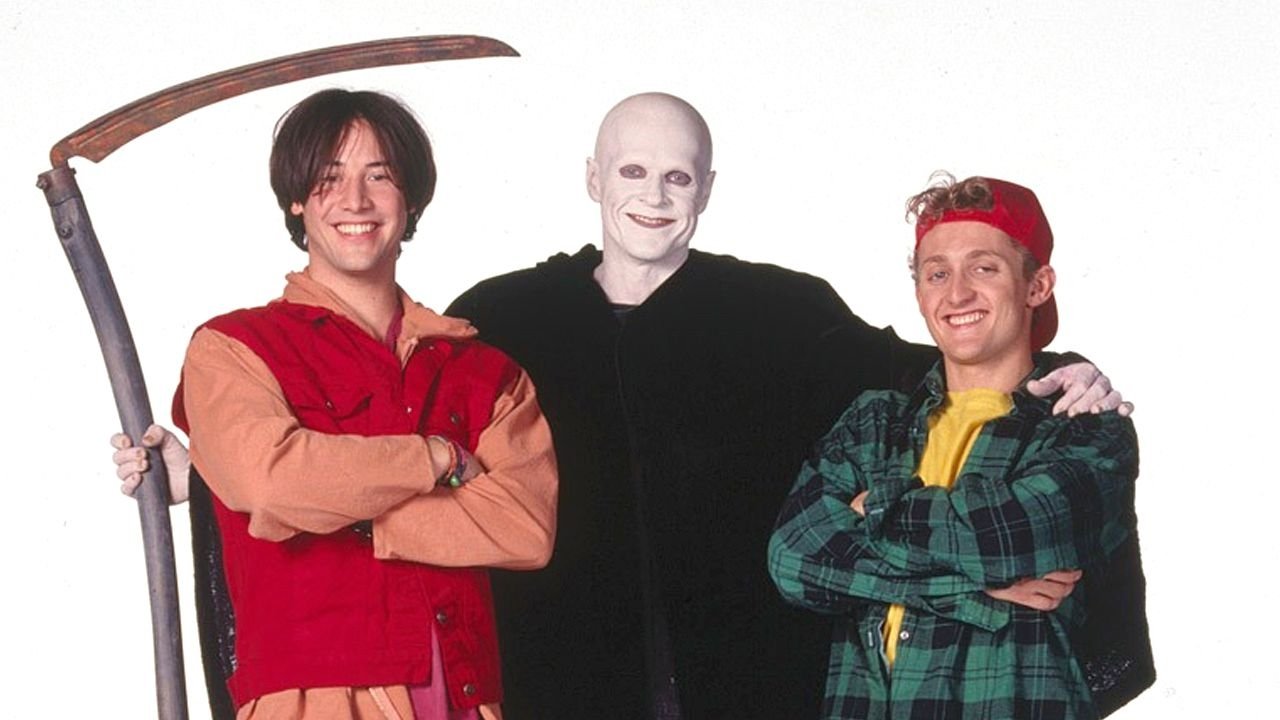
If there is one reason to track down this often-overlooked sequel, it’s William Sadler. His portrayal of the Grim Reaper is one of the most inspired comedic turns of the decade. Clad in the traditional black robes and wielding a scythe, he starts as a terrifying pursuer and ends up as a disgruntled, insecure bassist who just wants to be liked.
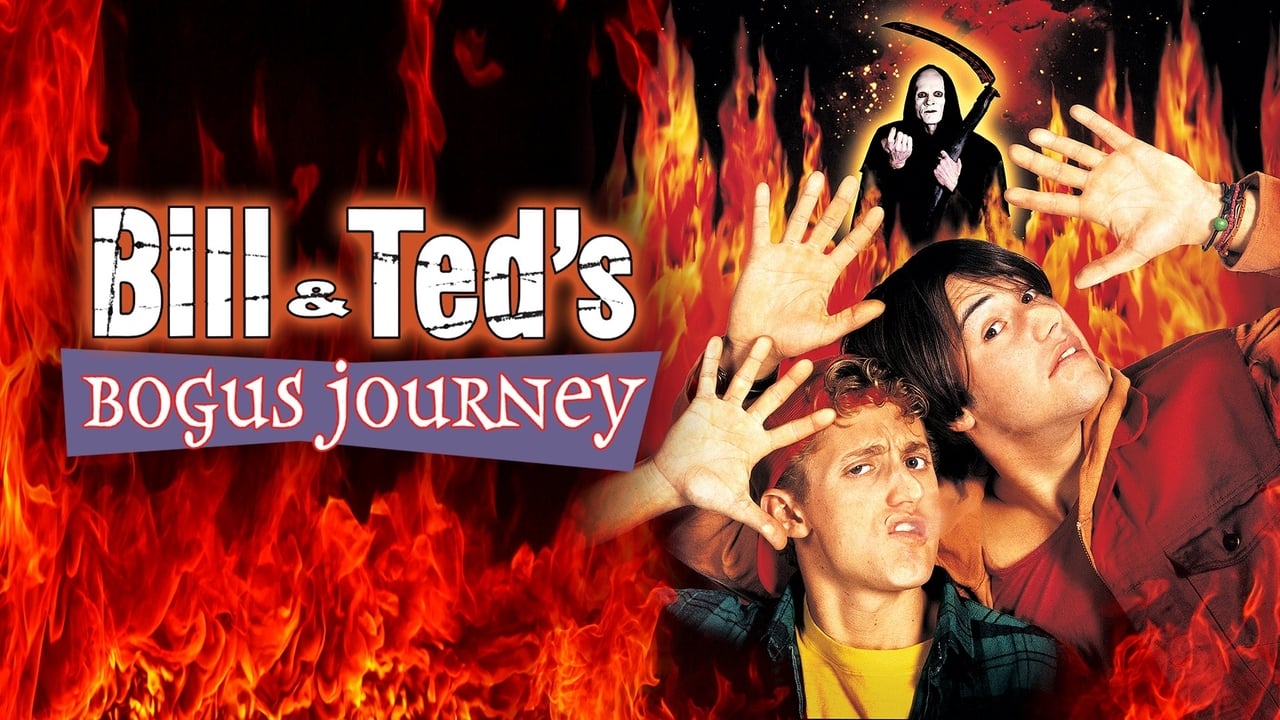
The sequence where Bill and Ted challenge him to a series of games to win their souls back—moving from chess to Battleship, Clue, and finally Twister—is a comedic high-water mark. Sadler plays it straight, which makes the absurdity of a skeletal deity shouting "You sunk my battleship!" land with maximum impact. Apparently, Sadler improvised much of the Reaper's physicality, including the hilarious accent and the constant vanity about his "shining" robes.
Looking back from an era where every franchise is meticulously planned out as a "cinematic universe," there’s something refreshing about how chaotic Bogus Journey feels. It’s a sequel that doesn't care about "building the brand." It just wants to show you a giant alien, a robot battle, and a heavy metal concert at the end of the world. It’s messy, ambitious, and unashamedly bizarre.
While Excellent Adventure is the movie everyone quotes, Bogus Journey is the movie that lingers in your brain. It’s a cult classic that deserves to be pulled out of the shadow of its older brother. It’s a reminder that even the biggest blockbusters used to have room for a little bit of madness, a lot of practical effects, and a Grim Reaper who really, really hates losing at Twister. If you haven't revisited this one since the DVD era, it's time to go back. It's truly non-heinous.
Keep Exploring...
-

Bill & Ted's Excellent Adventure
1989
-
Bill & Ted Face the Music
2020
-
Teenage Mutant Ninja Turtles II: The Secret of the Ooze
1991
-
A Goofy Movie
1995
-
Jimmy Neutron: Boy Genius
2001
-
Teenage Mutant Ninja Turtles
1990
-
Men in Black
1997
-

Mystery Men
1999
-
Osmosis Jones
2001
-

Dick Tracy
1990
-

DuckTales: The Movie - Treasure of the Lost Lamp
1990
-
Homeward Bound: The Incredible Journey
1993
-

The Swan Princess
1994
-

Austin Powers: The Spy Who Shagged Me
1999
-
Spy Kids
2001
-
Spy Kids 2: The Island of Lost Dreams
2002
-
Journey to the Center of the Earth
2008
-

Aliens in the Attic
2009
-

Hot Tub Time Machine
2010
-
Paul
2011