Boyz n the Hood
"Survival is the only graduation that matters."
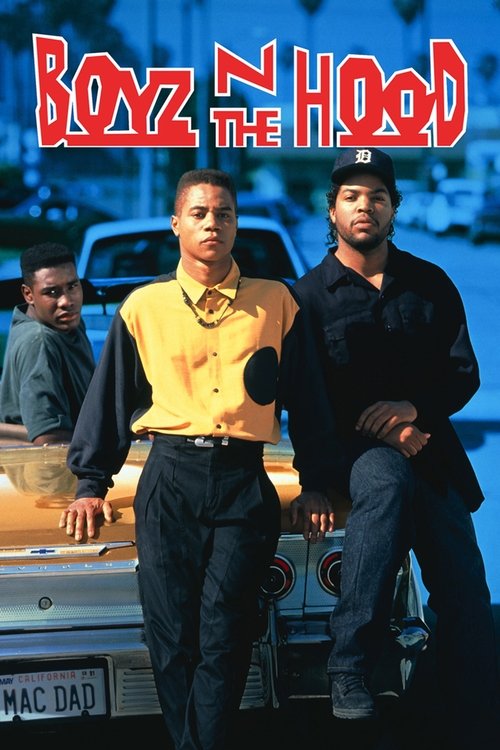
The first thing you notice isn't the image, but the noise. It’s the constant, rhythmic thrum of police helicopters circling overhead—the unofficial soundtrack of 1991 South Central Los Angeles. I recently rewatched Boyz n the Hood on a humid Tuesday afternoon while my neighbor was outside using a leaf blower, and for a split second, the mechanical drone from the window synced perfectly with the film's oppressive atmosphere. It’s a sound that signals a neighborhood under permanent occupation, and it sets the stage for a story that feels less like a traditional Hollywood drama and more like a dispatch from a war zone that the rest of the country was trying to ignore.
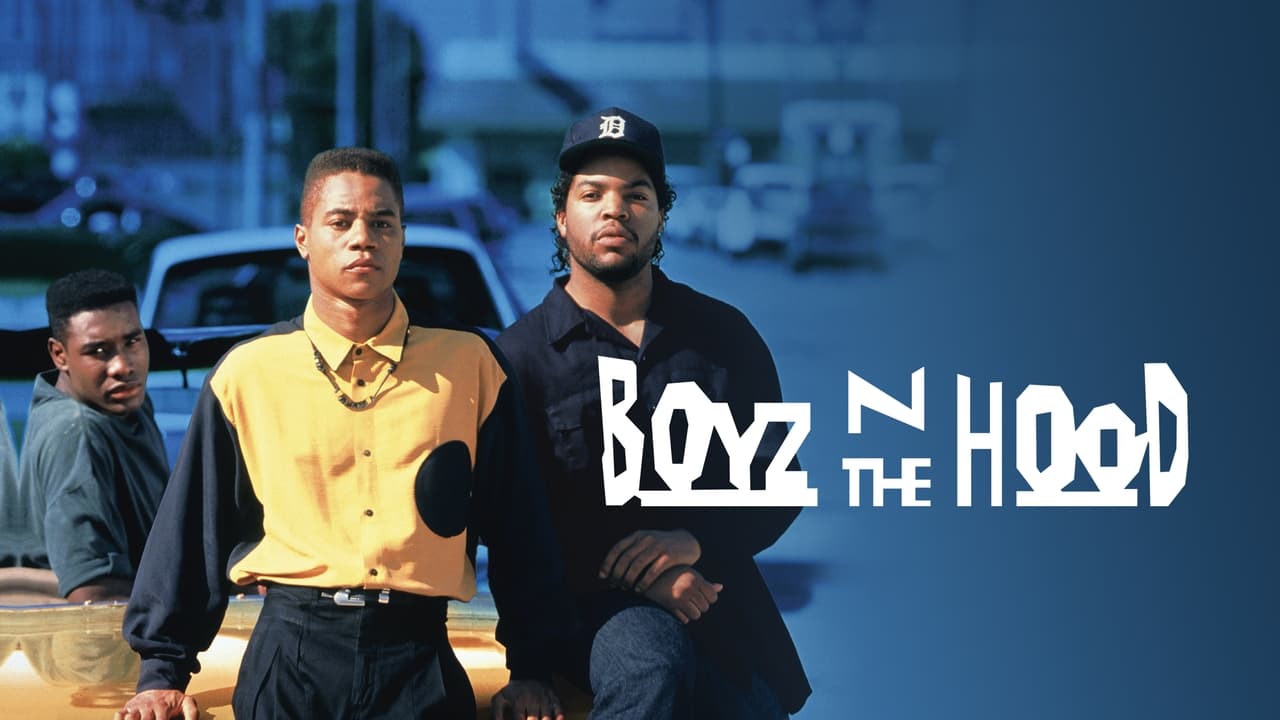
John Singleton was only 23 when he wrote and directed this, fresh out of USC film school and brimming with the kind of "direct-action" energy you can’t fake. Looking back from our current era of polished, focus-grouped cinema, there is a jagged, unpretentious honesty to the way Singleton shoots his hometown. He wasn't trying to invent a new genre; he was trying to save lives.
The Moral Weight of Furious Styles
At the center of the storm is Cuba Gooding Jr. as Tré Styles, a young man navigating the literal and metaphorical minefields of his block. But the film’s gravity—its true North Star—is Laurence Fishburne as his father, Furious Styles. Before he was teaching Keanu Reeves about the Matrix, Fishburne was delivering the most vital fatherhood performance of the decade.
There’s a specific scene where Furious takes Tré and his friend Ricky to a billboard in the neighborhood to explain gentrification. It’s the kind of moment that could feel like a "very special episode" lecture in a lesser movie, but Fishburne imbues it with such weary, parental desperation that it hits like a physical blow. He isn't just teaching a history lesson; he’s trying to provide his son with the intellectual armor necessary to survive a system designed to swallow him whole. If Furious Styles isn't the blueprint for on-screen fatherhood, the blueprint is broken.
Contrast this with the tragedy of Doughboy, played by Ice Cube in a debut that remains his best work. Coming straight off the heels of N.W.A., Ice Cube didn't have to act much to convey the nihilism of a man who knows his expiration date is fast approaching. His Doughboy is the flip side of Tré’s coin—a kid with just as much potential who simply didn't have a Furious Styles in his ear. When he says, "Either they don't know, don't show, or don't care about what's going on in the hood," he isn't reading a script; he’s delivering a eulogy for his own life.
Beyond the "Hood Movie" Label

While the 90s saw a flood of "urban" films trying to capitalize on this success, Boyz n the Hood remains distinct because it refuses to aestheticize the violence. In modern action movies, gunshots are often stylized—they have a cinematic "pop." Here, the violence is ugly, clumsy, and devastatingly final. When the inevitable tragedy strikes Morris Chestnut’s character, Ricky, it isn't a slow-motion operatic moment. It’s a frantic, messy scramble in an alleyway that leaves a family—and the audience—shattered.
The film captures a very specific pre-digital L.A. It’s a world of bright primary colors, high-top fades, and the chrome of lowriders on Crenshaw Boulevard. But the sunshine is deceptive. Singleton uses the vibrant L.A. light to highlight the absurdity of the situation; people are dying in paradise. Angela Bassett also shows up as Tré’s mother, Reva, and although her screen time is limited, she provides a crucial counterpoint to the male-dominated narrative. Her confrontation with Furious about the "work" of raising a son is a sharp reminder that the burden of survival isn't carried by the men alone.
A Legacy Carved in Concrete
It’s fascinating to reassess this film in the context of the early 90s indie boom. We often talk about Tarantino and the Sundance kids, but Singleton’s achievement was arguably more radical. He forced a major studio (Columbia Pictures) to tell a story about Black humanity without the usual tropes of the "white savior" or the "magical mentor."
The production itself was a bit of a miracle. Apparently, Singleton was so protective of his vision that he refused to let anyone else direct the script, despite having zero professional experience. It was a massive gamble for the studio, but it paid off when he became the youngest person—and the first Black person—ever nominated for the Best Director Oscar. You can feel that confidence in every frame. He wasn't asking for permission to tell this story; he was demanding it.

The film has developed a massive cult following over the years, not because it’s "cool," but because it’s true. It’s quoted by rappers, studied by sociologists, and still screened in neighborhood centers because the questions it asks haven't gone away. The "Keep It Real" mantra was the 90s' most successful trap, and Singleton was one of the few directors brave enough to show exactly where that road ended.
Boyz n the Hood isn't just a period piece or a relic of 90s cinema; it’s a foundational text. It manages to be a coming-of-age story, a social critique, and a heart-wrenching tragedy all at once, without ever losing its sense of place. It’s a film that demands your attention and earns your empathy, leaving you with the heavy realization that for many, the American Dream is just about making it to the end of the block.
Watching it today, the film feels surprisingly modern, likely because the systemic issues it highlights are still very much in the headlines. It’s a reminder that great cinema doesn't just reflect the world—it challenges it. If you haven't seen it, or haven't seen it lately, do yourself a favor and watch it. Just be prepared for those helicopters to stay in your head long after the credits roll.
Keep Exploring...
-
Thelma & Louise
1991
-
A Bronx Tale
1993
-

Falling Down
1993
-
Natural Born Killers
1994
-
Strange Days
1995
-

Jackie Brown
1997
-
American Psycho
2000
-
Training Day
2001
-
25th Hour
2002
-

Adaptation.
2002
-
John Q
2002
-
21 Grams
2003
-
Monster
2003
-
Lucky Number Slevin
2006
-
Gone Baby Gone
2007
-
The Next Three Days
2010
-
Drive
2011
-
The Lincoln Lawyer
2011
-
End of Watch
2012
-
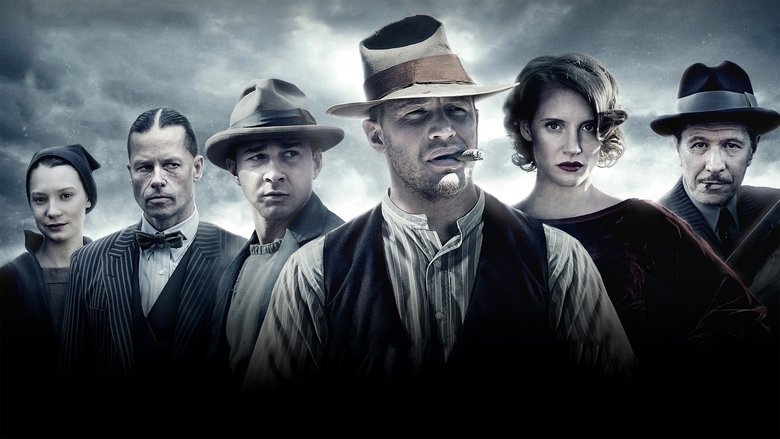
Lawless
2012