Hook
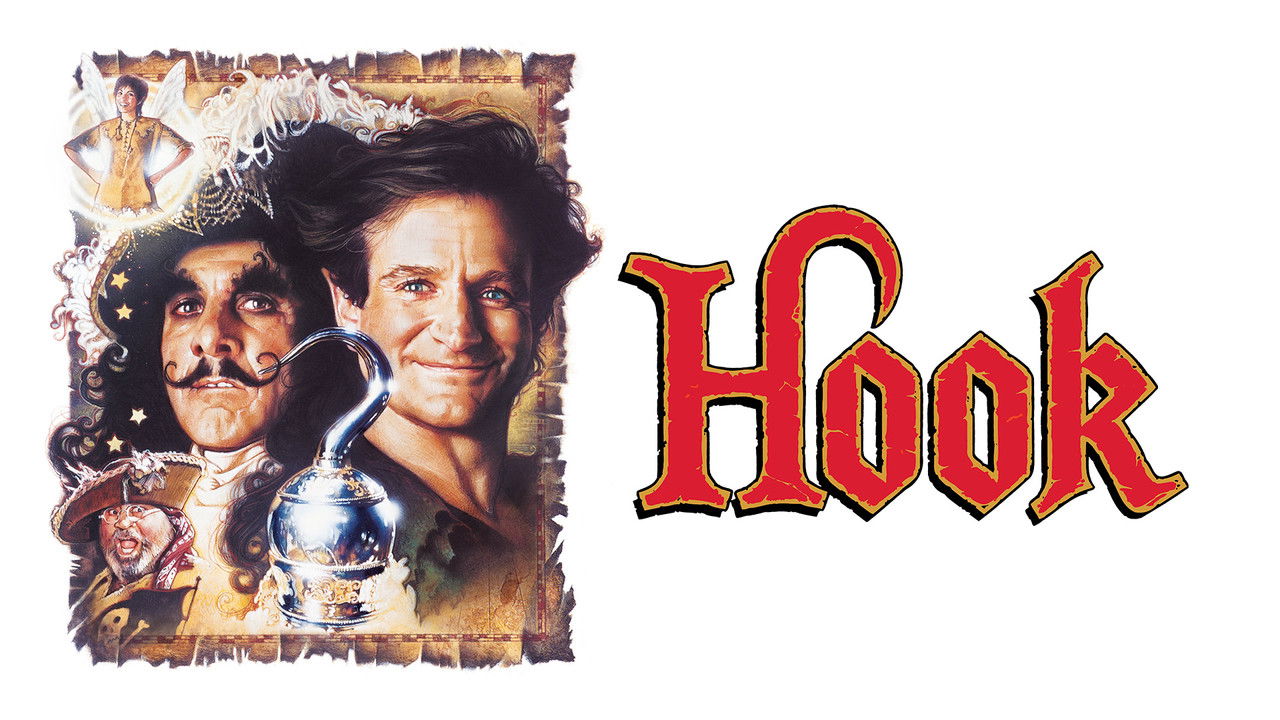
"The legend is old. The Pan is new."
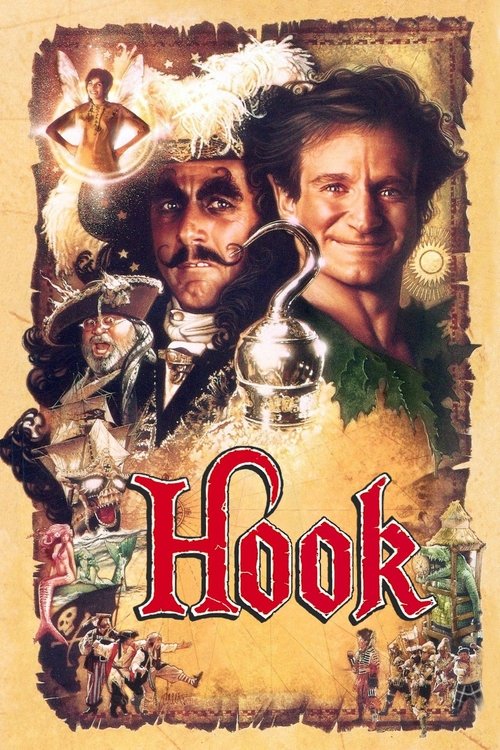
I was watching Hook the other day while trying to peel a particularly stubborn navel orange. Right as Robin Williams finally rediscovered his "happy thought" and took to the skies, a jet of citrus zest shot directly into my left eye. For a few stinging seconds, I was effectively blind, experiencing Neverland as a blurry smear of neon colors and John Williams’ triumphant brass. Honestly? It might be the best way to watch it.
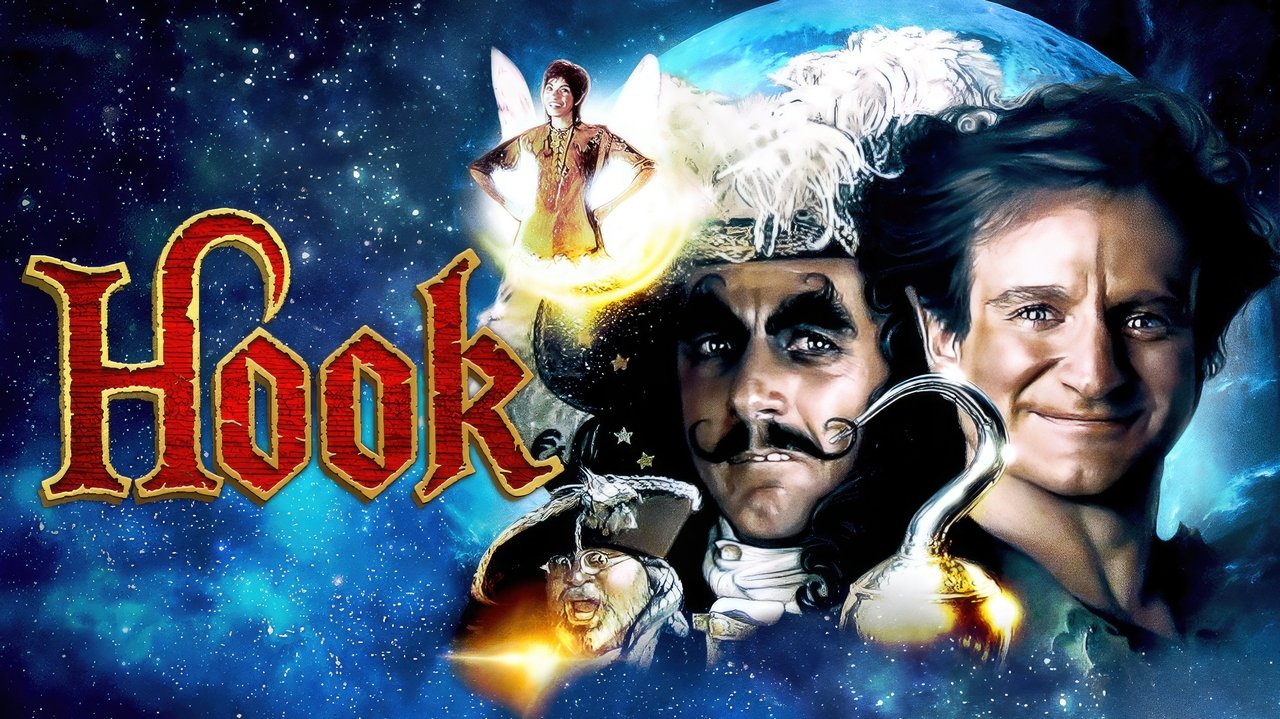
Hook is a film that exists in a strange, shimmering limbo. When it landed in 1991, critics treated it like a bloated carcass of a blockbuster, a sign that Steven Spielberg had finally lost his touch by throwing $70 million at a set that looked like a theme park. But for those of us who grew up with the VHS tape—the one with the gold-bordered cover—this movie wasn't a "failed experiment." It was the definitive version of the myth. Looking back now, it’s a fascinating time capsule from that specific moment when Hollywood was transitioning from the practical magic of the 80s to the digital dominance of the 90s.
The Corporate Pirate of Suburbia
The brilliance of the premise—Peter Pan grows up to be a soulless merger-and-acquisitions lawyer—is pure 90s anxiety. Peter Banning isn't just a bad dad; he’s a man who has replaced imagination with a cellular phone the size of a loaf of bread. Robin Williams plays the early scenes with a repressed, jittery energy that feels uncomfortable because we’re so used to him being the spark in the room.
Watching him struggle to remember how to play is genuinely heartbreaking. It’s the ultimate "Modern Cinema" theme: the loss of innocence in the face of career-driven cynicism. When he finally arrives in Neverland, the film shifts gears into a theatrical maximalism that we just don't see anymore. This wasn't a green-screen void; it was a massive, tangible world built on Stage 27 at Sony Pictures Studios. You can feel the weight of the wood, the texture of the "imaginary" food (which looked like a radioactive tie-dye accident at a Dairy Queen), and the sheer scale of the pirate wharf.
A Masterclass in Pantomime
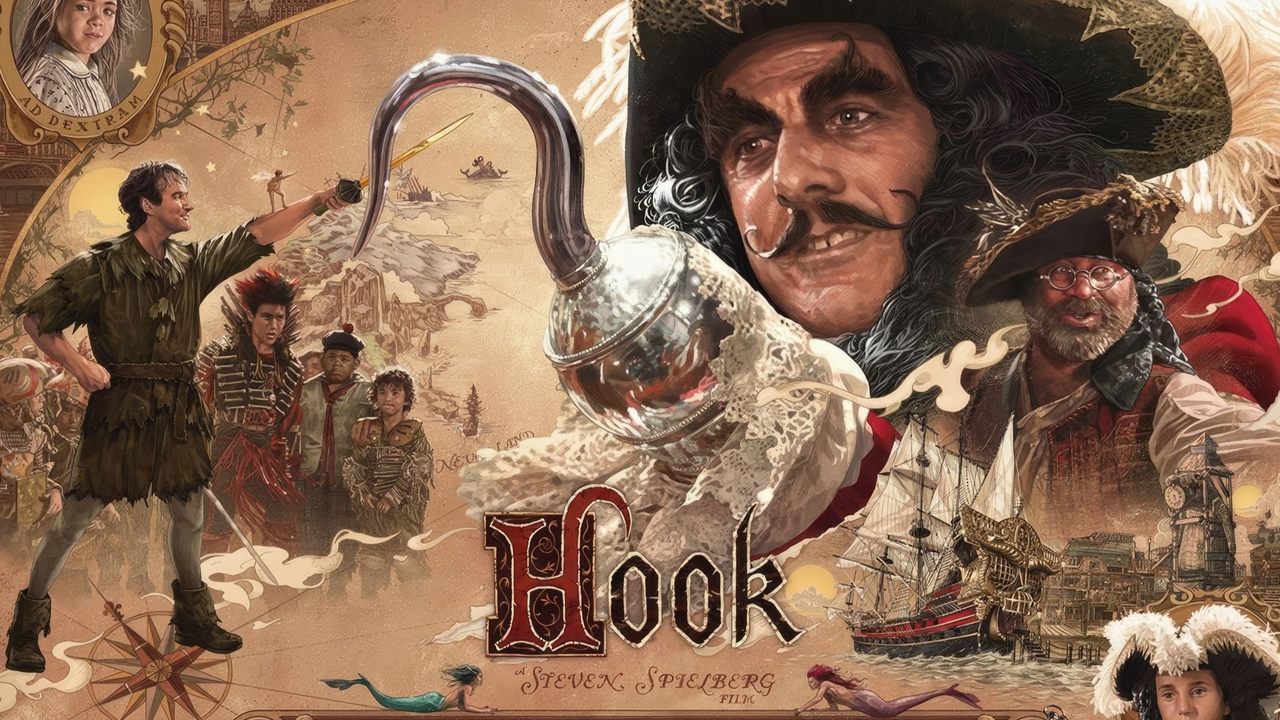
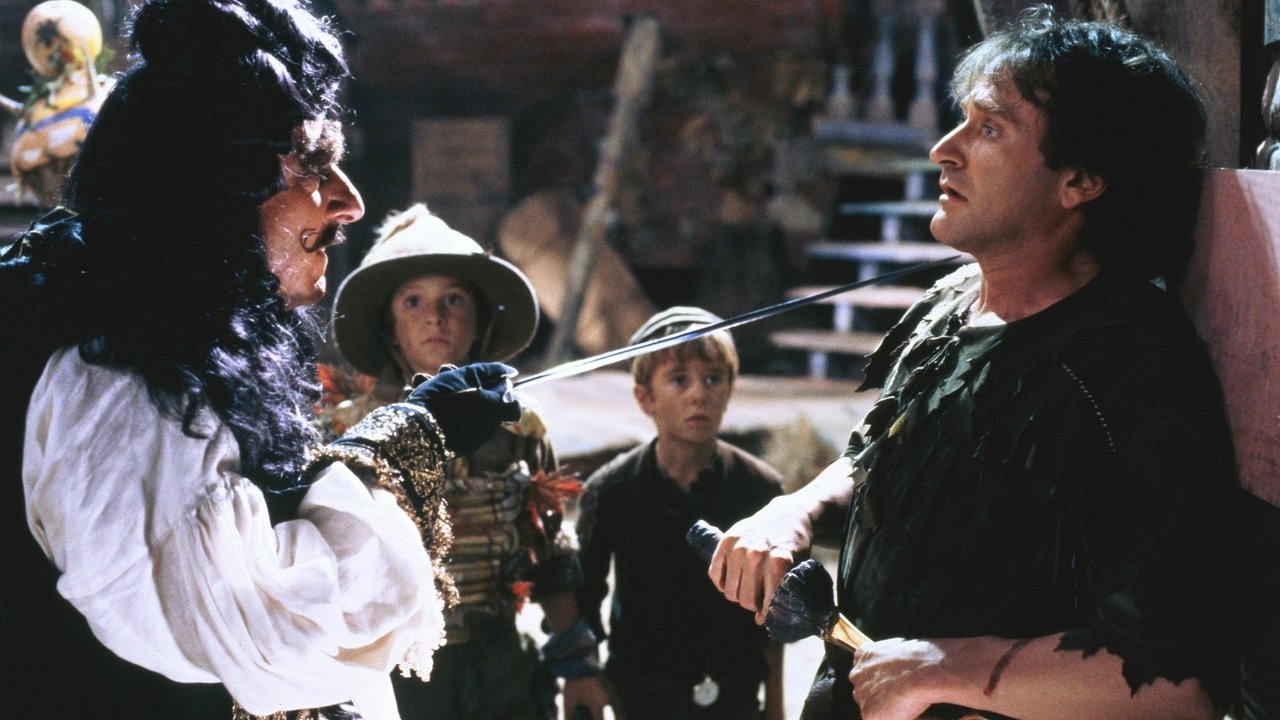
While the kids are the emotional anchor, the movie belongs to the villains. Dustin Hoffman as Captain James Hook is one of the most underrated transformative performances of that decade. Between the prosthetic nose, the powdered wig, and the refined, suicidal melancholy, he’s unrecognizable. He plays Hook not as a monster, but as an aging dandy obsessed with "good form" and his own legacy. His chemistry with Bob Hoskins, who plays Mr. Smee with a bumbling, sycophantic charm, provides the film’s best comedic beats.
Then there’s Julia Roberts as Tinkerbell. Looking back through the lens of production trivia, her performance feels a bit disconnected—mostly because she spent the entire shoot isolated on a separate stage against a blue screen, or being hauled around on complex wire rigs. Rumors of her being difficult on set (earning the nickname "Tinkerhell") were rampant in the tabloids at the time, but on screen, she brings a fragile, unrequited longing to the role that adds a layer of adult sadness to this supposed kids' movie.
The Spectacle of the Practical
What strikes me most in 2024 is how Hook handles its "wonder." This was a massive commercial success, raking in over $300 million worldwide, yet it was snubbed by the prestige crowd. Today, we’d see this world rendered in flawless, sterile CGI. In 1991, Spielberg was still leaning on the tricks of the trade: matte paintings, forced perspective, and thousands of gallons of water.
There’s a sequence where the Lost Boys—who, let's be honest, look like they escaped a high-budget 1990s Gap commercial—engage in a final battle with the pirates. It’s a chaotic, swashbuckling mess of marbles, tomatoes, and egg launchers. It’s tactile. It’s messy. It’s the kind of stunt work that feels dangerous in a way digital doubles never do. Even the cameos are a testament to the film's "event" status: keep your eyes peeled and you'll spot Glenn Close as the pirate tossed into the "Boo Box," and even Phil Collins as a police inspector.
The film is admittedly too long—142 minutes is a lot of time to spend in Neverland—and it occasionally dips into a sugary sentimentality that feels a bit thick. But as a bridge between the analog past and the digital future, it’s a marvel. It’s a film about the fear of growing up, made by a director who was finally starting to do just that, moving toward the more somber territory of Schindler’s List (1993).
Looking back, Hook isn't the disaster the 1991 critics claimed it was. It’s a grand, messy, colorful exploration of what we lose when we stop looking for our happy thoughts. It’s an adventure that feels earned because the stakes—the souls of Peter’s children—actually feel real amidst the theatricality. If you haven't seen it since the days of scan-lines and tracking issues, give it another look. Just watch out for the orange zest.
Keep Exploring...
-

Night at the Museum
2006
-
Shrek
2001
-
Shrek 2
2004
-
Charlie and the Chocolate Factory
2005
-
Shrek the Third
2007
-
Horton Hears a Who!
2008
-

Puss in Boots
2011
-
How to Train Your Dragon 2
2014
-
The Lego Movie
2014
-
Last Action Hero
1993
-

The SpongeBob SquarePants Movie
2004
-
Night at the Museum: Battle of the Smithsonian
2009
-
Night at the Museum: Secret of the Tomb
2014
-
DuckTales: The Movie - Treasure of the Lost Lamp
1990
-

The Swan Princess
1994
-
Casper
1995
-
Hercules
1997
-
Stuart Little
1999
-

The Emperor's New Groove
2000
-
The Road to El Dorado
2000