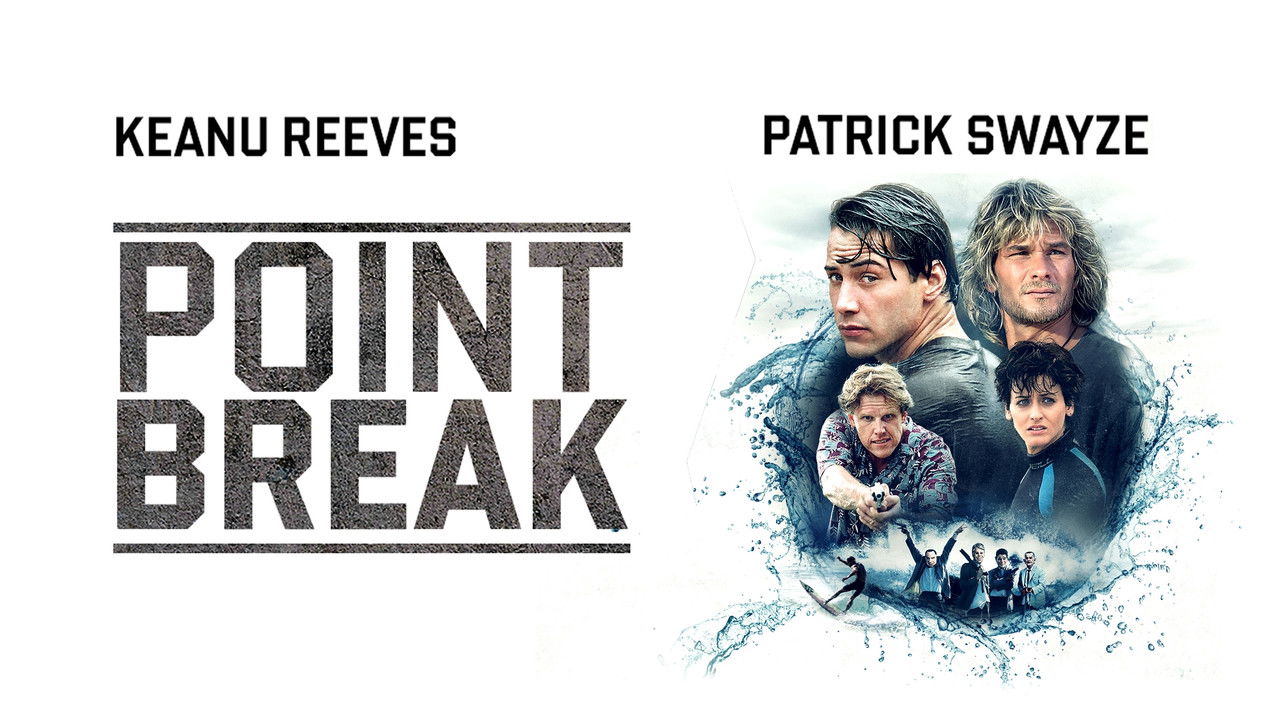
Point Break
"One wave. One law. No turning back."
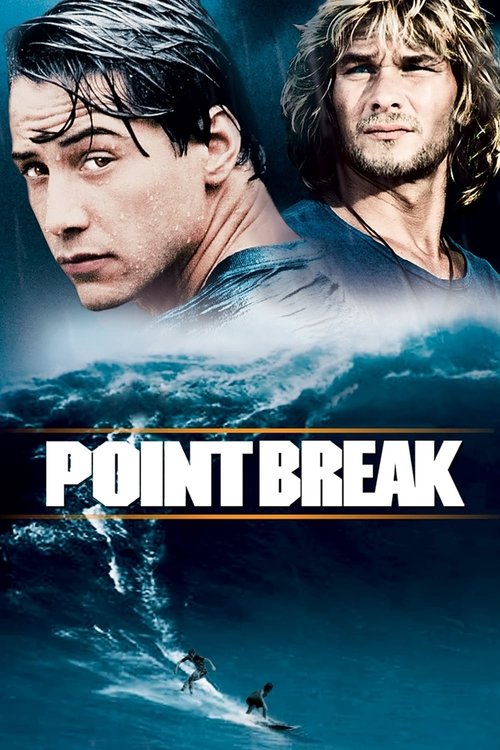
There is a specific, sun-bleached desperation that permeates the Los Angeles of 1991, a city caught between the neon excess of the eighties and the impending gloom of the nineties. It’s a landscape where the American Dream feels like it’s being pawned for surfboard wax and skydiving fuel. In the middle of this transition, Kathryn Bigelow (who would later win an Oscar for The Hurt Locker) delivered a film that on paper sounds like a Saturday Night Live sketch—"FBI agent goes undercover to bust surfing bank robbers"—but on screen becomes a heavy, almost Shakespearean tragedy about the seductive nature of total freedom.
I watched this recently while eating a bag of slightly stale pretzel nuggets, and I realized that the crunching sound perfectly synced with the impact of the footsteps in that legendary foot chase through the back alleys of Venice. It’s those tactile, physical moments that make Point Break feel so much more substantial than the CGI-heavy blockbusters that would eventually colonize the genre.
The Gospel According to Bodhi
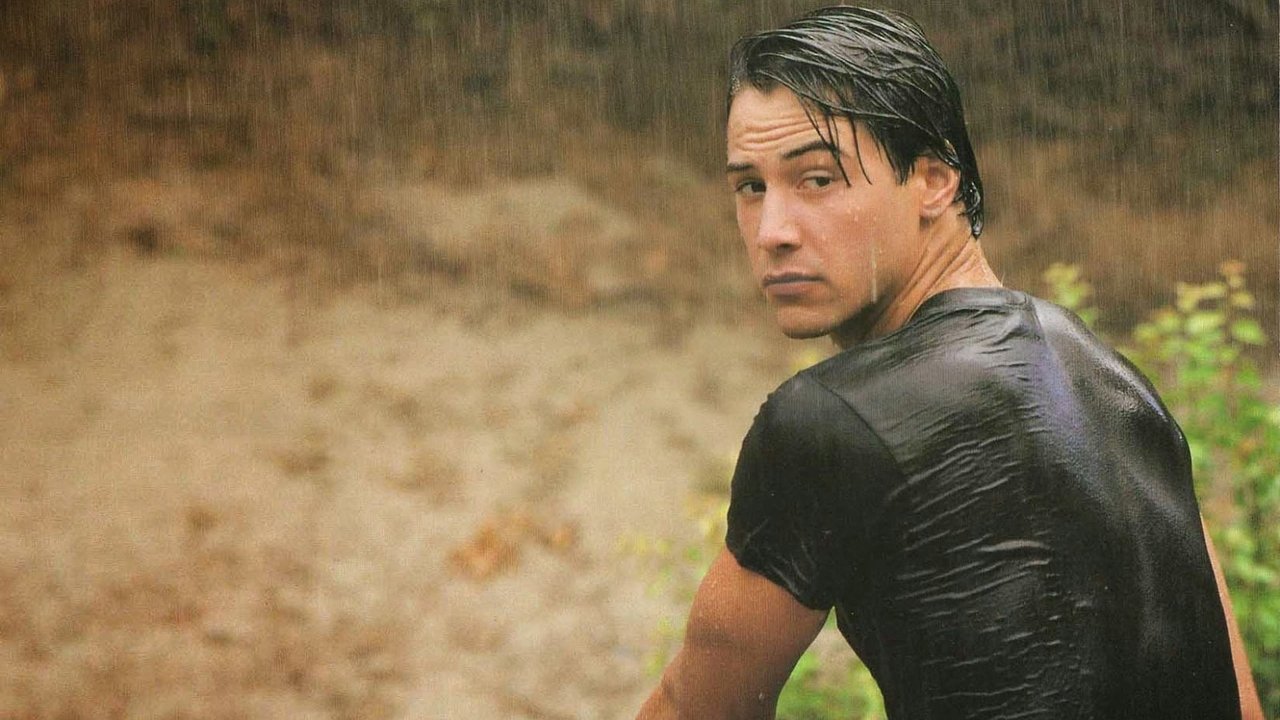
At its core, this isn't just a heist movie; it's a character study of a man being dismantled by his own curiosity. Keanu Reeves, as the wonderfully named Johnny Utah, is the quintessential "young man in a suit" trying to assert authority in a world that doesn't respect it. He’s stiff, he’s earnest, and he is quite possibly the most incompetent FBI agent in cinematic history, letting his heart—and his thirst for adrenaline—get in the way of every single procedure in the manual.
Then there’s Bodhi. Patrick Swayze (fresh off Ghost and Road House) gives a performance that carries a surprising amount of weight. He isn't a cartoon villain. He’s a charismatic cult leader who uses the ocean as his cathedral. When he talks about the "50-year storm," he isn't just talking about weather; he’s talking about a spiritual reckoning. Bigelow shoots him with a reverence that makes you understand why Utah would throw his badge into the ocean. The chemistry between Reeves and Swayze is the engine of the film—a bromance so intense it borders on the devotional, played out through shared jumps and near-death experiences.
Practical Chaos and High Stakes
What truly separates Point Break from its contemporaries is the sheer physicality of the action. We’re looking back at an era where if a character fell out of a plane, a human being actually had to fall out of a plane to capture the shot. Patrick Swayze, a notorious daredevil, actually performed many of his own skydiving stunts. Apparently, the production had to tell him to stop jumping because the insurance company was having a collective heart attack.
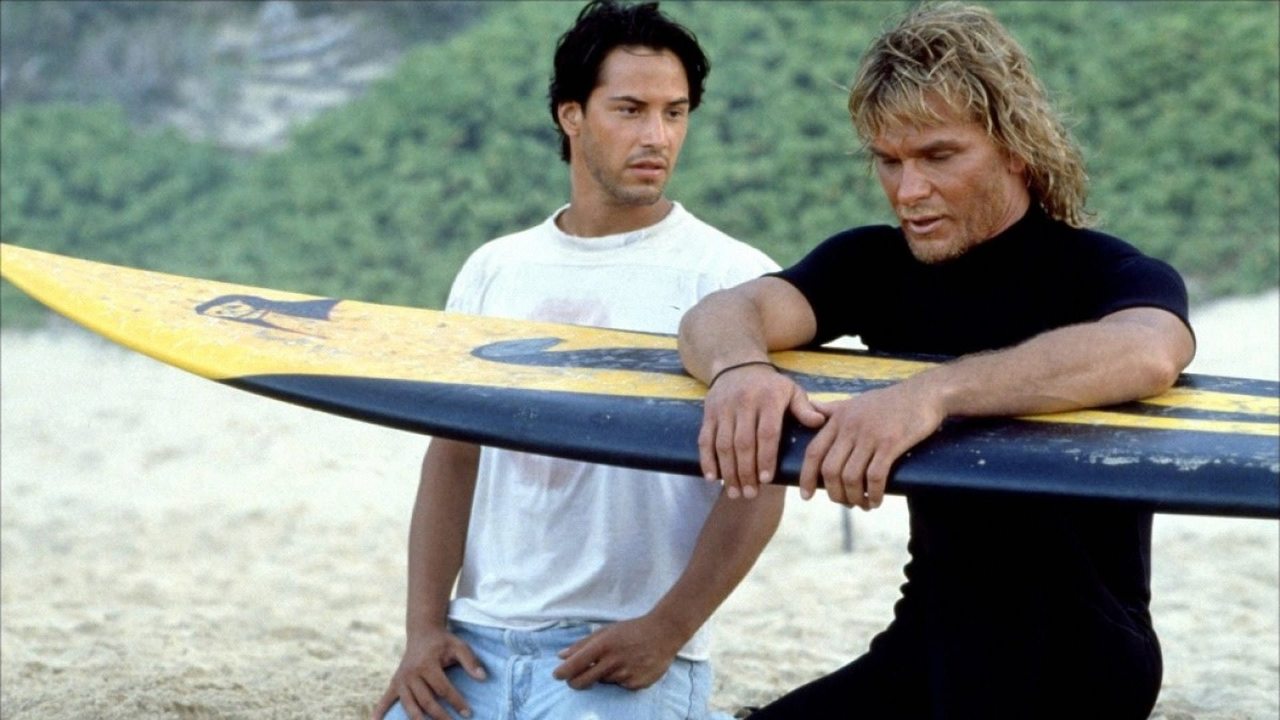
The surfing sequences, too, have a weight to them. Lori Petty, as Tyler, provides the necessary groundedness, acting as the bridge between Utah’s rigid world and the fluid, dangerous world of the Ex-Presidents. Bigelow’s direction during the action is relentless but never confusing. She uses a "Pogo-cam"—a gyroscope-stabilized camera on a pole—to run right behind the actors, giving the foot chases a sense of frantic, breathless urgency. You feel every fence jump and every shattered window. It’s dark, it’s sweaty, and it feels like the characters are genuinely one misstep away from a broken neck.
The Legacy of the Ex-Presidents
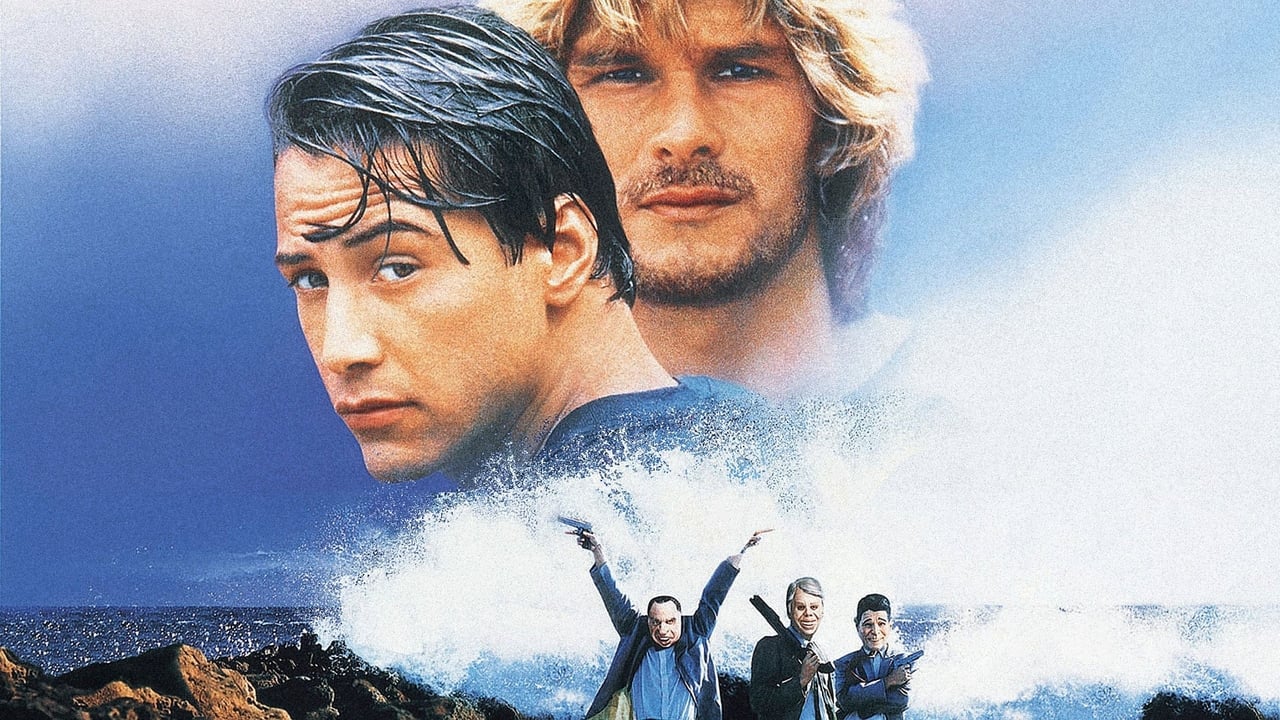
It’s easy to see how this film birthed a thousand imitators (most notably the first Fast and Furious, which is essentially a beat-for-beat remake with cars instead of boards). But those films often miss the fatalism that Bigelow weaves into the narrative. The "Ex-Presidents"—played with a mix of brotherhood and nihilism by actors like James LeGros—aren't just robbing banks for the money; they’re doing it to fund a lifestyle that ultimately consumes them.
The inclusion of Gary Busey as Agent Angelo Pappas adds a layer of grizzled, cynical humor that keeps the movie from drifting too far into the ether. His demand for "two meatball subs" is the stuff of legend, but his performance also hints at the toll this job takes on a person’s soul. By the time we reach the rain-soaked finale at Bells Beach, the "100% pure adrenaline" promised by the tagline has turned into something much more somber. It’s a story about the realization that you can’t live on the edge forever without eventually falling off.
Cool Details
Swayze actually cracked four ribs while filming the surfing scenes, but he kept going because he didn't want the production to stall. The film was originally titled Johnny Utah, but the studio realized that sounded like a Western, so they briefly considered Riders on the Storm. Keanu Reeves actually learned to surf for the role and reportedly still keeps it up as a hobby today. The "Ex-Presidents" masks were chosen specifically because they felt like a mockery of the establishment the surfers were trying to escape. * Before Bigelow took over, the film was in development for years with Ridley Scott attached to direct.
Point Break is the rare action film that managed to capture the specific anxiety of its era while remaining weirdly timeless. It’s a movie that respects the danger of its world, refusing to give its characters an easy out or a clean happy ending. Even three decades later, that final shot of the surf feels like a gut punch. If you haven't revisited this one lately, do yourself a favor: grab a meatball sub, ignore your responsibilities for two hours, and succumb to the ride. It’s still as potent as a rogue wave.
Keep Exploring...
-
Strange Days
1995
-
From Dusk Till Dawn
1996
-

The Boondock Saints
1999
-
John Wick
2014
-
Bound by Honor
1993
-

The Negotiator
1998
-
The Hurt Locker
2008
-
Patriot Games
1992
-
Speed
1994
-
Desperado
1995
-

Falling Down
1993
-
True Romance
1993
-
Natural Born Killers
1994
-

The Crow
1994
-
The Fast and the Furious
2001
-

Kill Bill: Vol. 2
2004
-
Undisputed II: Last Man Standing
2006
-
United 93
2006
-
Street Kings
2008
-
Hard Boiled
1992