Robin Hood: Prince of Thieves
"The legend lives, but the Sheriff steals the show."
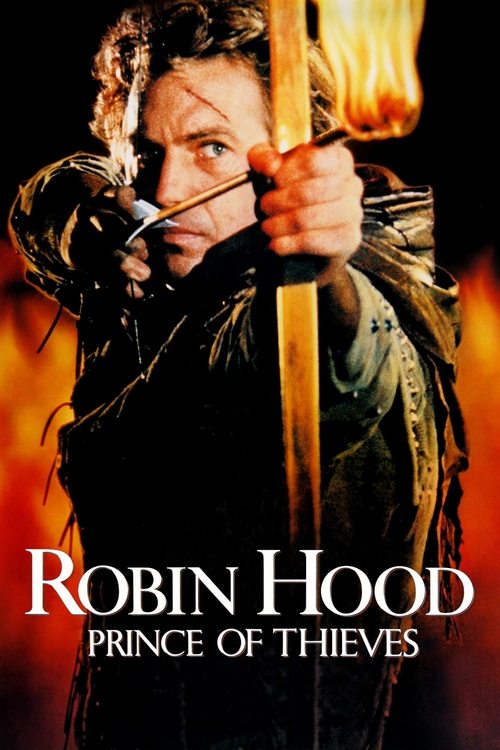
1991 was a bizarre year where we collectively decided that the most convincing way to play a British folk hero was with a mild California drawl and a very expensive mullet. Yet, despite the linguistic confusion, Robin Hood: Prince of Thieves became an absolute juggernaut. It was the kind of movie that dominated the cultural conversation for months, fueled by a record-breaking power ballad and the sheer, unadulterated charisma of Alan Rickman. I recently revisited it on a grainy DVD I found at a garage sale—the case still smelled faintly of old basement and dryer sheets—and I was struck by how much this film represents the "Blockbuster Transition" era.
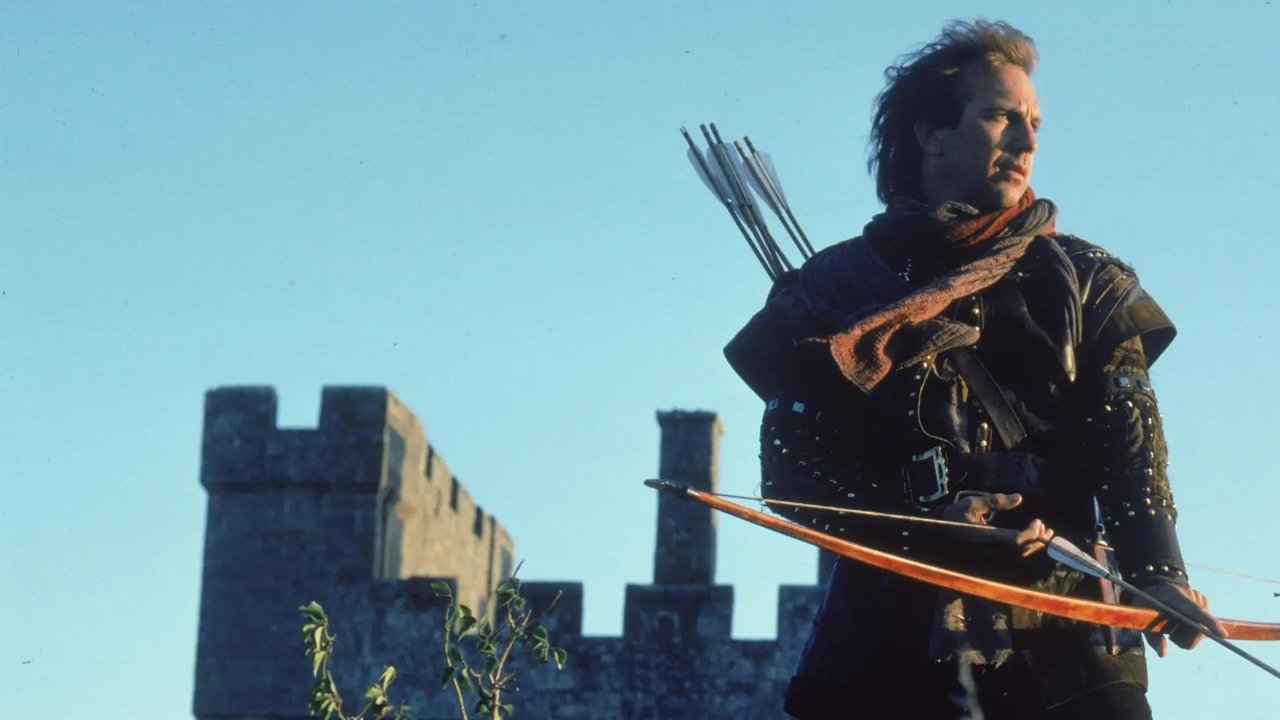
This isn't the sanitized, polished CG-fest we see in modern reboots. It’s a dirty, sweaty, oddly violent adventure that feels like it’s straining against its own 140-minute runtime. It’s a movie that wants to be Dances with Wolves (1990) in the woods but ends up being a showcase for one of the greatest villainous performances in cinema history.
The Rickman Masterclass and the Costner Question
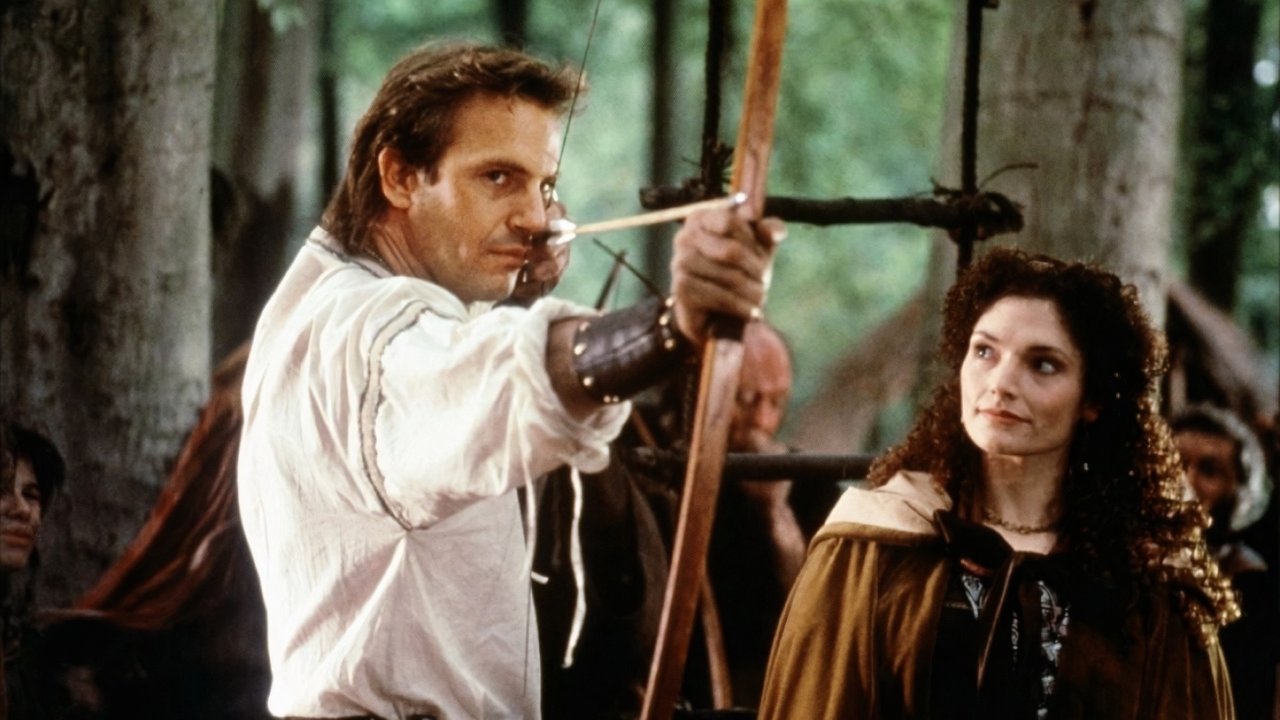
The elephant in the room has always been Kevin Costner. Coming off an Oscar-winning streak, Costner was the biggest star on the planet, and he plays Robin of Locksley with a sincerity that almost makes you forget he’s not even trying to sound English. He’s athletic, he’s earnest, and he wields a longbow like he’s trying to win a World Series with it. But the movie doesn't truly breathe until Alan Rickman swaggers onto the screen as the Sheriff of Nottingham.
Rickman reportedly turned the role down twice until director Kevin Reynolds (who also helmed Waterworld) gave him total creative freedom to "doctor" his lines. The result is legendary. While everyone else is acting in a gritty historical drama, Rickman is in a high-camp dark comedy. His delivery of "And call off Christmas!" is the stuff of legend. He’s not just a villain; the Sheriff is essentially a Goth middle-manager having a very public breakdown. Without him, the film would likely have faded into the "pretty good" pile of the early 90s. Instead, he elevates it into something magnetic.
Practical Peril and the "Arrow Cam"
Before the MCU made us accustomed to digital everything, action had a different weight. Prince of Thieves features some genuinely impressive practical work. The Sherwood Forest treehouse village is a massive, tangible set that you can almost feel the splinters on. When the Sheriff’s men raid the camp, the chaos is filmed with a frantic, handheld energy that captures the panic of the outlaws.
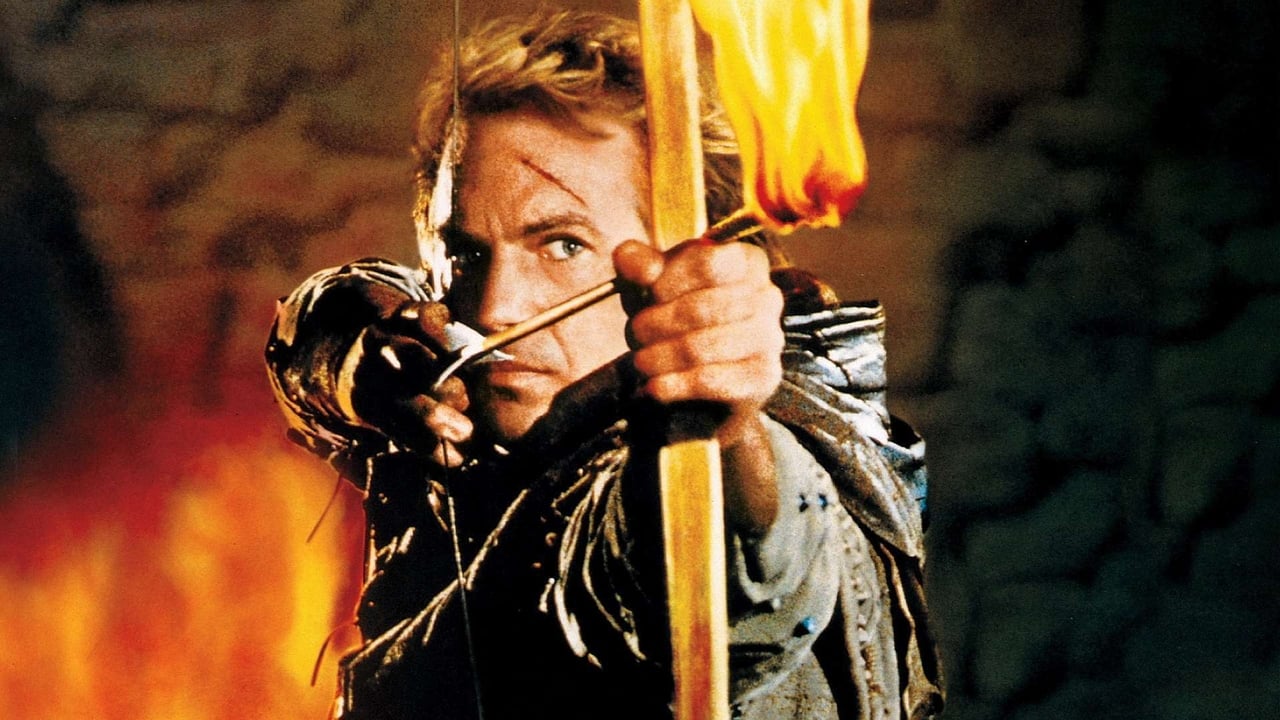
The standout "high-tech" moment of 1991 was the POV shot of the flaming arrow. In the pre-CGI-dominance era, this was a "how did they do that?" moment for audiences. It used a mix of clever camera rigging and early optical effects to give us a perspective we hadn't seen before. It’s the direct ancestor to the "bullet time" we’d see later in The Matrix (1999).
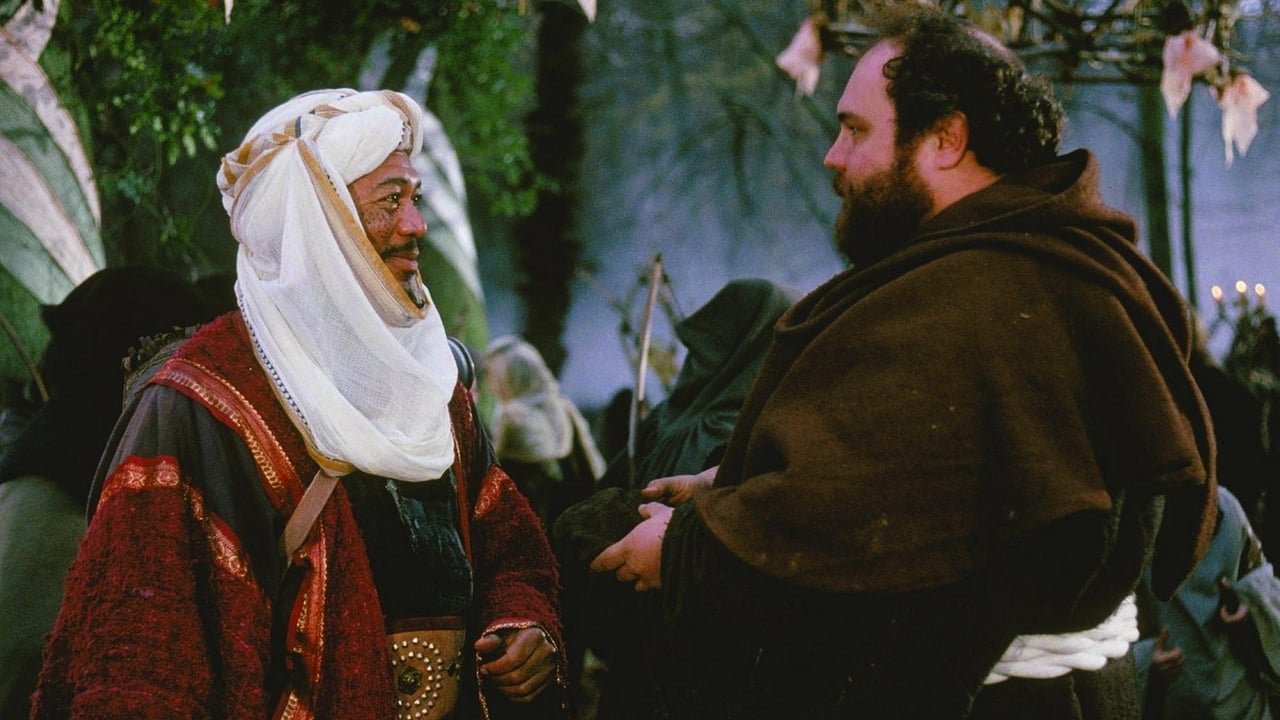
The action choreography by Kevin Reynolds and his team emphasizes the brutality of the era. The opening escape from the Jerusalem prison is dark and claustrophobic, introducing Morgan Freeman as Azeem. Freeman brings a level of gravitas to the "Moorish companion" role that was revolutionary for a Robin Hood adaptation. He’s the intellectual superior to almost everyone in the film, and his chemistry with Costner provides the emotional spine that the script (written by Pen Densham and John Watson) occasionally forgets to polish.
A Cultural Snapshot of the Nineties

You cannot talk about this film without mentioning the music. Michael Kamen—the genius behind the scores for Die Hard (1988) and Lethal Weapon—created a heroic theme so iconic that Morgan Creek Entertainment used it as their production logo for decades. Then, of course, there’s Bryan Adams. "(Everything I Do) I Do It for You" was inescapable. It stayed at #1 in the UK for sixteen consecutive weeks. I remember watching this film on a VHS tape that had a "Be Kind, Rewind" sticker partially peeled off, which left a sticky residue that attracted cat hair, and even through the fuzz of a third-generation copy, that song made the ending feel more epic than it probably was.
The film also features a delightful, moody performance from Christian Slater as Will Scarlett. Fresh off Heathers (1988), Slater brings a "disaffected 90s teen" energy to the 12th century that somehow works. And let's not forget Mary Elizabeth Mastrantonio as Marian. She’s not a damsel in distress; she’s a noblewoman who holds her own in a sword fight, reflecting the burgeoning "strong female lead" trend of the early 90s.
The production was famously troubled—Costner and Reynolds clashed frequently, and the budget ballooned to $48 million (a massive sum at the time). But the gamble paid off. It grossed over $390 million worldwide, proving that audiences were hungry for large-scale, romantic adventures that felt "real" rather than staged.
Ultimately, Robin Hood: Prince of Thieves is a glorious mess. It’s too long, the accents are a disaster, and it takes itself way too seriously at times. But it’s also undeniably entertaining. It has a heart of gold, a villain for the ages, and a sense of scale that modern green-screen blockbusters often struggle to replicate. It captures that specific moment in cinematic history where practical stunts were meeting early digital ambition, all wrapped in the golden glow of early 90s stardom. It’s the ultimate Friday night movie—best served with a large bowl of popcorn and a willingness to ignore the geography of the English coastline.
Keep Exploring...
-
The Count of Monte Cristo
2002
-
Waterworld
1995
-
Wyatt Earp
1994
-

The Bodyguard
1992
-
Twister
1996
-

The Man in the Iron Mask
1998
-
The Karate Kid
2010
-
1492: Conquest of Paradise
1992
-
The Three Musketeers
1993
-

Crouching Tiger, Hidden Dragon
2000
-

Hero
2002
-
xXx
2002
-
Risen
2016
-
Days of Thunder
1990
-
Maverick
1994
-
First Knight
1995
-

Outbreak
1995
-
DragonHeart
1996
-
Executive Decision
1996
-
Red Cliff
2008