Aladdin
"Wish fulfillment has never been this fast and frantic."
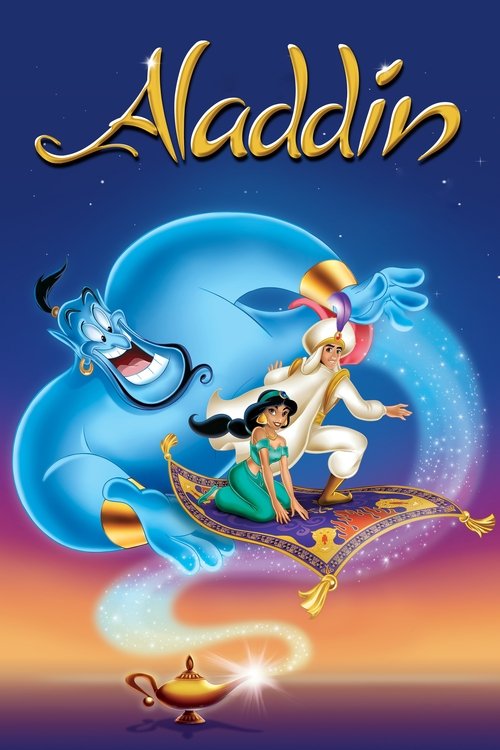
There is a specific, crackling energy to Aladdin that suggests the animators at Disney were finally allowed to drink as much espresso as they wanted after the polished, Broadway-style sincerity of Beauty and the Beast. While the "Disney Renaissance" is often defined by its sweeping romances and Alan Menken ballads, this 1992 outing feels like the moment the studio realized they could also be a little bit dangerous, a little bit snarky, and incredibly fast. It’s an adventure film that moves with the velocity of a pinball machine, and thirty-odd years later, it hasn't lost a single mile per hour.

I watched this most recently while nursing a lukewarm cup of chamomile tea that I’d forgotten to put honey in, and even with that mild domestic tragedy occurring in my lap, the opening notes of "Arabian Nights" still gave me goosebumps. It’s a film that demands your attention from the first frame.
The Robin Williams Variable
We have to talk about the blue guy in the room. Before 1992, celebrity voice acting was usually a subtle affair—you’d hire a recognizable voice to bring weight to a character. Then Robin Williams stepped into the recording booth and essentially rewrote the rules of the medium. As the Genie, Williams isn't just a character; he’s a tectonic shift in animation history. His improvisational whirlwind forced the animators to abandon traditional, rigid storyboarding in favor of a more fluid, "let’s see if we can keep up" style.
The Genie’s rapid-fire pop culture references—Arnold Schwarzenegger, Ed Sullivan, Groucho Marx—technically should have dated the movie by 1996. Yet, they work because they are anchored by a genuine emotional core. Williams brings a frantic pathos to the Genie’s desire for freedom that balances the "Friend Like Me" spectacle. It’s a performance so dominant that it’s easy to overlook Scott Weinger as Aladdin, who manages to make the "street urchin" archetype likable rather than grating, and Linda Larkin, who gives Jasmine a backbone that was arguably sturdier than any Disney princess who came before her.
A Masterclass in 2D Adventure
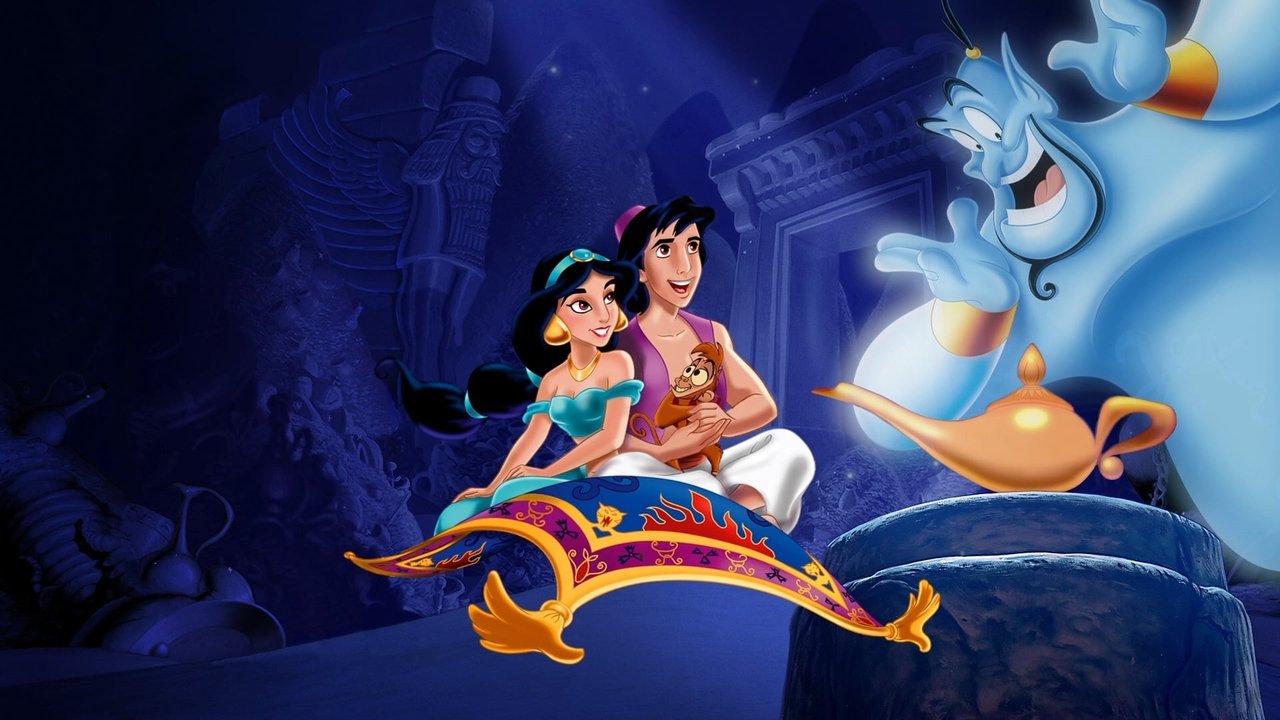
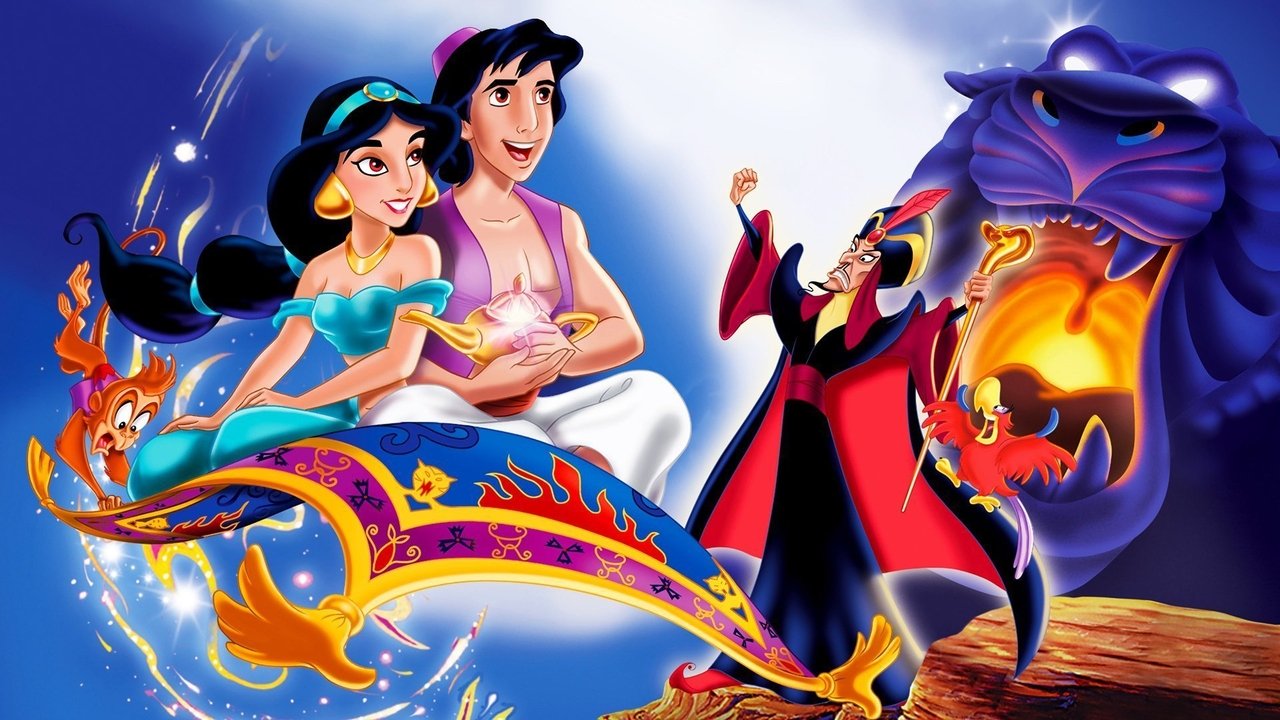
From an adventure standpoint, Aladdin is flawlessly paced. The "One Jump Ahead" sequence is a masterclass in vertical level design—if this were a video game, it’d be the perfect tutorial. The Cave of Wonders, however, is where the film truly flexes its 1990s muscles. This was the era where Disney began experimenting with CGI to enhance their hand-drawn worlds. The tiger-head entrance and the subsequent lava escape are early examples of digital environments that actually serve the tension rather than just showing off.
Looking back, the Magic Carpet is perhaps the most underrated technical achievement in the film. It’s a character with no face and no voice, yet it has more personality than most live-action leads today. The way the animators used computer-generated patterns on the carpet’s "skin" allowed it to maintain its intricate detail while moving through 3D space. It creates a sense of tactile wonder that makes the "A Whole New World" sequence feel like a genuine flight rather than a green-screen simulation. Jonathan Freeman as Jafar provides the perfect counterweight to all this wonder. He is a deliciously dry villain, and Gilbert Gottfried as Iago is, frankly, the only way a talking parrot should ever be portrayed. Jafar’s plan is actually incredibly inefficient for a guy with a talking parrot, but his aesthetic—all sharp angles and swirling capes—is peak villainy.
The Blockbuster Legacy
Aladdin wasn't just a hit; it was a cultural steamroller. Produced on a budget of roughly $28 million, it went on to gross over $500 million worldwide, becoming the highest-grossing film of 1992. This was the moment Disney became a merchandising supernova. I’m fairly certain that by 1993, every household in the Western world owned at least one plastic Genie toy or a VHS tape with that iconic purple spine.
What’s fascinating about the film’s legacy is how it transitioned Disney from the "analog" feel of the 1980s into the digital-forward mindset of the 90s. It proved that "Family" movies could be irreverent and meta without losing their soul. It also sparked a massive industry trend of hiring A-list stars for voice roles, a move that changed Hollywood’s business model forever (for better or worse). It’s also worth noting the sheer "adventure" of the production itself—the film was famously overhauled mid-production (the "Black Friday" rewrite) where they aged Aladdin up and cut his mother from the script to make the story leaner. The decision to pivot Aladdin from a scrawny kid to a "Young Tom Cruise" type was the ultimate 90s executive move, and honestly, it’s a big reason why the chemistry with Jasmine actually clicks.
Ultimately, Aladdin survives the "5-minute test" with flying colors because it never stops trying to entertain you. Every background character in Agrabah has a distinct silhouette, every lyric by Alan Menken, Howard Ashman, and Tim Rice is a narrative engine, and the animation remains some of the most vibrant to ever come out of the Burbank studio. It’s a film about breaking out of the boxes people put us in—whether you’re a princess in a palace, a thief in the streets, or a cosmic being in a lamp. It’s a high-adventure classic that feels just as electric today as it did on a dusty VHS tape in the mid-90s.
Keep Exploring...
-

The Return of Jafar
1994
-

Aladdin and the King of Thieves
1996
-
Hercules
1997
-
Treasure Planet
2002
-
The Princess and the Frog
2009
-
Shrek 2
2004
-
The Little Mermaid
1989
-
Beauty and the Beast
1991
-
Shrek
2001
-
The Road to El Dorado
2000
-

The SpongeBob SquarePants Movie
2004
-

Pocahontas
1995
-
DuckTales: The Movie - Treasure of the Lost Lamp
1990
-
A Goofy Movie
1995
-
How to Train Your Dragon
2010
-

Frozen
2013
-
How to Train Your Dragon 2
2014
-
The Lego Movie
2014
-
The Rescuers Down Under
1990
-
Hook
1991