Army of Darkness
"Medieval dead. Modern ego. Groovy."
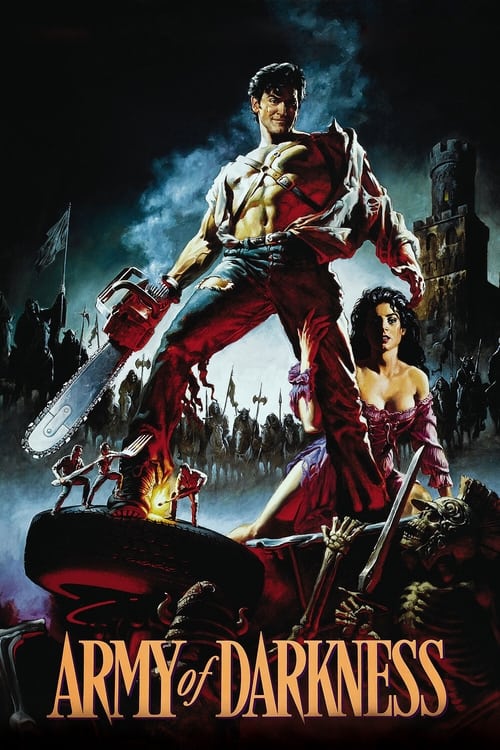
There is a specific kind of cinematic magic that happens when a director stops caring about logic and starts caring about how many different household objects he can hit his lead actor in the face with. I first experienced this particular brand of chaos while watching Army of Darkness on a humid Tuesday evening, nursing a lukewarm Dr. Pepper and trying to figure out why my cat was so offended by the sound of a chainsaw. It’s a movie that defies the standard laws of franchise physics, taking a cabin-in-the-woods horror series and punting it directly into the sun—or rather, into 1300 A.D.

By the time Sam Raimi got around to the third installment of his Evil Dead saga, he wasn't just making a horror movie anymore; he was making a live-action cartoon with a "Splatterstick" heart. This is 1992 filmmaking at its most ambitious and unhinged, standing right on the precipice of the CGI revolution that Jurassic Park would kick off only a year later. It’s the final, glorious stand of the analog era, where stop-motion skeletons and front-projection backgrounds provided a texture that a modern rendering farm just can’t replicate.
The Chin That Conquered Time
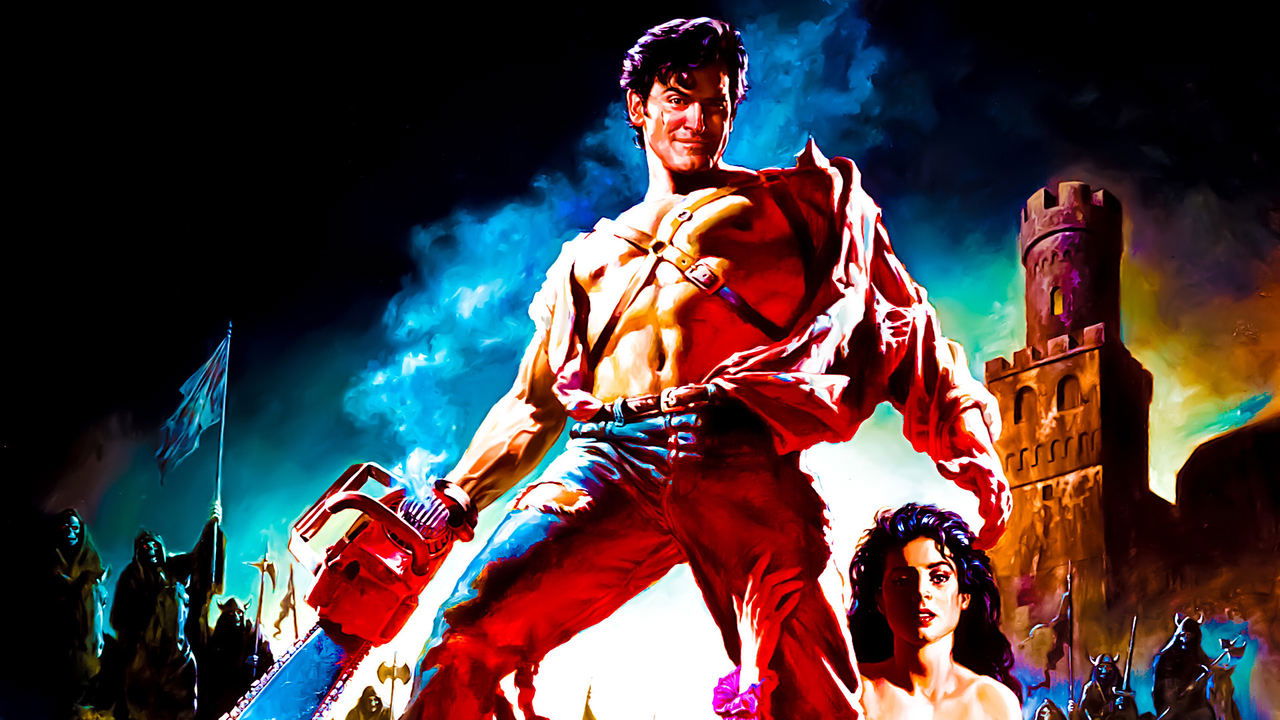
At the center of this hurricane is Bruce Campbell. If Sam Raimi is the conductor of this madness, Campbell is the crash-test dummy. His performance as Ash Williams is a masterclass in "The Cocky Moron." He is a department store clerk with the soul of a 1940s action hero and the IQ of a wet brick. Looking back, Ash is essentially the anti-hero we didn't know we needed: a man who is consistently responsible for his own misfortune but manages to fail upward through sheer, stubborn grit.
The physical comedy here is peerless. Whether he’s fighting tiny versions of himself or getting his hair pulled by a "She-Bitch" in a pit, Campbell commits with a rubber-faced intensity that feels like a tribute to Buster Keaton. It’s easy to forget that Embeth Davidtz is in this movie as Sheila—long before she was in Schindler’s List—and she plays the "maiden in distress who becomes a Deadite hag" with incredible sport. The chemistry isn't about romance; it's about two people trying to survive a script that wants to cover them in as much corn syrup and red dye as humanly possible.
Stop-Motion and S-Mart Style
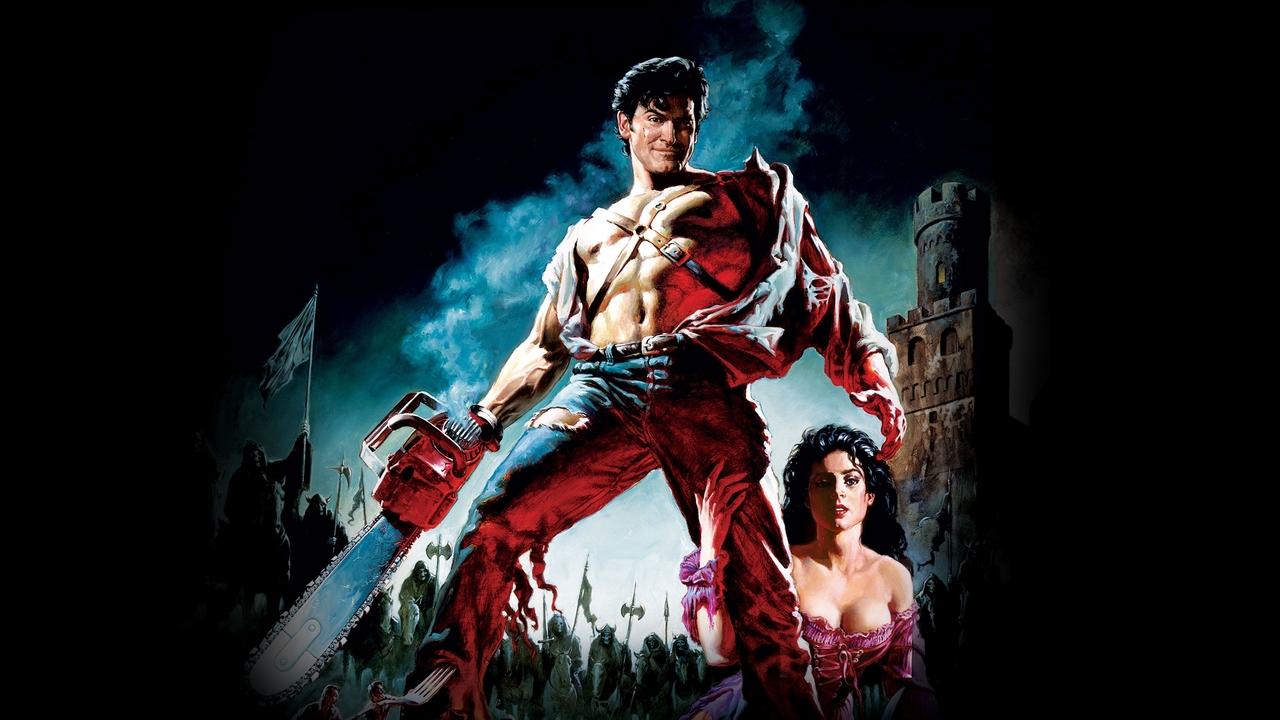
Visually, Army of Darkness is a feast of "How did they do that?" moments. Bill Pope (who would later shoot The Matrix) gives the Dark Ages a dusty, epic feel that punches way above its $11 million budget. The film utilized a process called Introvision, a sophisticated front-projection technique that allowed Ash to interact with massive, miniature, or fantastical environments without the fuzzy edges of traditional bluescreen.
Then there are the skeletons. The "Pit Bitch" and the skeletal army are a loving, clattering homage to Ray Harryhausen. There’s something so tactile about those stop-motion bones; they have a jittery, unnatural energy that CGI often smooths over. Joseph LoDuca’s score, supplemented by a "March of the Dead" theme by Danny Elfman, elevates the whole thing to a dark fantasy epic. I’ve always felt that the skeletal bridge-building scene is the peak of 90s practical effects. It’s goofy, sure, but it’s undeniably there.
The Stuff You Didn’t Notice
The production of Army of Darkness was almost as chaotic as the plot. Originally titled Medieval Dead, the film sat on a shelf for a while because of a legal dispute between Universal and Dino De Laurentiis over the rights to the character of Hannibal Lecter (it’s a long story). This delay actually helped fuel the film’s cult status; by the time it hit VHS, the anticipation among horror fans was at a fever pitch.
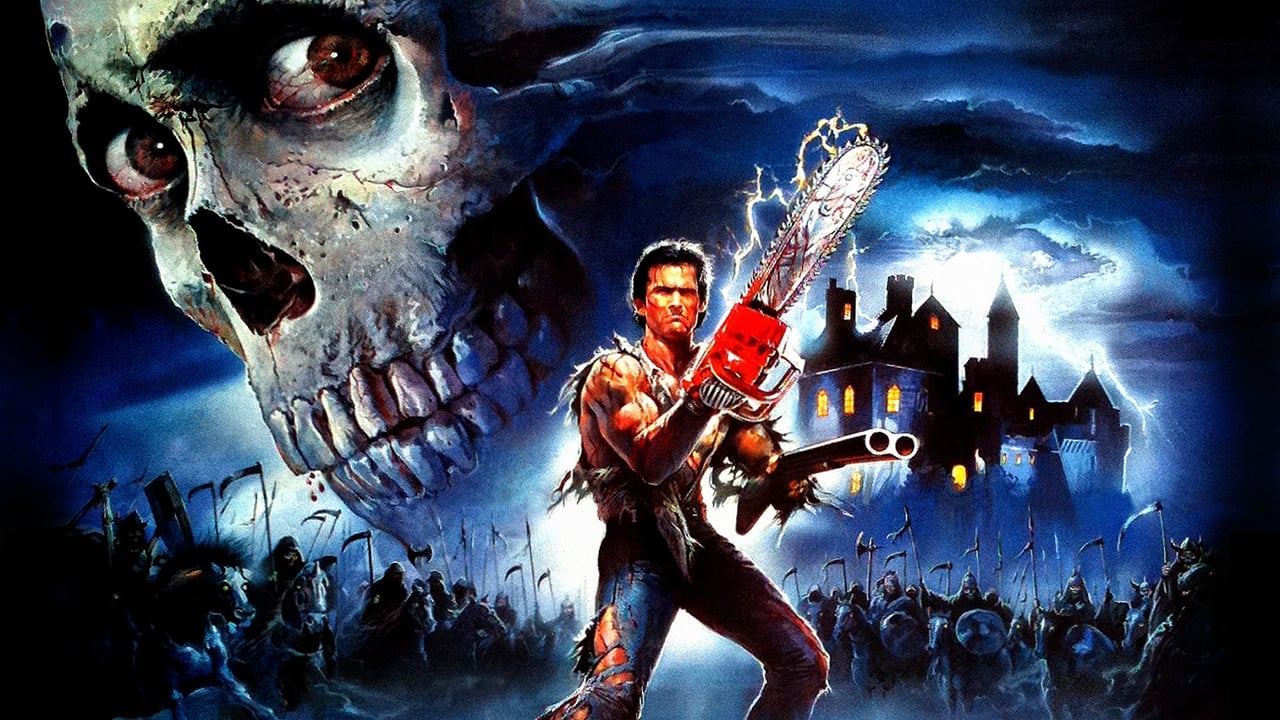
1. The Alternate Ending: There are two ways this movie ends. The theatrical version sees Ash back at S-Mart, being a hero. The original "Director’s Cut" ending is a total downer where Ash oversleeps and wakes up in a post-apocalyptic wasteland. Personally, the S-Mart ending is the superior choice because the original ending is a total buzzkill. 2. The Classic: As with all Sam Raimi films, his 1973 Oldsmobile Delta 88 (The Classic) makes an appearance. In this movie, it’s converted into a "Death-coaster" with spinning blades. 3. The Words: The incantation "Klaatu Barada Nikto" is a direct lift from the 1951 sci-fi classic The Day the Earth Stood Still. 4. Ash's Book: The Necronomicon used in the film was actually quite heavy and difficult to lug around, leading Campbell to develop a very real resentment toward the prop. 5. The Title: Universal didn't want the word "Dead" in the title, fearing it would scare off mainstream audiences, which is how we ended up with the much more "Action-Adventure" sounding Army of Darkness.
Army of Darkness is the ultimate "comfort movie" for people who like their comedy dark and their action absurd. It represents a pivot point in cinema—the moment where the DIY spirit of the 80s met the polished production values of the 90s. It’s a film that knows exactly what it is and invites you to join in on the joke. It’s loud, it’s fast, and it features a man attaching a chainsaw to his stump with the casualness of someone putting on a watch.
Watching it today, the film hasn't aged so much as it has ripened. The practical effects feel like a lost art form, and Bruce Campbell’s one-liners have become the foundational text for a generation of genre fans. It’s a reminder that you don't need a $200 million budget to create a masterpiece of world-building; you just need a car, a camera, and a leading man willing to be tortured for our amusement. Hail to the king, baby.
Keep Exploring...
-
Evil Dead II
1987
-

The Evil Dead
1981
-
Drag Me to Hell
2009
-
Tremors
1990
-
Groundhog Day
1993
-
Hocus Pocus
1993
-
Gremlins 2: The New Batch
1990
-
Death Becomes Her
1992
-

Porco Rosso
1992
-
Last Action Hero
1993
-
The Visitors
1993
-
Hercules
1997
-
Dogma
1999
-

Stranger Than Fiction
2006
-

Trick 'r Treat
2007
-

The Cabin in the Woods
2012
-
Matilda
1996
-

Slayers Return
1996
-

DuckTales: The Movie - Treasure of the Lost Lamp
1990
-

The Muppet Christmas Carol
1992