Braindead
"The goriest home movie ever made."
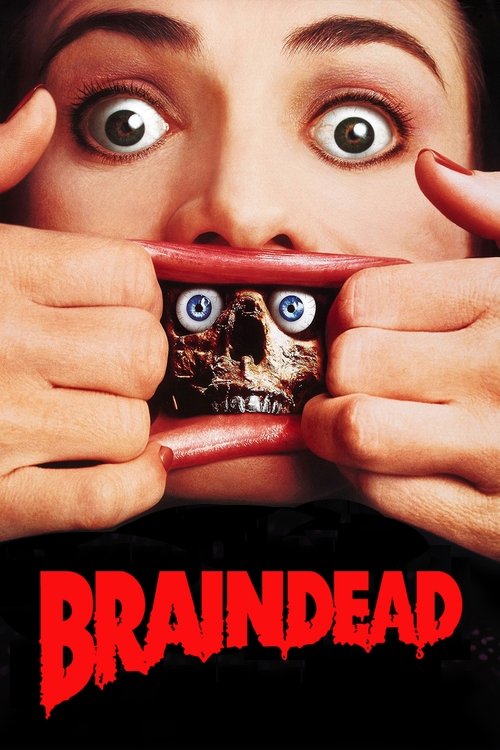
Before Peter Jackson became the architect of Middle-earth and the man who single-handedly turned New Zealand into a global film hub, he was just a guy with a very sick sense of humor and a seemingly infinite supply of fake blood. I first saw Braindead (released as Dead Alive in North America) on a grainier-than-usual VHS tape I’d rented from a shop that smelled exclusively of popcorn salt and floor wax. I watched it while eating a bowl of very runny oatmeal, a choice I regretted deeply within the first twenty minutes, yet I couldn't look away. It’s a film that demands your full attention, mostly so you can make sure none of its madness spills out into your living room.
A New Kind of Family Drama
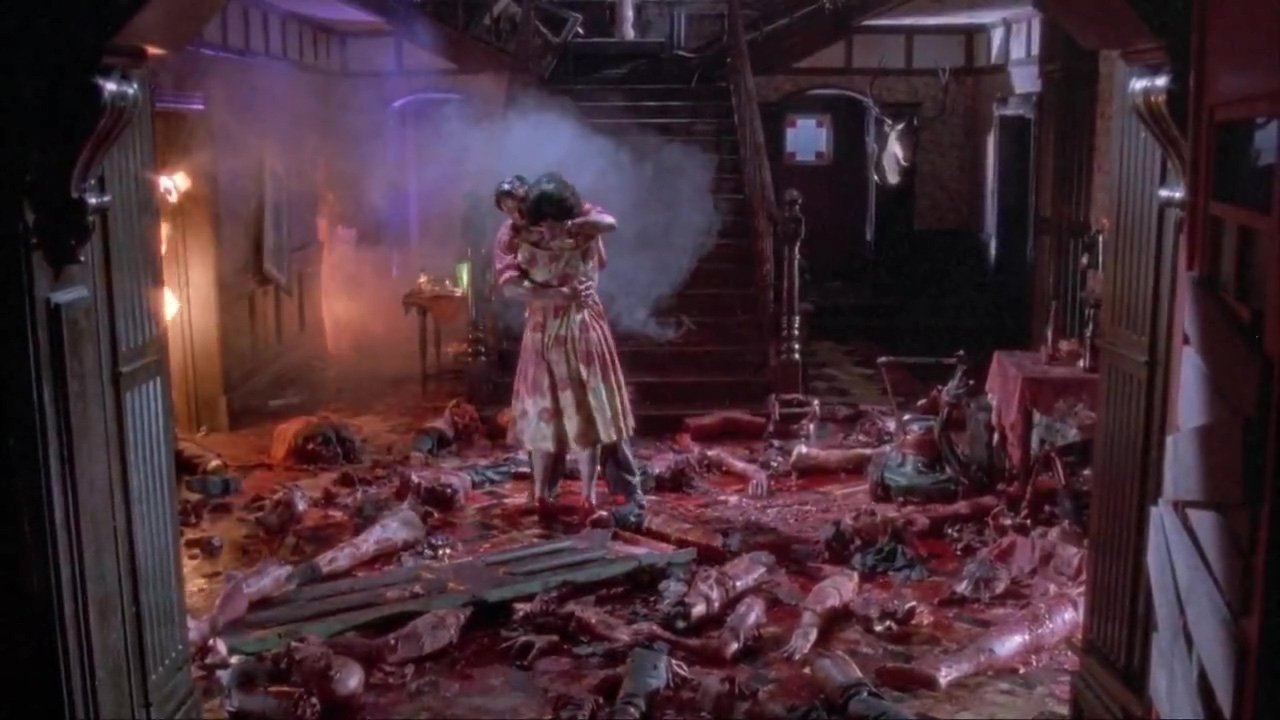
At its heart, Braindead is a sweet, weirdly traditional story about a boy trying to escape the shadow of his overbearing mother. That mother just happens to be Elizabeth Moody, who plays Vera Cosgrove with a Victorian nastiness that would make Miss Havisham look like a ray of sunshine. When Vera is bitten by a Sumatran Rat-Monkey at the zoo—an animatronic creature that looks like it was constructed from nightmares and discarded dryer lint—she begins a slow, oozing transformation into a zombie.
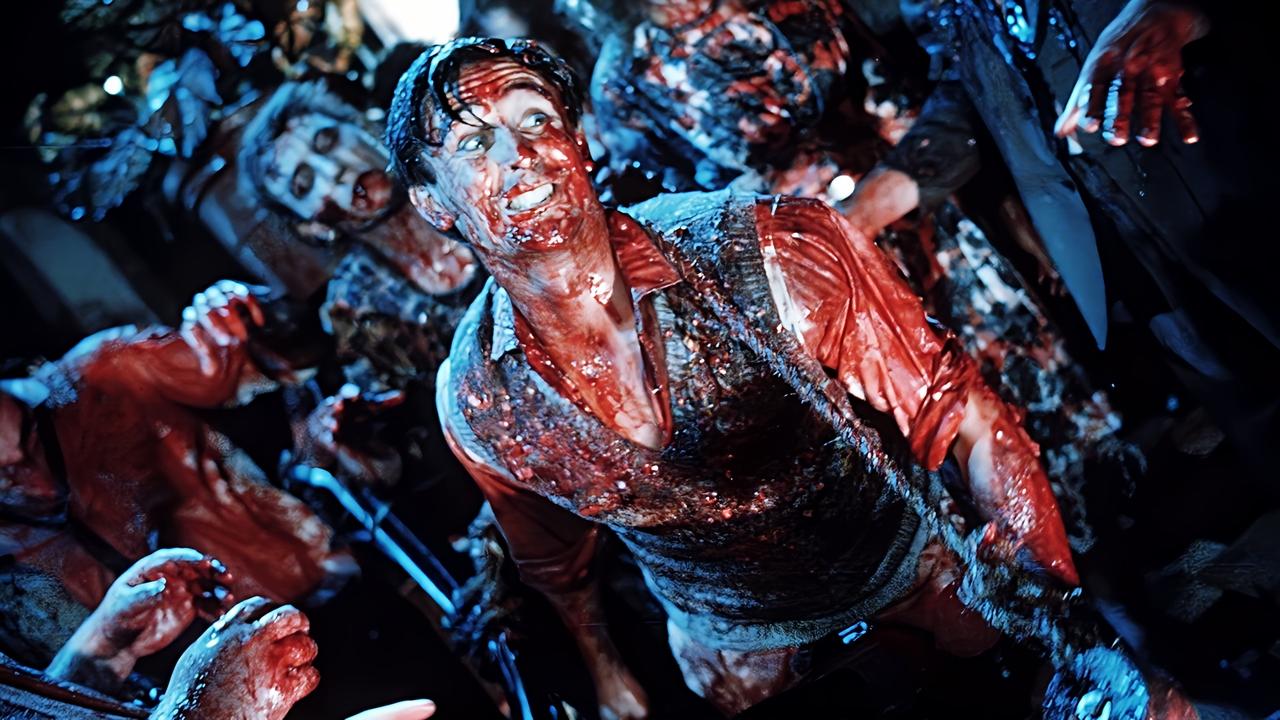
Timothy Balme stars as Lionel, the dutiful son who tries to keep his mother’s condition a secret, even as her skin starts sliding off into her custard. Balme’s performance is a masterclass in physical comedy. He’s like a Kiwi Buster Keaton if Keaton had been dropped into a blender with a gallon of red corn syrup. His frantic energy is matched by Diana Peñalver as Paquita, the local shopkeeper’s daughter who believes their love is written in the stars (and the tarot cards). Watching Lionel try to manage a growing basement full of the undead while maintaining the appearances of a polite 1957 New Zealand household is where the film’s "splatterstick" genius truly shines.
The Peak of Practical Gory-Ography
We talk a lot these days about the "CGI Revolution." Looking back from our current era of digital de-aging and green-screen environments, Braindead feels like a glorious, sticky monument to the analog age. This was the era where, if you wanted a zombie to get torn in half, you didn't call a rendering farm; you called a bunch of guys in a garage to build a latex torso and a pneumatic pump.
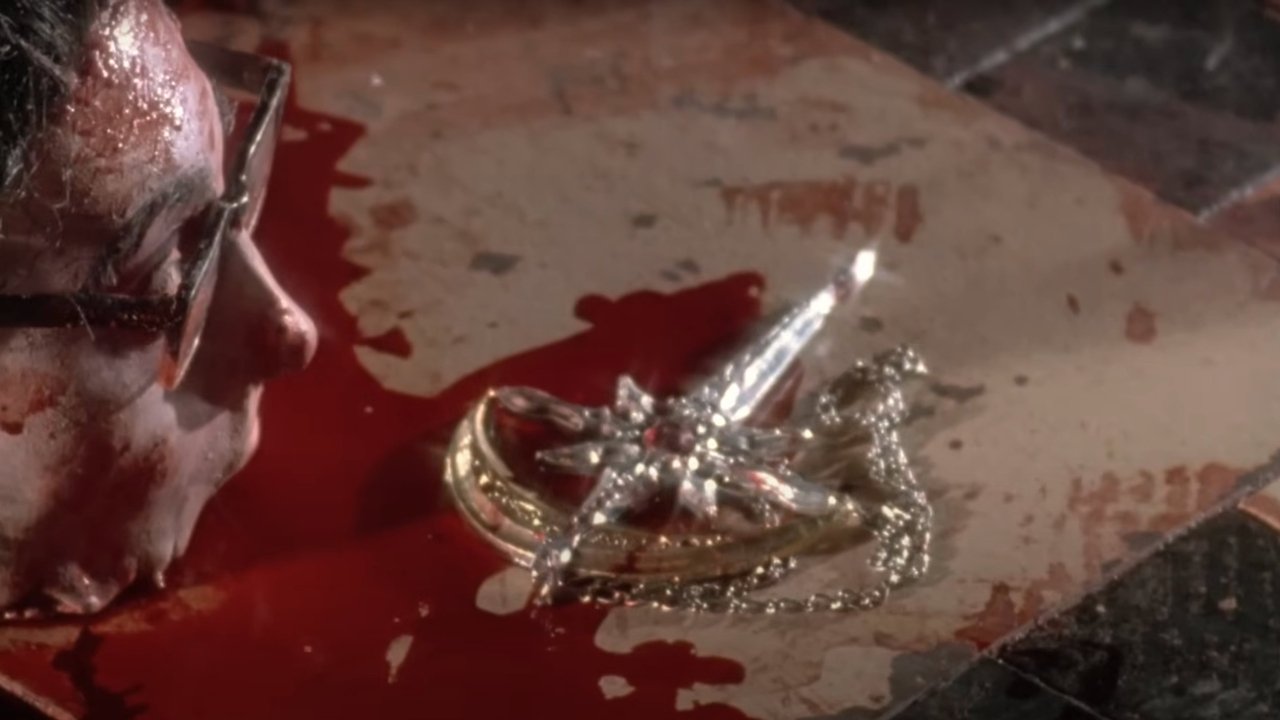
The sheer scale of the practical effects here is staggering. By the time we reach the infamous finale, Jackson and his crew (including a young team that would eventually become the powerhouse Weta Workshop) were reportedly pumping five gallons of fake blood a second. The legendary "lawnmower scene" remains the high-water mark for cinematic carnage. It’s so over-the-top, so cartoonishly excessive, that it transcends horror and enters a state of pure, manic euphoria. It’s essentially a Looney Tunes short directed by a madman with a chainsaw, and it’s beautiful.
I often wonder how the crew felt at the end of those shooting days. Apparently, the set became so sticky from the sugar-based blood that the actors' shoes would frequently get stuck to the floor mid-take. That’s the kind of indie hustle you just don't see anymore in the age of "we'll fix it in post." Every squelch, every limb-pop, and every erupting fountain of gore feels tactile and earned.
Divine Intervention and Rat-Monkeys
One cannot discuss Braindead without mentioning Father McGruder, played with legendary intensity by Stuart Devenie. His mid-movie appearance provides perhaps the greatest line in the history of cinema: "I kick arse for the Lord!" Watching a priest perform high-kick martial arts on a group of graveyard punks is the exact moment you realize Peter Jackson isn't just making a horror movie; he's throwing a party and everyone is invited, provided they don't mind getting a little brain matter on their Sunday best.

Even the smaller roles, like Ian Watkin as the sleazy Uncle Les, contribute to the film's unique New Zealand flavor. There’s a specific kind of "No. 8 wire" ingenuity present here—that Kiwi trait of fixing anything with whatever is lying around. In this case, Jackson is fixing the horror genre with a lawnmower and a sense of "why the hell not?"
The film's failure at the box office in 1992 is almost hard to believe now, given its status as a foundational text for horror fans. It was a victim of its own extremity, often censored or cut to ribbons by ratings boards who didn't understand that the gore was the punchline, not the point. But the DVD era rescued it, allowing a new generation to see the "Unrated Director’s Cut" in all its gooey glory. It served as the ultimate calling card for Jackson, proving that he could manage complex logistics, tone, and pacing on a shoestring budget of $3 million—a drop in the bucket compared to the $280 million he’d eventually spend on the Lord of the Rings trilogy.
If you have a weak stomach, Braindead is a nightmare. For everyone else, it is a triumph of imagination over budget. It’s a reminder of a time when the only limit to what you could put on screen was how many gallons of syrup you could buy and how much cleanup your crew was willing to tolerate. It’s hilarious, heart-pounding, and profoundly gross. Looking back, it’s not just a cult classic; it’s the DNA of a filmmaker who would go on to change cinema forever, proving that sometimes you have to wade through a sea of fake blood to reach the Oscars. Just, maybe, don't eat oatmeal while you watch it.
Keep Exploring...
-

The Frighteners
1996
-
Bad Taste
1987
-

Tremors 2: Aftershocks
1996
-
Tremors
1990
-
Army of Darkness
1992
-
Evil Dead II
1987
-
A Grand Day Out
1990
-
The Wrong Trousers
1993
-
Chungking Express
1994
-

The Adventures of Priscilla, Queen of the Desert
1994
-

Heavenly Creatures
1994
-

Trick 'r Treat
2007
-

The Cabin in the Woods
2012
-
Warm Bodies
2013
-
Buffalo '66
1998
-
Secretary
2002
-
Beginners
2011
-

Robot & Frank
2012
-
The First Time
2012
-
Dead Snow
2009