Chaplin
"The man behind the mask, the genius behind the tramp."
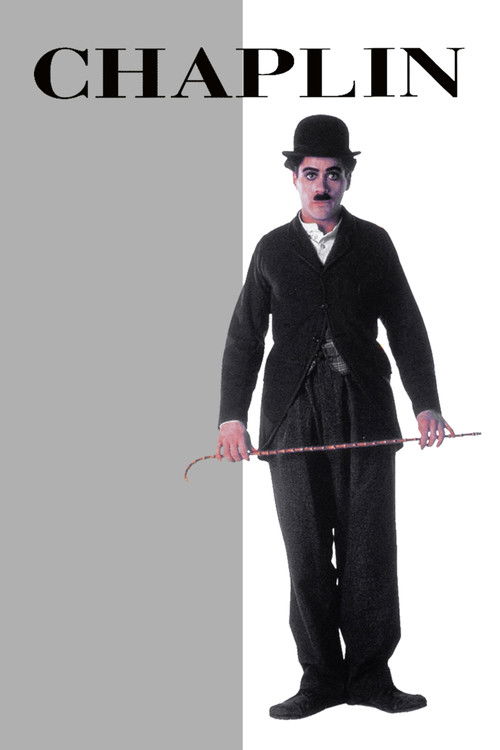
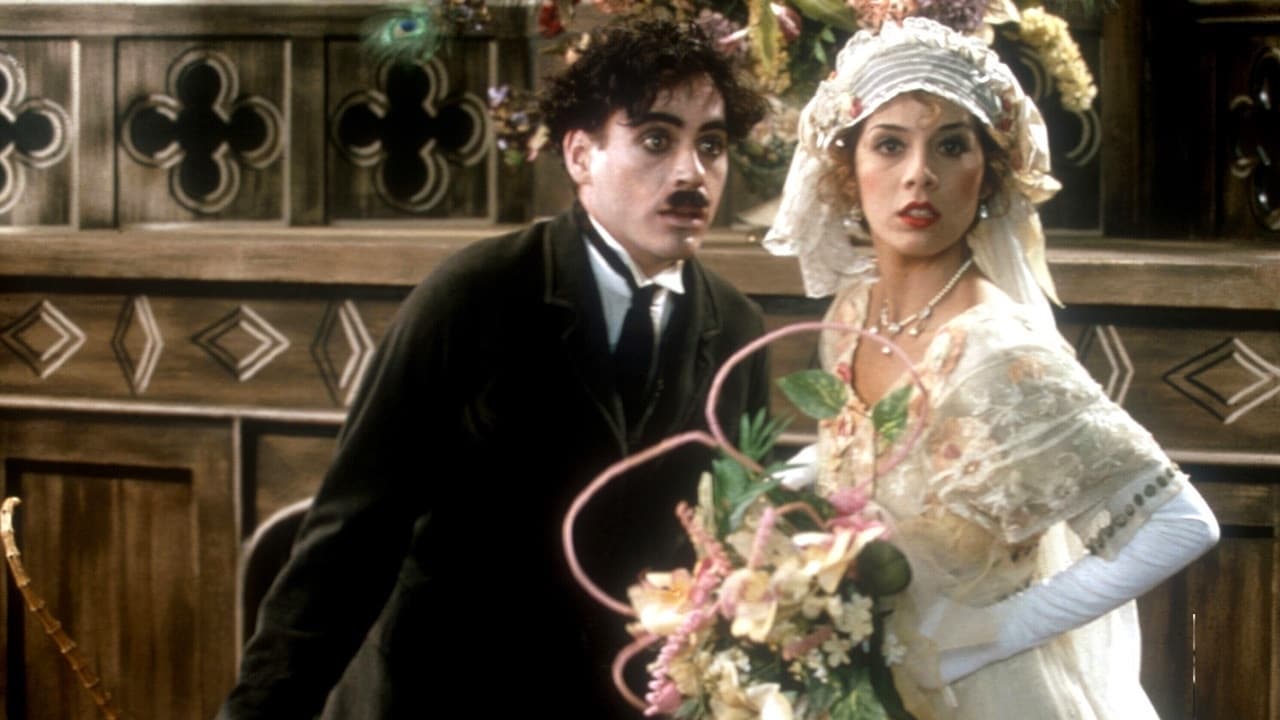
If you squint just hard enough at the screen during the opening act of Chaplin, you might actually believe in reincarnation. Long before he was the snarky centerpiece of the Marvel universe, Robert Downey Jr. was delivering a performance so transformative it practically vibrates with nervous energy. I watched this recently on a grainy DVD I bought at a yard sale for two dollars, and the disc had a weird smudge that made Charlie’s iconic bowler hat look like it was vibrating during the finale, which—honestly—added a layer of surrealism the film probably deserved.
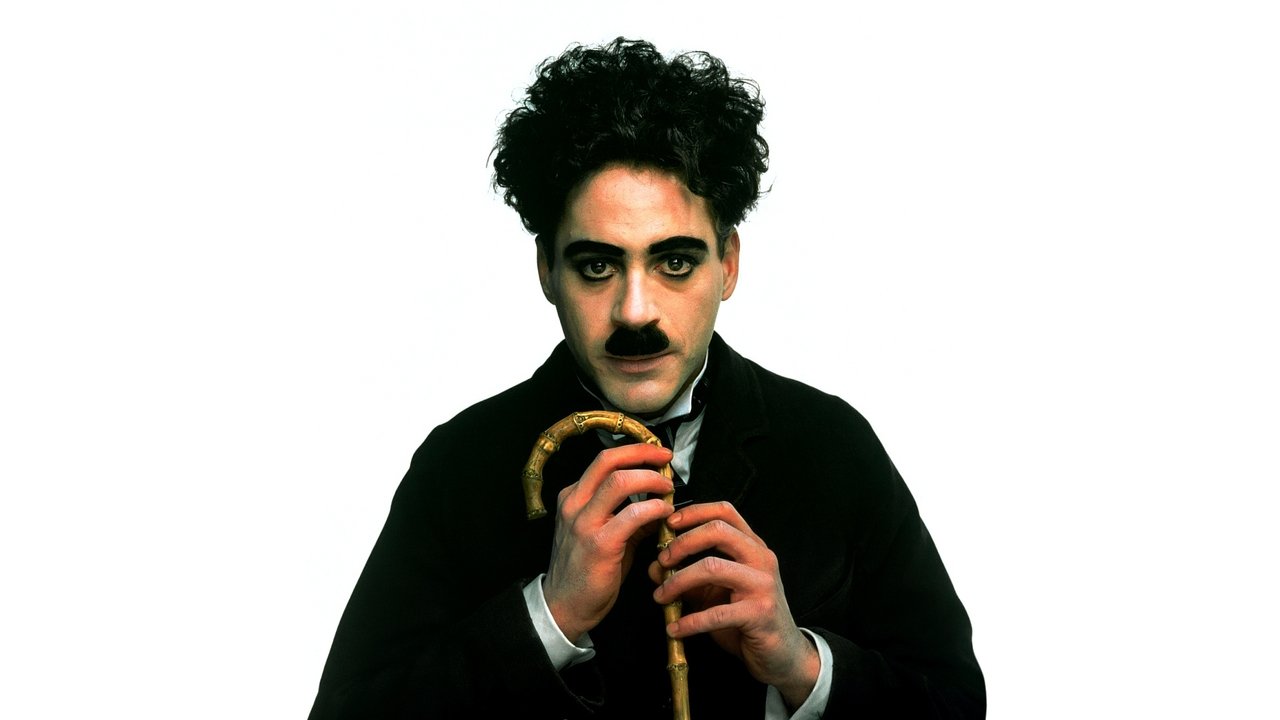
Directed by the late, great Richard Attenborough (Gandhi), this is a 1992 prestige drama in the truest sense. It’s big, it’s sweeping, and it’s occasionally a little too in love with its own sense of importance. But at the center of this massive, $31 million production is a man who spent his life trying to find a home in a world that only wanted him for his punchlines.
The Man Who Would Be Tramp
Let’s be real: biopics that try to cover a subject’s entire lifespan from the cradle to the grave usually feel like a Wikipedia page on fast-forward. Chaplin doesn't entirely escape this trap, but it has a secret weapon in Robert Downey Jr. The way he mimics Chaplin’s physicality—the "Little Tramp" waddle, the lightning-fast cane work, the expressive pantomime—is nothing short of miraculous. I’ve seen plenty of actors "do" the Tramp, but RDJ captures the sadness in the eyes behind the greasepaint.
The film follows Charlie from his Dickensian childhood in London poverty to the heights of Hollywood stardom and his eventual, heartbreaking exile during the McCarthy era. Along the way, we get a parade of famous faces. Marisa Tomei (fresh off her My Cousin Vinny buzz) pops up as Mabel Normand, and a very young Milla Jovovich plays Mildred Harris. But the real heart of the film is the casting of Geraldine Chaplin, Charlie’s actual daughter, playing her own grandmother, Hannah. There’s a scene where she’s descending into mental illness, and knowing the real-life family connection made my skin crawl in the best possible way. It adds a layer of authenticity that no amount of prosthetic makeup could achieve.
The Attenborough Architecture

Richard Attenborough never met a wide-angle lens he didn't like. Coming off the massive success of his previous epics, he treats Chaplin's life with the same reverence he gave to world leaders. The production design is staggering; they recreated early 20th-century London and the burgeoning dirt-road Hollywood with a level of detail that makes you miss the days of massive practical sets. This was the early 90s, right on the cusp of the CGI revolution, and you can feel the weight of the physical world in every frame.
However, the film uses a framing device—an aged Chaplin narrating his life to a fictional editor (played by John Thaw as Fred Karno in the early years)—that sometimes slows the momentum. Every time we cut back to the "present day" in Switzerland, I found myself checking my watch. I wanted to stay in the silent era, watching the birth of cinema. The script, co-written by the legendary William Goldman (The Princess Bride), is sharp, but it struggles to decide if it wants to be a character study or a history lesson. It’s a movie that tries to pack a trunk full of memories into a carry-on bag.
Looking Back at the Legend
Looking back at Chaplin now, it feels like a fascinating relic of early 90s filmmaking. It’s the kind of "Great Man" movie that Hollywood doesn't really make anymore—at least not with this much earnestness. It captures a specific moment in cinema history where the industry was starting to look back at its own origins with a mix of guilt and nostalgia. The segments dealing with the FBI’s pursuit of Chaplin for his "un-American" activities feel surprisingly modern, reminding me that the intersection of celebrity and politics has always been a dumpster fire.
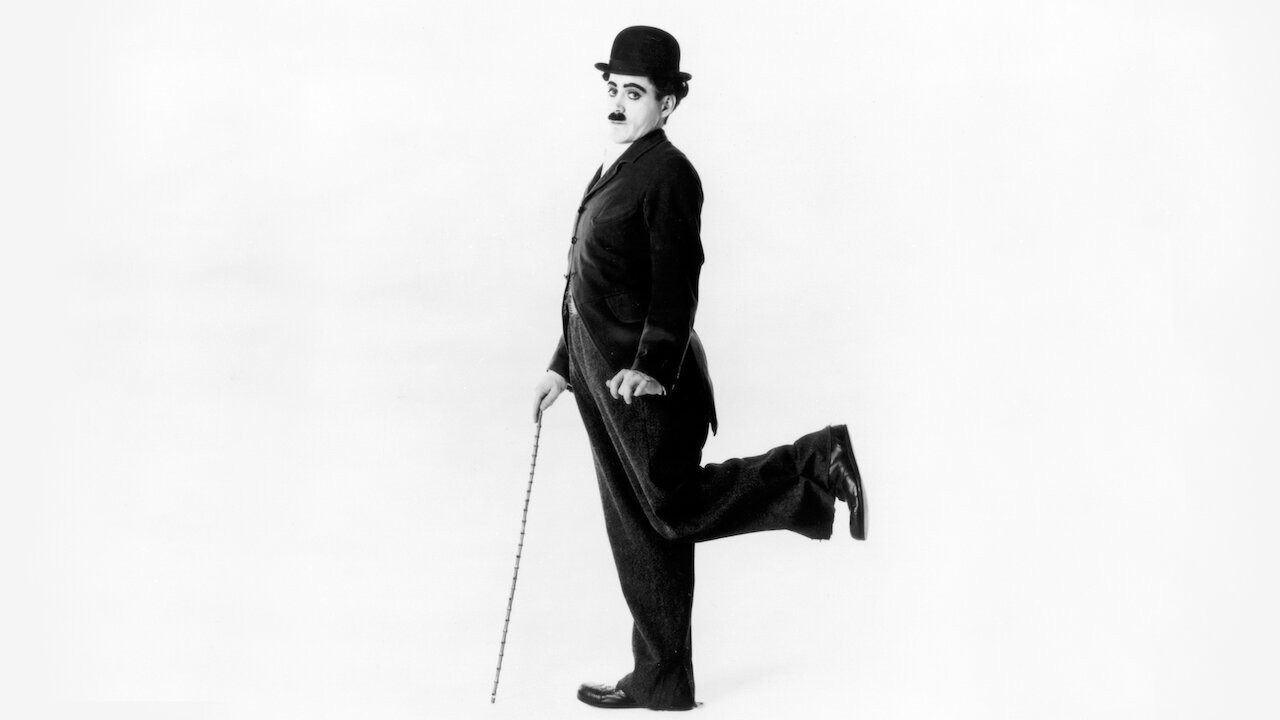
The score by John Barry (the man behind the James Bond sound) is lush and romantic, perhaps a bit too much at times, but it fits the sweeping visuals captured by cinematographer Sven Nykvist (Ingmar Bergman's frequent collaborator). It’s a gorgeous-looking film, even if it occasionally loses its footing in the melodrama.
Ultimately, you watch this for the performances. Paul Rhys is excellent as Sydney Chaplin, Charlie’s ever-suffering brother and manager, providing the grounded reality to Charlie’s flighty genius. But the movie belongs to Downey. It’s the role that proved he was the best actor of his generation, long before his personal struggles and eventual redemption became their own Hollywood legend.
While it’s a bit overstuffed and occasionally leans into biopic clichés, Chaplin is a must-watch for the lead performance alone. It’s a grand, messy, beautiful tribute to the man who arguably invented the modern concept of fame. If you can handle the 143-minute runtime, it’s a journey that earns its emotional finale, reminding us that behind every great comedy is a healthy dose of tragedy. Just keep an eye out for those early 90s hairstyles—they’re the only thing in the movie that hasn’t aged gracefully.
Keep Exploring...
-
A Bridge Too Far
1977
-
Maverick
1994
-
Absolute Power
1997
-
My Cousin Vinny
1992
-
The Age of Innocence
1993
-
Amistad
1997
-
Flatliners
1990
-

Jacob's Ladder
1990
-

Miller's Crossing
1990
-
Misery
1990
-
Barton Fink
1991
-
The Doors
1991
-
The Fisher King
1991
-
A River Runs Through It
1992
-
Candyman
1992
-
Glengarry Glen Ross
1992
-
Malcolm X
1992
-
The Hand That Rocks the Cradle
1992
-
The Mighty Ducks
1992
-

The Muppet Christmas Carol
1992