My Cousin Vinny
"Justice wears a leather jacket and high-waist jeans."

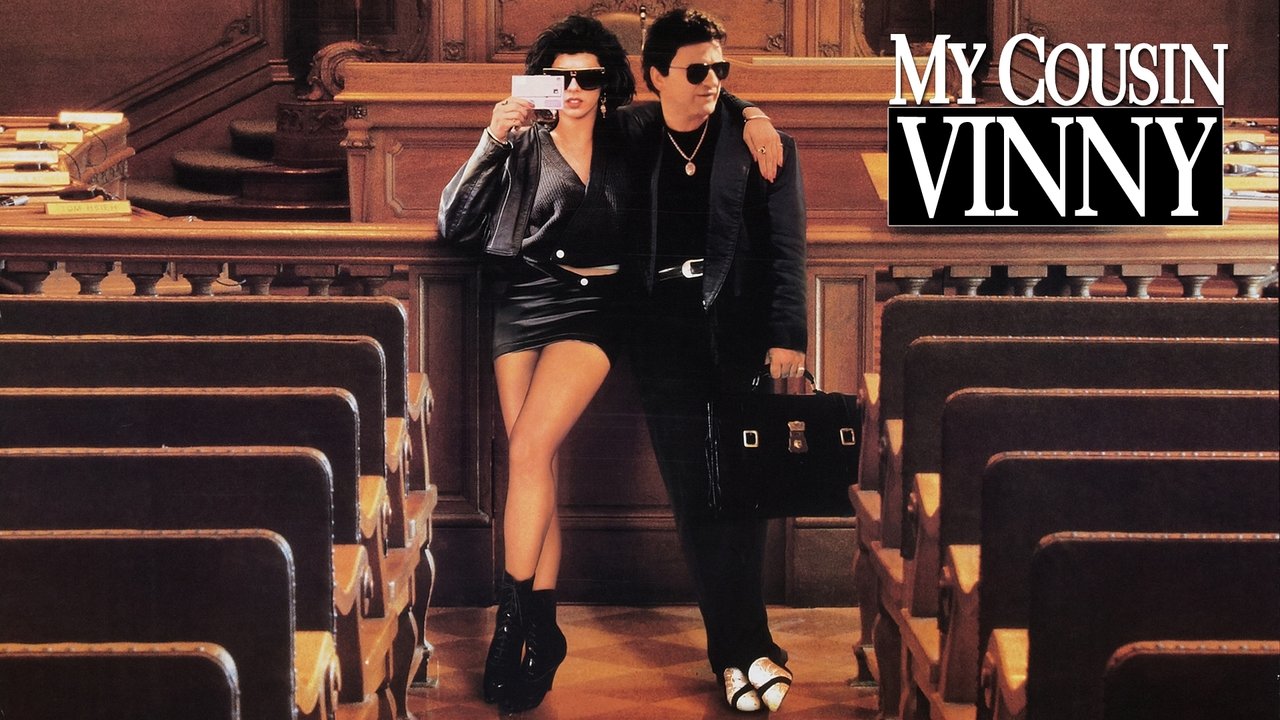
Most legal dramas from the early '90s were self-serious, wood-paneled behemoths. We were neck-deep in the era of John Grisham adaptations and the booming "You can't handle the truth!" theatricality of A Few Good Men. Amidst all that mahogany and prestige, Jonathan Lynn—a man with a law degree from Cambridge, mind you—dropped a film about a guy in a velvet suit who didn't know what "disclosure" meant. On the surface, it’s a fish-out-of-water comedy. But looking back from our current vantage point, My Cousin Vinny remains one of the most intellectually honest depictions of the American legal system ever captured on celluloid.
The Unlikely Blueprint for Courtroom Realism
It is a delightful irony that many law professors cite this film as the most accurate "courtroom movie" in existence. While other films rely on surprise witnesses jumping out of the gallery, My Cousin Vinny grounds its drama in the actual mechanics of the law: procedure, rules of evidence, and the grueling necessity of a proper foundation for expert testimony. I watched this again recently on a rainy Tuesday while eating a bowl of slightly-too-soggy Cheerios, and I was struck by how the "cerebral" element isn't buried—it’s the engine.
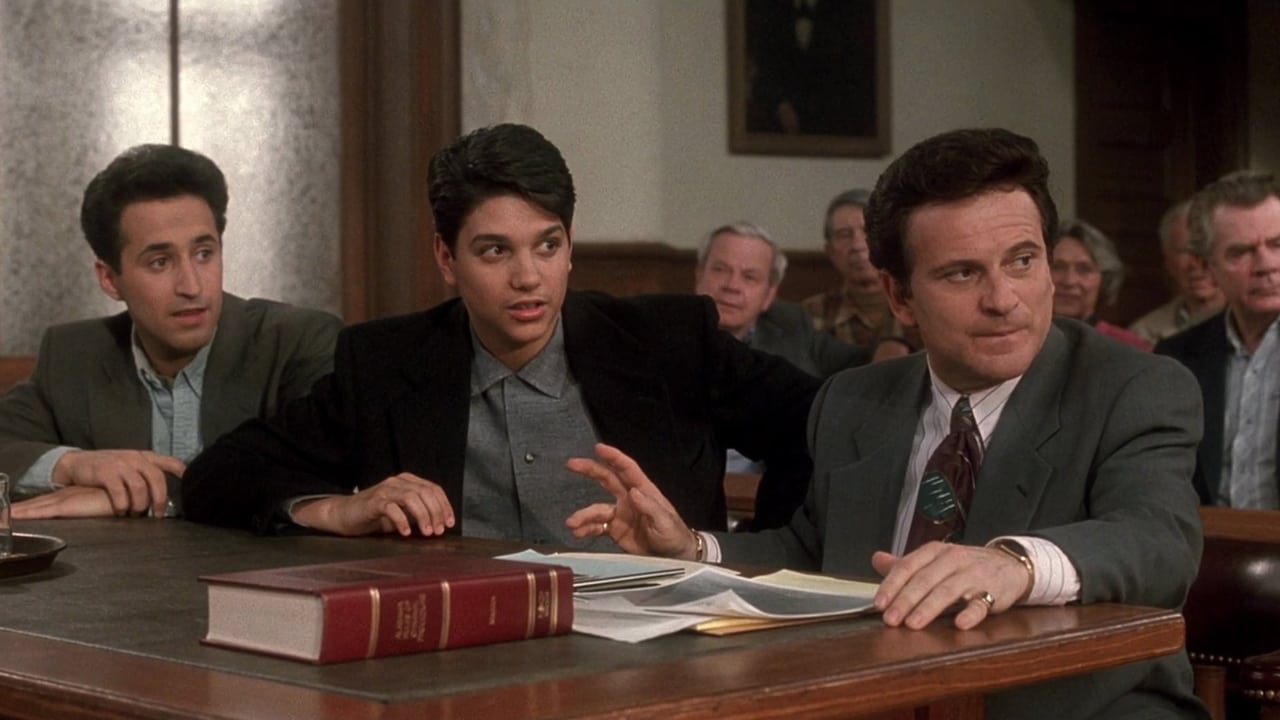
The film treats the law like a logic puzzle. The "drama" doesn't come from soaring speeches; it comes from the grueling, minute details of tire treads and the boiling point of grits. Joe Pesci, fresh off his terrifying turn in Goodfellas (1990), plays Vincent LaGuardia Gambini not as a buffoon, but as a man with a highly specialized, mechanical mind trying to adapt to a rigid, foreign operating system. It’s a performance of immense psychological weight. He’s a guy who failed the bar exam five times, carrying the crushing insecurity of a Brooklyn auto mechanic sitting in the shadow of Fred Gwynne’s towering, literal-and-metaphorical Judge Haller. Fred Gwynne's eyebrows were the most intimidating legal obstacle in the state of Alabama, and his chemistry with Pesci is a masterclass in understated friction.
A Masterclass in Subverting Expectations
Then there is Mona Lisa Vito. For years, a persistent, ugly urban legend suggested that Marisa Tomei only won her Best Supporting Actress Oscar because the presenter read the wrong name. Re-watching this film in a post-DVD, high-definition era makes that rumor look as ridiculous as a mud-stained Buick Skylark. Tomei’s performance is the intellectual heartbeat of the movie.
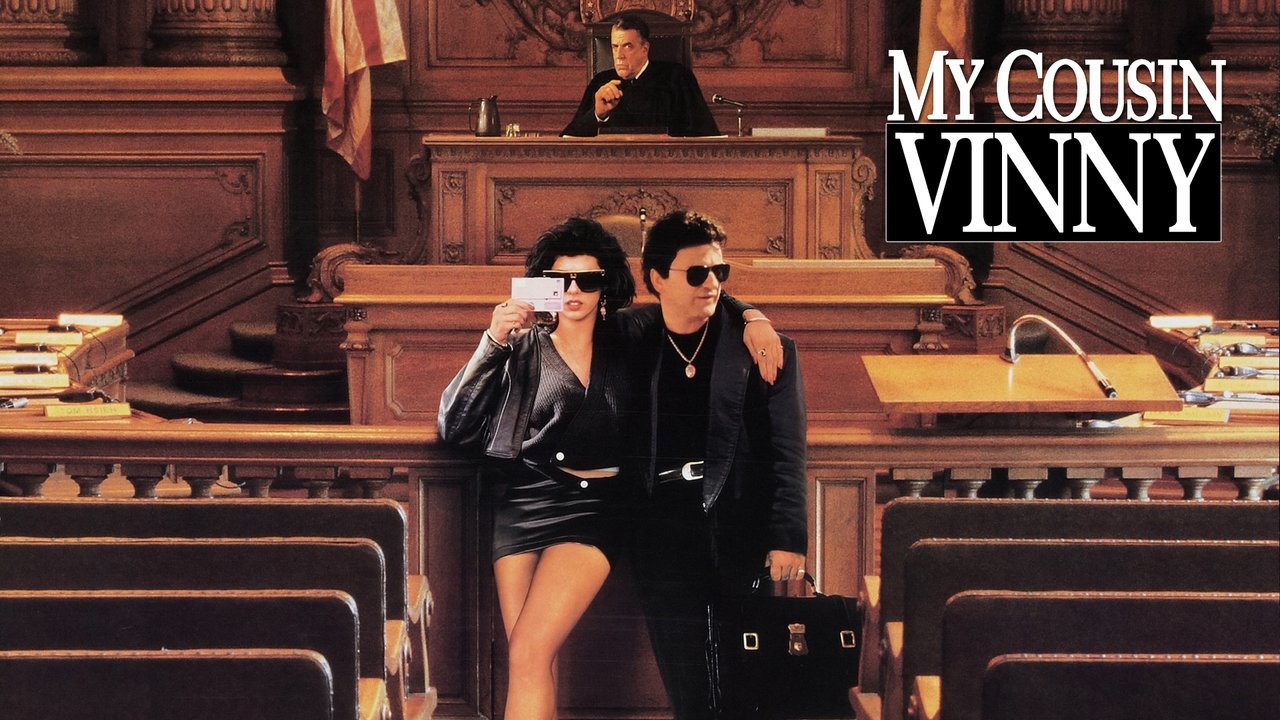
In a lesser script, Lisa would be "the girlfriend"—a sounding board for the hero's journey. Instead, she is the true expert. The film sets us up to see her as a stereotypical "bimbo" in neon spandex, only to reveal that her knowledge of general automotive physics is the only thing standing between Ralph Macchio and the electric chair. The scene where she explains the difference between a 1963 Pontiac Tempest and a Chevrolet Corvette is arguably the most satisfying "intellectual" payoff in '90s cinema. It’s not just a gag; it’s a character-defining moment of competence. She isn't just supporting Vinny; she is the one who understands the physics of the world they’re navigating.
The Weight of the "Two Yutes"
The film thrives on the cultural transition of the early '90s. We see the friction between the fast-talking, analog Brooklyn energy and the deliberate, slow-paced tradition of the South. Lane Smith plays the prosecutor, Jim Trotter III, with a surprising amount of grace. He isn't a villain; he’s just a guy doing his job well. This elevates the drama—Vinny isn't fighting a corrupt system; he’s fighting a competent one.
Looking back, the film also captures a final gasp of the "mid-budget" theatrical experience. It cost $11 million and made over $60 million because it trusted the audience to follow a plot about the "rules of discovery." It’s a film that respects the viewer's intelligence while making them laugh at the word "yutes." Apparently, Joe Pesci based Vinny’s wardrobe on people he actually knew in his neighborhood, and that authenticity anchors the film. It never feels like a caricature; it feels like a guy who is genuinely terrified of failing the one person who believes in him.

Stuff You Didn't Notice
The Munster Connection: This was Fred Gwynne’s final film appearance before his death in 1993. He spent his career trying to escape the shadow of Herman Munster, and he ended it with a performance of such dignity and comedic timing that it remains his definitive non-makeup role. Director's Pedigree: Director Jonathan Lynn co-wrote the legendary British sitcom Yes Minister. That "cerebral" edge and fascination with bureaucratic procedure are baked into the film's DNA. * The Bar Exam Reality: In the original script, Vinny had only failed the bar once. It was Joe Pesci who suggested he fail it five times, adding a layer of desperation and "last-chance" drama to the character’s arc.
My Cousin Vinny is that rare bird: a film that gets funnier the more you pay attention to the details. It’s a story about the importance of expertise, the value of an outsider's perspective, and the fact that sometimes, the most "unqualified" person in the room is the only one actually looking at the evidence. It’s a high-water mark for the 1990s legal comedy that has aged into a legitimate classic. If you haven't revisited it lately, do yourself a favor—the logic holds up even better than the fashion.
Keep Exploring...
-

The Mighty Ducks
1992
-

Instructions Not Included
2013
-
Barton Fink
1991
-
The Fisher King
1991
-

The Muppet Christmas Carol
1992
-
The Player
1992
-

White Men Can't Jump
1992
-

It Could Happen to You
1994
-
The Hudsucker Proxy
1994
-
To Die For
1995
-
Bottle Rocket
1996
-
That Thing You Do!
1996
-
Deconstructing Harry
1997
-
Wag the Dog
1997
-

Night on Earth
1991
-
A Dog's Will
2000
-
Malcolm X
1992
-
A Little Princess
1995
-
Selena
1997
-
Maverick
1994