Porco Rosso
"High-flying hogs and Adriatic daydreams."
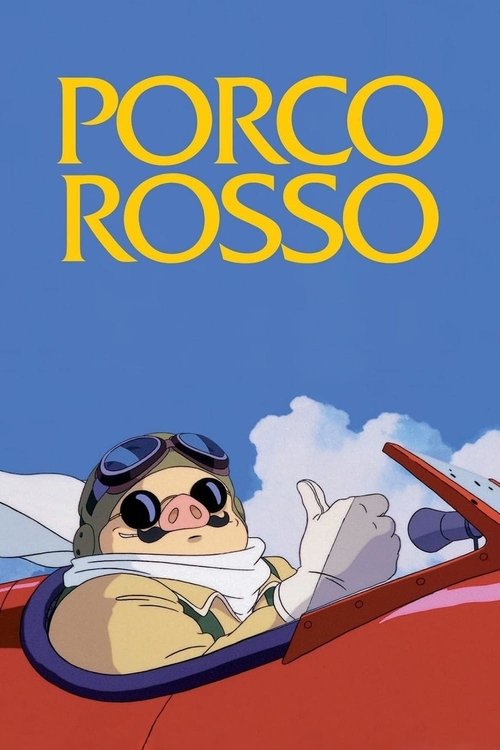
I remember watching Porco Rosso for the first time while nursing a lukewarm cup of instant miso soup that had way too much seaweed in it. Every time a spoonful of salty broth hit my tongue, I felt like I was sucking in the sea air of the Adriatic. It’s a strange sensory memory, but that’s what this movie does to you—it grounds its fantastical premise in such tactile, greasy, sun-drenched reality that you can almost smell the engine oil and the sea salt.

In the grand pantheon of Studio Ghibli, Porco Rosso is often the one that gets tucked behind the mystical heavyweights like Spirited Away or the heartbreaking weight of Grave of the Fireflies. But for those of us who grew up in the 90s, watching the transition from the chunky grit of VHS to the pristine clarity of DVD, Porco Rosso feels like a secret handshake. It’s a cult classic that celebrates the "cool dad" energy of Hayao Miyazaki (director of My Neighbor Totoro and Princess Mononoke), a man who clearly just wanted to stop drawing forest spirits for five minutes and draw some really, really beautiful planes.
A Pig with a Past
Set in the 1930s, the film follows Marco Pagot, a former Italian Air Force ace who, through a cocktail of survivor's guilt and a literal curse, has been transformed into an anthropomorphic pig. He now goes by Porco Rosso (Shūichirō Moriyama) and lives as a bounty hunter, chasing down sky pirates in his iconic red Savoia S.21 flying boat.
The plot is deceptively simple: Porco gets shot down by a cocky American ace named Donald Curtis (Akio Otsuka), goes to Milan to get his plane fixed by a precocious young female engineer named Fio (Akemi Okamura), and prepares for a final showdown. But the "adventure" here isn't just about dogfights. It’s about the melancholy of aging in a world that’s rapidly turning toward fascism. It’s basically Casablanca with a snout.
Looking back from our current era of hyper-saturated CGI, there is something deeply rebellious about the animation in Porco Rosso. Released in 1992, right as the industry was flirting with the digital revolution, this film is a testament to the power of the hand-drawn frame. Every time Porco’s engine sputters or a cloud bank shifts, you’re seeing a level of craftsmanship that feels increasingly like a lost art. The way Atsushi Okui handles the cinematography—capturing the shimmering heat off the Mediterranean water—is enough to make you want to book a flight to Italy immediately.
The Spanner in the Works
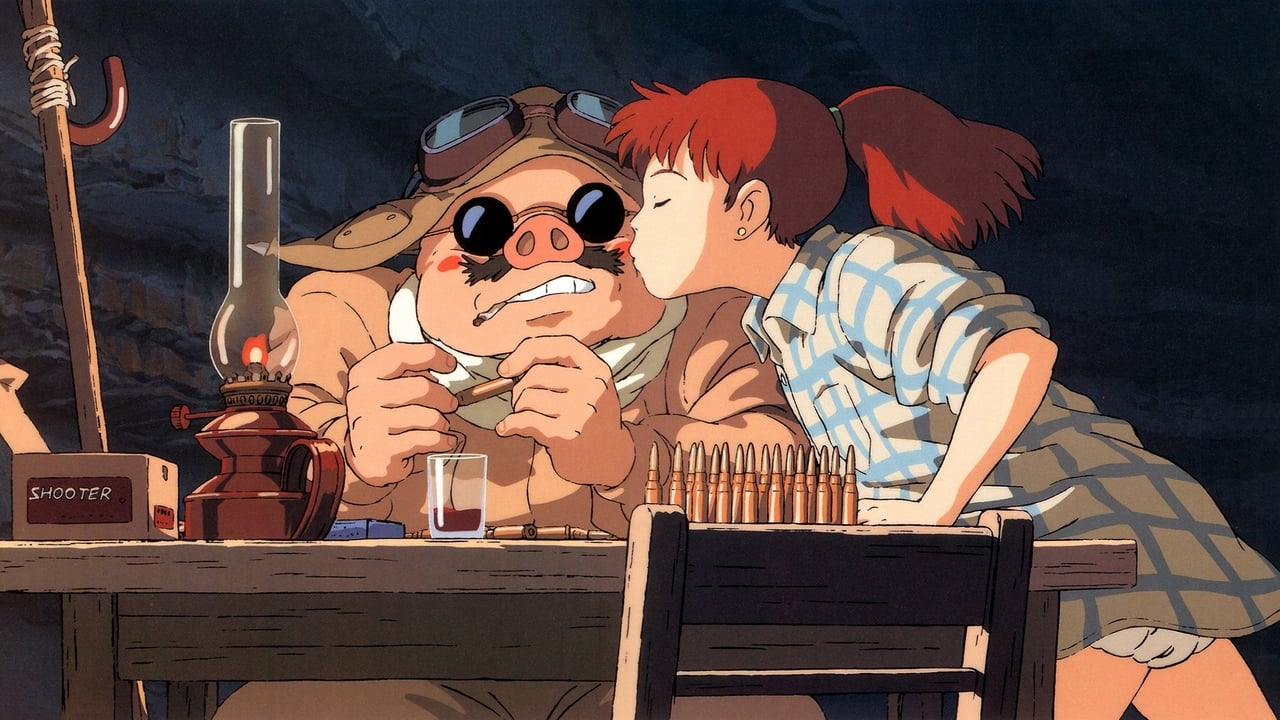
While Porco is the soul of the film, Fio Piccolo is the engine. In an era where "strong female characters" were often just men with different hair, Fio is a genuine revelation. She’s a teenager who understands aerodynamics better than the men twice her age, and she doesn't take an ounce of Porco's "I'm a cynical pig" routine. Her chemistry with the rest of the Piccolo family—a workforce of women taking over the factory while the men are away looking for work—is a subtle but sharp nod to the changing social tides of the 1930s.
Then there’s the humor. This is arguably Miyazaki’s funniest film. The "Mamma Aiuto" gang are the least threatening pirates in cinematic history, behaving more like a rowdy PTA group than sea-faring criminals. The slapstick dogfight between Porco and Curtis at the end of the film is a masterstroke of comedic timing, where the planes eventually give way to throwing wrenches and punching each other in knee-deep water. It’s light, it’s affectionate, and it knows exactly how ridiculous it is to see a pig in a flight suit.
The Legend of the Red Plane
The trivia surrounding this film only adds to its outsider charm. Did you know Porco Rosso was originally commissioned by Japan Airlines as a short in-flight film? Imagine sitting on a long-haul flight to Tokyo in 1992 and seeing this pop up on the tiny screen. Miyazaki eventually realized the story had too much "middle-aged man’s regret" to be a simple short and expanded it into the feature we have today.
Other cool details for the aviation nerds:
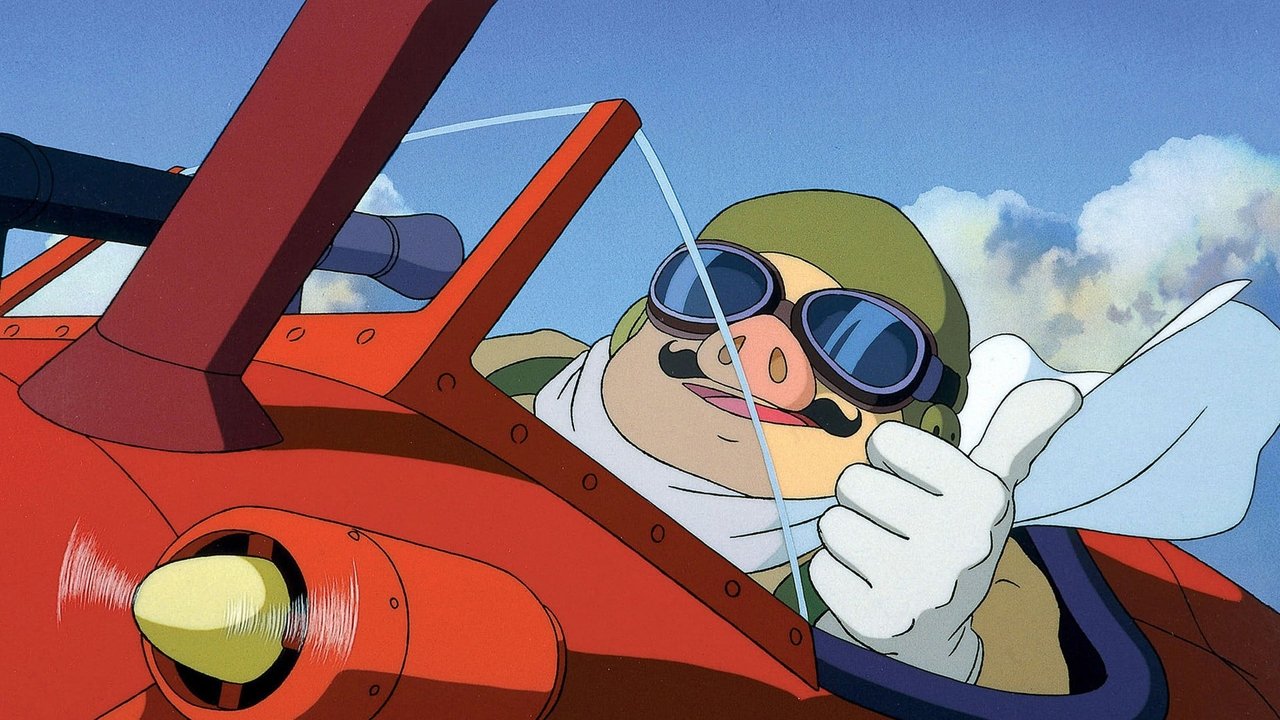
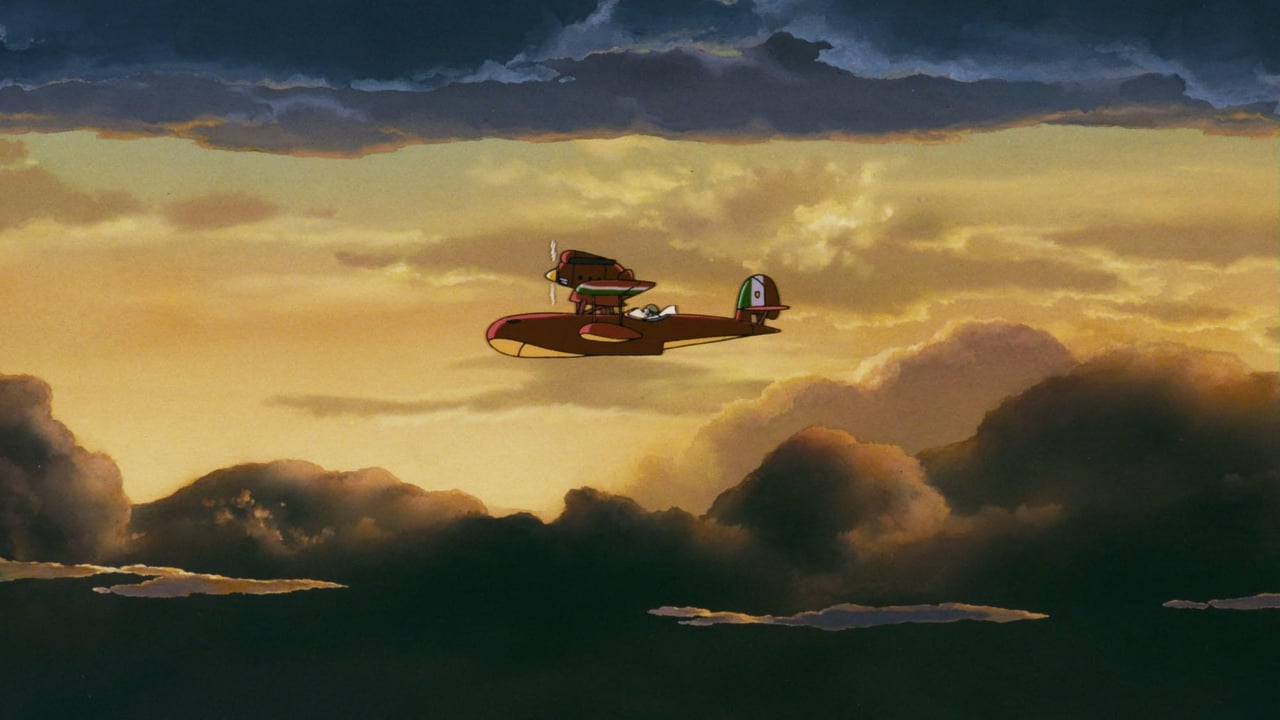
The red plane, the Savoia S.21, is actually based on a real-life racing plane, though Miyazaki tweaked the design to make it look "more pig-like." The name "Mamma Aiuto" translates to "Mother, help me!" in Italian—perfect for a group of incompetent pirates. The film features a cameo of a "Ghibli" engine, which was the name of a real Italian scouting aircraft (and, of course, the studio’s namesake). The haunting song "Le Temps des cerises," sung by Tokiko Kato (who voices the lounge singer Gina), is a real French revolutionary song that adds a layer of genuine historical melancholy to the film's "cool" exterior.
This isn't just a movie about a pig who flies planes; it’s a movie about what it means to keep your integrity when the rest of the world is losing its mind. It’s an adventure that feels earned because it balances the thrill of the sky with the quiet, heavy moments on the ground. Whether you’re a Ghibli completist or someone who just appreciates a damn good dogfight, Porco Rosso is the kind of film that lingers in your mind like the smell of expensive tobacco and expensive fuel.
I’ve revisited this film probably half a dozen times since that first bowl of miso soup. Every time I do, I’m struck by how it avoids the trap of being a "kids' movie" or an "adult movie." It’s just a movie—one that understands that sometimes, the only way to deal with a world gone mad is to fix your engine, head for the clouds, and refuse to play by the rules. It’s a cult classic for a reason: it’s got a heart as big as its protagonist’s flight goggles.

Keep Exploring...
-
Hercules
1997
-
Princess Mononoke
1997
-

The Emperor's New Groove
2000
-
The Road to El Dorado
2000
-

Sinbad: Legend of the Seven Seas
2003
-

Brave
2012
-

The Book of Life
2014
-

Howl's Moving Castle
2004
-

The SpongeBob SquarePants Movie
2004
-
A Monster in Paris
2011
-
Shrek
2001
-

Spirited Away
2001
-
Shrek 2
2004
-
Ponyo
2008
-
How to Train Your Dragon 2
2014
-
The Lego Movie
2014
-
Fantastic Mr. Fox
2009
-

DuckTales: The Movie - Treasure of the Lost Lamp
1990
-

Slayers Return
1996
-
A Goofy Movie
1995