Sneakers
"The world isn't run by weapons anymore. It's run by zeros and ones."
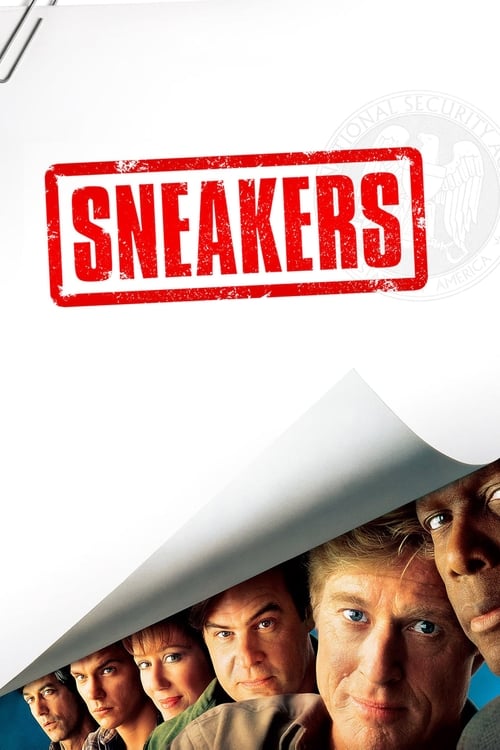
Before the internet was a place where we argued with strangers about sourdough, it was a terrifying, shadowy frontier that lived in beige plastic boxes and made high-pitched shrieking noises whenever you tried to connect. In 1992, the digital revolution was still wearing training wheels, and Phil Alden Robinson—fresh off the sentimental success of Field of Dreams—decided to pivot toward a high-tech heist film that felt like a bridge between the analog cool of the 70s and the looming paranoia of the 21st century.
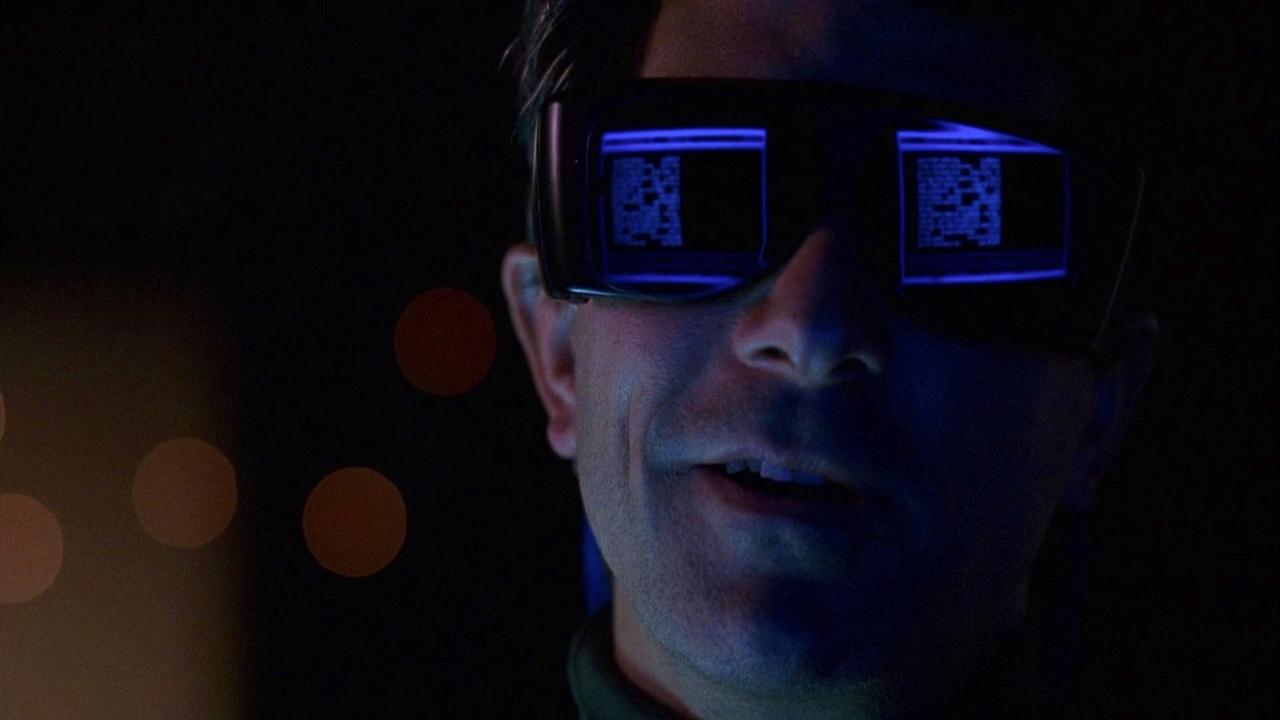
I watched this on a Tuesday night while trying to peel a stubborn price sticker off a used book, and the frustration of the sticky residue weirdly mirrored the tension of a high-stakes hack. It’s a film that thrives on those tactile, messy moments.
The Analog Soul of a Digital Thriller
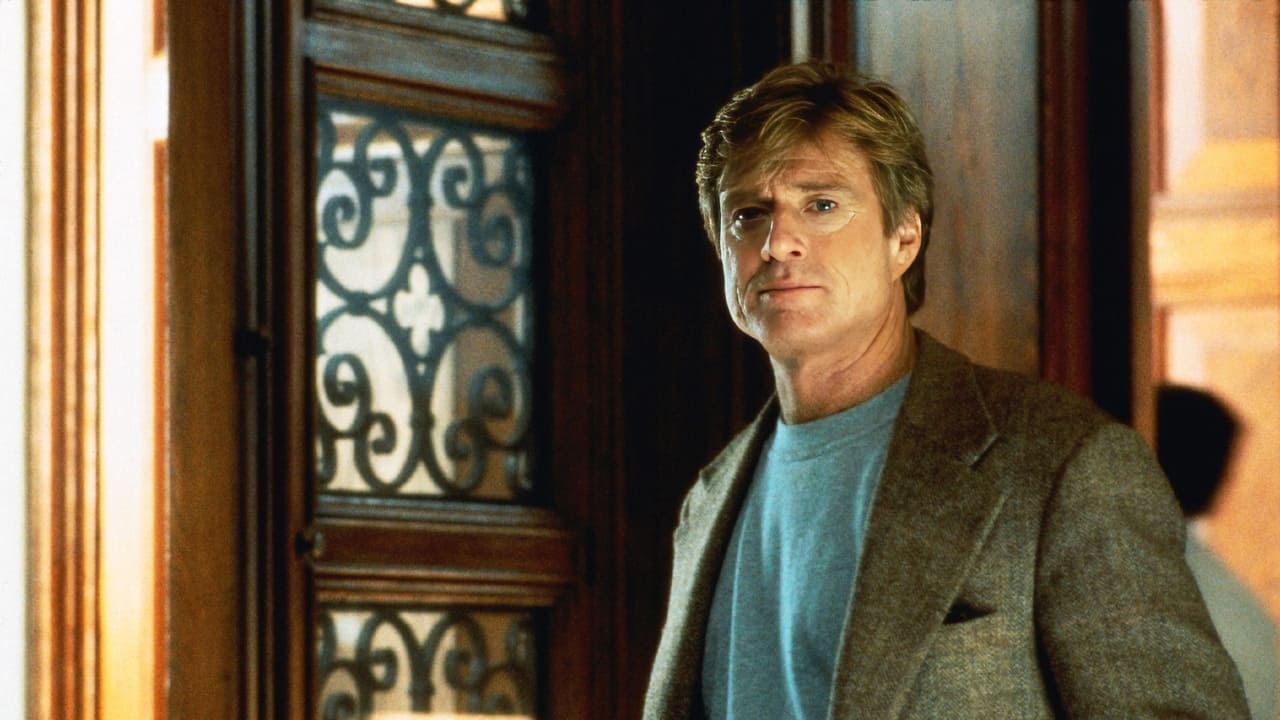
What strikes me most about rewatching Sneakers in the age of fiber-optic speeds is how heavy the technology feels. The computers aren't sleek; they are massive, clunky tanks that require physical presence to manipulate. Our hero, Martin Bishop, played with a weathered, charming exhaustion by Robert Redford (who apparently took the role to work on something "lighter" than his usual fare), leads a group of "sneakers"—security experts paid to break into banks to prove they can be robbed.
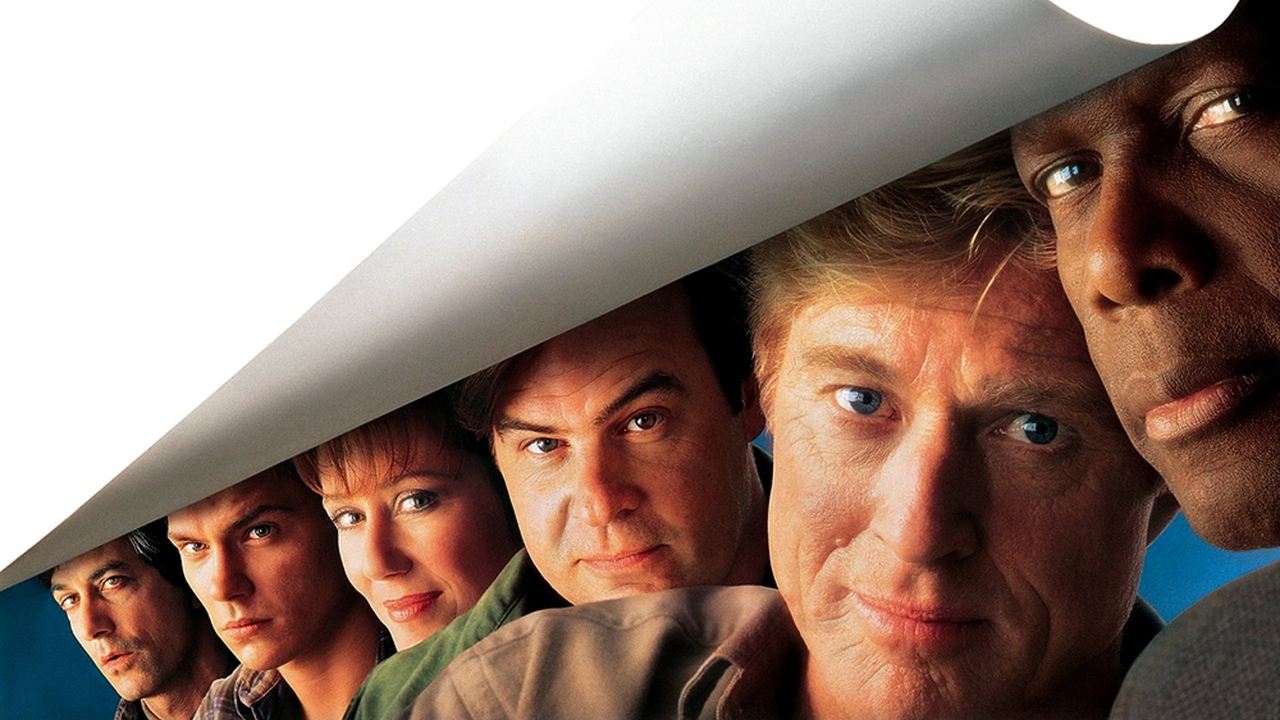
This isn't The Matrix. There are no leather trench coats or slow-motion bullets. Instead, we get an ensemble cast that feels like a family of eccentric uncles. Sidney Poitier brings a regal, skeptical gravitas as Crease, a former CIA officer who provides the group’s moral (and tactical) backbone. Watching Poitier and Redford trade barbs is a masterclass in screen presence—they don't need to do much to command the room. They represent a classic Hollywood era passing the torch to the "new" tech-heavy world, and they do it with a wink.
The film's tech-anxiety was incredibly prescient. It centers on a "black box" that can break any encryption, a MacGuffin that felt like science fiction in 1992 but feels like a Tuesday morning headline today. Sneakers is essentially a heist movie for people who think Ocean’s Eleven is too loud. It values silence, acoustics, and the way sound travels over a vent more than it values explosions.
Paranoia as a Team Sport
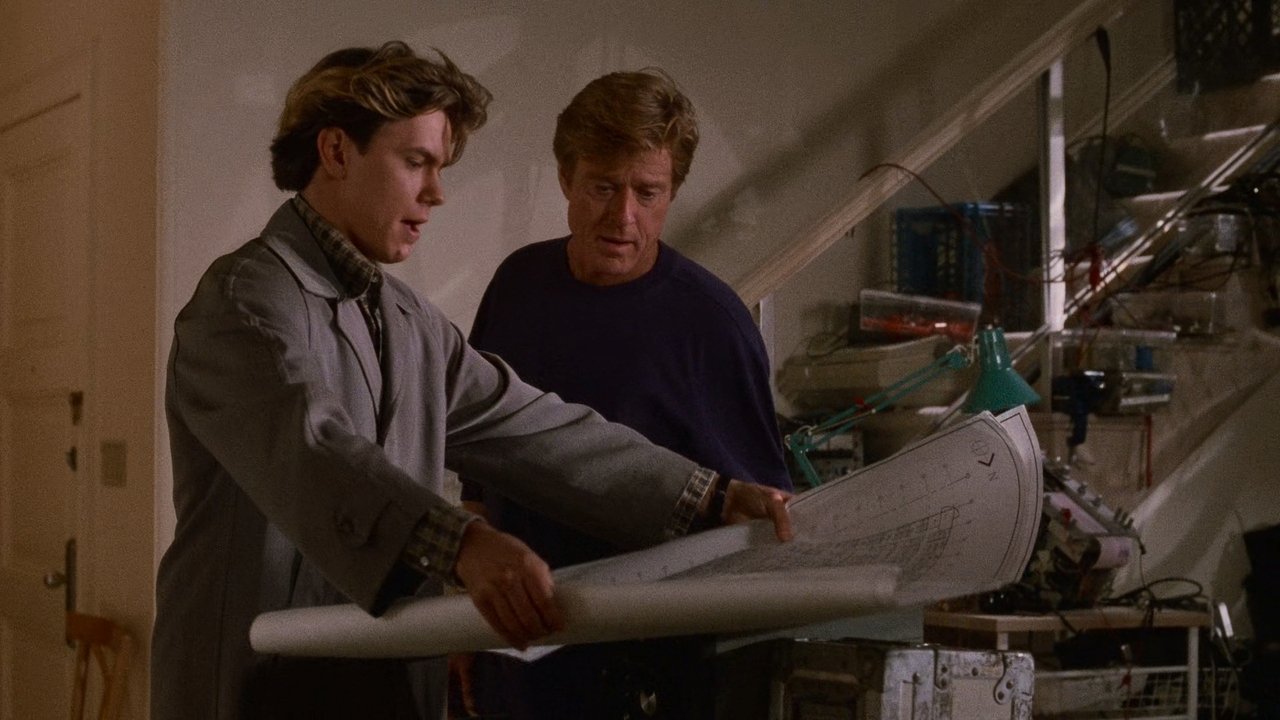
While Redford and Poitier provide the weight, the film’s heart beats in its weirdness. Dan Aykroyd plays Mother, a conspiracy theorist whose dialogue likely felt like a satire of the fringe in 1992 but now sounds like a standard social media feed. In a strange bit of life imitating art, Aykroyd’s real-life obsession with UFOs and government cover-ups actually makes his performance feel more grounded; he isn't playing a character so much as he’s playing his own weekend hobbies.
Then there is David Strathairn as Whistler, the blind tech genius. Strathairn’s performance is subtle and brilliant, avoiding the "superhero" tropes often attached to blind characters in film. The sequence where he "drives" a van by listening to the sounds of the road is a standout piece of tension that earns every ounce of its suspense. It’s joined by a young River Phoenix as Carl, the kid of the group. Looking back, Phoenix’s performance is bittersweet; he brings a jittery, youthful energy that balances the seasoned cynicism of the older cast members.
The villain, played by Ben Kingsley, is perhaps the film’s only slightly dated element. His Cosmo is a bit of a Bond villain archetype, though his motivation—the total collapse of the world economy via the death of privacy—was decades ahead of its time. The central reveal of the anagram "Setec Astronomy" (which fans of the film know rearranges to "Too Many Secrets") remains one of the most satisfying "aha!" moments of 90s cinema.
A Box Office Trojan Horse
Despite its niche subject matter, Sneakers was a massive commercial hit. Universal Pictures gambled on a $23 million budget—a significant chunk of change in '92—and saw a return of over $105 million. It was a cultural touchstone that proved audiences were hungry for thrillers that used their brains rather than just their brawn. Interestingly, the production was a bit of a logistics nightmare because the cast was so stacked. Getting Redford, Poitier, Kingsley, and Aykroyd in the same room required a scheduling dance that cost the studio a fortune in hold fees.
The film also features a gorgeous, haunting score by James Horner, who used wordless vocals to create an atmosphere of digital mystery. It doesn't sound like a typical action score; it sounds like the wind whistling through a server room. Even the "black box" itself was a piece of high-level production design; the prop was created by the same person who designed the iconic hardware in WarGames, ensuring it looked like something a government could actually fear.
Looking back, the film captures that brief window of time when we believed technology might actually make us freer before it started tracking our grocery habits. It’s a movie that values the "guy in the chair" long before that became a superhero trope.
Ultimately, this is the kind of cinema that is sadly becoming extinct: the mid-budget, star-driven adult thriller that doesn't need a sequel to justify its existence. It’s a "comfort food" thriller that manages to be both cozy and genuinely tense, anchored by a cast that clearly enjoyed each other's company. If you’ve never seen it, find the biggest screen you can, turn off your phone, and remember a time when the biggest threat to the world was a beige box and a clever anagram. It's a reminder that even in a world of zeros and ones, the human element is the only thing that really matters.
Keep Exploring...
-
Chicago
2002
-
To Die For
1995
-
Bottle Rocket
1996
-
Another 48 Hrs.
1990
-
Cape Fear
1991
-

Fried Green Tomatoes
1991
-
The Naked Gun 2½: The Smell of Fear
1991
-
A League of Their Own
1992
-
Lethal Weapon 3
1992
-
Patriot Games
1992
-
A Perfect World
1993
-
Cool Runnings
1993
-
In the Line of Fire
1993
-
Mrs. Doubtfire
1993
-
Sleepless in Seattle
1993
-
The Pelican Brief
1993
-
Ace Ventura: Pet Detective
1994
-
Naked Gun 33⅓: The Final Insult
1994
-
The Mask
1994
-

The Santa Clause
1994