The Mighty Ducks
"Winning isn't everything, but quacking is."
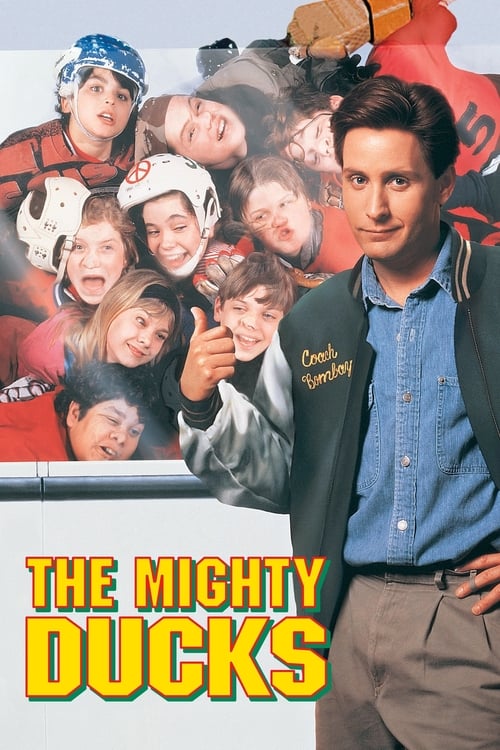
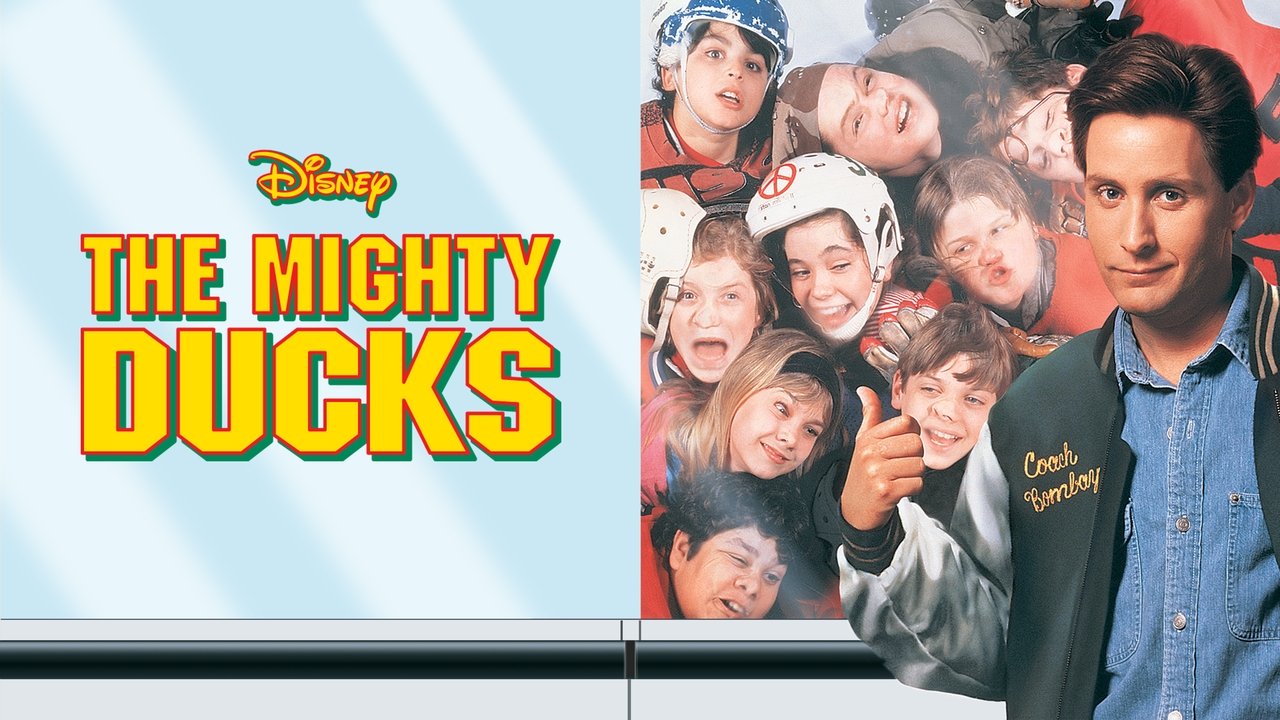
I watched this movie last night while trying to scrape dried, petrified oatmeal off the legs of a toddler’s high chair, and I realized something: The Mighty Ducks is arguably the weirdest "wholesome" premise Disney ever greenlit. If you strip away the bright green jerseys and the triumphant score, you’re left with the story of a high-powered, cynical lawyer named Gordon Bombay who gets a DUI and is sentenced to supervise a group of minors in a freezing basement-level ice rink. In today’s world, that’s a gritty HBO miniseries starring Jeremy Strong. In 1992, it was the foundational text for an entire generation’s sporting dreams.
The Limo on the Thin Ice
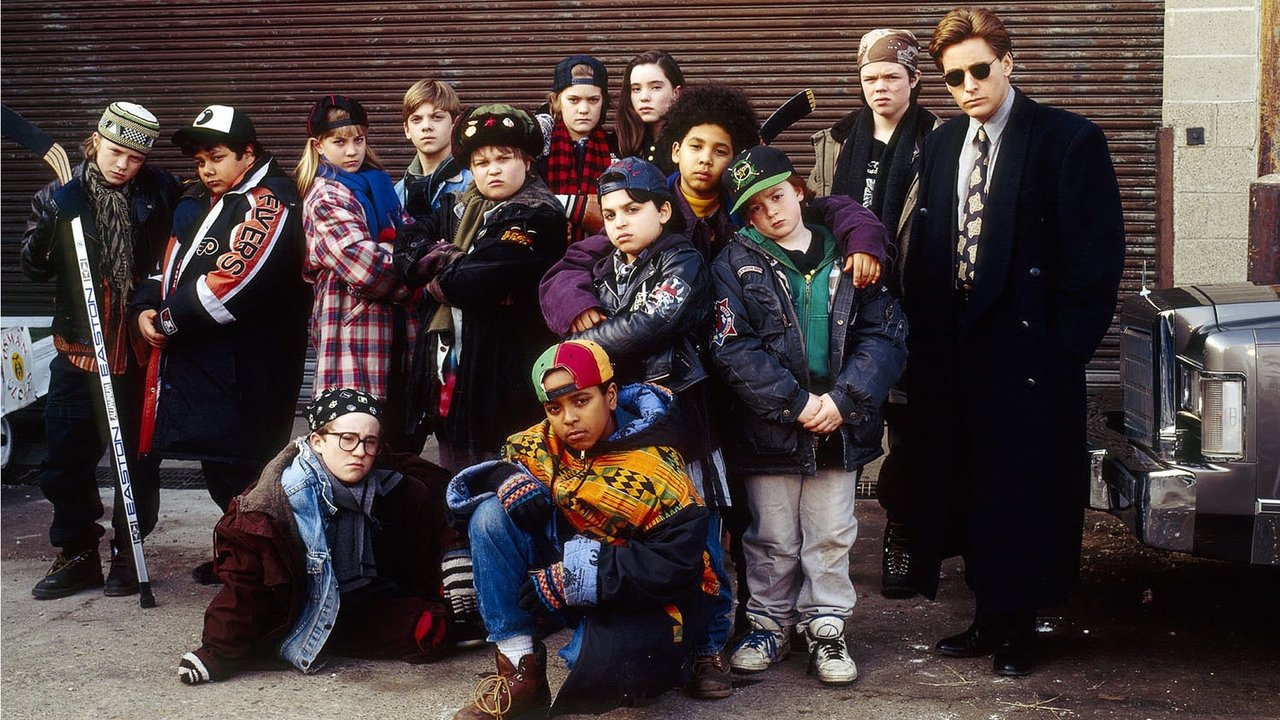
The film opens with a sequence that perfectly captures that early-90s transition from 80s excess to 90s sincerity. Emilio Estevez, fresh off the heels of Young Guns and still carrying that brat-pack swagger, plays Bombay as a man who has replaced his soul with a law degree and a very expensive car. When he drives that silver limousine onto the middle of a frozen pond to meet his "team," it’s an image of pure, glorious absurdity.
Director Stephen Herek, who had already proven he could handle lovable losers with Bill & Ted’s Excellent Adventure, treats the District 5 team not as a group of adorable moppets, but as a gritty, urban ragtag crew. They don’t have gear; they have attitude. Looking back, this was the peak of the "misfit sports" formula that dominated the DVD shelves of my youth. Before every youth sports movie became a polished, high-definition affair, there was a certain tactile grime to these films. You can almost smell the damp wool and the stale rink air through the screen. The District 5 locker room looks like it hasn't been cleaned since the Nixon administration.
Skating Through the Screen
While we usually think of "action" in terms of explosions or car chases, sports cinematography in the early 90s was undergoing its own revolution. The Mighty Ducks doesn’t rely on CGI to simulate the speed of the game; it relies on the actual physical hustle of the cast and the camera crew. Cinematographer Thomas Del Ruth, who shot The Breakfast Club, brings a ground-level intensity to the hockey sequences.
The camera is often strapped to a sled or held by a skater, whipping past the players to give us a sense of the chaotic, ankle-breaking reality of peewee hockey. There’s a weight to the hits and a satisfying thwack to the pucks that feels more authentic than many modern sports dramas. I’ve always been obsessed with how they choreographed the "Flying V." In retrospect, the 'Flying V' is basically an invitation for a triple minor penalty and a total lack of defensive awareness, but on screen, accompanied by David Newman’s soaring score, it feels like a tactical masterstroke on par with anything in Braveheart.

The Steel and the Heart
The film's secret weapon isn't actually the hockey—it's the friction between Emilio Estevez and Lane Smith, who plays the villainous Coach Jack Reilly. Lane Smith was a master of the "principled jerk" archetype, and his obsession with a decades-old missed penalty shot gives the movie a stakes-heavy gravity it probably shouldn't have. It’s a classic 90s trope: the surrogate father figure vs. the toxic mentor.
Then there are the kids. This was our first real look at a young Joshua Jackson (Charlie Conway), years before he’d head to Dawson’s Creek. He anchors the heart of the team, representing the "pure" love of the game that Bombay lost. The film manages to weave in a surprisingly melancholy subplot about Charlie’s mother, Heidi Kling, and the quiet struggle of single parenthood in the suburbs. It’s these small, quiet beats between the "quacking" that keep the movie from drifting into pure cartoon territory.
Interestingly, the actors actually had to attend a three-week intensive hockey camp before filming because half of them couldn't stay upright on skates. You can see that progression on screen; the early clumsiness isn't just acting—it’s a group of kids terrified of breaking their collarbones for a Disney paycheck.
A Legacy of Quacks
We often talk about the "Disney-fication" of culture, but The Mighty Ducks did it literally. The film was so successful it birthed an actual NHL franchise, the Anaheim Mighty Ducks, which is a level of marketing synergy that would make a modern Marvel executive weep with envy.
But beyond the merchandise, the film holds up because it understands the fundamental appeal of the underdog. It’s not about being the best; it’s about finding a tribe where your weirdness is an asset. Whether it’s Goldberg the goalie’s fear of the puck or Fulton Reed’s legendary "slap shot" that supposedly clocked in at 100mph, the movie celebrates the specialist. It’s a colorful, loud, and occasionally cynical piece of 90s filmmaking that eventually gives in to its own heart. It’s a reminder that sometimes, the best way to handle a mid-life crisis and a legal catastrophe is to teach a kid how to trip an opponent while the ref isn't looking.
In the end, The Mighty Ducks isn't trying to be Raging Bull. It’s a movie that knows exactly what it is: a fast-paced, high-energy comedy that makes you want to buy a pair of CCM Tacks and find the nearest frozen pond. It’s a foundational piece of the 90s live-action Disney era that, despite its ridiculous premise, still manages to stick the landing on the ice. Quack, quack, quack, Mr. Ducksworth.
Keep Exploring...
-

Wizards of Waverly Place: The Movie
2009
-
Teenage Mutant Ninja Turtles II: The Secret of the Ooze
1991
-

The Muppet Christmas Carol
1992
-
The Three Musketeers
1993
-

Jack
1996
-
Maverick
1994
-
101 Dalmatians
1996
-
Holes
2003
-

What a Girl Wants
2003
-
First Daughter
2004
-

Ice Princess
2005
-
Just My Luck
2006
-
The Spy Next Door
2010
-
Here Comes the Boom
2012
-

The Odd Life of Timothy Green
2012
-
Teenage Mutant Ninja Turtles
1990
-
My Cousin Vinny
1992
-
Mrs. Doubtfire
1993
-

The Santa Clause
1994
-

Babe
1995