Mrs. Doubtfire
"He’ll do anything to be their father. Even become their nanny."
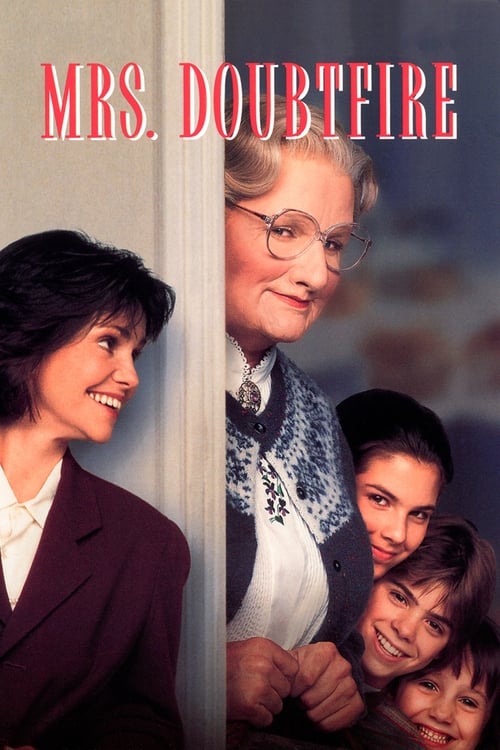
I remember the specific, slightly sweet plastic smell of the oversized clamshell VHS case for Mrs. Doubtfire. In the mid-90s, that purple-and-white box was a permanent fixture next to the VCR in almost every suburban living room. Re-watching it recently—while wearing a pair of mismatched socks I found under the sofa, which felt appropriate for a movie about domestic chaos—I realized that my childhood brain had completely missed the point. I used to think it was a movie about a guy in a funny dress; I now realize it’s actually a high-stakes, surprisingly heavy drama about the messy, heartbreaking logistics of a family falling apart.

The Kinetic Chaos of Daniel Hillard
The film kicks off with Daniel Hillard (Robin Williams) quitting a voice-over gig on a matter of principle (he won't voice a smoking bird for kids). It establishes his character immediately: he’s talented, principled, and utterly irresponsible. He’s the "fun" dad who throws a birthday party for a pony in the living room while his wife, Miranda (the perpetually underrated Sally Field), is at work.
When the divorce happens, the film doesn't pull its punches. The scene where the judge grants Daniel only weekly supervised visits is genuinely gut-wrenching. This was Robin Williams at the absolute zenith of his powers. We often talk about his manic energy, but people forget how well he could play "desperate." Daniel is a man who is literally losing his oxygen, which in his case, is his children. It's this desperation that makes the central conceit—dressing up as an elderly British nanny to infiltrate his own home—feel like a tragic necessity rather than just a wacky prank.
The Latex and the Legend
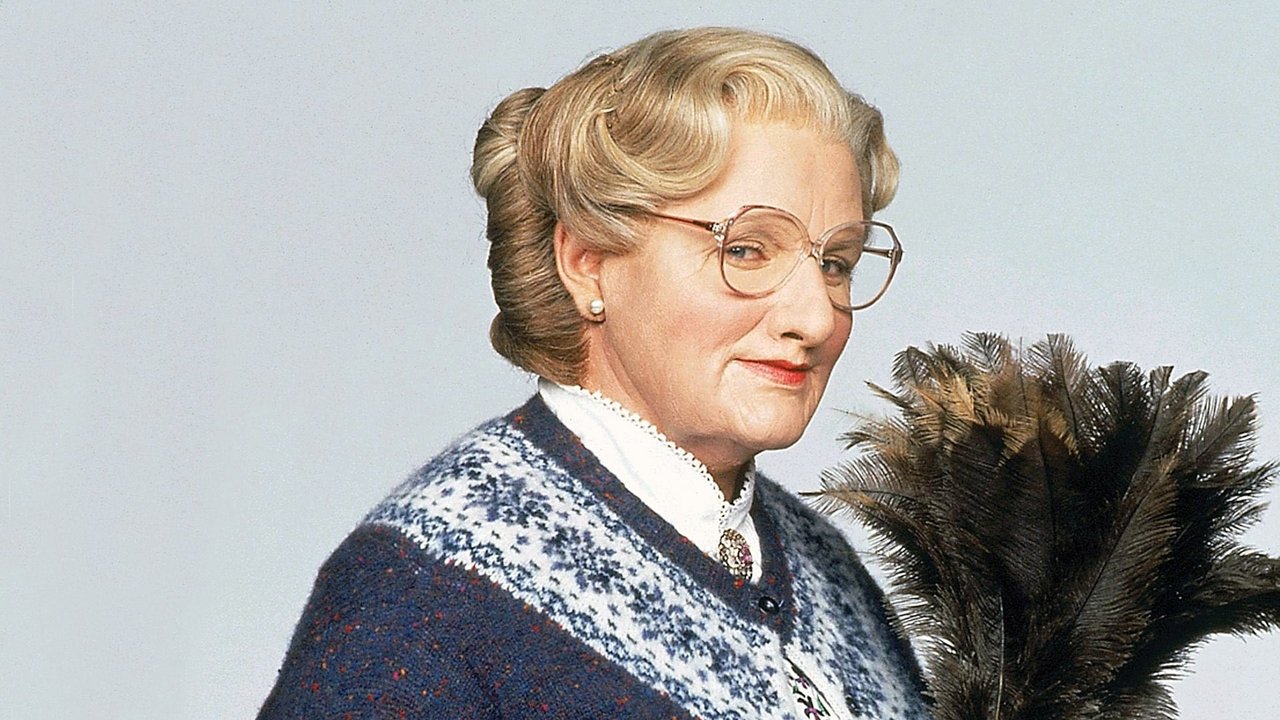
The transformation into Euphegenia Doubtfire is where the movie earns its place in the 90s hall of fame. This was 1993, an era where "special effects" usually meant CGI dinosaurs, but here, the magic was all practical. Makeup artist Greg Cannom spent four and a half hours every day applying latex pieces to Williams’ face. Looking back, the makeup is so convincing it’s actually a little unsettling, but it allowed Williams to disappear into a character that was distinct from his own persona.
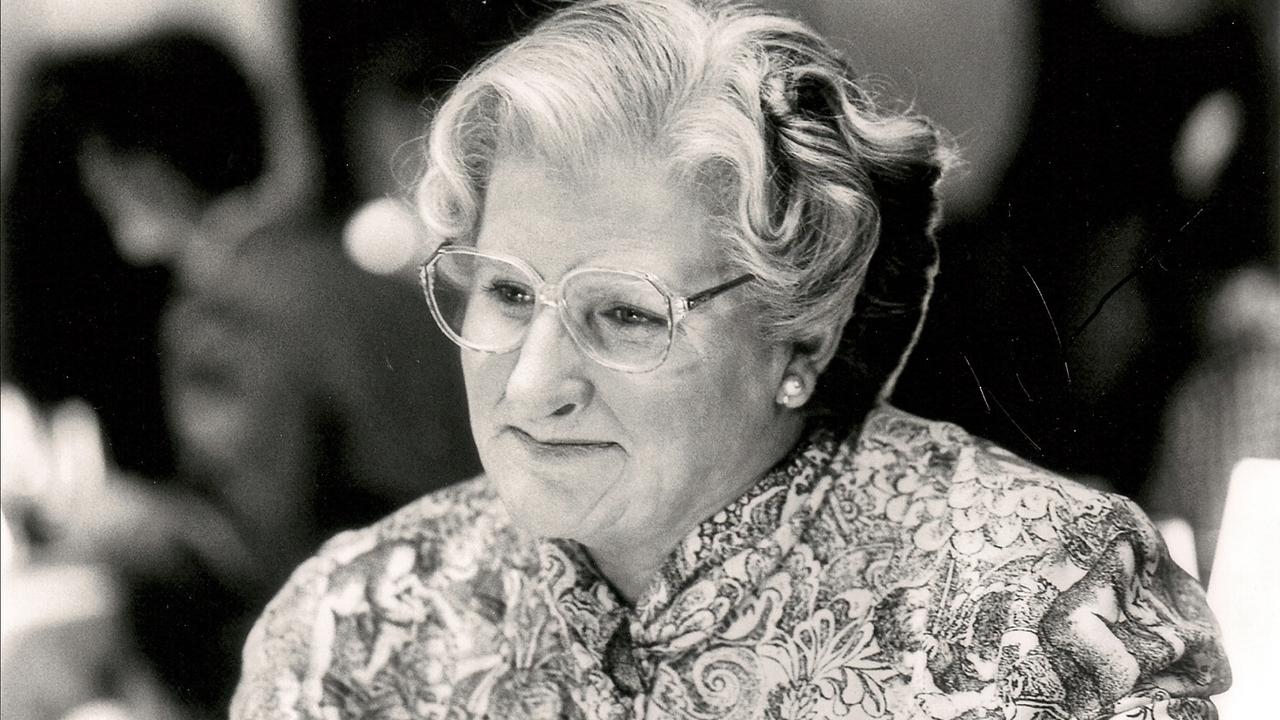
The "DVD culture" of the early 2000s eventually revealed just how much work went into this. The special features showed us that director Chris Columbus (who had already conquered the world with Home Alone) basically had to shoot with three cameras at all times because Williams wouldn't stop improvising. There were reportedly PG, PG-13, and R-rated cuts of this film based solely on Williams’ off-color riffs. Watching it now, you can feel that spontaneity. When the "face mask" (actually icing) falls into the tea, that wasn't scripted—it was a happy accident that Williams just rolled with.
A Masterclass in Supporting the Manic
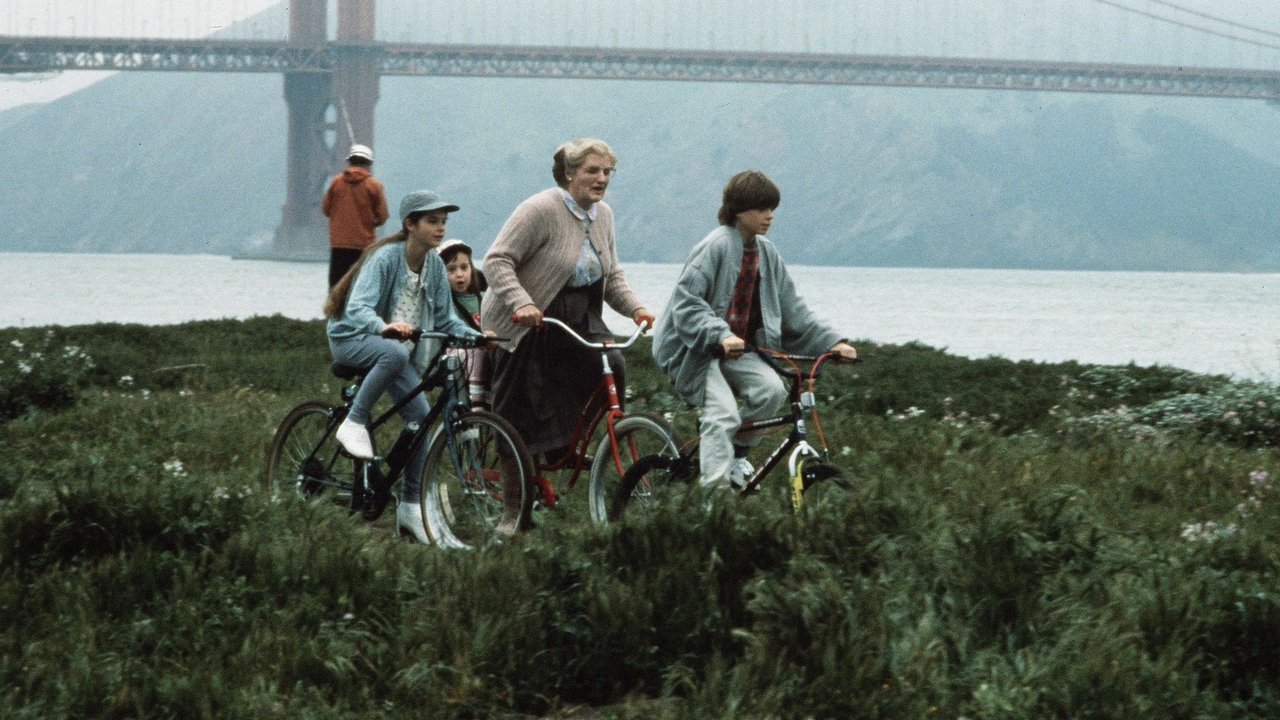
While Williams is the engine, the movie only works because of the people around him. Sally Field has the thankless job of being the "serious" one, but she plays Miranda with a weary, relatable grace. She isn't a villain; she’s just a woman who has been carrying the weight of two adults for fourteen years. Then there’s the kids: Lisa Jakub, Matthew Lawrence, and a tiny, precocious Mara Wilson (before she became Matilda). They actually feel like siblings, not Hollywood props.
And we have to talk about Pierce Brosnan as Stu. This was before he donned the tuxedo for GoldenEye, and he is remarkably good as the "other man." The script could have made him a jerk, but he’s actually a decent, handsome guy who genuinely likes the kids and wants to take them to Hawaii. The scene where Daniel pelts him with a lime and calls it a "run-by fruiting" is the ultimate 90s petty-dad move.

The Bittersweet Reality Check
What makes Mrs. Doubtfire stand out from the sea of 90s family comedies—and why it remains a Popcornizer favorite—is the ending. In a typical blockbuster of the era, Daniel and Miranda would have realized they still loved each other, and the family would have been restored. But the filmmakers fought the studio on this. They insisted on a realistic conclusion: the parents stay divorced, but they find a way to co-parent with respect.
It’s a remarkably mature message for a movie that features a man setting his fake breasts on fire over a stove. It acknowledges that sometimes things break and you can't put them back together exactly as they were, but you can build something new. It’s that blend of high-concept drag comedy and grounded emotional stakes that allowed the film to rake in over $440 million—a staggering amount for a domestic drama in 1993.
Mrs. Doubtfire remains a fascinating artifact of its time, capturing a moment when a massive movie star could carry a film through sheer, unadulterated talent and a few pounds of latex. It’s funny, sure, but the reason it sticks with me is the heart underneath the wig. It reminds me that being a parent isn't about being the fun guy with the pony; it’s about showing up, even when you have to glue on a new face to do it.
Keep Exploring...
-
Home Alone
1990
-
Home Alone 2: Lost in New York
1992
-
Stepmom
1998
-
The Santa Clause
1994
-

Babe
1995
-
Patch Adams
1998
-

Cheaper by the Dozen
2003
-
The Princess Diaries 2: Royal Engagement
2004
-

High School Musical 3: Senior Year
2008
-

Hannah Montana: The Movie
2009
-

Arthur Christmas
2011
-

Jack
1996
-
The Mighty Ducks
1992
-

The Muppet Christmas Carol
1992
-
Freaky Friday
2003
-
The Fisher King
1991
-
Bicentennial Man
1999
-
Teenage Mutant Ninja Turtles
1990
-
Fried Green Tomatoes
1991
-
A League of Their Own
1992