Return of the Living Dead III
"Love is dead, but she’s still hungry."
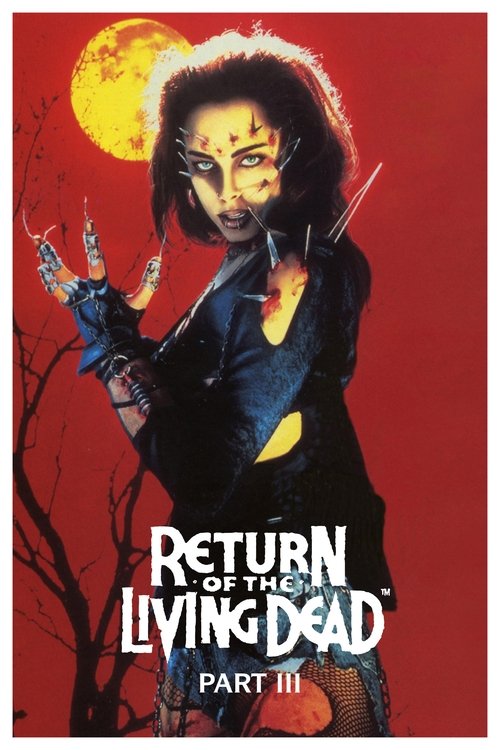
If you walked into a video store in 1993 expecting the slapstick, "Braaaaains!" shouting anarchy of the first two Return of the Living Dead movies, the third installment likely gave you a psychic concussion. While the predecessors were punk-rock comedies that treated the apocalypse like a mosh pit, Return of the Living Dead III is a somber, gothic tragedy. It’s Romeo and Juliet if Juliet had a hunger for cerebral cortexes and a DIY aesthetic involving rusted nails and shards of glass.

I’ve always had a soft spot for movies that take a hard left turn away from their franchise roots. This wasn’t just a sequel; it was a total reimagining of what a zombie movie could be in the early 90s. I actually watched this for the third time last Tuesday while struggling to assemble a cheap IKEA bookshelf, and the sight of a character hammering spikes into her own skin felt weirdly relatable as I searched for a missing cam-lock nut.
From Punk Rock to Goth Romance
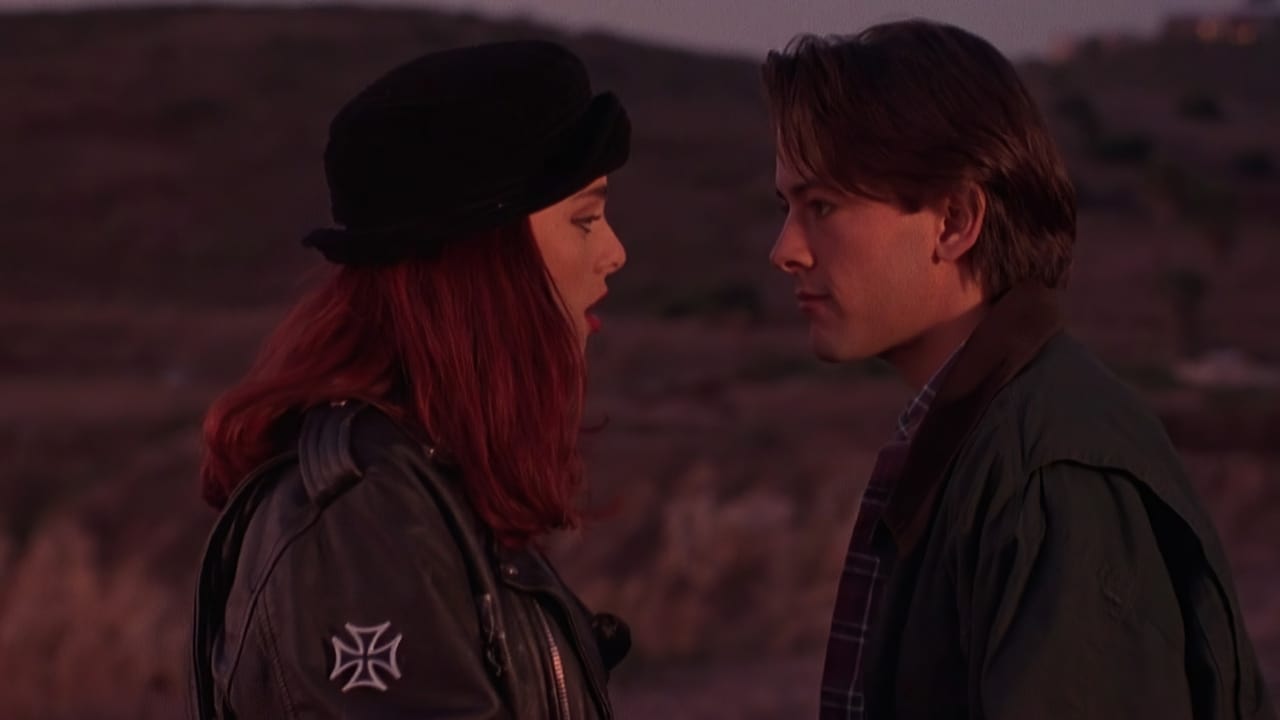
Directed by Brian Yuzna—the man who gave us the "shunting" scene in Society—this film trades the neon-drenched 80s for the moody, rain-slicked grime of the early 90s. We follow Curt (J. Trevor Edmond), the rebellious son of a military colonel (Kent McCord) who is experimenting with the infamous Trioxin gas to create "bio-living" soldiers. When Curt’s girlfriend, Julie (Melinda Clarke), dies in a motorcycle accident, he does what any grieving, irrational teenager with access to top-secret chemicals would do: he brings her back.
The shift in tone is jarring but effective. Gone are the talking severed heads and the bumbling graveyard workers. In their place is a legitimate attempt at a tragic romance. Curt is desperate and delusional, while Julie is a ticking time bomb of biological urges. It captures that specific 90s brand of teenage angst—the feeling that your love is so intense it’s literally life-threatening—and literalizes it with a hefty dose of gore.
The Art of Self-Inflicted Agony
The real star of the show isn't the script or the military subplot; it’s Melinda Clarke. Before she was a powerhouse on The O.C. or Nikita, she delivered one of the most physically demanding performances in horror history. As the Trioxin takes hold, Julie realizes that the only way to suppress her hunger for human brains is to subject herself to extreme physical pain.
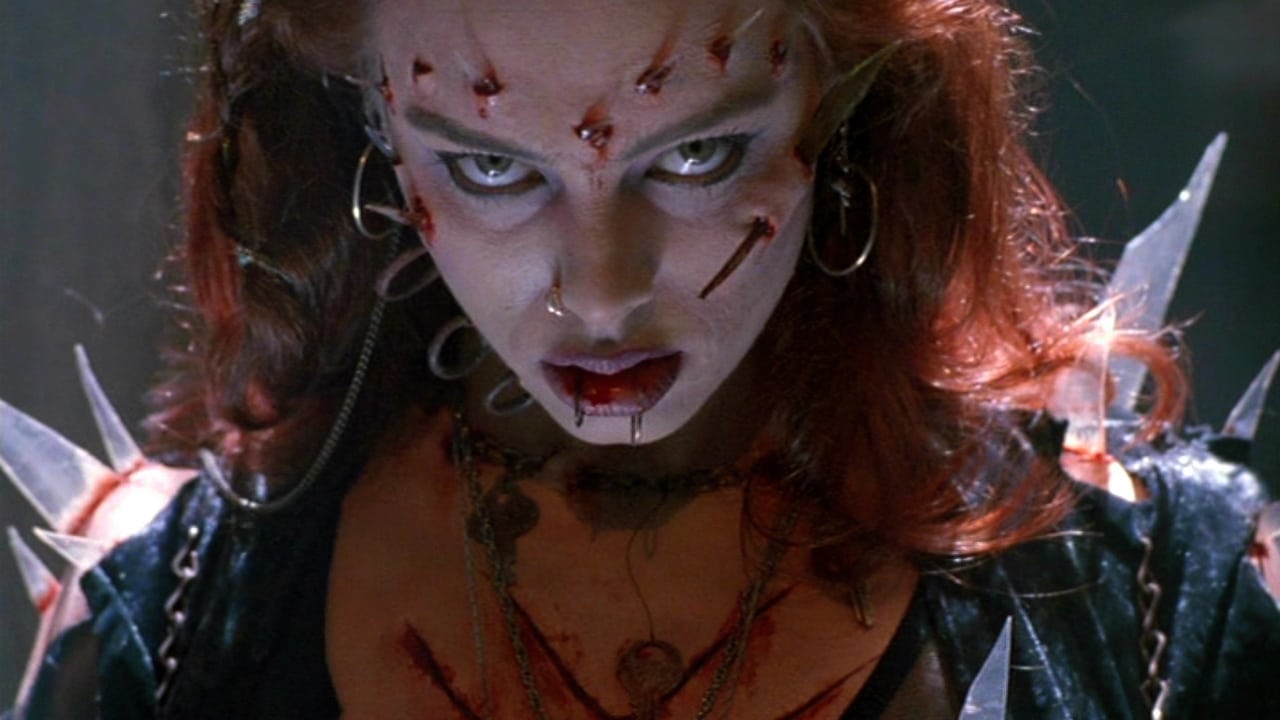
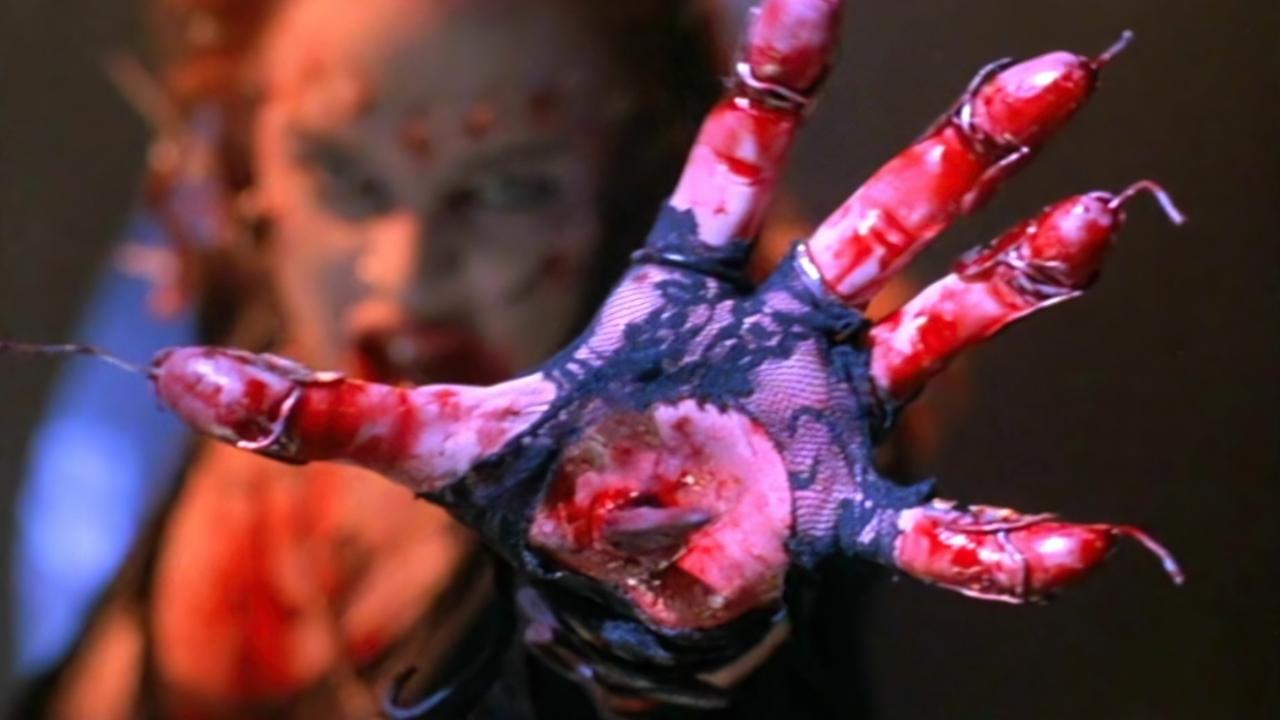
This leads to the film’s iconic imagery: Julie transforming herself into a "body-mod" nightmare. She uses piercings, wires, and broken glass to keep her nerves screaming, effectively distracting her stomach by torturing her skin. It’s a bold, disturbing metaphor for self-harm and addiction, and it’s essentially the most metal way to deal with a hunger for gray matter ever filmed.
The practical effects, handled by a team including the legendary Steve Johnson, are phenomenal. In an era where CGI was beginning to rear its head (think Jurassic Park), ROTLD III is a glorious last stand for the latex-and-slime brigade. The creature designs are tactile and repulsive; when you see a character with their spine pulled through their throat, you feel the weight of the prosthetic. It has a "wet" look that modern digital effects rarely replicate.
Finding Beauty in the Body Horror
Despite its $2 million budget—which is basically the catering budget for a Marvel movie—Brian Yuzna makes every cent scream. He leveraged his experience in the indie trenches to create a film that feels much larger than its "direct-to-video" reputation suggests. The film didn't exactly set the box office on fire, but it became a staple of the DVD era, often discovered by horror fans who were shocked to find a movie with actual emotional stakes buried under a sequel number.
There’s a great piece of trivia regarding the casting: Melinda Clarke actually auditioned for the role three times, and they almost went with someone else because they thought she was "too pretty" to be a zombie. She had to prove she could handle the grueling 18-hour days spent in a makeup chair. Looking back, it’s hard to imagine anyone else in the role. She brings a tragic vulnerability to Julie that makes the ending hit surprisingly hard.

The film also benefits from a solid supporting cast. Basil Wallace shows up as "Riverman," a philosophical hermit living in the sewers who provides a strange, grounded counterpoint to the military-industrial complex plotline. It’s these weird, textured details that elevate the movie from a standard "zombies on the loose" flick to something closer to a dark fairy tale.
Return of the Living Dead III is a fascinating relic of the early 90s. It bridged the gap between the splatter-heavy 80s and the more polished, psychological horror that would follow in the wake of Scream. It’s a movie that respects its audience enough to be sad, and it’s a masterclass in how to use practical effects to tell a story rather than just to show off a budget.
If you’re looking for a double feature, pair this with The Crow. They share that same rain-washed, "love-conquers-the-grave" DNA that defined the era. It’s not a perfect film—the military subplot drags occasionally, and some of the supporting acting is a bit wooden—but for Julie’s transformation alone, it’s an essential watch for any horror enthusiast. Just don’t try the body-mod stuff at home while you're building furniture. It doesn't help.
Keep Exploring...
-

The Return of the Living Dead
1985
-
A Girl Walks Home Alone at Night
2014
-

Bram Stoker's Dracula
1992
-
Mary Shelley's Frankenstein
1994
-

Wolf
1994
-

Night of the Living Dead
1990
-
Braindead
1992
-
Leaving Las Vegas
1995
-

Tremors 2: Aftershocks
1996
-

Chasing Amy
1997
-
Buffalo '66
1998
-
Ring
1998
-

Warm Bodies
2013
-
Monster's Ball
2001
-
Session 9
2001
-
Secretary
2002
-
Cabin Fever
2003
-

Garden State
2004
-
Waiting...
2005
-

High School Musical
2006