Robin Hood: Men in Tights
"The legend that actually speaks with an English accent."
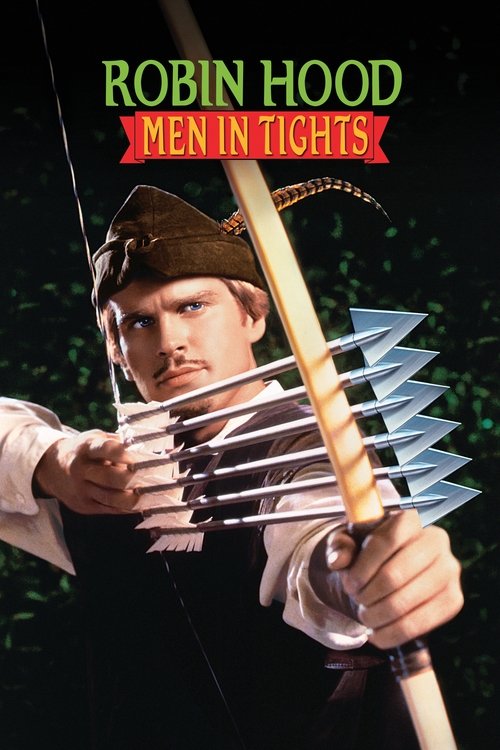
The early 1990s were a weirdly self-serious time for the legend of Sherwood Forest. Kevin Costner had just dominated the box office with Robin Hood: Prince of Thieves, a film that gave us a gritty, mullet-clad hero and a Bryan Adams power ballad that refused to leave the radio for roughly 400 years. It was a movie begging to be poked with a stick, and Mel Brooks—the undisputed king of the cinematic "stick-poke"—was more than happy to oblige. I watched this most recent time while my neighbor was power-washing his driveway for three hours straight, and the rhythmic whoosh of the water weirdly synced up with the scene where the Merry Men burn down the village. It felt appropriate for a movie that thrives on chaotic, repetitive energy.
The Anti-Costner Crusade
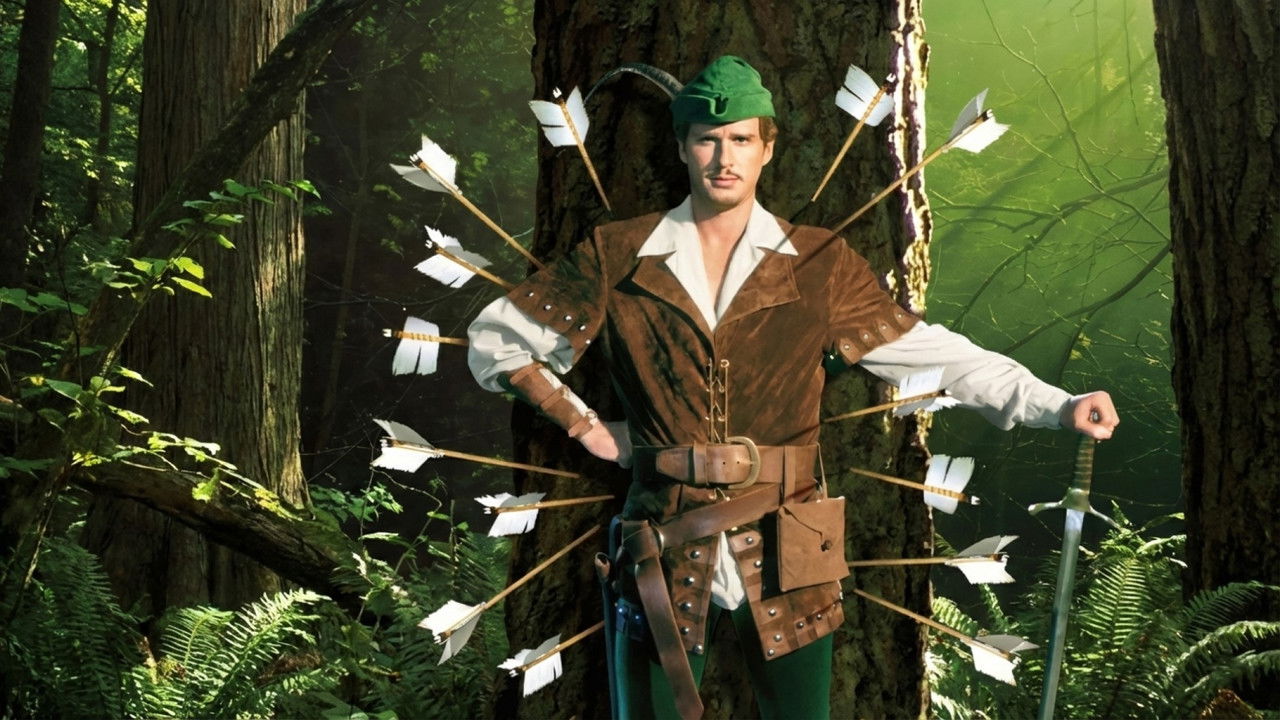
Robin Hood: Men in Tights isn’t just a parody of the Robin Hood myth; it is a laser-targeted assassination of the 1991 blockbuster. While the film pulls DNA from the 1938 Errol Flynn classic, its funniest barbs are aimed directly at the 90s "prestige" action flick. When Cary Elwes looks into the camera and reminds the audience that, unlike some other Robins, he can speak with an actual English accent, it’s a shot across the bow that still lands today. Cary Elwes is arguably the film’s greatest asset. Coming off The Princess Bride, he was the only actor alive who could play a dashing hero while simultaneously looking like he was about to burst into a Broadway showtune. He doesn't just play Robin Hood; he plays a guy who is very aware he’s playing Robin Hood.
The film arrived at a crossroads for Mel Brooks. The 70s and 80s were his undisputed golden era, and by 1993, some critics felt his brand of "Vaudeville-on-film" was losing its edge. However, looking back with thirty years of hindsight, Men in Tights feels like a joyful victory lap. It’s a transition point from the old guard of comedy to the new. You have Richard Lewis doing his neurotic, "Prince John as a New York stand-up" routine, clashing beautifully with the screen debut of a very young Dave Chappelle as Ahchoo. Seeing Dave Chappelle in a Reebok Pump joke is a time capsule of 1993 culture that somehow hasn't aged into total irrelevance.
A Masterclass in the "Stupid-Smart" Gag
Brooks has always operated on a high-low frequency: a joke about 12th-century political exile followed immediately by a man falling into a pile of horse manure. "Prince John’s migrating mole is the hardest-working physical gag of the 90s," and it’s the kind of repetitive, low-brow commitment that Brooks excels at. The Sheriff of Rottingham, played by the late Roger Rees, is a frantic, scenery-chewing delight who delivers lines with a fractured syntax that feels like Shakespeare having a stroke.
What makes the humor work mechanically is Brooks’s mastery of the "rule of three," or in some cases, the "rule of twelve." He will run a joke into the ground, dig it up, and run it into the ground again until you laugh out of sheer exhaustion. Take the scene where the Blindman, Loxley (played by Mark Blankfield), is trying to "see" things. It’s objectively dumb, but the commitment to the bit is so absolute that you can’t help but admire the craftsmanship of the stupidity. "Mel Brooks treats the fourth wall like a suggestion rather than a boundary," and having the characters literally pull out the script to check the plot is a meta-flourish that paved the way for the self-aware comedies of the 2000s.
The Cult of the Merry Men
While it wasn't a critical darling upon release—many felt it was a "lesser" version of Blazing Saddles—the film found its true home on VHS and late-night cable. For a generation of kids, this was the only Robin Hood that mattered. It’s filled with bits that have become permanent fixtures of the cult comedy lexicon. "I'm on one side, I'm on the other side" is still the gold standard for low-budget bridge fights.
The production value is surprisingly high for a parody, thanks to cinematography by Michael D. O'Shea and a score by Hummie Mann that sounds like it belongs in a legitimate $100 million epic. This contrast is the secret sauce of parody: it has to look like the thing it’s making fun of. If the sets looked cheap, the jokes wouldn't have anything to push against. Instead, the film looks like a lush medieval adventure, which makes Amy Yasbeck’s 'Everlast' chastity belt the pinnacle of 90s prop comedy.

Apparently, the casting was as chaotic as the film itself. Cary Elwes allegedly turned down a role in the actual Prince of Thieves only to end up mocking it here. And for the trivia hunters: the role of King Richard was offered to Sean Connery (who played the role in the Costner film), but he declined, leading to Patrick Stewart stepping in for a cameo that perfectly parodies Connery’s specific Scottish-King-of-England delivery.
Robin Hood: Men in Tights is a film that refuses to grow up, and honestly, why should it? It’s a testament to Mel Brooks’s ability to find the ridiculous in the sublime. While some of the 90s references are starting to gather dust, the core energy—a bunch of talented actors having the time of their lives in green felt—remains infectious. It’s not a masterpiece of high cinema, but it’s a masterpiece of having a good time, and sometimes that’s exactly what the legend had coming.

Keep Exploring...
-
Dracula: Dead and Loving It
1995
-
Spaceballs
1987
-

The Nutty Professor
1996
-

History of the World: Part I
1981
-
Tremors
1990
-

My Girl
1991
-
Army of Darkness
1992
-
Addams Family Values
1993
-

Dazed and Confused
1993
-
Hocus Pocus
1993
-
Ed Wood
1994
-
Ri¢hie Ri¢h
1994
-

Clueless
1995
-
Happy Gilmore
1996
-
Matilda
1996
-
The Cable Guy
1996
-
Austin Powers: International Man of Mystery
1997
-

Bride of Chucky
1998
-

Fear and Loathing in Las Vegas
1998
-

Rushmore
1998