Fear City: A Family-Style Comedy
"A projectionist is down. The Carioca is up."
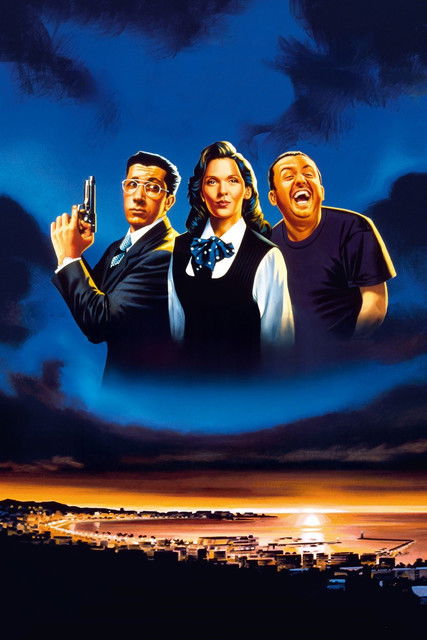
Imagine a world where the most prestigious film festival on the planet, Cannes, is terrorized by a serial killer who takes their cues from a low-budget, fourth-rate slasher flick. Now, imagine that killer isn’t a supernatural entity or a masked psychopath with a grudge, but a looming threat that somehow makes everyone in the room break into a synchronized dance number. This is the deranged, hyper-literate, and deeply silly world of Fear City: A Family-Style Comedy (originally La Cité de la peur), a 1994 French masterpiece that feels like the bastard child of Airplane! and a fever dream induced by too much unpasteurized Camembert.
I recently revisited this while recovering from a wisdom tooth extraction—laughing literally caused me physical pain, and yet, I found myself doubling over as Alain Chabat’s character explained why his name is Karamazov ("No relation"). It is a film that demands your attention not through "prestige," but through a relentless, machine-gun barrage of visual gags and wordplay that refuses to let you breathe.
The Gospel According to Les Nuls
To understand why this film exists, you have to understand Les Nuls. In the early 90s, they were the French equivalent of Monty Python meets the early cast of SNL, a comedy troupe that dominated the airwaves of Canal+. When they finally made the leap to the big screen with Alain Berbérian directing, they didn't just make a movie; they made a manifesto on the absurdity of the medium itself.
The plot is a skeleton: Odile Deray (Chantal Lauby), a high-strung PR agent, is trying to generate buzz for Red Is Dead, a horror movie so bad it makes student films look like Kubrick. When the projectionists start dying in the exact same way as the victims in the film—hammer and sickle to the head—the movie suddenly becomes the hottest ticket in town. Enter Serge Karamazov (Alain Chabat), a bodyguard who is more interested in his own hair than safety, and Simon Jérémi (Dominique Farrugia), an actor who gets so happy he vomits. French cinema spent decades trying to be Godard, only to realize its true calling was Alain Chabat acting like a golden retriever on acid.
A Meta-Meditation on the Silver Screen
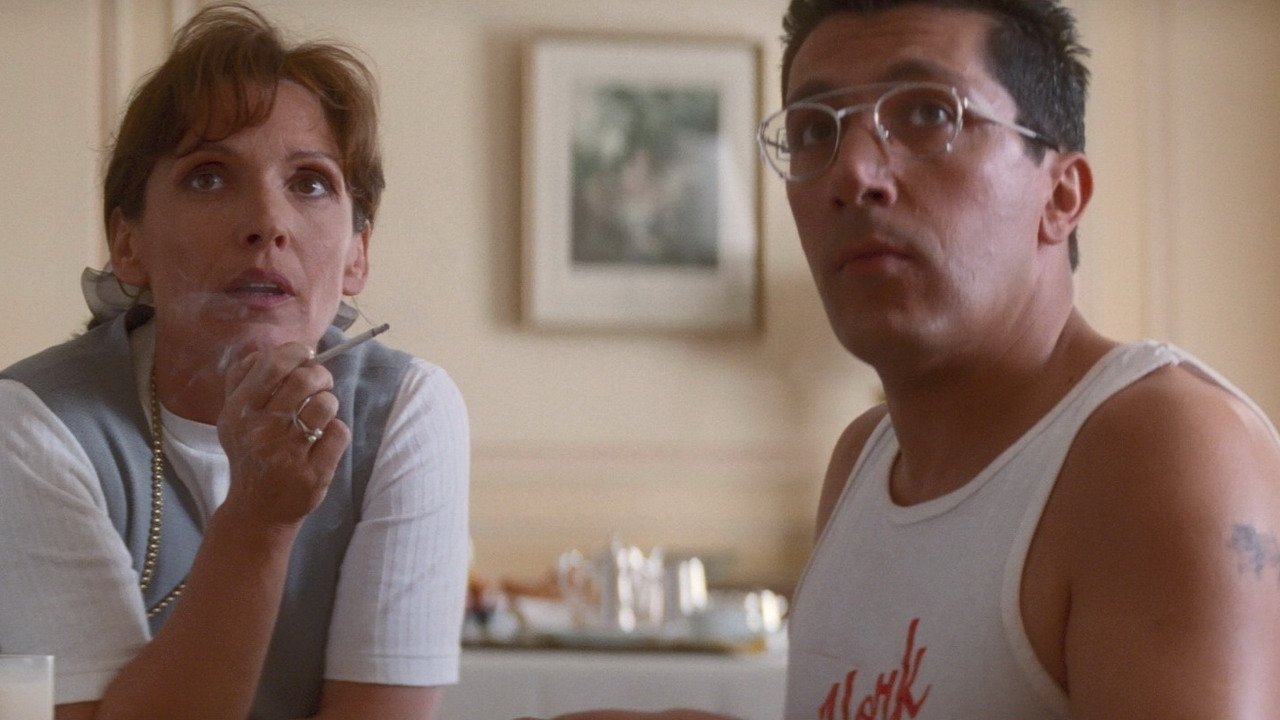
While it’s easy to dismiss Fear City as a collection of fart jokes and slapstick, there is a strangely cerebral layer to the chaos. Released in 1994—the same year Pulp Fiction was busy reinventing the "cool" crime thriller at the actual Cannes Film Festival—Fear City acts as a deconstruction of the very industry that sustains it. It mocks the self-importance of the "seventh art," the desperation of PR culture, and the rigid tropes of the slasher genre.
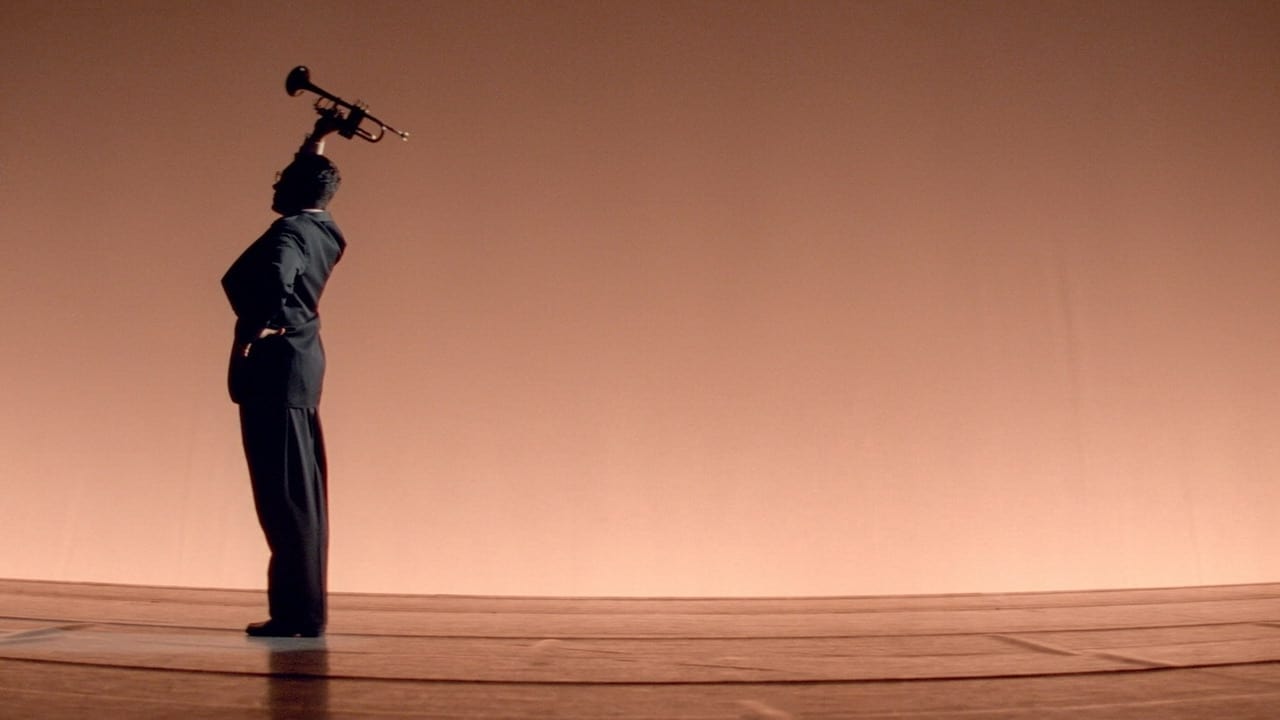
The film-within-a-film, Red Is Dead, is a perfect parody of 80s schlock, but the way the "real" world reacts to it is where the genius lies. The characters frequently break the fourth wall, acknowledge the script, and play with cinematic language in a way that feels surprisingly modern. When Gérard Darmon (playing the incredibly smooth Commissioner Bialès) and Alain Chabat launch into "The Carioca," it’s not just a random musical break; it’s a direct assault on the audience's expectations of narrative flow. The film essentially argues that since life is a series of nonsensical events, cinema should stop pretending to be any different. It’s the smartest movie about being completely moronic ever made.
The Mechanics of the Gag
The comedy here is rhythmic. It’s built on a foundation of "ZAZ" style (Zucker, Abrahams, and Zucker) humor where the background is just as important as the foreground. Look at the way Sam Karmann delivers his lines as the "Disturbing Man," or the blink-and-you’ll-miss-it visual puns scattered throughout the police station. It’s the kind of movie that rewards the pause button—a true relic of the VHS and early DVD era where you’d rewind a three-second clip just to make sure you actually saw a man walking a chair like a dog.
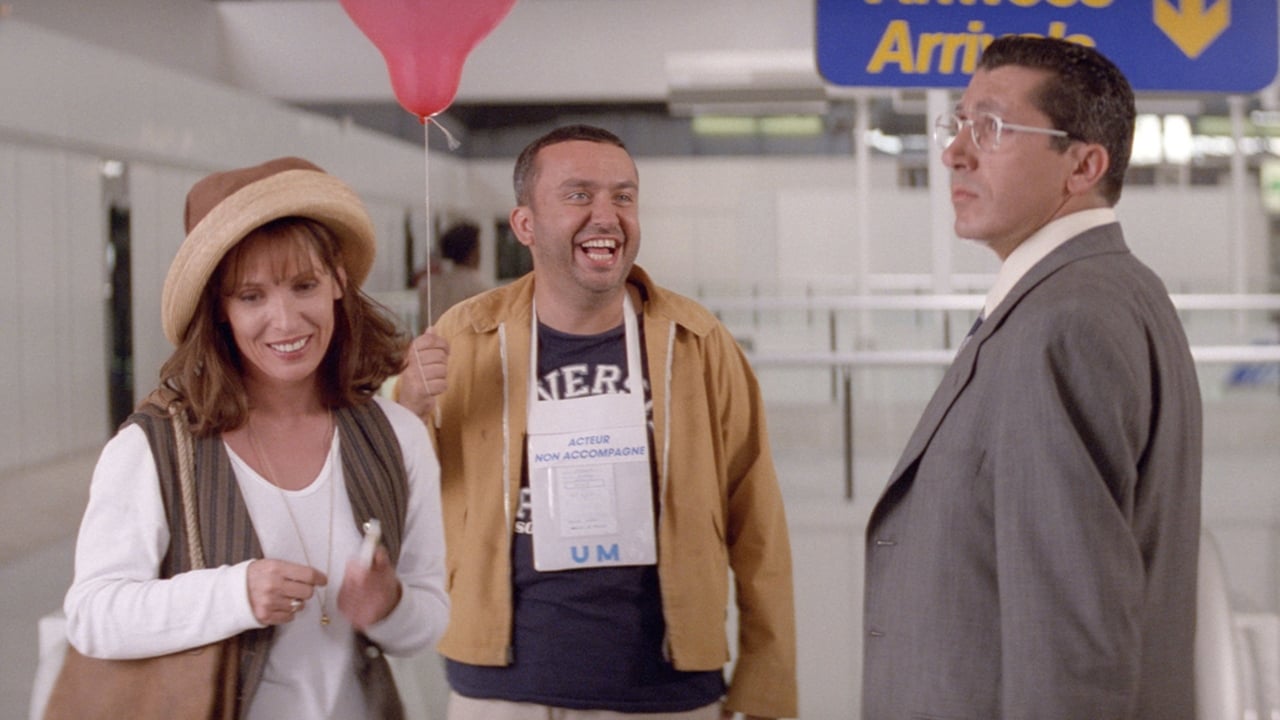
What’s fascinating looking back from 2024 is how well the practical effects and the "lo-fi" aesthetic hold up. Because the film is intentionally mocking "second-class" cinema, the cheapness of the blood and the obviousness of the sets actually enhance the experience. It doesn't need CGI to be funny; it just needs Dominique Farrugia to have a perfectly timed physical reaction to a piece of bad news. The chemistry between the trio is palpable, born from years of live television where timing was a matter of survival.
Fear City: A Family-Style Comedy is a rare bird: a cult film that actually deserves the worship. It’s a dense, joyous, and fiercely intelligent piece of nonsense that captures a specific moment in French cultural history while remaining universally hilarious. If you’ve ever felt that the Cannes Film Festival takes itself a little too seriously, or if you just want to see a man try to use a phone that is clearly just a baguette, you owe it to yourself to find a copy. It is proof that sometimes, the best way to honor the "magic of the movies" is to set it on fire and dance the Carioca around the flames.
Stuff You Didn't Notice
The Carioca Legend: The dance sequence between Gérard Darmon and Alain Chabat was intended to be a minor gag. However, it became so iconic in France that it is still a staple at weddings and parties thirty years later. Darmon reportedly practiced the choreography for weeks to ensure he looked as "professional" as possible. A "Nul" Cameo: If you look closely during the Cannes crowd scenes, you can spot a young Dave Grohl lookalike, but the real prizes are the cameos from French acting royalty like Daniel Gélin, who were more than happy to show up just to be part of the madness. The Martoni Factor: Jean-Christophe Bouvet, who plays the villainous politician Martoni, would later gain international fame (or infamy) as the snobbish Pierre Cadault in Emily in Paris. Seeing him here in a high-octane 90s parody is a trip. Lost in Translation: The film's heavy reliance on French puns is the main reason it never quite "broke" America. For instance, the running gag about "Youri" only works if you understand the French phonetic play, but the physical comedy is so strong it usually bridges the gap regardless.

Keep Exploring...
-
My Cousin Vinny
1992
-

Asterix & Obelix: Mission Cleopatra
2002
-
The Dinner Game
1998
-
A Dog's Will
2000
-
Ask Me If I'm Happy
2000
-
Instructions Not Included
2013
-
Three Colors: White
1994
-
Night on Earth
1991
-
The Postman
1994
-

Three Men and a Leg
1997
-
10 Things I Hate About You
1999
-
All About My Mother
1999
-
Asterix: The Mansions of the Gods
2014
-
Three Colors: Blue
1993
-

Three Colors: Red
1994
-

Cry-Baby
1990
-

DuckTales: The Movie - Treasure of the Lost Lamp
1990
-
Barton Fink
1991
-
Johnny Stecchino
1991
-
Mediterraneo
1991