Forrest Gump
"A slow-rolling odyssey through history that finds its heartbeat in the simplest moments."
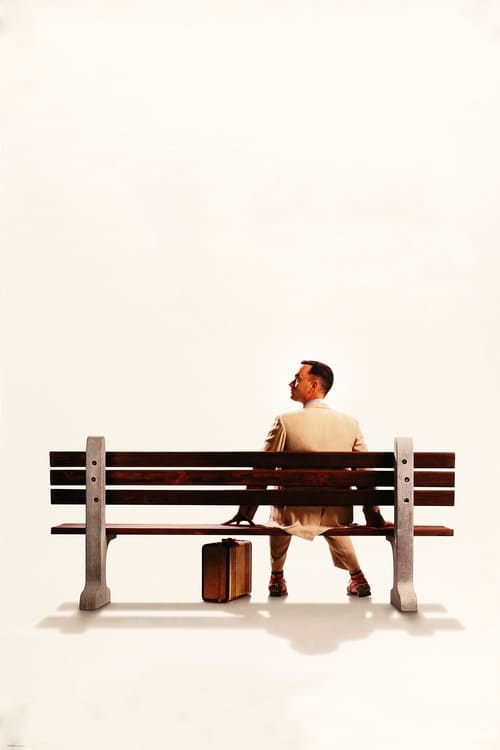
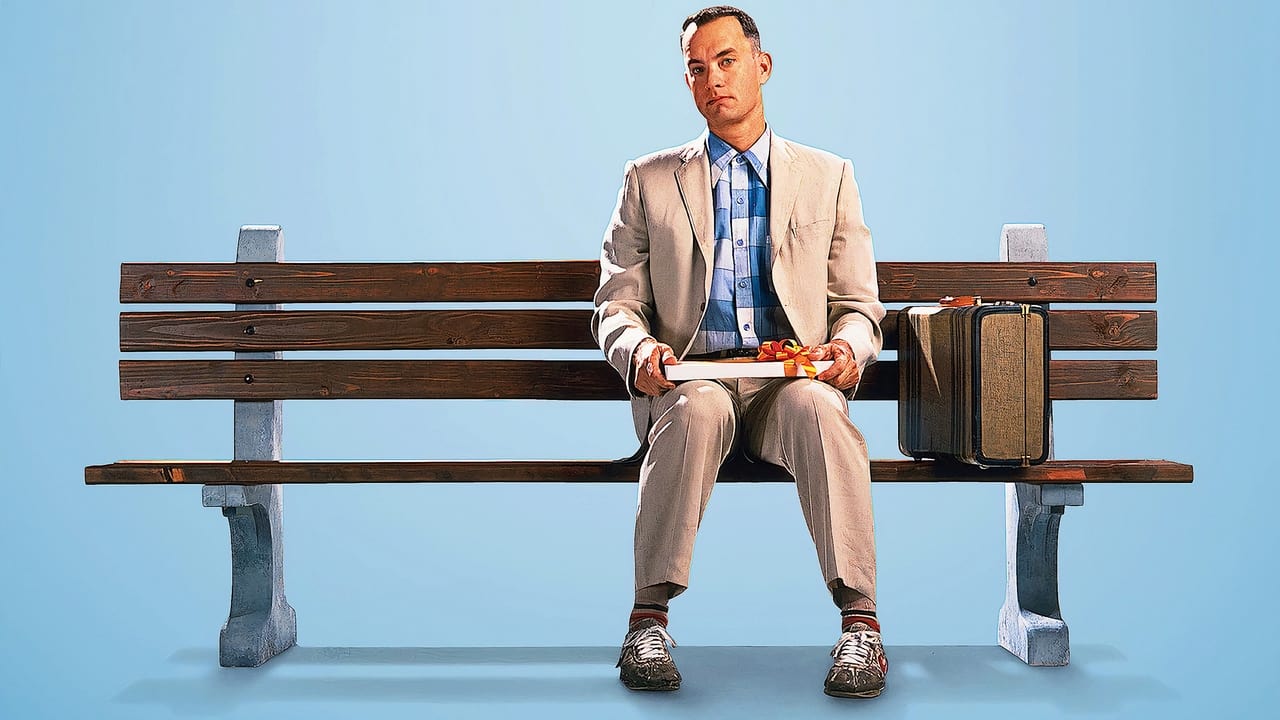
Sitting on a park bench in Savannah, Georgia, clutching a grease-stained box of chocolates, Tom Hanks looks like just another traveler waiting for the number nine bus. But then he starts talking, and the world—or at least the audience in 1994—stopped to listen. I first saw this film on a scratched DVD in my college dorm while eating a box of Raisinets that had melted into one giant, lukewarm chocolate brick, and somehow, that sticky mess felt like the perfect accompaniment to the bittersweet sprawl of Forrest's life.

Forrest Gump is often remembered as a "feel-good" movie, but rewatching it today reveals something much more complex. It’s a technical marvel that somehow kept its soul, a high-wire act performed by a director, Robert Zemeckis, who was becoming increasingly obsessed with pushing the boundaries of what a camera could "honestly" capture. Coming off the heels of Back to the Future and Who Framed Roger Rabbit, Zemeckis used this film to stage a quiet revolution in visual effects.
The Historical Hijacking
Looking back, the CGI was the real sorcery. We’re so used to digital de-aging and deepfakes now that it’s hard to describe how jaw-dropping it was to see Forrest shaking hands with JFK or appearing on The Dick Cavett Show alongside John Lennon. The team at Industrial Light & Magic, led by Ken Ralston, didn't just add explosions; they rewrote history. They used archival footage and painstakingly matched the lighting, grain, and mouth movements to make Forrest a "Zelig" for the baby boomer generation.
It was a digital trick that served a narrative purpose: showing us that history isn't just made by Great Men, but by the people who just happen to be standing in the room. Yet, the most impressive special effect in the movie remains Gary Sinise’s missing legs. The blue-screen stockings used to "remove" Lieutenant Dan’s lower limbs were groundbreaking, but it’s Gary Sinise’s performance—the bitter, whiskey-soaked rage of a man who feels cheated by his own destiny—that makes the effect feel real. Without his cynical edge, the movie might have floated away into pure sentimentality.
Performances That Anchor the Whimsy
Tom Hanks was in the middle of a legendary run here, fresh off his win for Philadelphia. It’s a deceptively difficult role; play Forrest too broad, and it’s offensive; play him too soft, and he’s a doormat. Hanks finds a specific rhythm—a literal and metaphorical forward motion—that makes Forrest feel like an immovable object.

Then there’s Robin Wright as Jenny. She’s often the subject of heated debate among my friends—some see her as a tragic figure, others as a plot device that only exists to break Forrest’s heart. Personally, I think Wright carries the heaviest emotional load in the film. While Forrest is blissfully protected by his optimism, Jenny bears the scars of the 60s and 70s. She is the dark shadow to Forrest’s light, and her journey through the counter-culture movement provides the necessary grit to balance the "magic" of Forrest’s luck. The movie is secretly a tragedy disguised as a Hallmark card, and Jenny is the one who has to live that tragedy out loud.
The Great 1994 Oscar Heist
You can't talk about Forrest Gump without mentioning the 67th Academy Awards. This was the year it went head-to-head with Pulp Fiction and The Shawshank Redemption. It ended up winning six Oscars, including Best Picture, Best Director, and a second consecutive Best Actor trophy for Hanks.
In the years since, film nerds have spent thousands of hours arguing that Quentin Tarantino was "robbed." While Pulp Fiction certainly redefined the indie landscape and the "Sundance generation," Forrest Gump was a different kind of achievement. It was the ultimate "Prestige Blockbuster." It managed to gross over $677 million while tackling child abuse, the Vietnam War, and the AIDS crisis. It’s a film that captured a specific American yearning for innocence during the cynical transition of the mid-90s.
Stuff You Might Have Missed

The production was famously a bit of a gamble. Paramount actually grew cold on the budget during filming, particularly for the iconic "running across America" sequence. To keep the cameras rolling, Robert Zemeckis and Tom Hanks reportedly paid for that portion of the shoot out of their own pockets in exchange for a larger share of the profits. Considering the box office haul, that was probably the smartest financial move in Hollywood history.
Also, if you look closely at the running scenes, that’s often not Tom Hanks. His younger brother, Jim Hanks, served as his hand-picked stunt double because he was the only one who could perfectly replicate Tom’s slightly awkward, stiff-torso running style. It’s those tiny, familial details that give the film its idiosyncratic texture.
Final Thoughts
The score by Alan Silvestri—especially that delicate, piano-driven main theme—still has the power to make me feel like I’ve got something in my eye. Whether you view the film as a conservative fable or a surrealist comedy about the randomness of existence, there’s no denying the craft on display. From the way Don Burgess frames the sprawling landscapes of the American West to the effortless chemistry of the ensemble, it’s a movie that earns its runtime.
The film leaves you with a strange sense of peace, much like the feather that bookends the narrative. It’s a reminder that we are all just drifting on a breeze, sometimes landing in a puddle and sometimes on a shoulder. I’ll always have a soft spot for the way Forrest simply accepts his life as it comes, even when the rest of us are busy overthinking ours. It’s a big, messy, beautiful piece of cinema that remains as singular now as it was thirty years ago.
Keep Exploring...
-

Dilwale Dulhania Le Jayenge
1995
-

Cast Away
2000
-
That Thing You Do!
1996
-
10 Things I Hate About You
1999
-

Love, Rosie
2014
-

Titanic
1997
-
The Truman Show
1998
-
Chungking Express
1994
-
The Postman
1994
-

Saving Private Ryan
1998
-
The Green Mile
1999
-
Back to the Future Part III
1990
-
Before Sunrise
1995
-
Moonrise Kingdom
2012
-
A Beautiful Mind
2001
-
The Curious Case of Benjamin Button
2008
-
The Wolf of Wall Street
2013
-
Jerry Maguire
1996
-
As Good as It Gets
1997
-
Life Is Beautiful
1997