Naked Gun 33⅓: The Final Insult
"Still silly after all these years."
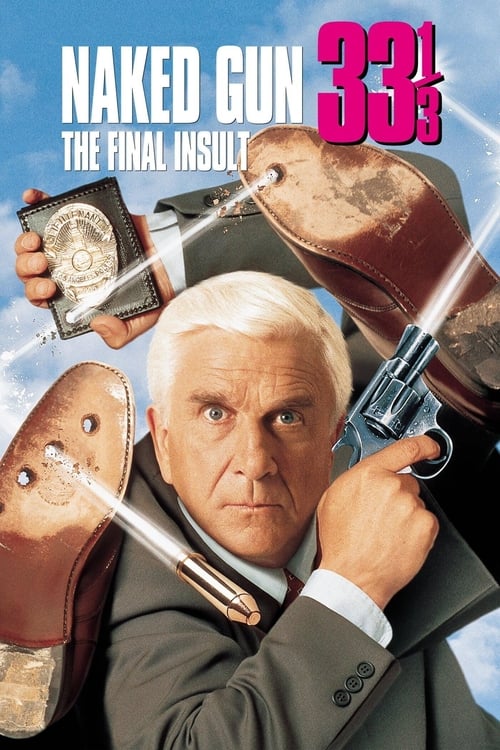
The sight of a dozen baby strollers bouncing down the steps of Union Station while a hail of bullets flies overhead shouldn't be funny. It’s a direct, shot-for-shot parody of Brian De Palma’s The Untouchables, which was itself a nod to Battleship Potemkin. But when Leslie Nielsen’s Lt. Frank Drebin gets his foot caught in one of those strollers and starts inadvertently kicking a machine-gun-wielding assassin, I can't help but lose it. That’s the magic of the Naked Gun series: it takes the "serious" cinema we’re supposed to respect and treats it like a giant, inflatable chew toy.
I recently revisited Naked Gun 33⅓: The Final Insult on a humid Tuesday evening while nursing a bag of popcorn that was roughly 40% unpopped kernels—a viewing experience that felt spiritually aligned with the film’s "hit-everything-at-the-wall" philosophy. Released in 1994, this was the swan song for the trilogy, and while the gears were starting to grind a bit, it remains a fascinating artifact of a time when the Zucker-Abrahams-Zucker (ZAZ) style of comedy ruled the multiplex.
A Retirement Plan Gone Wrong
By 1994, the spoof genre was at a crossroads. We were moving away from the meticulously crafted sight gags of the 80s toward the more scattershot, pop-culture-heavy style that would eventually lead to the Scary Movie franchise. Peter Segal, making his directorial debut here before going on to helm Tommy Boy, keeps the pace frantic. The plot, as much as there is one, involves Frank Drebin being lured out of a very domestic, very boring retirement to go undercover in a state prison. His mission? Befriend a terrorist played by Fred Ward (who brings a surprisingly sturdy "straight man" energy to the madness) and find out what he’s planning to blow up.
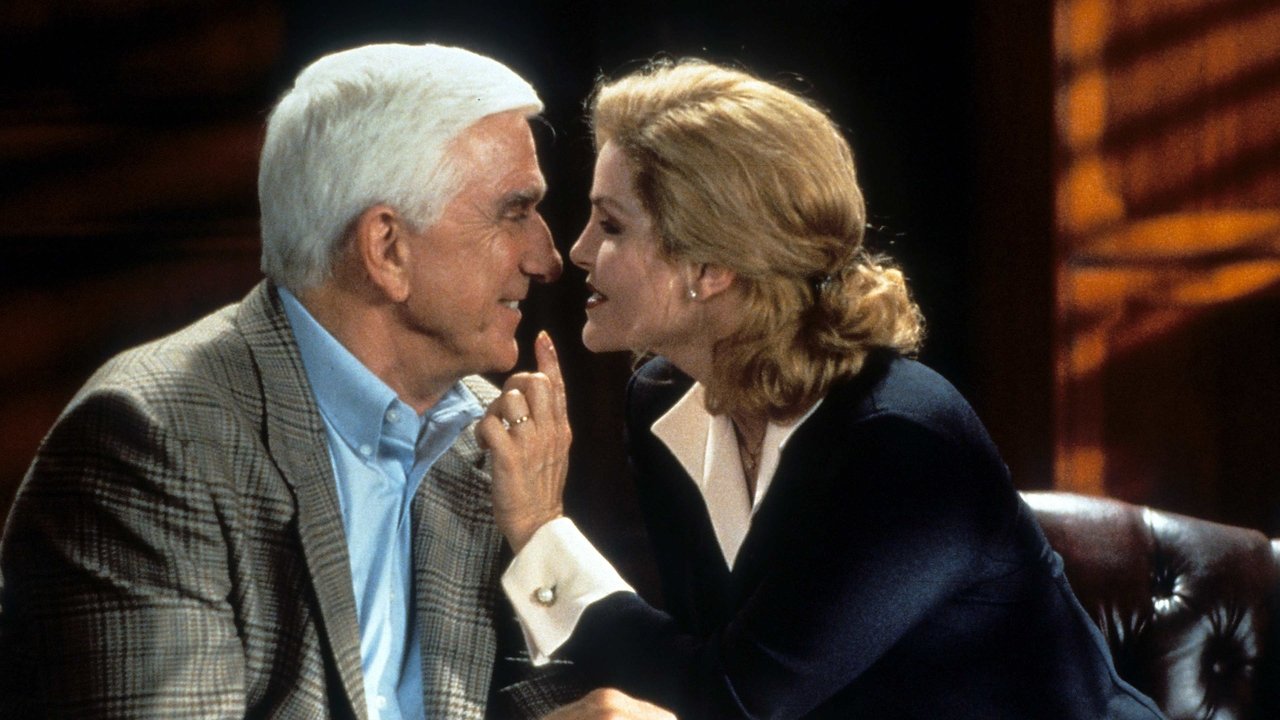
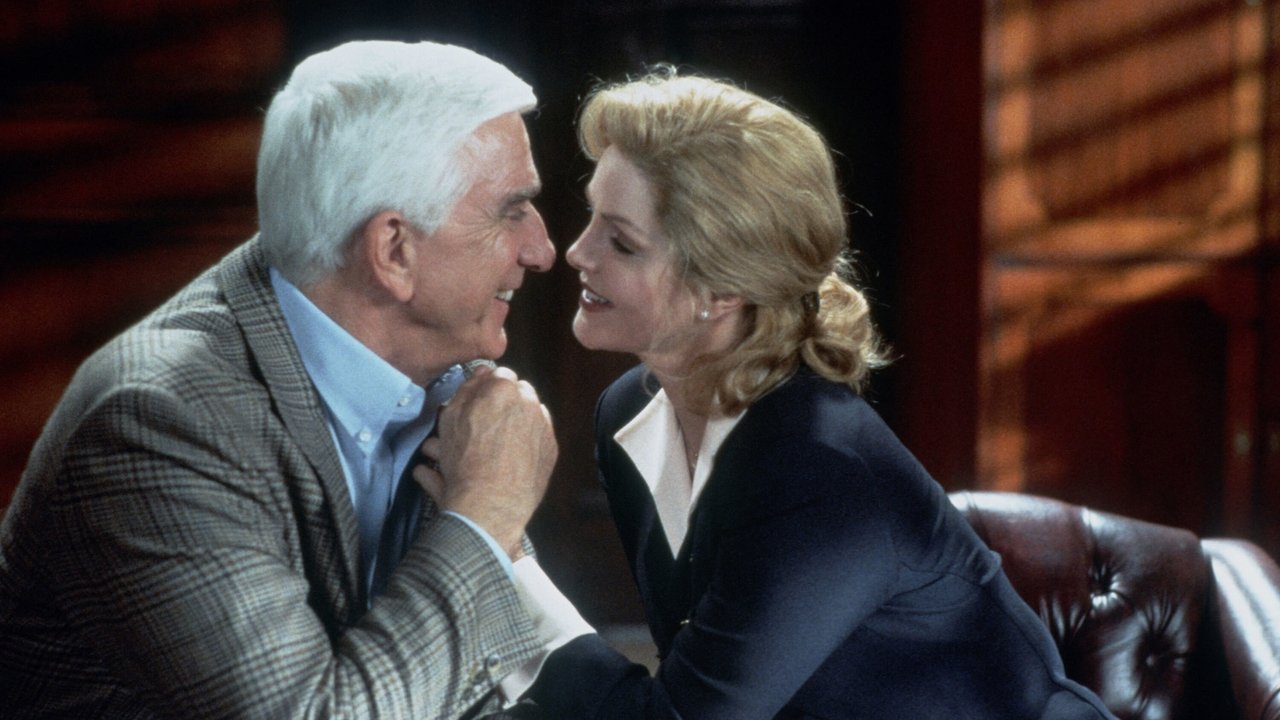
The domestic scenes between Frank and Jane, played by the perpetually game Priscilla Presley, are actually some of my favorites. There’s something inherently hilarious about Frank trying to be a "modern husband" while still possessing the situational awareness of a goldfish. Watching them navigate a fertility clinic is like watching a bulldozer try to perform heart surgery, and it’s a testament to Leslie Nielsen’s genius that he can make a simple walk through a door look like a coordinated stunt.
The Last Gasp of the Slapstick Giant

Looking back, the 90s was the last era where high-budget, practical-effect slapstick could thrive. Today, a lot of the visual gags would be "enhanced" by CGI, losing that tactile, dangerous energy. When Frank is dangling from a lighting rig at the Academy Awards, it feels real because it is real—or at least, a real stuntman is really dangling. There’s a weight to the humor that digital comedy often lacks.
Speaking of the Academy Awards, the climax of the film is a masterclass in organized chaos. It’s a parade of 90s cameos—Vanna White, Weird Al Yankovic, Mary Lou Retton—that serves as a perfect time capsule. It also highlights how much the film industry has changed. Back then, the Oscars were the undisputed center of the cultural universe; today, a parody of them wouldn't feel nearly as high-stakes.
The film also features the return of the original squad: George Kennedy as the long-suffering Ed Hocken and O. J. Simpson as the disaster-prone Nordberg. It’s impossible to watch this now without acknowledging the massive "elephant in the room" regarding Simpson’s real-life timeline—the film was released just months before the trial of the century began. It adds a surreal, unintended layer of "90s-ness" to the experience that no screenwriter could have planned.
The Oscar-Worthy Chaos
Does every joke land? Heavens, no. The hit-to-miss ratio is probably about 60/40. Some of the wordplay feels a bit dusty, and the subplot about Jane’s desire for a baby feels like it’s from a different, much worse movie. But the bits that work are legendary. The "Phil Donahue" sequence in the prison is a piece of absurdist art, and the opening parody of The Untouchables is as sharp as anything ZAZ ever produced.
Behind the scenes, the film was a massive commercial success, pulling in over $132 million on a $30 million budget. It proved that audiences still had an appetite for the "deadpan dummy" archetype that Leslie Nielsen perfected. Interestingly, the title 33⅓ wasn't just a reference to the speed of an LP record; it was a cheeky way to signal that this was the third film plus a little extra. It’s that kind of low-stakes, high-effort wit that makes me miss this era of filmmaking. It wasn't trying to build a cinematic universe; it just wanted to make you spit out your soda.
Naked Gun 33⅓: The Final Insult isn't the tightest film in the trilogy—that honor still belongs to the 1988 original—but it’s a joyful, messy goodbye to one of comedy’s greatest characters. It’s the kind of movie that rewards you for paying attention to the background of every shot while simultaneously demanding that you don't take a single second of it seriously. If you need 83 minutes of pure, unadulterated silliness to escape the modern world, Frank Drebin is still the man for the job.
Keep Exploring...
-
The Naked Gun 2½: The Smell of Fear
1991
-
The Naked Gun: From the Files of Police Squad!
1988
-
The Longest Yard
2005
-
Another 48 Hrs.
1990
-
Lethal Weapon 3
1992
-
Sneakers
1992
-
Ace Ventura: Pet Detective
1994
-
The Mask
1994
-
Ace Ventura: When Nature Calls
1995
-
Bad Boys
1995
-
Get Shorty
1995
-
Tommy Boy
1995
-
Rush Hour
1998
-
Austin Powers: The Spy Who Shagged Me
1999
-

Hot Shots!
1991
-

Hot Shots! Part Deux
1993
-
Big Momma's House
2000
-
Miss Congeniality
2000
-
Chicago
2002
-
White Chicks
2004