Speed
"Fifty miles per hour or everyone dies."
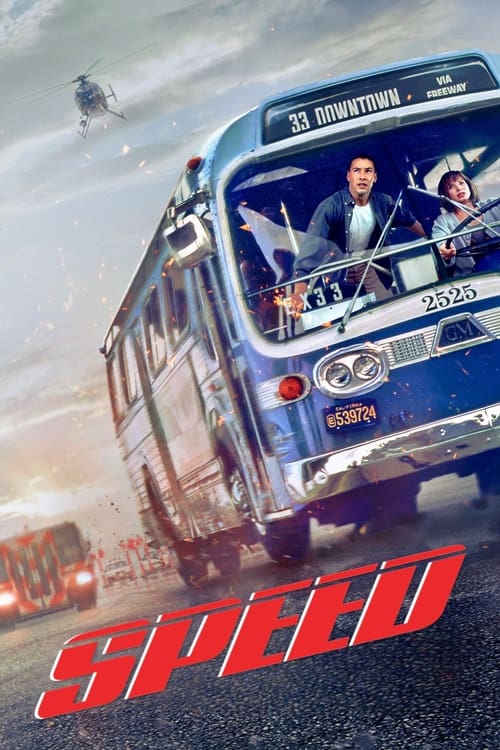
The mid-90s were a strange, transitional twilight for the American action movie. We were moving away from the "one-man-army" bravado of the eighties and sliding toward the pixel-heavy spectacles that would eventually define the turn of the millennium. In 1994, Speed arrived like a brick through a plate-glass window. I revisited it this week on a humid Tuesday evening while nursing a glass of lukewarm ginger ale and trying to ignore the rhythmic thumping of my neighbor’s washing machine, and I realized something: this isn't just a "Die Hard on a bus" clone. It’s a relentless, high-stakes exercise in tension that treats its absurd premise with a deadly seriousness that few modern blockbusters dare to replicate.
The Geometry of a Death Trap
The premise is the stuff of screenwriting legend because of its brutal simplicity. A disgruntled ex-cop rigs a city bus to explode if it drops below 50 mph. That’s it. That’s the movie. But what director Jan de Bont—making his directorial debut after serving as the cinematographer on Die Hard—understands is that simplicity requires perfection in execution.
There is a genuine weight to the violence here. When the first bus explodes early in the film, it’s not a stylized firework; it’s a jarring, metal-rending shock that sets a grim tone. This isn't a playground. People are trapped in a claustrophobic tin can, and their fear feels uncomfortably real. Speed is effectively a two-hour panic attack masquerading as a summer blockbuster. It refuses to let you breathe, utilizing a propulsive score by Mark Mancina that mimics a racing heartbeat. By the time they hit the unfinished 105 freeway, I found myself gripping my sofa cushions as if I were the one trying to steer through Los Angeles traffic.
Practical Magic and Pavement
Looking back from an era where an entire city can be leveled by a guy at a computer terminal, the tactile reality of Speed is breathtaking. When you see that massive GM New Look bus leaping across a 50-foot gap in an unfinished highway, your brain registers the physics. It’s not just "early CGI that still impresses"—it’s almost entirely practical. They actually jumped a bus. They actually crashed a plane into a hangar. They actually filmed Keanu Reeves crawling underneath a moving vehicle on a rigged tow bar.
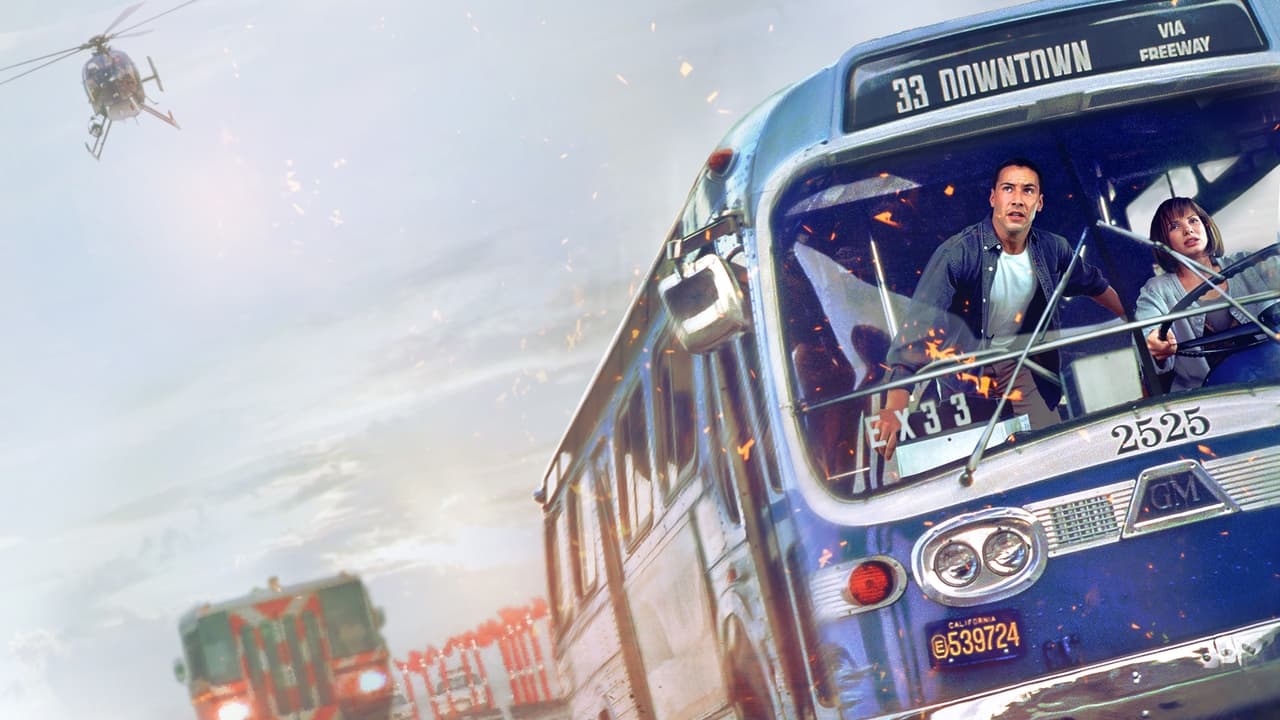
The cinematography by Andrzej Bartkowiak favors grit over glamour. The sun-bleached asphalt of LA looks hot and unforgiving. This practical approach gives the film a "heavy" feel; you can almost smell the diesel fumes and the burning rubber. In the transition from analog to digital filmmaking, Speed stands as one of the final, great monuments to what can be achieved with a massive budget, a fleet of real vehicles, and a stunt team with nerves of steel. The film makes a compelling argument that no amount of rendering power can replace the sight of twenty tons of steel actually obliterating a luggage cart.
The Accidental Icons
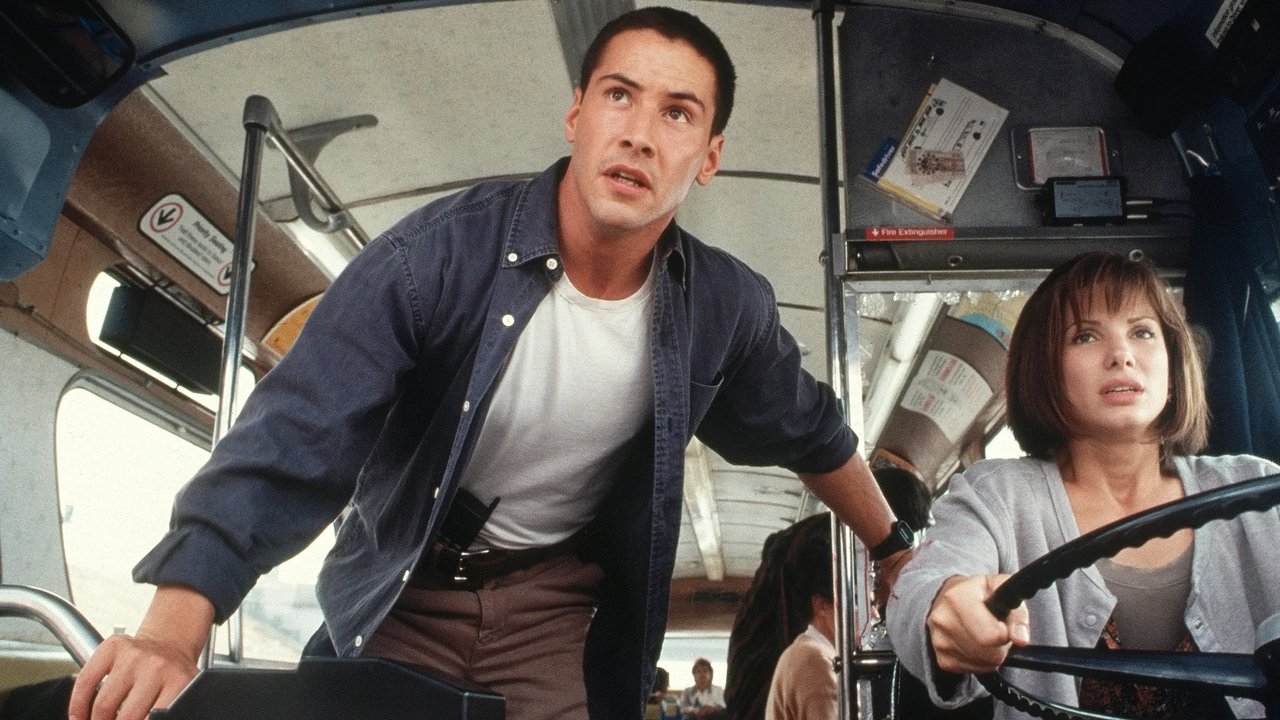
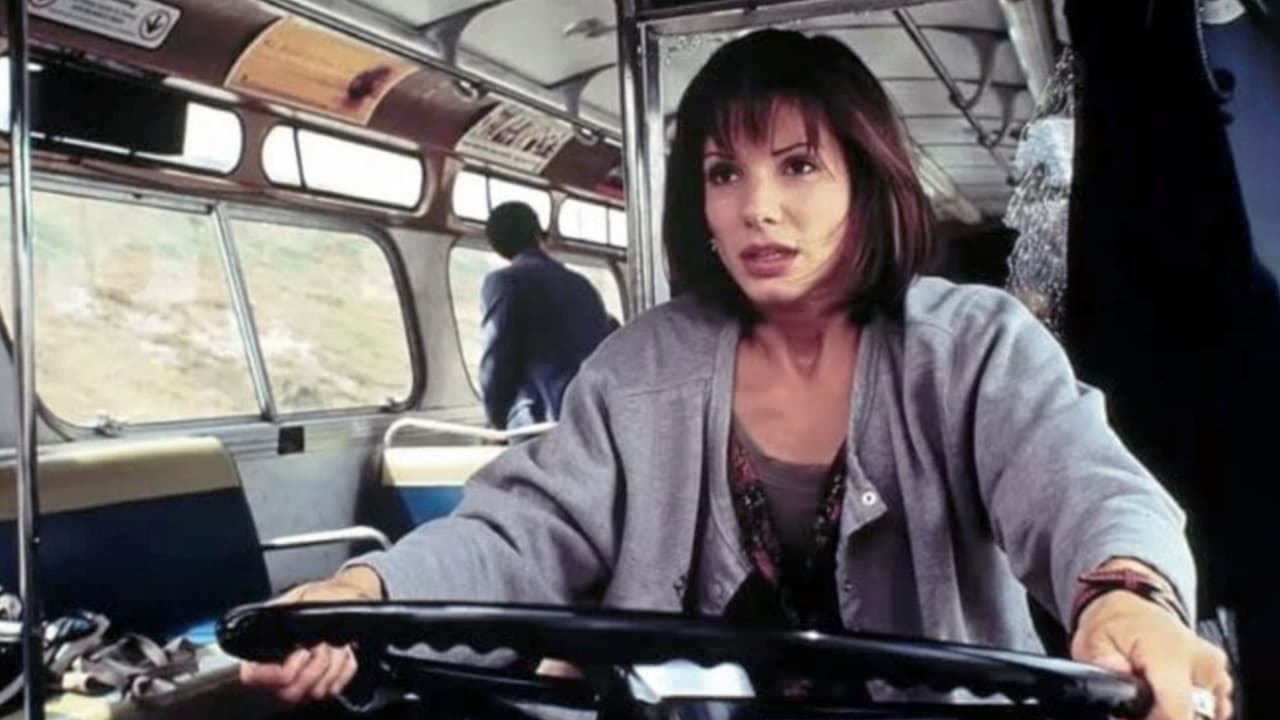
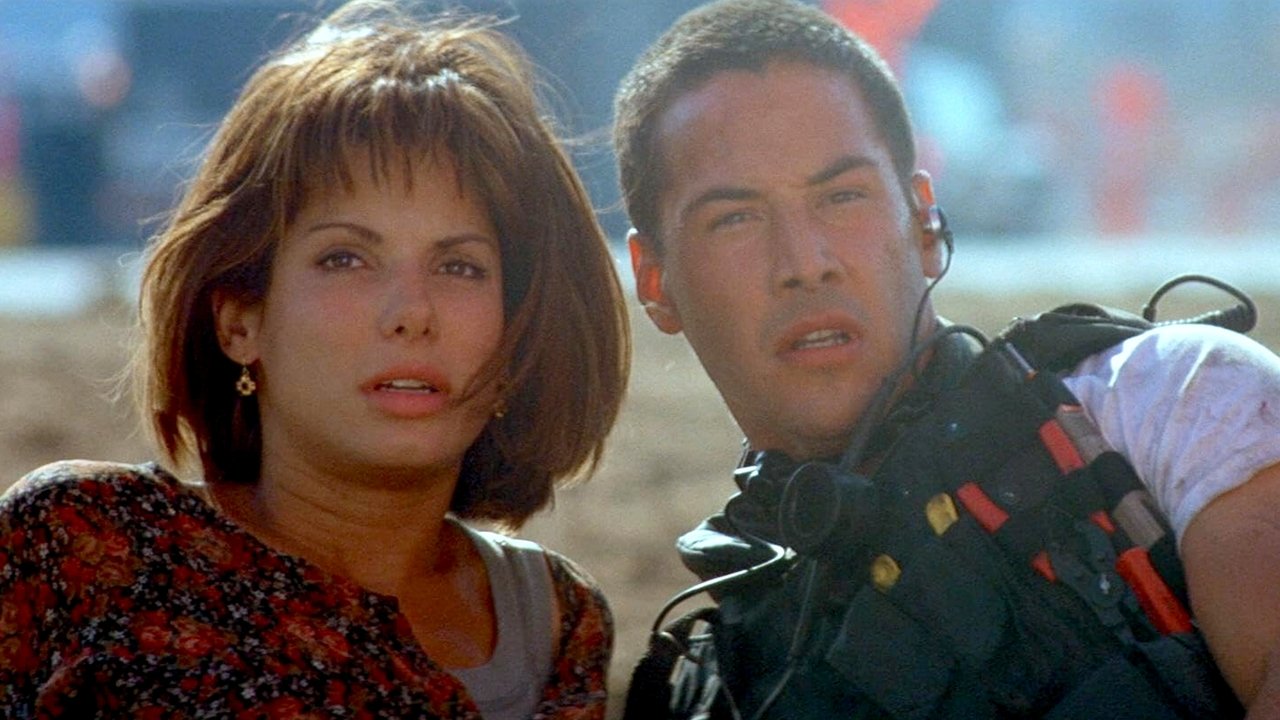
While the stunts provide the skeleton, the cast provides the soul. At the time, casting Keanu Reeves as Jack Traven was seen as a gamble. He was the "Whoa" guy from Bill & Ted, not a gritty action lead. But his performance here is a masterclass in stoic intensity. He plays Jack with a buzzcut and a desperate, singular focus that grounds the absurdity. Opposite him, Sandra Bullock as Annie was the film’s secret weapon. She wasn't the "damsel"; she was the person who had to keep the wheel straight while everything dissolved into chaos. Their chemistry isn't built on witty banter, but on shared trauma and adrenaline.
Then there is Dennis Hopper as Howard Payne. Hopper plays this role like a man who has replaced his conscience with a detonator and a grudge. He isn't a theatrical supervillain; he’s a disgruntled pensioner with a terrifyingly high IQ and nothing left to lose. His performance adds a layer of genuine menace that elevates the film above a mere stunt show. When he mocks Jack over the phone with the now-iconic "Pop quiz, hotshot," it doesn’t feel like a movie line—it feels like a threat.

The Legacy of the Commute
It’s easy to forget that this was a $30 million mid-budget gamble that turned into a $350 million global phenomenon. It launched Sandra Bullock into the stratosphere and proved Keanu Reeves could carry a franchise. Interestingly, much of the sharp, punchy dialogue that keeps the movie afloat was an uncredited polish by a young Joss Whedon, who managed to inject humor without undercutting the life-or-death stakes.
Watching it now, Speed feels like a time capsule of a pre-9/11 world where the anxieties were mechanical rather than ideological. It’s a film about problem-solving under extreme duress. It doesn't offer easy answers, and it doesn't save everyone. The "Modern Cinema" era produced many louder films, and certainly more expensive ones, but few are as lean or as mean as this. It’s a reminder that sometimes the best way to tell a story is to just start the engine and refuse to hit the brakes.
Speed remains the gold standard for high-concept action because it never blinks. It takes a ridiculous "what if" and treats it with the gravity of a Shakespearean tragedy, all while jumping a bus over a freeway gap. It’s intense, expertly choreographed, and serves as a brilliant reminder of why we fell in love with practical filmmaking in the first place. Put your phone away, sit down, and get ready for rush hour.
Keep Exploring...
-
Point Break
1991
-

The Matrix Reloaded
2003
-
The Hunt for Red October
1990
-
The Fugitive
1993
-
Star Trek: First Contact
1996
-
Twister
1996
-
True Lies
1994
-
Die Hard: With a Vengeance
1995
-
Mission: Impossible
1996
-
The Rock
1996
-
John Wick
2014
-
The Fast and the Furious
2001
-

Kill Bill: Vol. 2
2004
-
The Maze Runner
2014
-

Star Trek VI: The Undiscovered Country
1991
-

The Crow
1994
-
A Time to Kill
1996
-
From Dusk Till Dawn
1996
-
The Boondock Saints
1999
-
Minority Report
2002