Timecop
"The Muscles from Brussels meets the space-time continuum."
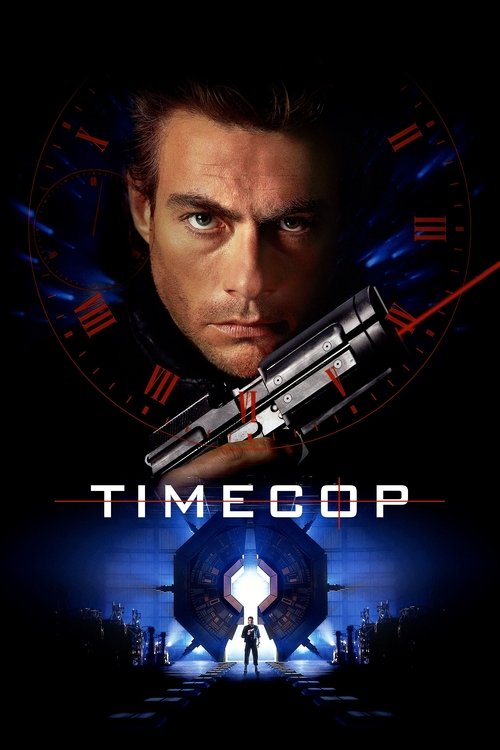
If you grew up in the nineties, there was a specific brand of Friday night magic that involved a local Blockbuster, a bag of microwave popcorn that was 40% salt, and a VHS tape featuring a guy whose name sounded like a high-end European car. I’m talking about Jean-Claude Van Damme. While he had plenty of hits involving underground fighting tournaments or twin brothers seeking revenge, 1994’s Timecop was the moment he truly leveled up. It wasn't just a martial arts flick; it was a legitimate sci-fi blockbuster that asked the question: "What if the guy who can do a 180-degree split was also the only thing standing between us and a temporal paradox?"
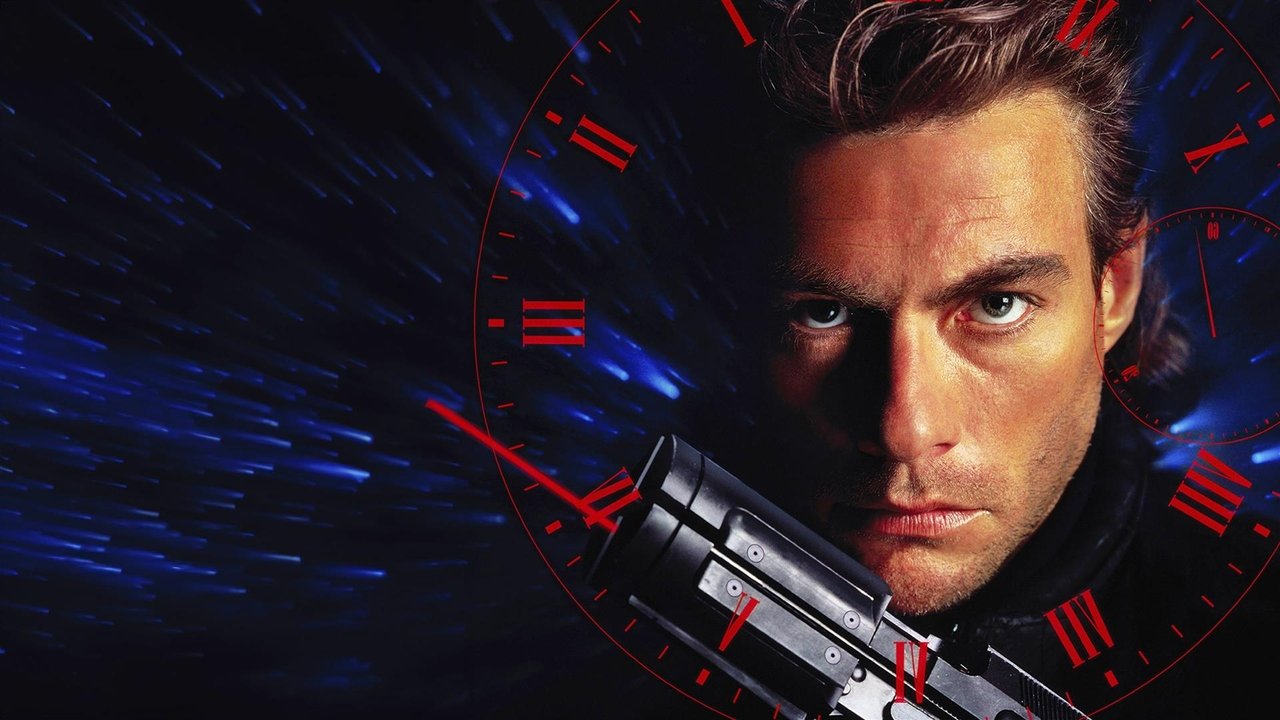
I recently rewatched this while my cat was aggressively trying to eat a piece of dental floss, and honestly, the sheer 90s-ness of the experience was almost as disorienting as a trip through a wormhole. Timecop isn't just a movie; it’s a perfectly preserved specimen of an era when high-concept sci-fi was getting a glossy, big-budget makeover.
Shooting the Future in Perpetual Shadow
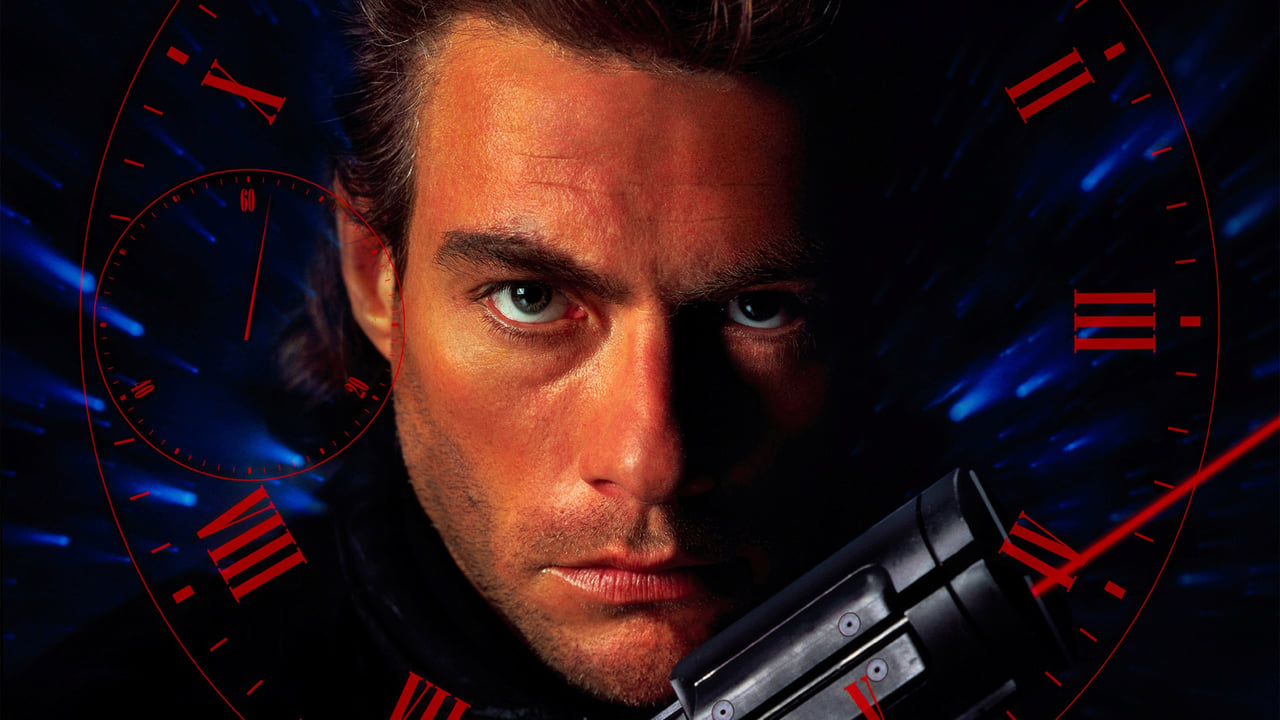
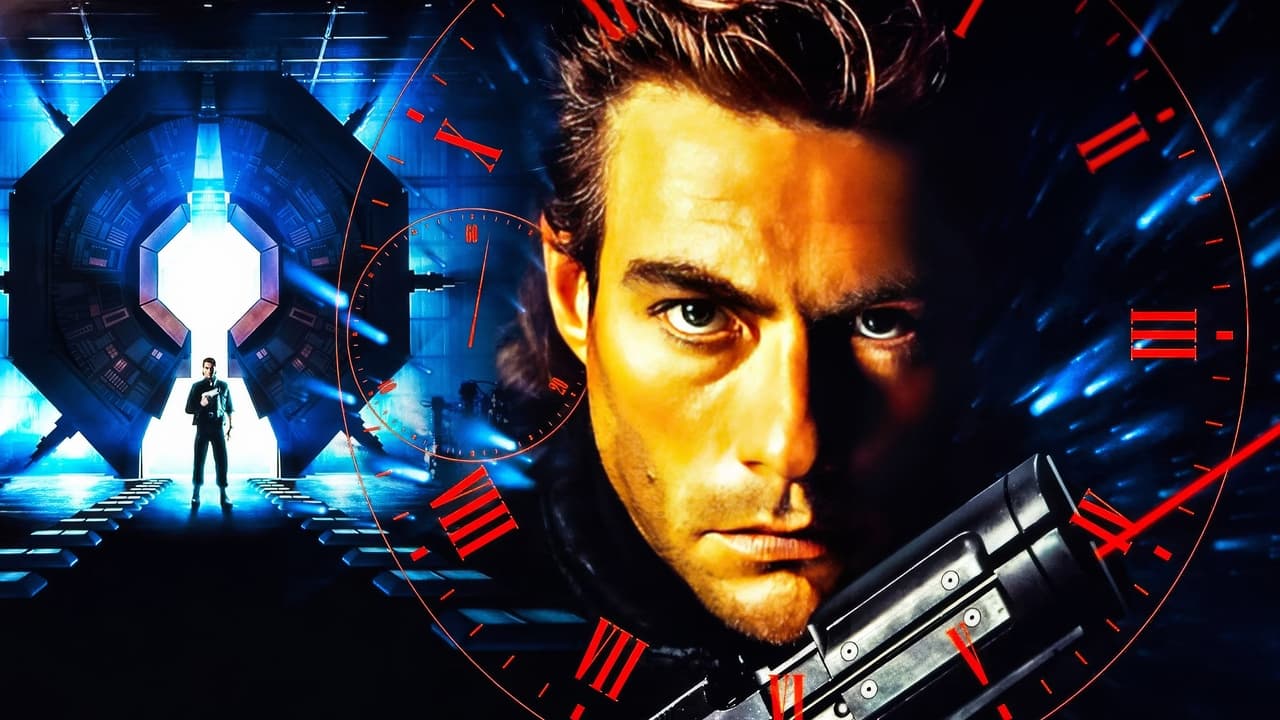
What immediately strikes me about Timecop is how good it looks. This isn't your standard, brightly lit action schlock. Director Peter Hyams (who also served as his own Director of Photography, as he did on 2010: The Year We Make Contact) brings a moody, "noir" aesthetic to the proceedings. The film is drenched in deep shadows, silhouettes, and rain-slicked streets. It gives the movie a weight and a texture that many of its contemporaries lacked.
The premise is peak Dark Horse Comics (the source material): By 2004, time travel exists, and the Time Enforcement Commission (TEC) is formed to stop people from messing with the past for profit. Jean-Claude Van Damme plays Max Walker, an officer who loses his wife, Melissa (Mia Sara, famously from Ferris Bueller's Day Off), in an explosion that we eventually learn is tied to the machinations of a corrupt politician.
Speaking of that politician, Ron Silver as Senator McComb is an absolute delight. He’s not just a villain; he’s a smirking, scenery-chewing embodiment of 90s cynicism. He’s using time travel to fund his presidential campaign because, in his words, "I'm an ambitious man." Silver plays the older and younger versions of himself with such oily charisma that you almost want to see him win, just to see what kind of dystopian 2004 he’d create.
The Most Famous Split in Cinema History
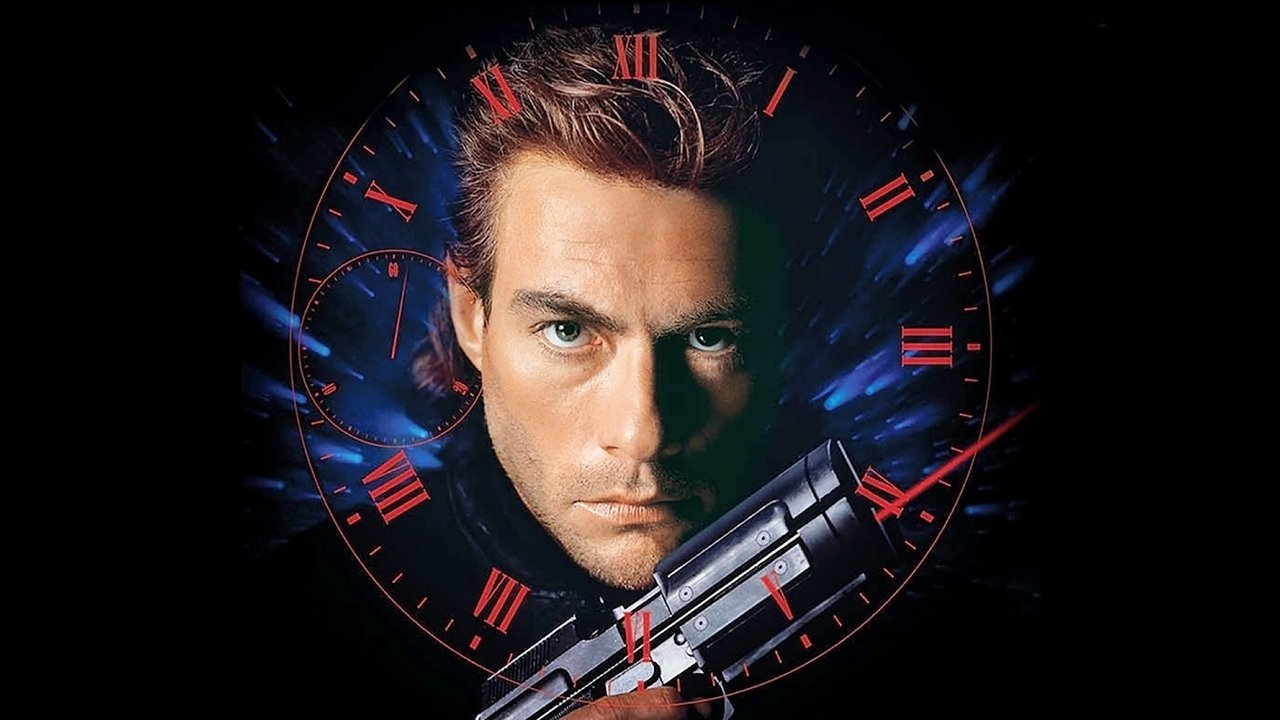
We can’t talk about a Van Damme movie without talking about the physicality. By 1994, JCVD had refined his "Muscles from Brussels" persona into something remarkably effective. He actually turns in a grounded, emotional performance here—or at least as grounded as you can get when you’re sporting a mullet that somehow stays perfectly feathered through a wormhole.
The action choreography is top-tier for the period. The kitchen fight sequence is the stuff of legend. When an assassin tries to tase Walker, JCVD hops onto a kitchen counter and slides into a full split to avoid the electric current on the floor. It’s ridiculous. It’s unnecessary. It’s exactly why we bought the ticket.
Beyond the splits, the film leans into its R-rating with some creative "time-travel" kills. There’s a sequence involving liquid nitrogen and a shattered limb that traumatized me as a kid but now feels like a charmingly gross practical effect from the pre-CGI-overload era. The film does use early digital effects for the time-travel "jump"—a sort of liquid-metal rippling wall—that actually holds up surprisingly well because it’s used sparingly.
A Box Office Juggernaut in a Dustbuster Car
Timecop was a massive success, and looking back, it’s easy to see why. It cost roughly $28 million to make and raked in over $128 million worldwide. It was JCVD’s first film to break the $100 million mark, momentarily making him one of the biggest stars on the planet. It launched a short-lived TV series and a direct-to-video sequel, but neither could capture the specific alchemy of the original.
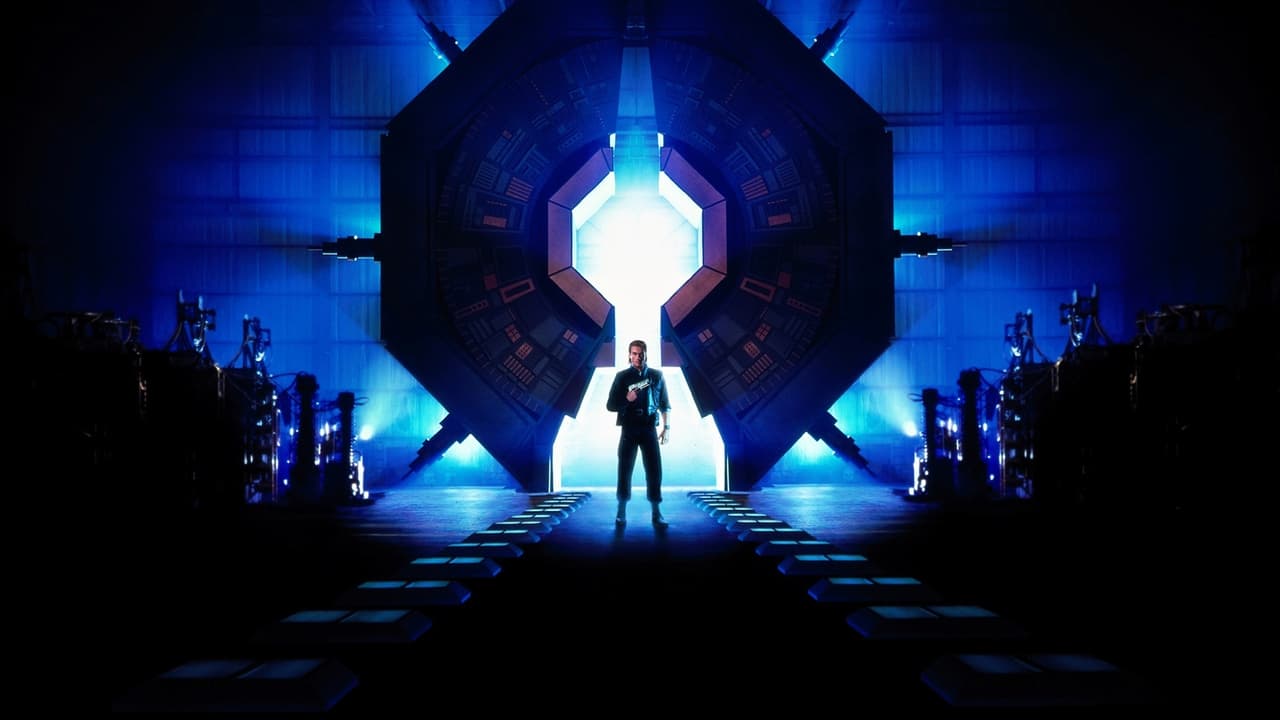
There’s a hilarious charm to the film’s "future" tech. Since the "future" parts of the movie take place in 2004, we get to see what 1994 thought the new millennium would look like. The cars are essentially motorized Dustbusters with voice-activated doors that never seem to work on the first try. It’s a reminder of how quickly "cutting edge" becomes "quaint." Yet, the film’s anxiety about political corruption and the abuse of technology feels oddly more relevant now than it did thirty years ago.
The production was a significant step for Dark Horse Entertainment, proving that comic properties outside the DC/Marvel "Big Two" could dominate the box office. It paved the way for films like The Mask and Hellboy. The script by Mark Verheiden keeps the logic just tight enough that you don't get a headache, while producer Sam Raimi (yes, that Sam Raimi) likely helped inject some of that kinetic energy and dark humor that pops up in the action beats.
Ultimately, Timecop is the definitive Jean-Claude Van Damme movie. It has the perfect balance of his physical prowess, a genuinely clever sci-fi hook, and a villain you love to loathe. It captures that mid-90s sweet spot where budgets were big enough for spectacular practical stunts, but digital effects hadn't yet robbed the action of its physical impact. If you haven't revisited this one since the days of the 32-bit Sega Saturn, give it a spin. It’s a lean, mean, 98-minute reminder of why we used to go to the movies just to see a guy kick people in the face across two different centuries.
Keep Exploring...
-
Universal Soldier
1992
-
RoboCop 2
1990
-

Double Impact
1991
-
Hard Target
1993
-
Another 48 Hrs.
1990
-
Lethal Weapon 3
1992
-
Patriot Games
1992
-
In the Line of Fire
1993
-
Star Trek: Generations
1994
-
Bad Boys
1995
-
The Net
1995
-

Outbreak
1995
-
Armageddon
1998
-

Repo Men
2010
-
The Fast and the Furious
2001
-

Cloverfield
2008
-
Vantage Point
2008
-

Predators
2010
-

In Time
2011
-
Darkman
1990