A Little Princess
"Believe in the magic you cannot see."
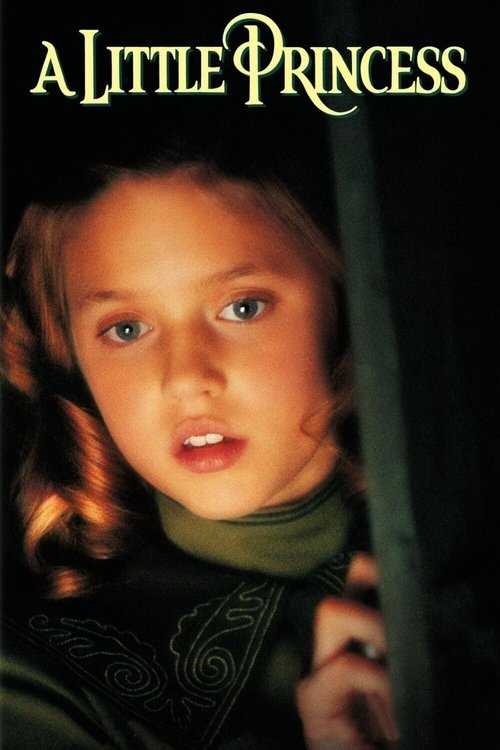
Long before he was drifting through the vacuum of space in Gravity or capturing the monochromatic heartbeat of Mexico City in Roma, Alfonso Cuarón was busy making the most beautiful "failure" of 1995. Looking back at the mid-90s, the cinematic landscape for children was dominated by the primary colors of the Disney Renaissance and the slapstick chaos of Home Alone clones. Then came A Little Princess, a film that looked like a Victorian painting dipped in emeralds and spoke like a philosophical treatise on the resilience of the human spirit. I recently rewatched this while nursing a lukewarm cup of peppermint tea that went stone-cold because I simply forgot to drink it; the film still has that kind of hypnotic gravity.
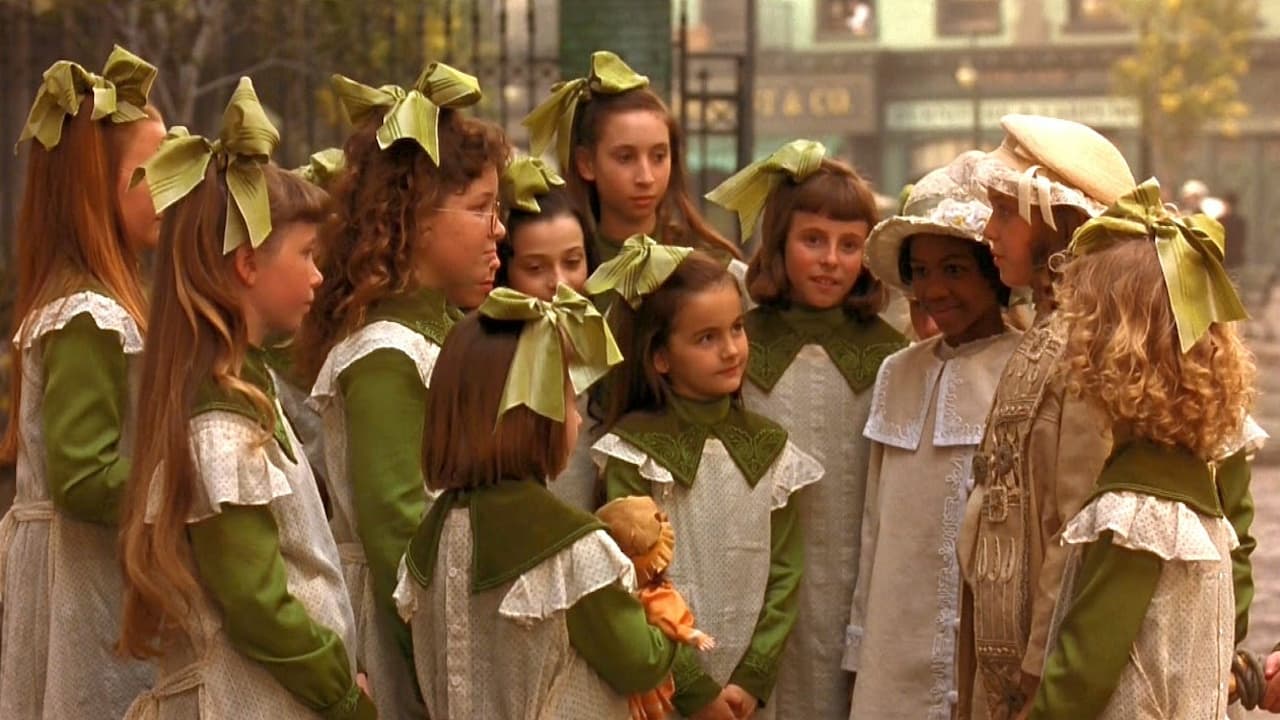
A Masterclass in Emerald and Amber
The first thing that hits you—and I mean really strikes you—is the light. This was one of the early collaborations between Alfonso Cuarón and cinematographer Emmanuel Lubezki, the man who would later win three consecutive Oscars for his "natural light" wizardry. In 1995, they weren't worried about realism; they were worried about feeling. The film is bathed in a distinct palette of deep greens and hazy ambers, creating a visual language that feels like a dream struggling to stay alive in a cold, grey world.
The story follows Sara Crewe, played with an unnerving, soulful maturity by Liesel Matthews. When her father, Liam Cunningham (decades before he was Davos Seaworth in Game of Thrones), goes MIA in WWI, Sara is stripped of her riches and banished to the attic of a New York boarding school. The transition from her lush, story-filled life in India to the bleak, Dickensian cruelty of Miss Minchin’s school is handled with a level of visual sophistication that most modern "family films" wouldn't dare attempt. Cuarón doesn't treat his young audience like they’re fragile; he treats them like they’re observant.
The Weaponization of Wonder
What fascinates me most about this version—which deviates significantly from the Frances Hodgson Burnett novel—is its cerebral take on imagination. In most kids' movies, fantasy is an escape. Here, Sara’s stories of the Ramayana are a weapon of resistance. When she tells the other girls that "all women are princesses," she isn’t talking about tiaras and tea parties; she’s talking about an inherent, indestructible human dignity that no amount of coal-scrubbing or starvation can erase.
Eleanor Bron plays the headmistress, Miss Minchin, not as a cartoon villain, but as a woman who has clearly had the "magic" beaten out of her by life. Her conflict with Sara is essentially a philosophical war: the nihilist who believes only in what she can touch versus the mystic who believes only in what she can dream. This film is basically the 'Pan’s Labyrinth' for kids who weren’t allowed to watch 'Pan’s Labyrinth' yet. It understands that for a child, a lack of agency is the ultimate horror, and storytelling is the only way to reclaim the throne.
Why It Vanished (And Why It Stayed)
It’s one of those Hollywood mysteries why this film bombed so hard at the box office. It made about $10 million against a $17 million budget, largely because Warner Bros. had no idea how to market a "prestige" kids' movie that didn't have a talking animal or a tie-in fast-food toy. It was the era of the DVD revolution, and A Little Princess eventually found its cult following on the small screen, where its tactile, practical effects and lush sets could be paused and admired.
There’s a sequence involving a feast that "appears" in the girls' attic that, in 1995, used a mix of clever practical sets and burgeoning digital touch-ups. It still looks better than half the CGI-slop we see today because it’s grounded in a specific artistic vision rather than just "filling the frame." Liam Cunningham pulls double duty here, playing both Sara’s father and the fictional Prince Rama in her stories, a choice that adds a heartbreaking layer to Sara’s psyche. She’s literally casting her father as the hero of her own mythology to keep him alive.

The film's ending is notoriously different from the book—it trades the novel's quiet, logical resolution for a rain-soaked, high-drama miracle. Purists might roll their eyes, but in the context of Cuarón's magical realism, it earns its tears. It’s a film that demands you feel something big, and it doesn't apologize for its sincerity.
In an era of cinema that was rapidly moving toward digital sterility, A Little Princess feels like a handmade heirloom. It’s a reminder that "family film" doesn't have to mean "simple," and that the most powerful special effect in any director’s toolkit is a well-placed shadow and a character who refuses to break. If you missed this one because the 1995 marketing machine failed you, it’s time to rectify that. Just make sure your tea is hot before you start, because you’re going to forget it’s there.
Keep Exploring...
-

The Muppet Christmas Carol
1992
-
The Secret Garden
1993
-

Miracle on 34th Street
1994
-

The Fall
2006
-
Neon Genesis Evangelion: The End of Evangelion
1997
-
A Dog's Will
2000
-
Wolf Children
2012
-
The Tale of The Princess Kaguya
2013
-
DuckTales: The Movie - Treasure of the Lost Lamp
1990
-
The Rescuers Down Under
1990
-
A River Runs Through It
1992
-
The Hudsucker Proxy
1994
-
Dead Man
1995
-
The Craft
1996
-
Y Tu Mamá También
2001
-
Anastasia
1997
-
The Iron Giant
1999
-
Millennium Actress
2002
-
The Odd Life of Timothy Green
2012
-
Song of the Sea
2014