A Walk in the Clouds
"A vintage love, aged in golden light."
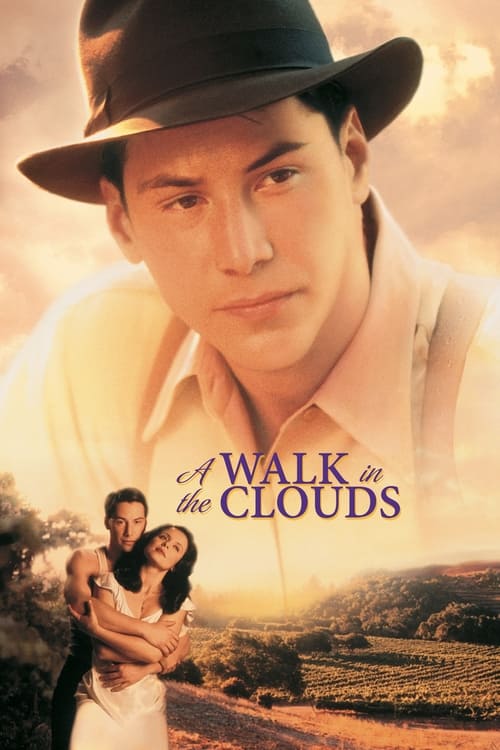
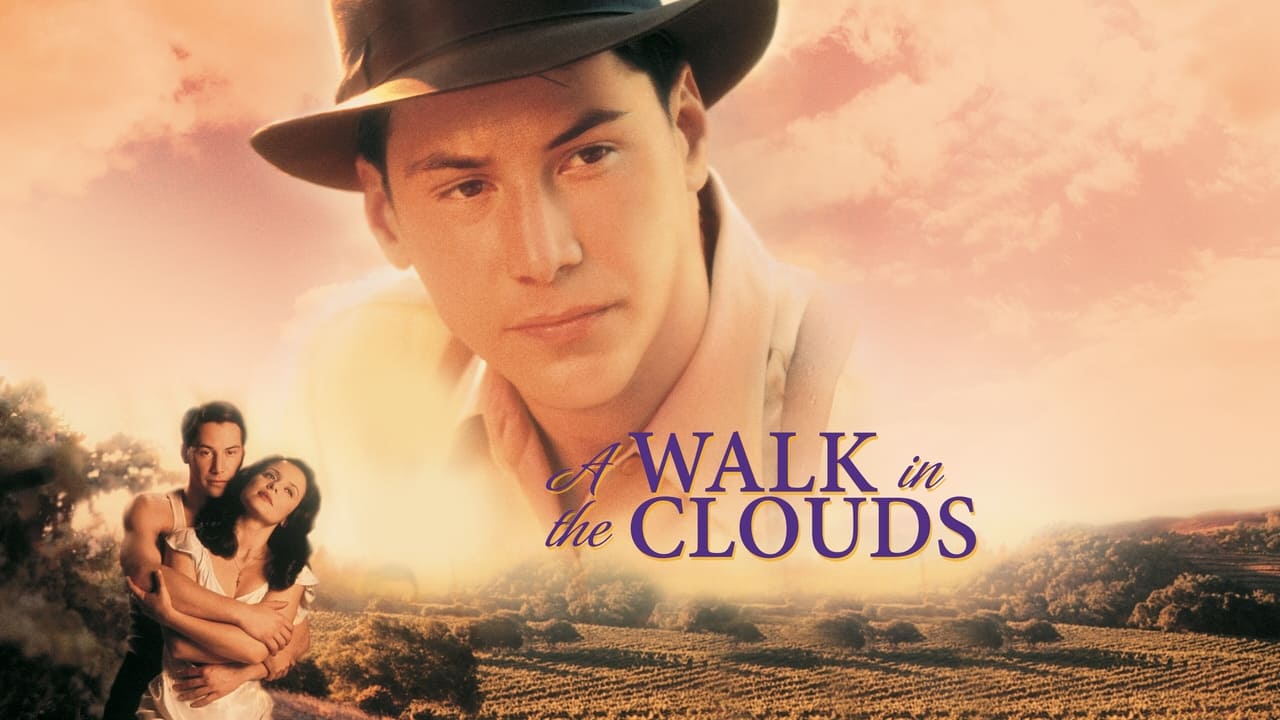
If you were to bottle the mid-1990s obsession with "prestige" romance—that specific era where every film looked like it was shot through a filter of liquid honey and expensive cognac—A Walk in the Clouds would be the premier vintage. It arrived in theaters right when Keanu Reeves was trying to figure out what to do with his post-Speed (1994) momentum. Instead of jumping back into an explosion-filled bus, he opted for a chocolate-box period piece that felt like a fever dream of Old World values and magical realism.
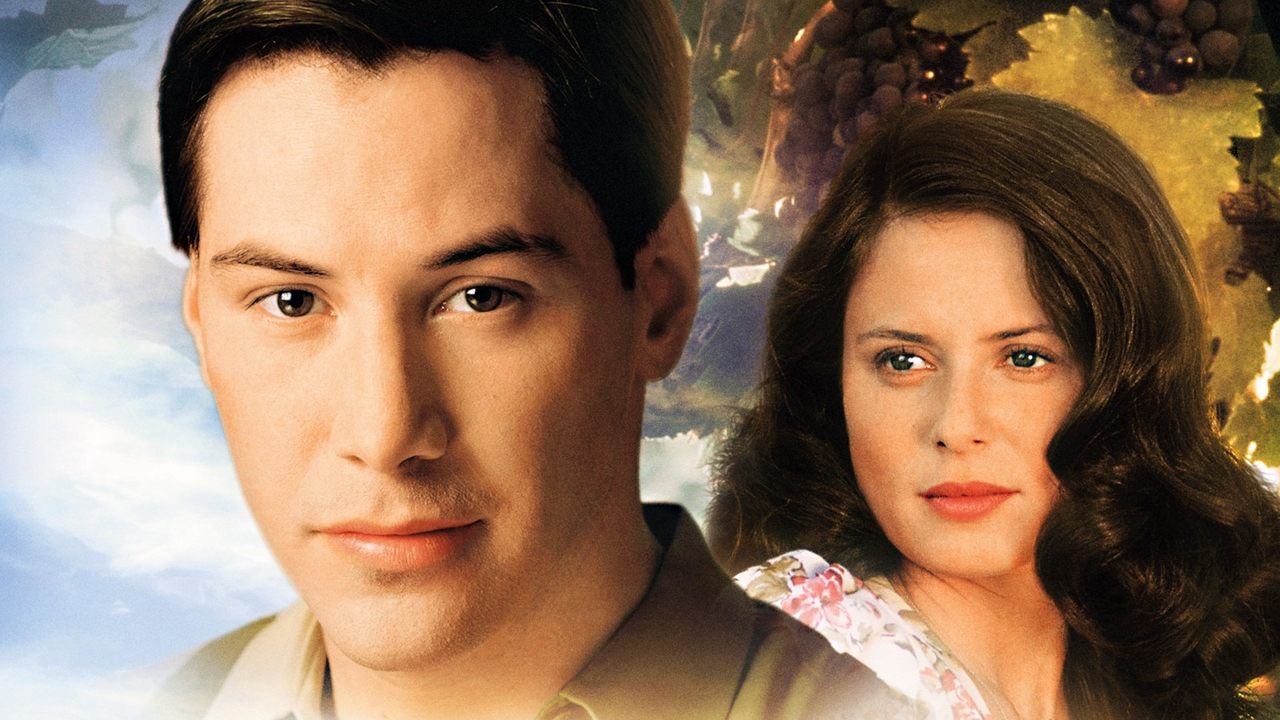
I revisited this one on a used DVD I picked up for three dollars, and the case still had that stubborn, gray sticky residue from a long-gone price tag that wouldn't come off no matter how hard I scrubbed. There’s something poetic about that; this movie is a bit like that residue—sticky, slightly dated, but strangely difficult to get rid of once it’s in your head.
The Lubezki Glow and Magical Realism
Before he was winning back-to-back Oscars for Gravity (2013) and Birdman (2014), cinematographer Emmanuel Lubezki was busy making the Napa Valley look like a mythical Eden. Looking back at this film now, the visuals are its strongest asset. Director Alfonso Arau, fresh off the international success of Like Water for Chocolate (1992), brought that same sense of "heightened reality" to this remake of the 1942 Italian film Four Steps in the Clouds.
The story is pure melodrama: Paul Sutton (Keanu Reeves), a WWII vet returning to a wife he barely knows (Debra Messing in a thankless pre-Will & Grace role), meets Victoria Aragón (Aitana Sánchez-Gijón) on a bus. She’s pregnant, unwed, and terrified of her traditionalist vineyard-owning father. Paul agrees to pose as her husband for one night to soften the blow. Naturally, one night turns into a week, and the "fake" marriage begins to feel a lot more real than the actual one waiting for him back home.
It’s the kind of plot that requires you to check your cynicism at the door. If you can’t get on board with the idea of Keanu Reeves flapping butterfly wings made of gossamer to protect grapevines from frost, you’re going to have a hard time. But there’s a sincerity to the filmmaking that I find almost moving in its lack of irony. The film is so aggressively romantic that it almost borders on a high-budget soap opera, yet Lubezki’s camera keeps it grounded in a way that feels lush rather than cheap.
Keanu’s Earnestness vs. Anthony Quinn’s Gravity
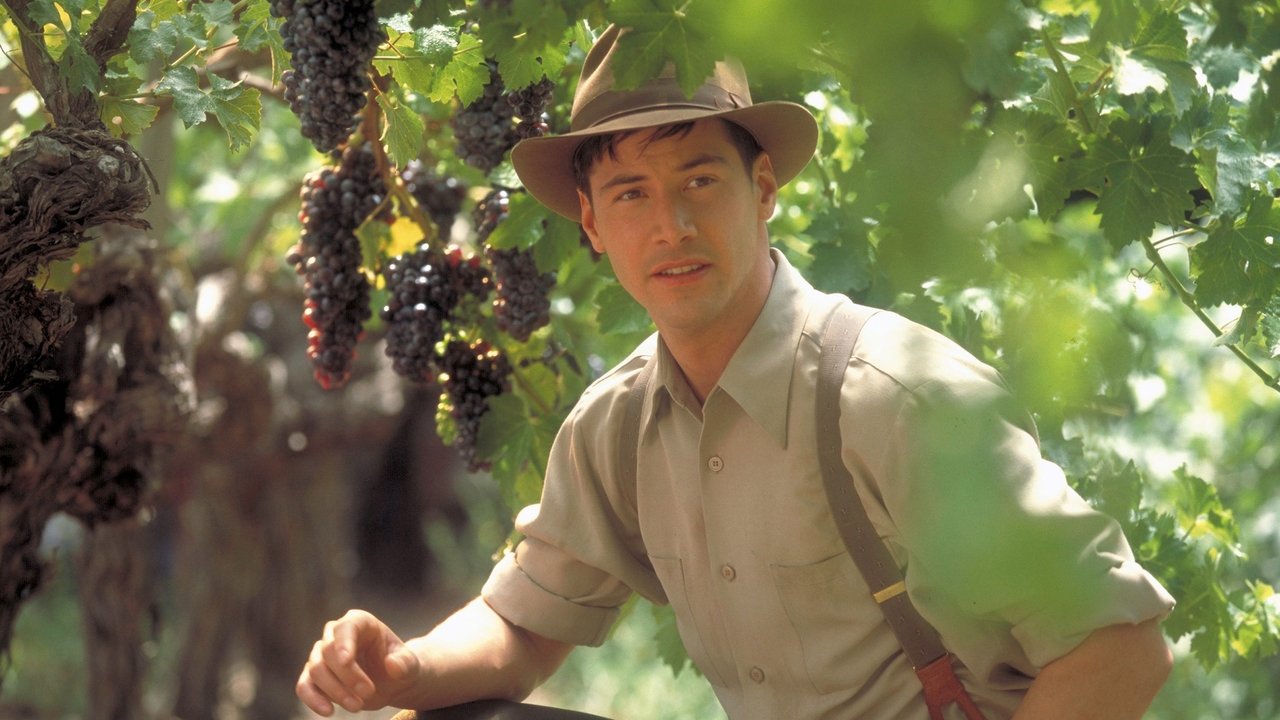
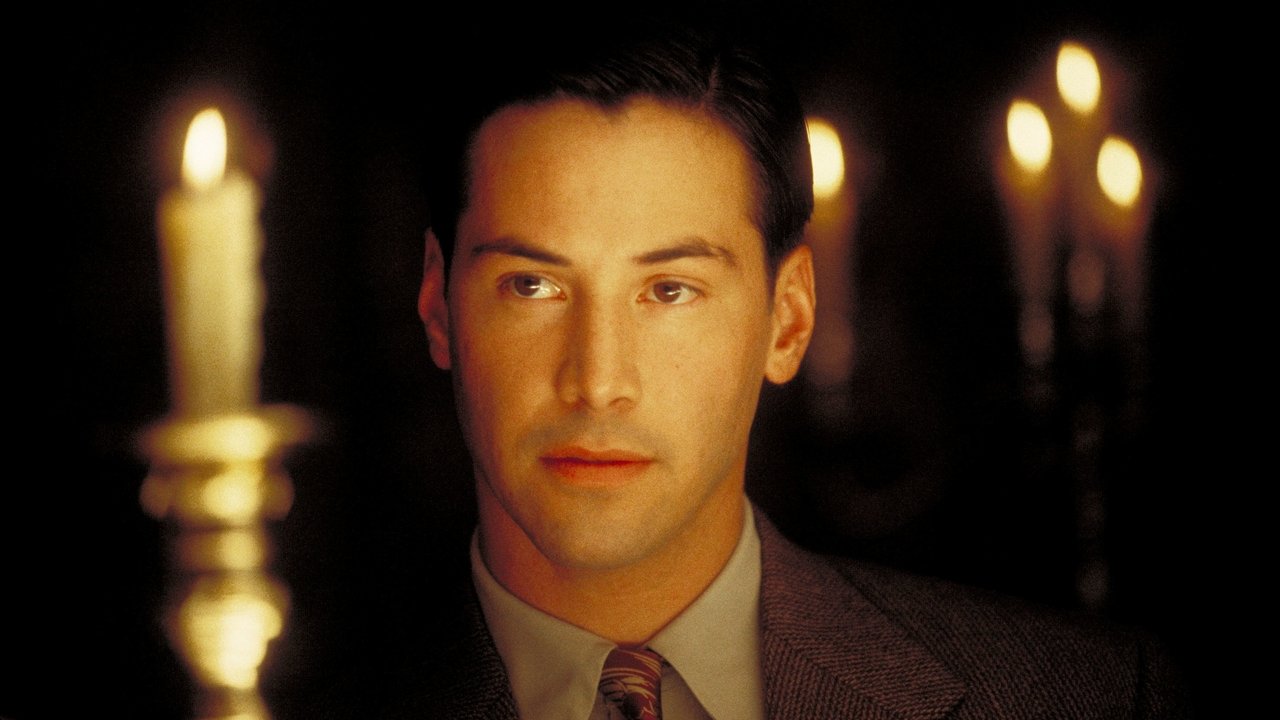
Let’s talk about the elephant in the vineyard: Keanu Reeves. In 1995, critics were particularly harsh on his performance here. He’s playing Paul with a stiff, wide-eyed sincerity that feels out of step with the more seasoned actors surrounding him. However, looking at it through a modern lens, his "blank slate" quality actually works for a character who is suffering from what we’d now call PTSD, searching for a family and a sense of belonging he never had. Reeves plays this role with the emotional range of a very handsome, very confused golden retriever, and honestly, that’s exactly what the story needs.
The real weight of the film comes from the legendary Anthony Quinn as Don Pedro, the family patriarch. Quinn was 80 when this was filmed, and he commands every frame he’s in with a glass of brandy in one hand and a lifetime of gravitas in the other. His chemistry with Reeves is the secret sauce of the movie; the scenes where they bond over the "art" of being a man and a husband provide the necessary friction to balance out the syrupy romance. When Quinn is on screen, the movie feels like a legitimate epic; when he’s off, it leans back into the Harlequin novel territory.
Why It Vanished (and Why to Seek It Out)
A Walk in the Clouds was a decent box office hit, but it’s largely been forgotten in the shuffle of the 90s indie boom and the subsequent rise of the CGI-heavy blockbuster. It exists in that "middle-budget" space that Hollywood has almost entirely abandoned. It didn’t have the awards-season legs of The English Patient (1996), nor the cult staying power of Reeves’ later work in The Matrix (1999).
Yet, there are sequences here that are genuinely breathtaking. The grape-stomping scene, set to Maurice Jarre’s sweeping, old-fashioned score, is a masterclass in editing and atmosphere. It’s pure cinematic escapism—a celebration of tradition, fire, and fertility that feels like it belongs to a different century of filmmaking.
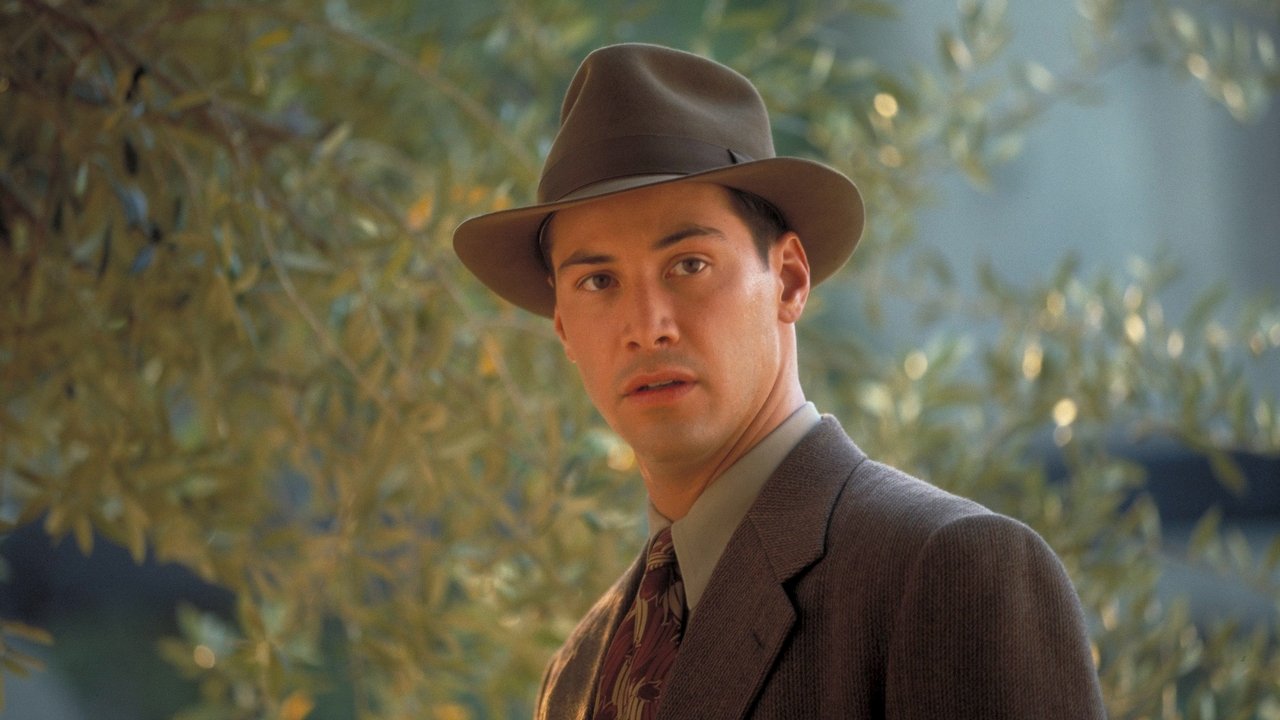
Is it cheesy? Absolutely. There are lines of dialogue about "the soul of the vine" that would make a sommelier wince. But in an era where romance is often portrayed through a lens of sarcasm or gritty realism, there is something refreshing about a movie that is this unashamedly "pretty." It’s a film that wants you to believe that fate is real, that family can be found in a vineyard, and that Keanu Reeves can sing a serenade under a balcony with a straight face.
Ultimately, this is a "vibe" movie. You watch it for the amber-tinted sunsets, the operatic family disputes, and the sheer comfort of a predictable story told with high-end craftsmanship. It’s not a masterpiece, but it’s a lovely, forgotten detour in the careers of its stars. If you’re looking for a film that feels like a warm blanket and a glass of cheap but serviceable merlot, this is your vintage.
***
Keep Exploring...
-
Sweet November
2001
-
It Could Happen to You
1994
-
Mary Shelley's Frankenstein
1994
-
The Quick and the Dead
1995
-
That Thing You Do!
1996
-
EverAfter
1998
-
Blast from the Past
1999
-
The Thomas Crown Affair
1999
-
Far and Away
1992
-
Lolita
1997
-
Sliding Doors
1998
-
The Legend of Bagger Vance
2000
-
The Lake House
2006
-
Confessions of a Dangerous Mind
2002
-
Raise Your Voice
2004
-
A Lot Like Love
2005
-
Broken Flowers
2005
-
Casanova
2005
-
The New World
2005
-
The Sisterhood of the Traveling Pants
2005