Apollo 13
"Three men, one tin can, and 200,000 miles of trouble."

The most terrifying thing about space isn't the aliens or the black holes; it’s the silence. It’s that haunting, metallic clunk when something goes wrong in a vacuum where no one can hear you scream, but everyone can hear you breathe. I recently revisited Ron Howard’s Apollo 13, and I watched it while sitting on a beanbag chair that was slowly leaking its Styrofoam guts across my carpet. I didn’t move for the full 140 minutes because I was genuinely afraid that any shift in my weight would somehow compromise the reentry angle. That is the power of this movie—it makes armchair engineers out of all of us.

The Magic of Competence
Released in 1995, right in the sweet spot of the "Dad Movie" Renaissance, Apollo 13 is a drama that thrives on something we rarely see in cinema today: pure, unadulterated competence. There’s no secret villain, no space monster, and no manufactured interpersonal "drama" where astronauts start punching each other. The antagonist is physics. The hero is the slide rule.
Tom Hanks, fresh off his back-to-back Oscar wins for Philadelphia and Forrest Gump, plays Jim Lovell with a steady, Midwestern stoicism that feels like a warm blanket. He is the ultimate "reliable guy." But the film’s heartbeat actually lives back on Earth. Ed Harris as Gene Kranz is a revelation in a white vest. Every time he’s on screen, the tension ratchets up three notches. His performance is a masterclass in stillness; he doesn't need to scream to show he’s under pressure. He just stares at a monitor until the monitor blinks first. Ed Harris’s flat-top haircut deserves its own star on the Hollywood Walk of Fame.
Then you have Gary Sinise as Ken Mattingly, the guy who gets bumped from the mission because of a measles exposure. Gary Sinise plays the 'guy who gets left behind' with such tragic, pouting intensity that you’d think he was being sent to a gulag rather than just staying in Florida. His arc—spending the entire crisis in a simulator trying to solve the power-up sequence—is arguably the most emotional part of the film. It’s a drama about the agony of being the person who could have been there.
Practical Magic in a Digital Dawn
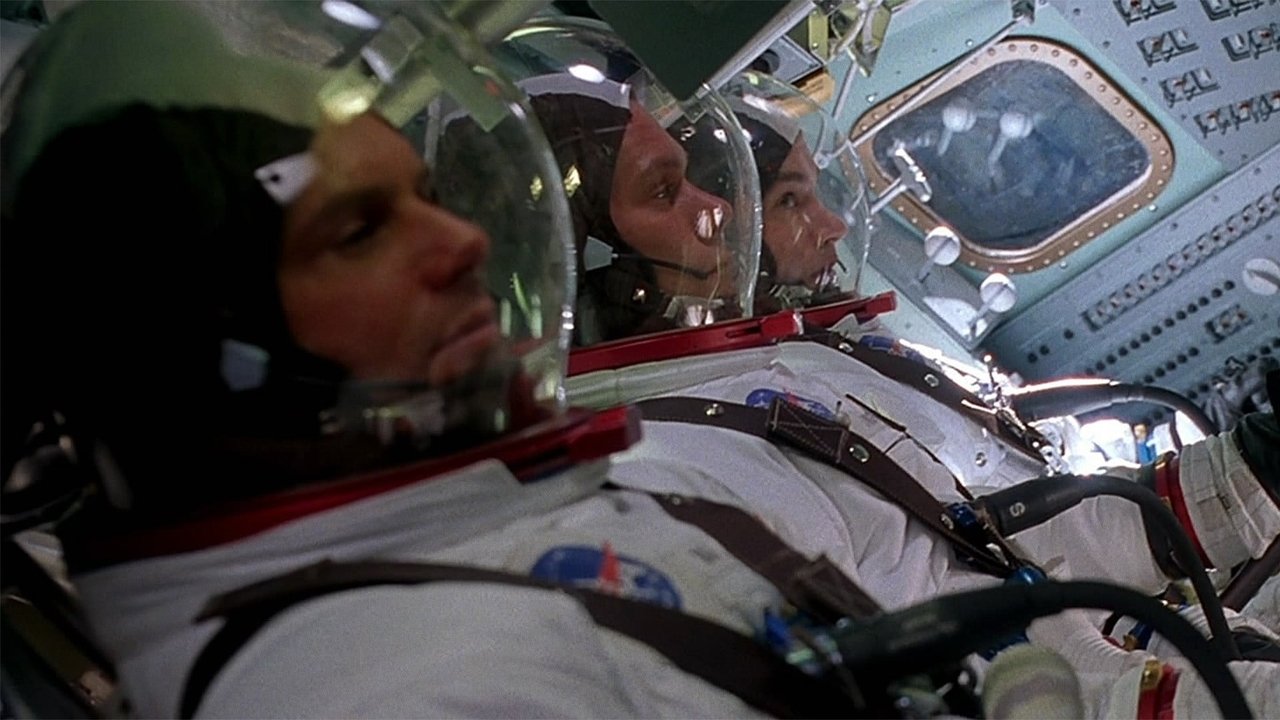
Looking back from our era of green-screen marathons, Apollo 13 represents a fascinating moment in filmmaking history. In 1995, we were just beginning to see what CGI could do (think Jurassic Park or Toy Story, which came out the same year). However, Ron Howard decided to lean into the grueling reality of practical effects.
To simulate weightlessness, the production didn't just use wires; they actually went up in NASA’s KC-135 "Vomit Comet" airplane. The cast and crew performed over 600 parabolic flights to capture those 23 seconds of zero-G at a time. I can tell. There’s a weight—or a lack thereof—to the way a stray lock of hair or a globule of juice floats in the cabin that CGI still struggles to replicate with the same soul. It gives the drama a tactile, claustrophobic edge. You feel the cold creeping into the command module. You feel the sweat on Bill Paxton's brow as Fred Haise gets sicker.
Bill Paxton and Kevin Bacon (who I always associate with his high-energy roles in Footloose or Tremors) provide the perfect friction for Tom Hanks. Kevin Bacon as Jack Swigert is particularly great as the "outsider" who has to prove he’s not the reason the mission failed. The chemistry between these three men, trapped in a space the size of a walk-in closet, is what keeps the movie from feeling like a dry history lesson.
A Cultural Mission Accomplished
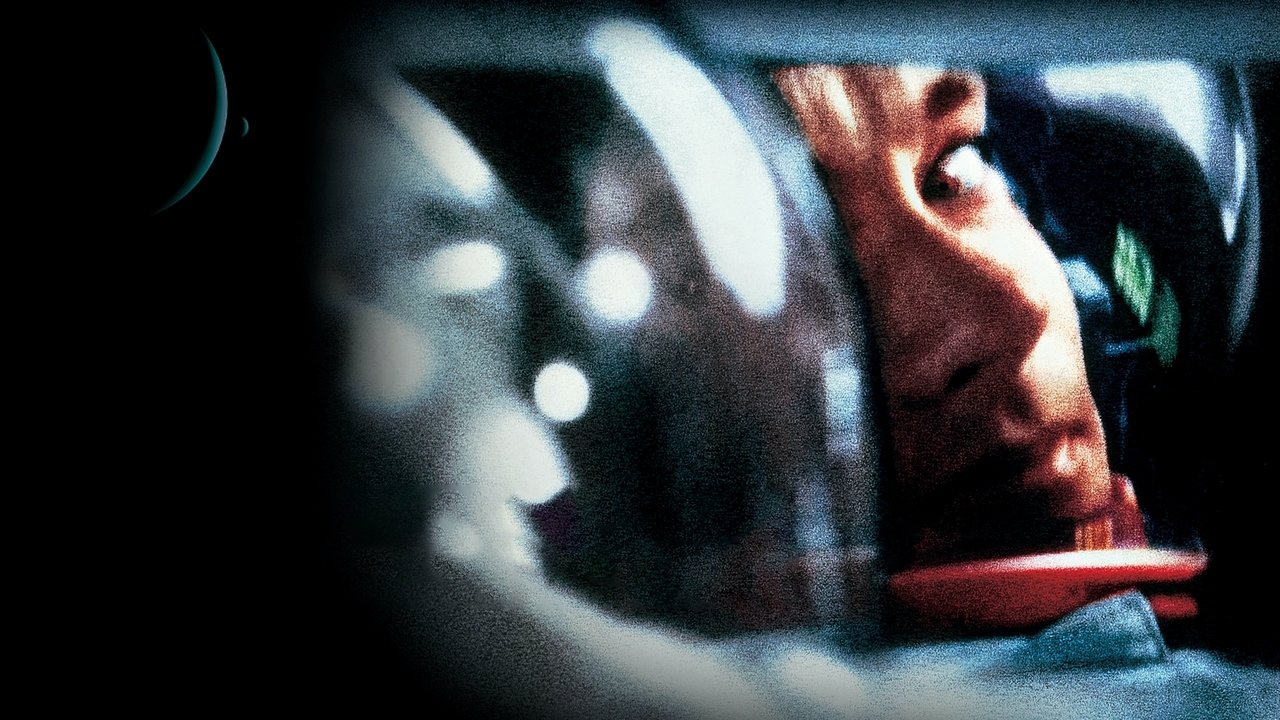
It’s easy to forget now, but Apollo 13 was an absolute monster at the box office. It pulled in over $355 million on a $52 million budget, proving that audiences were hungry for high-stakes, intelligent drama that didn't rely on explosions to provide thrills. It turned "Houston, we have a problem" into a global catchphrase (even though the real Jim Lovell actually said, "Houston, we've had a problem").
The film also managed to bridge a generational gap. For those who grew up in the 60s, it was a harrowing trip down memory lane. For those of us in the 90s, it was a reminder that the technology in our pockets was already more powerful than the computers that sent men to the moon. The scene where the ground crew has to literally "fit a square peg into a round hole" using only the materials the astronauts have on board is, in my opinion, one of the greatest sequences in cinema. It’s a celebration of human ingenuity that feels incredibly grounding in an era of superhero solutions.
I also have to mention Kathleen Quinlan as Marilyn Lovell. Often, the "wife at home" role in these movies is thankless, but she brings a quiet strength to the film. The scene where she loses her wedding ring down the shower drain—a bit of foreshadowing that could have felt cheesy—is played with such subtle dread that it still gives me chills.
Apollo 13 is the rare blockbuster that treats its audience like adults while keeping them on the edge of their seats like children. It captures a specific American optimism that feels both distant and deeply necessary. Even though I know exactly how it ends—I know they splash down safely, I know the parachute opens—I still hold my breath every single time the radio silence goes on a second too long during the reentry. If a movie can make you forget history just to keep you in the moment, it’s done its job perfectly.


Keep Exploring...
-
Frost/Nixon
2008
-

Cinderella Man
2005
-

Cast Away
2000
-

Saving Private Ryan
1998
-
JFK
1991
-
Backdraft
1991
-
Ransom
1996
-
A Beautiful Mind
2001
-

Charlie Wilson's War
2007
-
A League of Their Own
1992
-
Philadelphia
1993
-
Flags of Our Fathers
2006
-

Les Misérables
2012
-

Lincoln
2012
-

The Terminal
2004
-

Far and Away
1992
-

Braveheart
1995
-

Twister
1996
-

Seven Years in Tibet
1997
-

Stepmom
1998