Crimson Tide
"Two men. One key. No room for error."
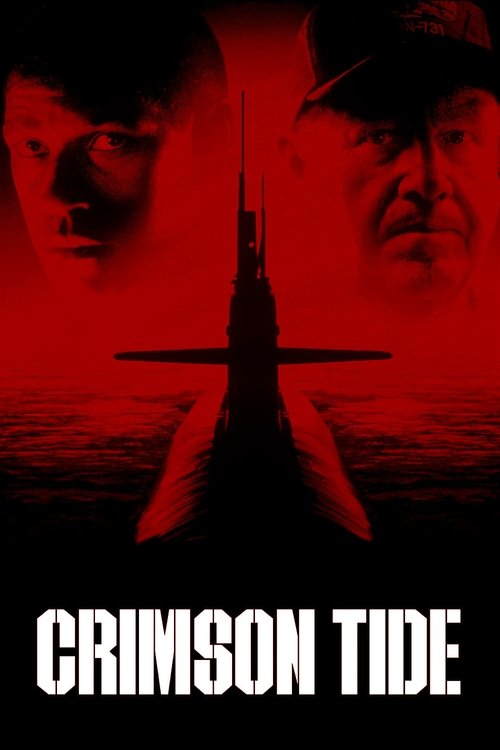
The air inside the USS Alabama isn't just recycled; it’s thick with the scent of ozone, cigarette smoke, and the palpable, salty dread of ninety men who know they might be the ones to turn the world into a charcoal briquette. By the time the opening credits of Crimson Tide finish rolling, you can practically feel the atmospheric pressure squeezing your temples. This isn't just a submarine movie; it’s a high-stakes psychological cage match where the prize is the survival of the human race.
I first watched this on a grainy VHS while sitting in a room that was far too hot, wearing a slightly itchy wool sweater that made the on-screen claustrophobia feel 10% more real. Even through the magnetic tape hiss, the intensity was stifling. Tony Scott, the man who gave us the sun-drenched machismo of Top Gun, trades the open skies for a cramped, neon-blue-and-emergency-red hallway, and the result is arguably his most disciplined work.
The Philosophy of the Punch
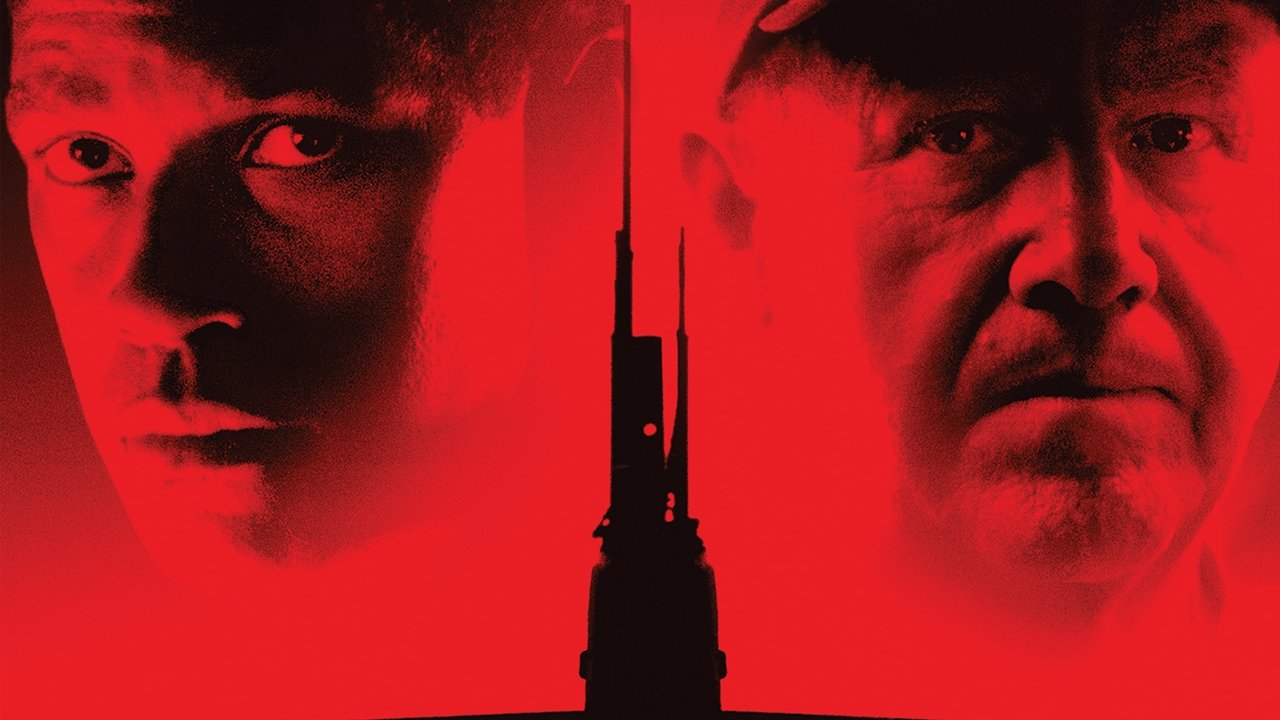
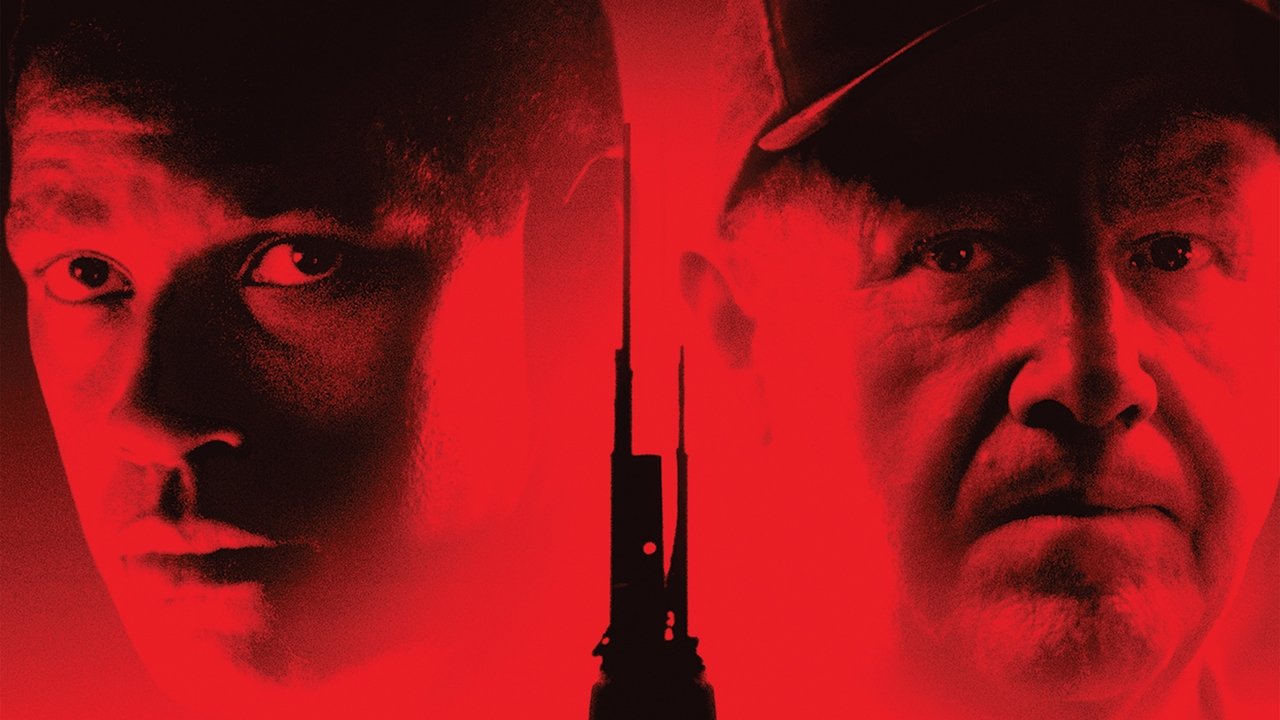
The core of the film is a collision between two tectonic plates of acting. You have Gene Hackman as Captain Ramsey, a man who views the world through a periscope and trusts his gut over a manual. Then you have Denzel Washington as Lt. Commander Hunter, a Harvard-educated officer who believes that in the nuclear age, the "why" is just as important as the "how."
Their conflict isn't just about a missed radio transmission; it’s a fundamental debate about the nature of command. When a breakaway Russian republic threatens to launch nukes, the Alabama receives an order to fire. But mid-transmission, a second message is cut off by an attacking Russian sub. Ramsey wants to launch anyway; Hunter wants to wait for the rest of the message.
What follows is essentially a very expensive, very loud HR dispute with nukes, and I love every second of it. Hackman is terrifying here because he isn’t a cartoon villain. He’s a professional doing what he was trained to do. When he barks at Hunter, you feel the weight of his thirty years of service. Washington, meanwhile, plays Hunter with a simmering, quiet intelligence. He doesn’t shout until he absolutely has to, making the eventual explosion all the more satisfying.
The Art of the High-Pressure Cooker
Visually, this film is a feast of 90s technical prowess. This was an era where "practical" still meant something. When the Alabama takes a hit from a torpedo, the sets actually tilt, and the water that floods the lower decks looks cold, heavy, and lethal. Dariusz Wolski, the cinematographer who would later shoot The Martian, uses high-contrast lighting to turn the submarine into a labyrinth of shadows.
The action sequences are edited with a rhythmic precision that never feels chaotic. You always know where the torpedoes are, how deep the sub is, and exactly how many seconds are left before the hull collapses. It’s a masterly display of geography—something modern action films often trade for "shaky-cam" confusion.
Then there’s the dialogue. While Michael Schiffer is the credited writer, the film famously had an uncredited polish from Quentin Tarantino. You can hear his voice in the legendary scene where Viggo Mortensen and a young James Gandolfini debate the merits of the Silver Surfer comic book. It’s a brief, humanizing moment of "subjective irrelevance" that makes the characters feel like real people with hobbies and opinions, rather than just cogs in a military machine. It grounds the stakes; these aren't just officers, they're nerds and fathers and friends who are about to die.
The Zimmer Wall of Sound
We have to talk about the score. Hans Zimmer won a Grammy for this, and it’s easy to hear why. It’s the bridge between his early synth work and the massive, orchestral walls of sound he’d later build for Inception. The main theme is a churning, masculine anthem that feels like it’s rising from the depths of the ocean. It drives the momentum forward even when the characters are just standing in a room staring at each other.
Looking back, Crimson Tide feels like one of the last great "adult" blockbusters. It’s a movie that trusts the audience to follow a complex legal argument about the chain of command while still delivering the "boom" factor. If sweat were a character, it would have won Best Supporting Actor, because every face on screen is perpetually glistening, reflecting the red glare of the battle lamps.
It’s also a fascinating snapshot of the mid-90s geopolitical landscape. The Soviet Union had collapsed, the "End of History" was supposedly upon us, yet the film reminds us that the machinery of the Cold War was still sitting in silos and submarines, waiting for a single misunderstood sentence to trigger the end. That anxiety hasn't aged a day. In fact, in our current era of instant but often fragmented communication, the idea of a half-received "Emergency Action Message" feels more terrifying than ever.
Crimson Tide is a rare beast: an action movie that prioritizes the tension of a conversation over the spectacle of an explosion. It thrives on the chemistry of its leads and the relentless vision of a director at the top of his game. Whether you’re a fan of naval history or just want to see two of the greatest actors of their generation scream at each other in a submarine, this is essential viewing. It’s a reminder that sometimes the most dangerous weapon on a nuclear sub isn’t the missile—it’s the man with his finger on the button.
Keep Exploring...
-
Man on Fire
2004
-

Enemy of the State
1998
-
The Siege
1998
-
The Last Castle
2001
-
The Taking of Pelham 1 2 3
2009
-
Days of Thunder
1990
-
Behind Enemy Lines
2001
-
Bound by Honor
1993
-
Courage Under Fire
1996
-
Déjà Vu
2006
-
Unstoppable
2010
-

Braveheart
1995
-

The Negotiator
1998
-
The Patriot
2000
-
The Count of Monte Cristo
2002
-

Domino
2005
-
Undisputed II: Last Man Standing
2006
-
United 93
2006
-
Batman: Year One
2011
-
The Quick and the Dead
1995