Die Hard: With a Vengeance
"A city in play. A detective in ruins."
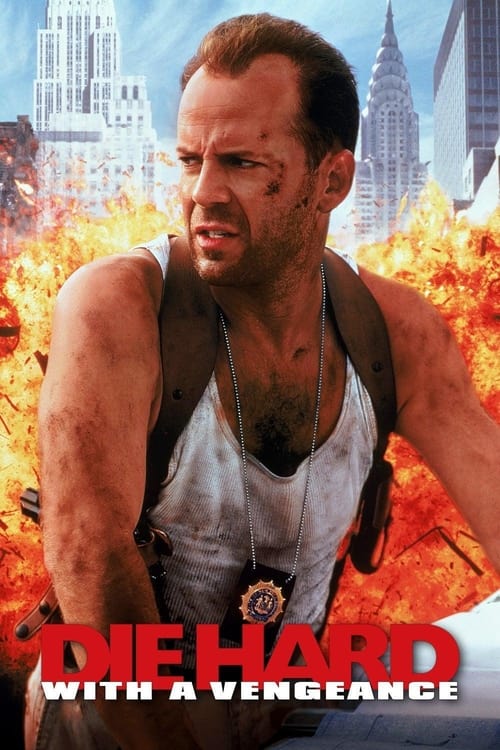
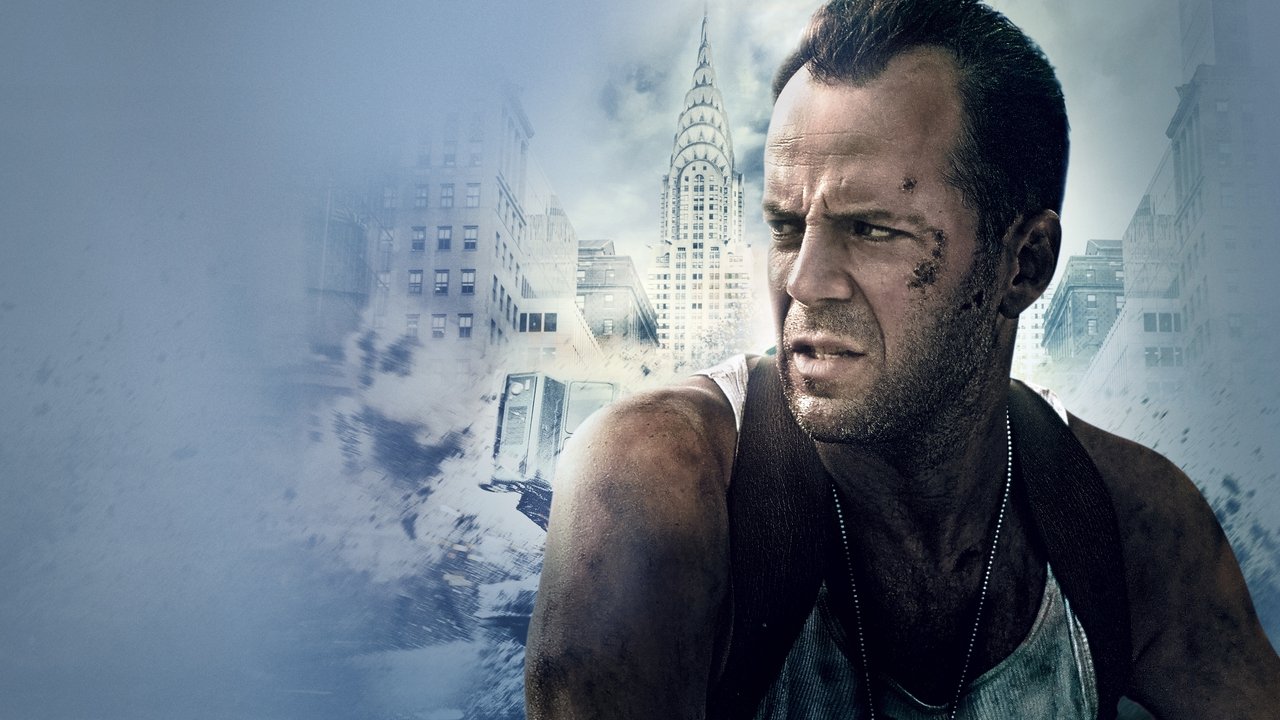
The 1990s were a peculiar decade for the "Everyman" hero. We’d moved past the oiled-up muscularity of the 80s, but we hadn’t yet reached the era where every protagonist needed a cape or a multiversal crisis. In 1995, Bruce Willis returned as John McClane, and he didn’t look like a hero; he looked like he’d spent the last forty-eight hours sleeping on a pile of damp newspapers. He’s hungover, suspended from the NYPD, and separated from his wife. It’s the perfect state for a man who is about to be forced into a high-stakes scavenger hunt across a sweltering New York City.
I watched this last Tuesday while eating a lukewarm bowl of chili, which felt spiritually appropriate for the film's grimy, sweltering atmosphere. Die Hard: With a Vengeance isn't just a sequel; it’s a total reclamation of the franchise after the airless, snowy repetition of the second installment. By bringing back original director John McTiernan, the series escaped the confines of a single building or airport and turned the five boroughs into a giant, ticking chessboard.
The Sweat, The Shards, and The City
There is a palpable sense of dread that permeates the first act. When a department store in the heart of the city evaporates in a massive explosion, the stakes feel heavier and more grounded than the cartoonish villainy of the era. This isn't a movie about a man in a vents; it’s a movie about a man being psychologically dismantled by a ghost from his past.
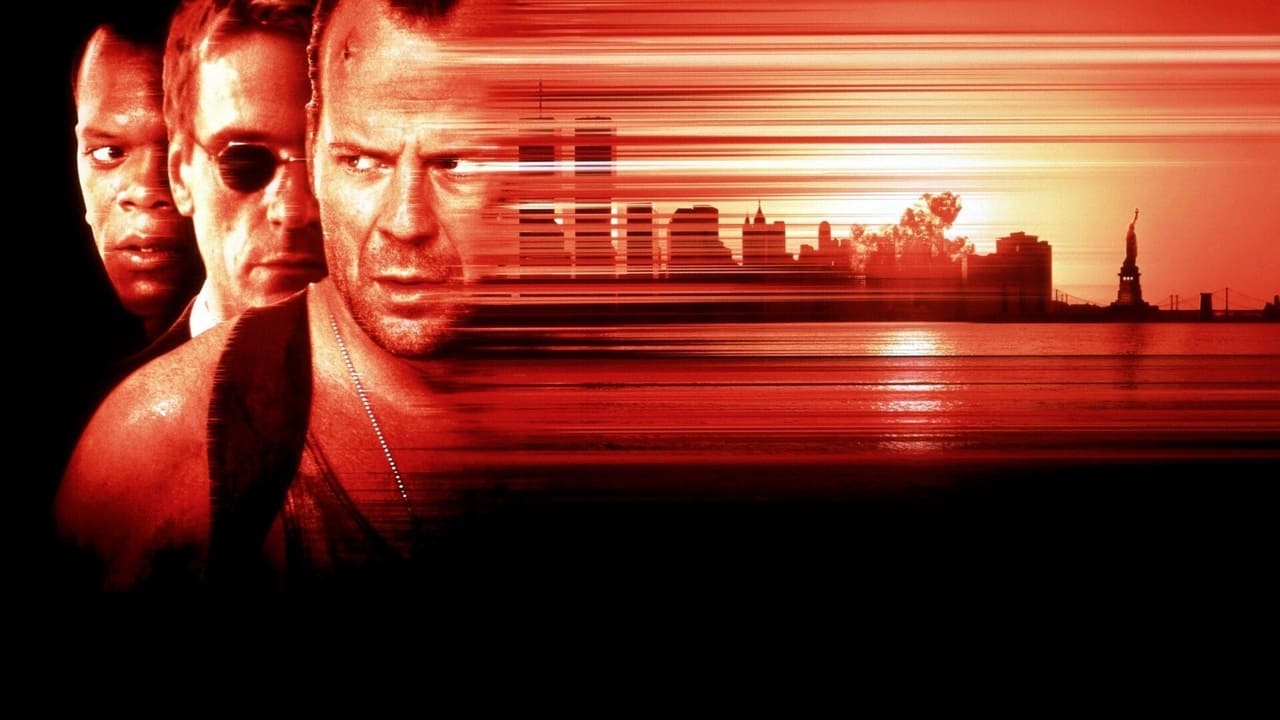
The introduction of Zeus Carver, played with a relentless, crackling energy by Samuel L. Jackson, is arguably the best "buddy" pairing in action history. Their relationship isn't built on the tired "odd couple" tropes of the Lethal Weapon clones. Instead, it’s forged in the furnace of racial tension and mutual survival. Jackson doesn’t play the sidekick; he’s the audience surrogate who correctly points out that McClane’s life is a magnet for catastrophe. Die Hard: With a Vengeance is the only sequel that understands John McClane is actually more interesting when he’s a total failure at life.
Jeremy Irons enters the fray as Simon, the velvet-voiced terrorist with a penchant for riddles and a personal vendetta. Irons manages to be more threatening with a cordless phone than most modern villains are with a magic gauntlet. He brings a cold, European intellect that serves as the perfect foil to the messy, intuitive desperation of McClane and Zeus. The "Simon Says" game provides a frantic pace that never lets the audience—or the characters—catch their breath.
A Masterclass in Mismatched Chemistry
What stands out in retrospect is how much of this film relies on practical execution. We are currently living through an era of "gray sludge" CGI, where action sequences feel weightless and digital. In 1995, when John McTiernan crashed a subway train or drove a Mercedes through Central Park, you felt the vibration in your teeth. The production had to navigate the logistical nightmare of filming in a pre-9/11 New York, and that authenticity pays dividends.
The action choreography is clear and impactful. Whether it’s a shootout in a narrow elevator or a desperate scramble for a gallon of water to solve a riddle, the film prioritizes physical space and geography. You always know where the characters are, how far they have to go, and exactly how much time they have to get there. It’s a masterclass in tension-building that feels increasingly rare in the age of rapid-fire, "shaky-cam" editing.
Behind the scenes, the film's existence is a fascinating bit of Hollywood recycling. The screenplay by Jonathan Hensleigh was originally a standalone script titled Simon Says, which was briefly considered as a vehicle for the Lethal Weapon franchise before being retooled for McClane. This explains why the film feels so different from its predecessors; it wasn't born from the "Die Hard in a [Location]" formula. It was its own beast that just happened to fit the character's DNA perfectly.
The Heist That Put the Screenwriter on a Watchlist
The scale of the film's success was massive, eventually becoming the highest-grossing film worldwide in 1995 with a $366 million haul. But the production was so detailed in its research that it actually drew federal attention. Jonathan Hensleigh was reportedly questioned by the FBI after completing the script because he had mapped out the robbery of the Federal Reserve Bank with such terrifying accuracy. He had figured out that the gold was stored on bedrock and that a tunnel could theoretically be dug into the vault from the nearby subway system—a detail the authorities weren't thrilled to see on the big screen.
The film also captures a very specific moment in tech history. It’s a "payphone thriller." The urgency of the "Simon Says" game depends entirely on the characters sprinting to find a working public phone before the timer hits zero. In a world of smartphones, the entire plot would dissolve in five minutes. This gives the movie a frantic, analog energy that has aged surprisingly well. It feels like a relic of a time when the world was big, disconnected, and genuinely dangerous.
Jeremy Irons delivers the best villain performance of the 90s while wearing a tank top that looks like it was stolen from a dumpster. His Simon is a creature of spite and greed, a man who uses the memory of his brother (Hans Gruber) as a convenient excuse for a multi-billion dollar heist. It’s a dark, cynical take on the heist genre that keeps the "Vengeance" in the title feeling earned rather than just a marketing buzzword.
Die Hard: With a Vengeance is the high-water mark for the franchise's sequels. It’s a sweaty, stressful, and brilliantly acted thriller that refuses to play it safe. By grounding the action in the racial and social tensions of 90s New York, it manages to be about something more than just explosions. It’s about two men who shouldn't like each other finding common ground in the middle of a literal minefield. If you want to remember why we used to love Bruce Willis on the big screen, this is the blueprint. It’s loud, it’s mean, and it’s a hell of a lot of fun.
Keep Exploring...
-
Die Hard
1988
-
Die Hard 2
1990
-
Live Free or Die Hard
2007
-
The Hunt for Red October
1990
-
The Rock
1996
-
Armageddon
1998
-
Unbreakable
2000
-
Terminator 2: Judgment Day
1991
-
True Lies
1994
-
Mission: Impossible
1996
-
The Last Boy Scout
1991
-
The Fugitive
1993
-
Speed
1994
-
Star Trek: First Contact
1996
-
Twelve Monkeys
1995
-
Minority Report
2002
-
The Bourne Identity
2002
-

The Matrix Reloaded
2003
-
The Bourne Supremacy
2004
-
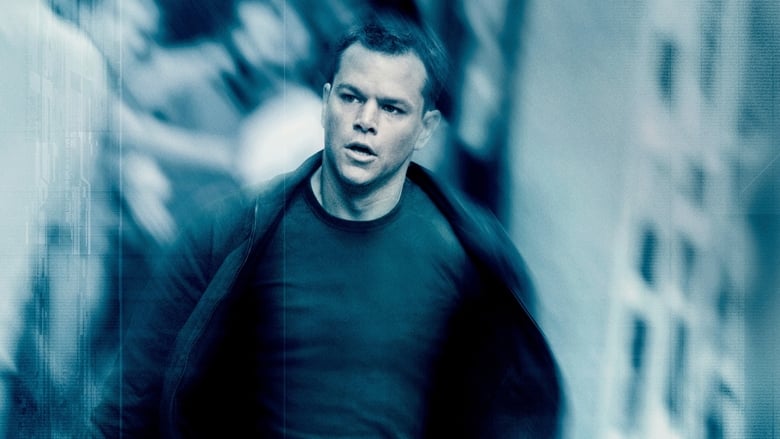
The Bourne Ultimatum
2007