Dilwale Dulhania Le Jayenge
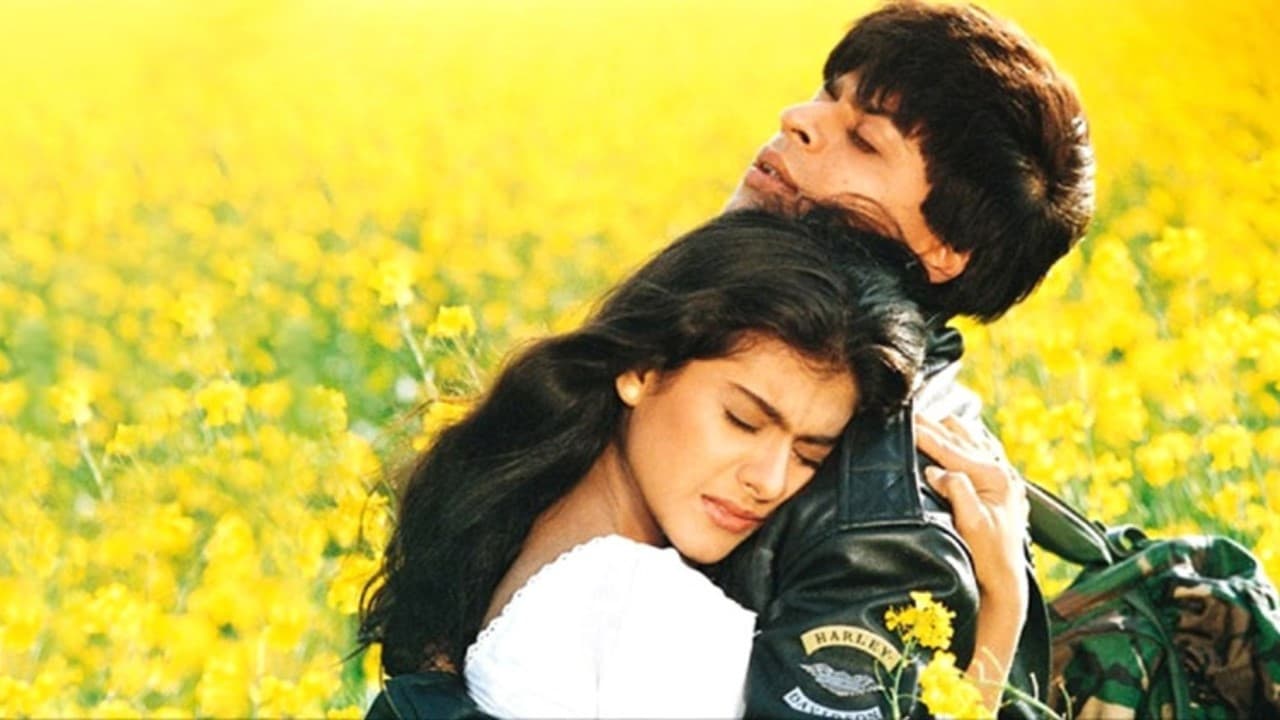
"The mustard fields are calling, and you must go."
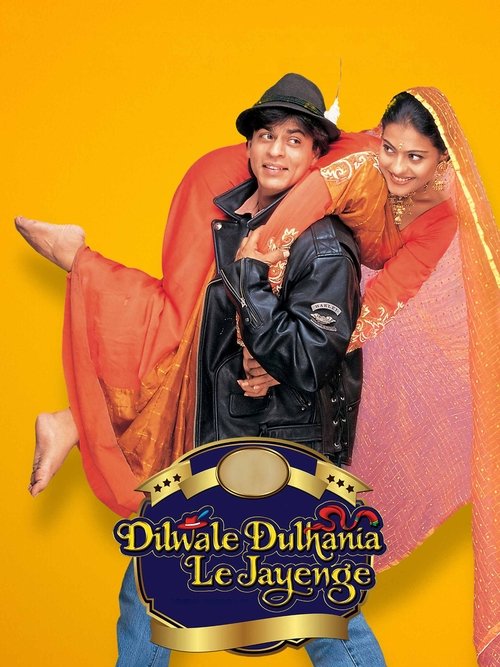
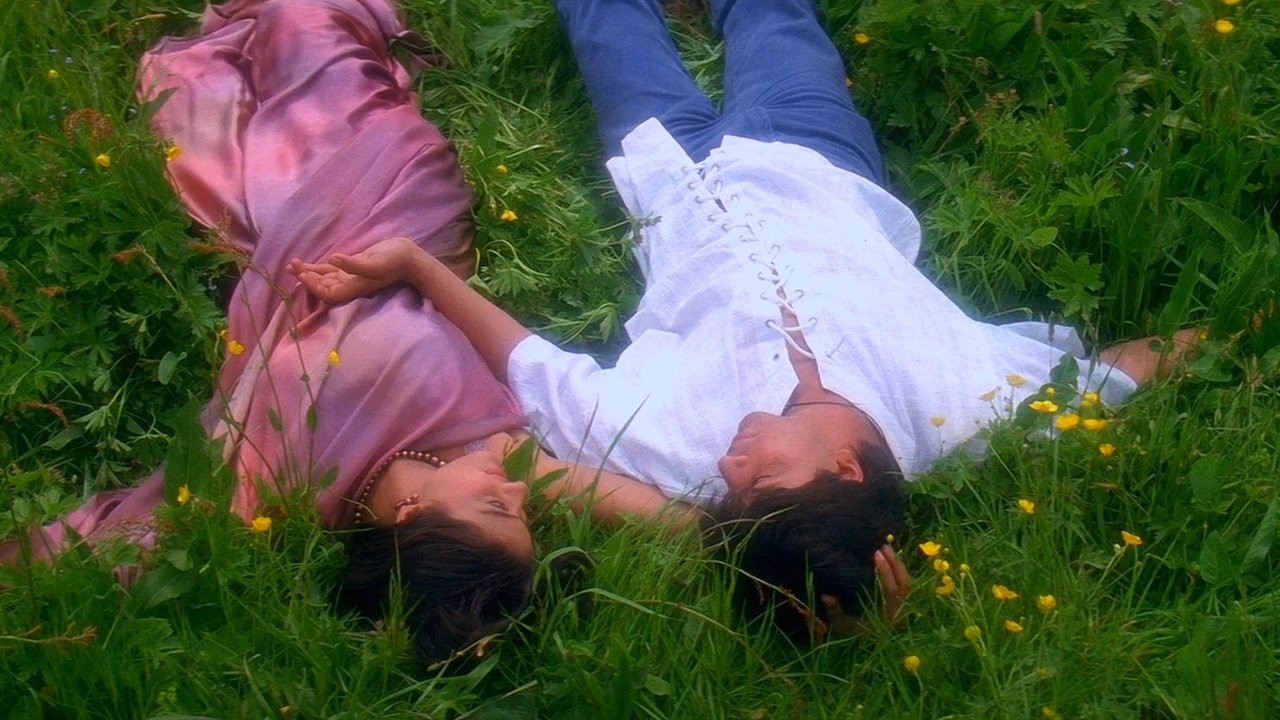
If you walked into the Maratha Mandir theater in Mumbai on any given afternoon for the last twenty-seven years, you wouldn’t just be watching a movie; you’d be participating in a ritual. Dilwale Dulhania Le Jayenge (affectionately known as DDLJ) hasn't just "held up" since 1995; it has essentially become the wallpaper of the Indian subconscious. I remember watching this for the fourth time while nursing a particularly nasty bout of food poisoning from a questionable street-cart samosa, and even through a haze of nausea, the moment Shah Rukh Khan spread his arms in those Swiss meadows, I felt weirdly cured.
The Great Negotiator of the Nineties
Looking back from our era of instant-access streaming, it’s easy to forget how much of a tectonic shift DDLJ represented. This was the mid-90s, the dawn of the "Global Indian." Aditya Chopra (who also directed the high-gloss Mohabbatein) wasn't just making a romance; he was drafting a manifesto for the NRI (Non-Resident Indian) experience.
The film follows Raj (Shah Rukh Khan) and Simran (Kajol), two London-based youngsters who meet on a Eurail trip. He’s a bratty, leather-jacket-wearing playboy; she’s a soulful dreamer tethered by her father’s rigid traditionalism. When they fall in love, the movie makes a choice that redefined the genre. Instead of the typical "rebel against the parents and elope" trope that fueled 80s hits like Qayamat Se Qayamat Tak, Raj decides he won't take Simran away unless her father, the formidable Chaudhry Baldev Singh (Amrish Puri), gives her to him.
This is the film’s central philosophical engine: the idea that you can be modern and global while remaining fundamentally "Indian" at heart. It posits that the "Dilwale" (the brave-hearted) don't just win the girl—they win the family. It’s a drama of manners and moral endurance disguised as a Technicolor musical.
Chemistry That Should Be Studied in Labs
We have to talk about Shah Rukh Khan and Kajol. If you haven't seen them together (in films like Kuch Kuch Hota Hai or My Name Is Khan), you’re missing the gold standard of cinematic friction. In DDLJ, they are electric. Kajol brings a grounded, earthy yearning to Simran that keeps the film from floating off into pure fantasy. And SRK? This was the moment he became "King Khan."
Watching it now, Raj is essentially a professional pest for the first forty minutes, and I’m convinced his persistence would earn him a restraining order in 2024, but Khan’s sheer charisma weaponizes that annoyance into charm. He plays Raj with a frantic, puppy-dog energy that masks a deep-seated need for paternal approval—a nuance he’d later explore with more gravity in Swades.
The supporting cast is equally legendary. Amrish Puri, known globally for playing Mola Ram in Indiana Jones and the Temple of Doom, delivers a performance of terrifying stillness. His character represents the anxiety of the immigrant—the fear that his children will lose their roots in the fog of London. On the flip side, Anupam Kher (who appeared in Silver Linings Playbook) provides the "Cool Dad" archetype that every 90s kid desperately wished they had.
A Prestige Production of Pure Sentiment
DDLJ wasn't just a hit; it was a prestige juggernaut. It swept the Filmfare Awards, taking home ten trophies, which was a record at the time. The production value, managed by the legendary Yash Chopra (the "King of Romance" who directed Deewaar and Lamhe), set a new visual language for Bollywood.
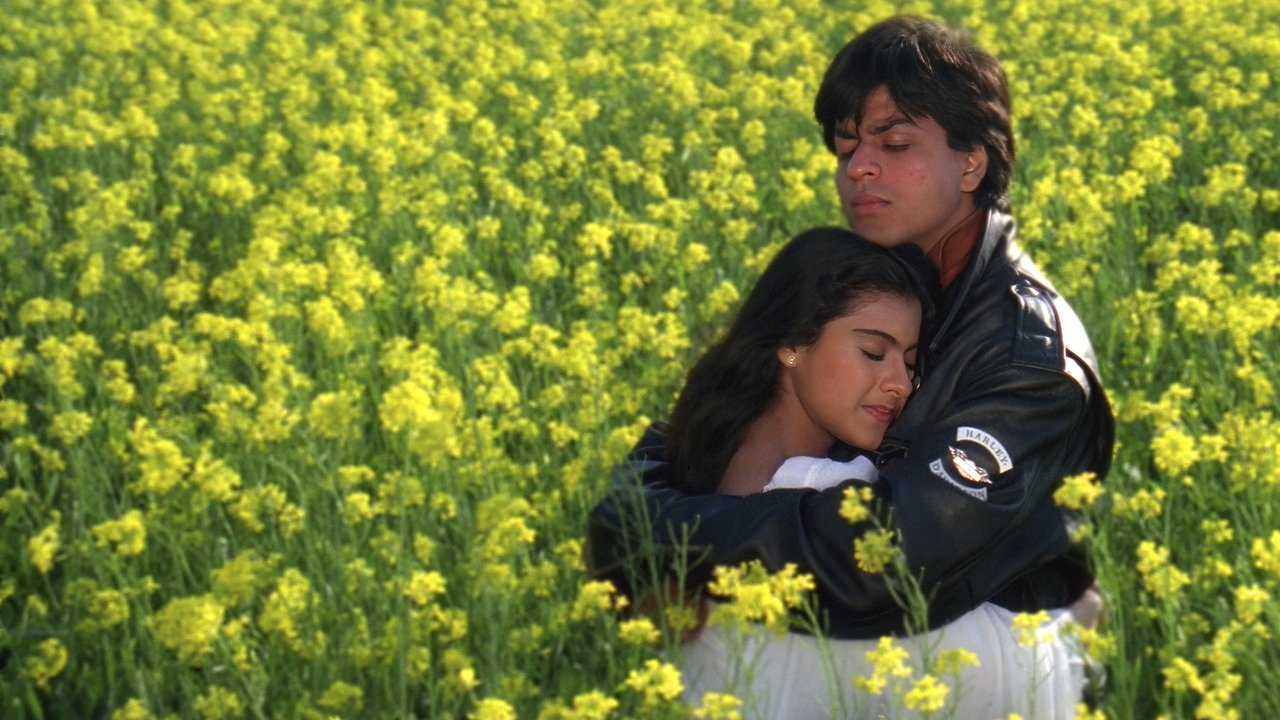
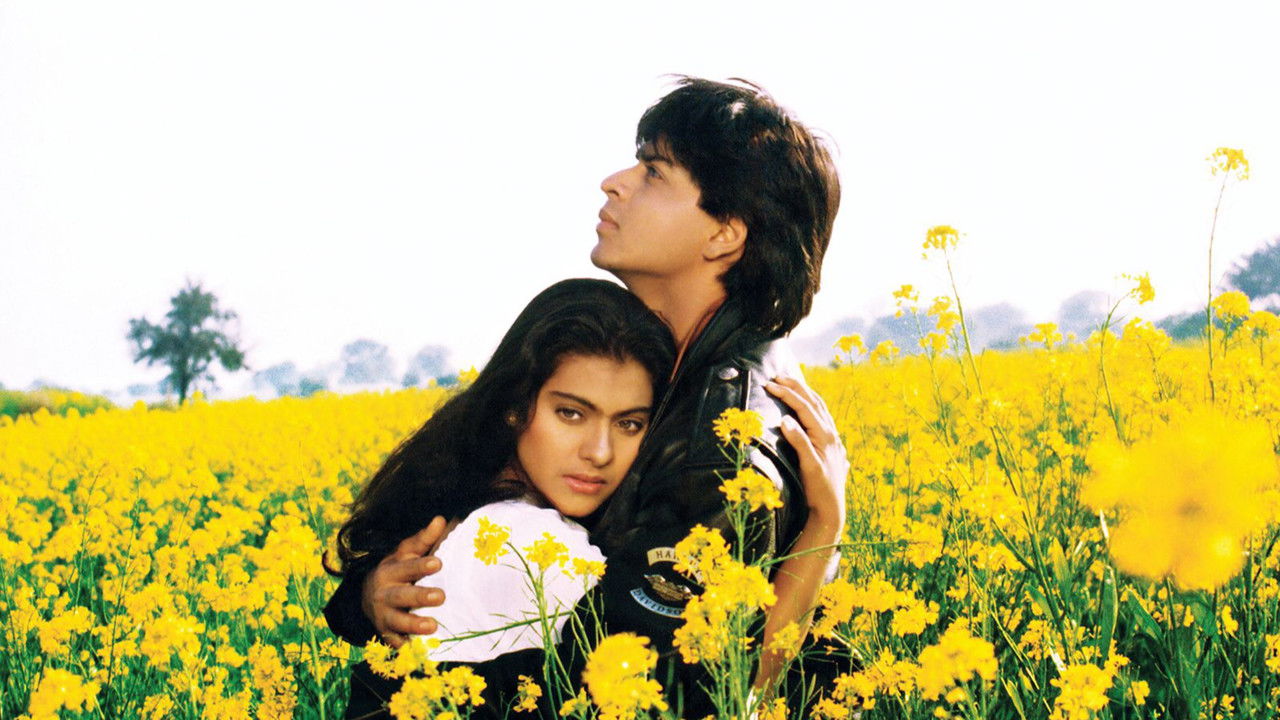
The cinematography by Manmohan Singh transitions beautifully from the cool, blue-toned landscapes of Europe to the warm, golden hues of the Punjab mustard fields. It’s a visual representation of Simran’s internal journey—from the cold constraint of her London life to the vibrant, messy reality of her heritage.
Interestingly, the film’s iconic leather jacket—the one Raj wears throughout the Europe trip—wasn't a costume department find. Apparently, Shah Rukh Khan bought it himself in New York for about $400. It’s also worth noting that a young Karan Johar, who would go on to direct Kabhi Khushi Kabhie Gham, served as an assistant director and even had a small cameo as one of Raj’s bumbling friends.
The score by Jatin Pandit is a character in its own right. From the mandolin riff of "Tujhe Dekha Toh" to the wedding anthem "Mehndi Laga Ke Rakhna," these songs aren't just background noise; they are the emotional shorthand for an entire generation's romantic expectations.

The Enduring Train Ride
Is it cheesy? By modern standards, absolutely. The comedy in the first act is broad, and the "palat" (turn around) scene is the height of cinematic manipulation. But DDLJ earns its sentiment. It treats its characters' dilemmas with a sincerity that is increasingly rare in our cynical, meta-commentary age.
It asks a question that still resonates: Can we honor where we came from while becoming who we want to be? The film’s answer is a resounding "yes," delivered with a smile, a song, and a frantic sprint alongside a moving train. It’s the ultimate "Prestige Rom-Com"—a film that took the tropes of the era and polished them until they reflected the dreams of millions.
Dilwale Dulhania Le Jayenge is more than a movie; it's a mood, a memory, and a masterclass in star power. Even if you aren't a fan of musicals, the sheer kinetic energy of the Raj-Simran-Baldev triangle is impossible to resist. It’s the kind of film that makes you want to buy a one-way ticket to Switzerland, or at the very least, call your parents. Just maybe skip the street-cart samosas before your viewing.
Keep Exploring...
-
10 Things I Hate About You
1999
-
The Postman
1994
-
A Dog's Will
2000
-
Forrest Gump
1994
-
Moonrise Kingdom
2012
-
Before Sunrise
1995
-
In the Mood for Love
2000
-

A Walk to Remember
2002
-

Pride & Prejudice
2005
-
Mr. Nobody
2009
-

Flipped
2010
-

About Time
2013
-

What's Eating Gilbert Grape
1993
-
The Bridges of Madison County
1995
-
All About My Mother
1999
-
Before Sunset
2004
-

Love, Simon
2018
-
Chungking Express
1994
-
Life Is Beautiful
1997
-

My Name Is Khan
2010