Dragon Ball Z: Fusion Reborn
"Two souls, one body, zero mercy."
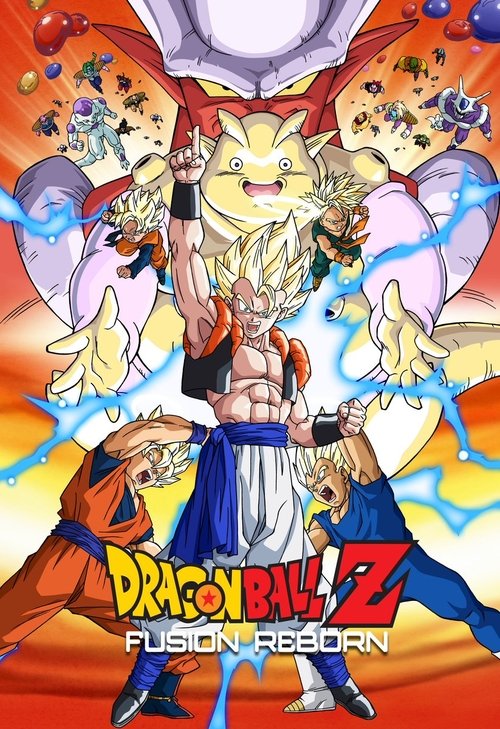
I watched Dragon Ball Z: Fusion Reborn on a slightly warped DVD I found in a bargain bin, while eating a bowl of cereal that was definitely past its expiration date. Somehow, the stale crunch of generic cornflakes perfectly complemented the surreal, sugar-crusted nightmare unfolding on my screen. This isn’t just another "Goku hits a guy really hard" story; it’s a 50-minute experimental dive into pop-art hell and the psychological dismantling of anime’s most stubborn ego.
Released in 1995, during the absolute fever pitch of the franchise's global expansion, Fusion Reborn feels like a bridge between eras. It captures that mid-90s transition where Toei Animation was pushing the limits of traditional cel animation before the digital sheen of the 2000s took over. It’s a film that asks: What if the afterlife wasn’t a place of fire and brimstone, but a psychedelic playground of giant jelly beans and reality-warping physics?
A Surrealist Nightmare in Candy Colors
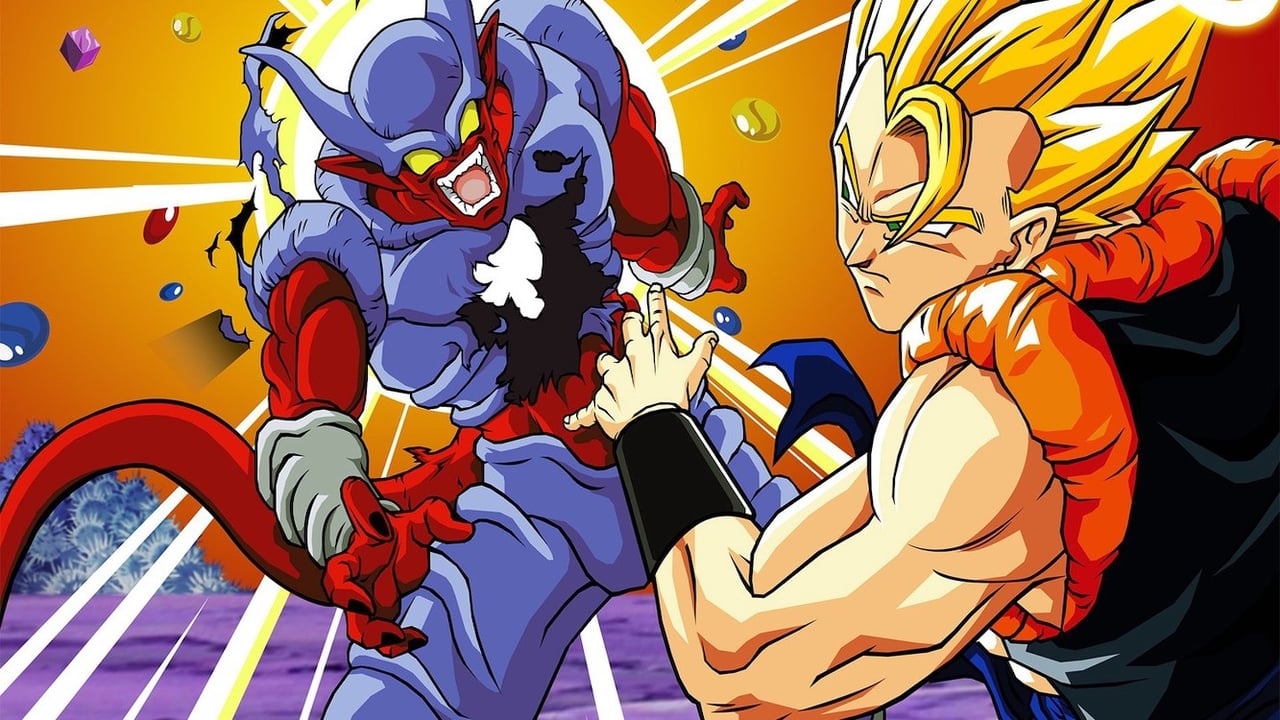
The plot kicks off with a literal bureaucratic error. A teenage demon, more interested in his Walkman than his job, allows the "Soul Cleansing Machine" to explode. This releases an accumulation of pure evil that manifests as Janemba—a creature that begins as a giant, yellow, innocent-looking blob and eventually evolves into a sleek, red devil that looks like he walked off a high-end streetwear poster.
Director Shigeyasu Yamauchi, who previously brought a moody, almost Gothic sensibility to the Saint Seiya films, treats the afterlife with a fascinating visual language. Instead of the typical rocky wastelands we usually see in Dragon Ball Z, we get a world broken into floating crystalline spheres. It’s vibrant, weird, and deeply unsettling. When Janemba fights, he doesn't just punch; he deconstructs space itself, dissolving into cubes and reappearing behind his opponent. It’s the kind of high-concept choreography that makes you realize the fight scenes in modern CGI blockbusters often feel stiff compared to this hand-drawn fluidity.
The action here is clear and rhythmic, avoiding the "shaky cam" confusion of later eras. There’s a weight to every blow, punctuated by Shunsuke Kikuchi’s iconic score, which leans into heavy brass and driving percussion to maintain a sense of cosmic stakes.
The Ego Death of the Prince

While Goku is busy tangling with the reality-warper in Hell, Earth is experiencing its own crisis: the dead have returned to life. This gives the film a chance to play with some dark comedy, featuring a thinly veiled parody of Adolf Hitler (credited simply as "The Dictator") leading an army of tanks through a modern city. It’s a bizarre tonal shift, but it highlights the era’s willingness to be subversive and weirdly political in a way that modern, more corporate-sanitized anime rarely attempts.
The heart of the film, however, is the return of Vegeta. At this point in the timeline, the Saiyan Prince is dead and languishing in the afterlife. His reunion with Goku isn't a warm one; it’s a collision of ideologies. To defeat Janemba, they must perform the Fusion Dance—a synchronized sequence that results in a singular, superior being.
This is where the film gets surprisingly cerebral. For Vegeta (Ryo Horikawa), fusion isn't just a power-up; it’s a total surrender of the self. To merge with his rival is to admit his own insufficiency. We see him weep—not out of physical pain, but out of the sheer agony of bruised pride. When they finally screw up the dance and turn into "Veku"—a portly, wheezing disaster of a warrior—the film shifts from high-stakes action to a cruel, hilarious commentary on the fragility of the alpha-male ego. Vegeta’s mid-life crisis is the only relatable thing in this entire franchise.
Toei’s Hand-Drawn High-Water Mark
Looking back from our current era of "Extended Universes" and endless franchise planning, Fusion Reborn feels remarkably lean. It’s 55 minutes of pure momentum. There’s no bloat, no unnecessary "set-up" for a sequel, just a self-contained explosion of creativity.
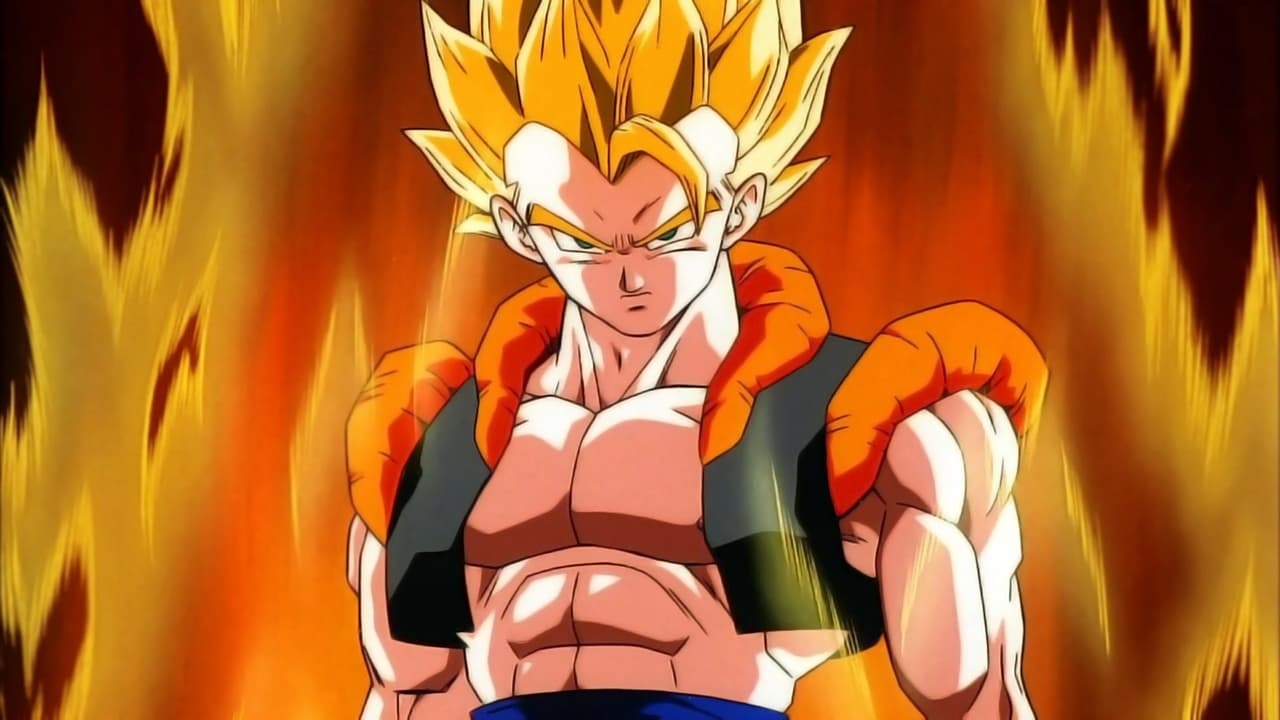
The appearance of Gogeta—the successful fusion of Masako Nozawa’s Goku and Ryo Horikawa’s Vegeta—is one of the most celebrated moments in the series' history, despite the character only appearing on screen for about three minutes. The efficiency of the storytelling is staggering. Gogeta doesn't monologue; he doesn't play with his food. He is a divine executioner, finishing the fight with a move called the "Stardust Breaker" that dissolves Janemba into sparkling dust. It’s a sequence that feels more like a religious experience than a cartoon brawl.
This film was a product of the "OVA" (Original Video Animation) boom mentality, where studios had the budget and the freedom to experiment with styles that didn't have to fit the weekly TV grind. It’s a reminder of what was lost when the industry moved toward digital coloring and streamlined production. There’s a grit and a texture to the ink lines here that feels alive.
Dragon Ball Z: Fusion Reborn is a vibrant artifact of 1995 that still packs a punch because it refuses to be "just another" action movie. By leaning into surrealism and the philosophical horror of losing one's identity, it transcends its status as a mere tie-in. It’s a short, sharp shock of beautiful animation and character-driven stakes. Whether you’re a die-hard fan of Masako Nozawa’s legendary vocal range or just someone who appreciates 90s cel animation at its peak, this is a trip to Hell worth taking. Just make sure your cereal hasn't expired before you hit play.

Keep Exploring...
-

Dragon Ball Z: Broly - The Legendary Super Saiyan
1993
-

Dragon Ball Z: The Return of Cooler
1992
-
Dragon Ball Z: Battle of Gods
2013
-
Dragon Ball Z: Resurrection 'F'
2015
-

Cowboy Bebop: The Movie
2001
-

Evangelion: 1.0 You Are (Not) Alone
2007
-
Evangelion: 2.0 You Can (Not) Advance
2009
-

Ghost in the Shell
1995
-
Justice League: The Flashpoint Paradox
2013
-

Dragon Ball Super: Broly
2018
-
Dragon Ball Super: Super Hero
2022
-
Neon Genesis Evangelion: The End of Evangelion
1997
-
Batman Beyond: Return of the Joker
2000
-
Titan A.E.
2000
-
Final Fantasy VII: Advent Children
2005
-
Resident Evil: Degeneration
2008
-

Evangelion: 3.0 You Can (Not) Redo
2012
-
Resident Evil: Damnation
2012
-

Superman/Shazam!: The Return of Black Adam
2010
-
Batman: The Dark Knight Returns, Part 1
2012