First Knight
"Honor, passion, and a very impressive head of hair."
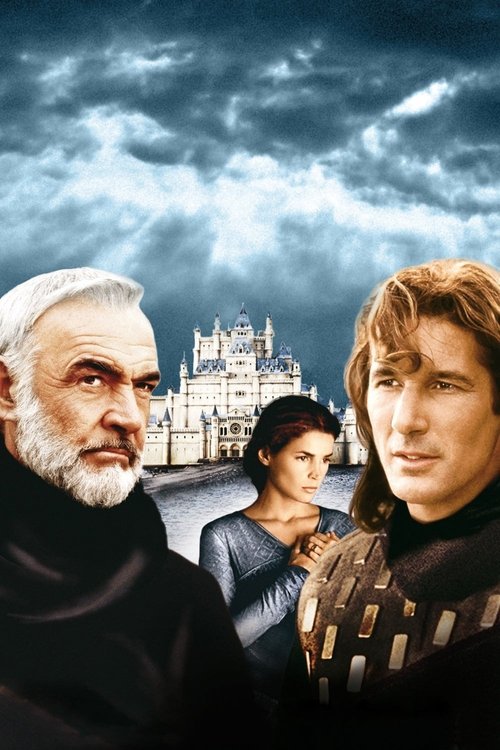
In the summer of 1995, you couldn't throw a rock without hitting a man in a kilt or a suit of armor. While Mel Gibson was busy screaming about freedom in the mud of Scotland, director Jerry Zucker—the man who gave us the slapstick genius of Airplane! and the pottery-wheel romance of Ghost—decided to take a wildly different path through the Middle Ages. First Knight arrived with a polished, blue-hued gleam, presenting a version of Camelot that looks less like a historical fortification and more like a high-end retirement community for people who really enjoy blue velvet.
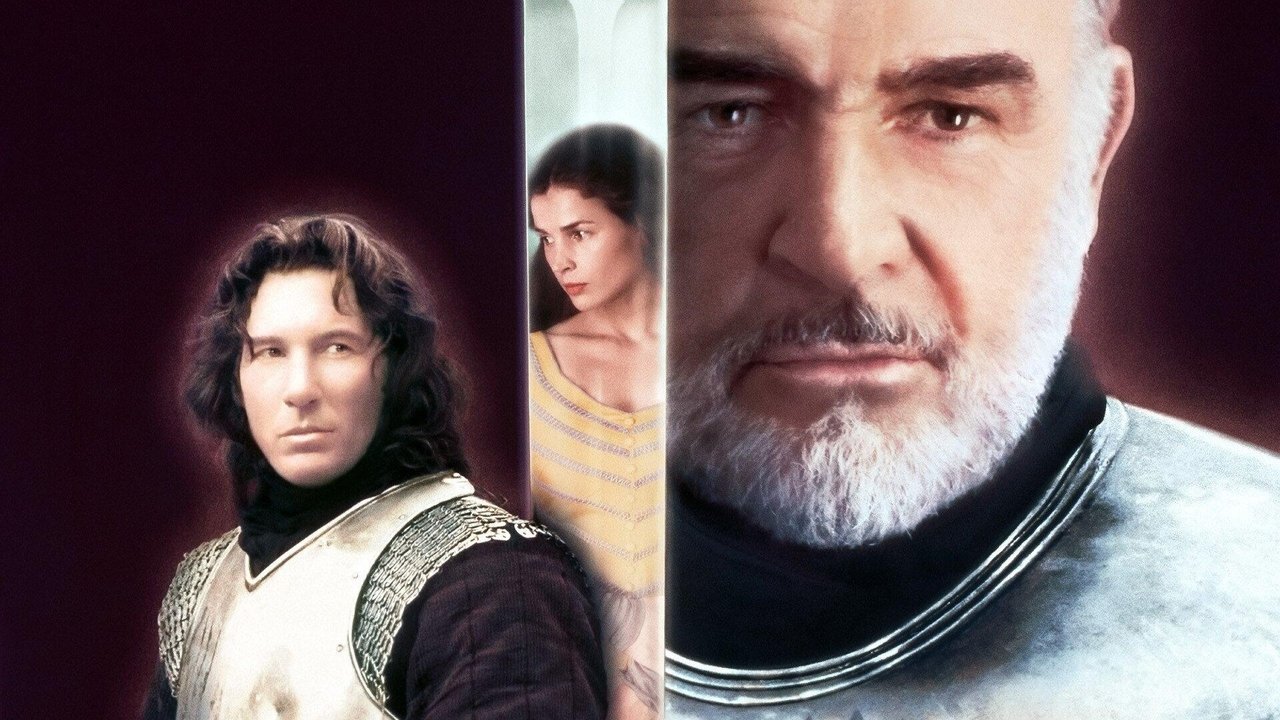
I recently revisited this one on a rainy Tuesday while eating a slightly over-toasted bagel, and I was struck by just how much of a "90s artifact" it truly is. It exists in that specific pre-CGI window where studios were still willing to build massive, tangible sets and hire hundreds of extras, yet the storytelling felt increasingly influenced by the breezy pacing of a modern soap opera. It’s a film that leans heavily on its stars, and your enjoyment of it depends almost entirely on how much you’re willing to buy into the specific charms of its leading trio.
The Round Table Meets the Runway
The biggest gamble First Knight takes is the total excision of Merlin and the supernatural. There is no Lady in the Lake, no sorcery, and Excalibur is just a really nice sword that King Arthur keeps in a box. By stripping away the magic, Jerry Zucker attempts to ground the legend in a human love triangle, but the result is a movie that feels strangely untethered from history. It’s a "historical" epic where everyone has perfect teeth and the dialogue feels like it was written for a contemporary boardroom.
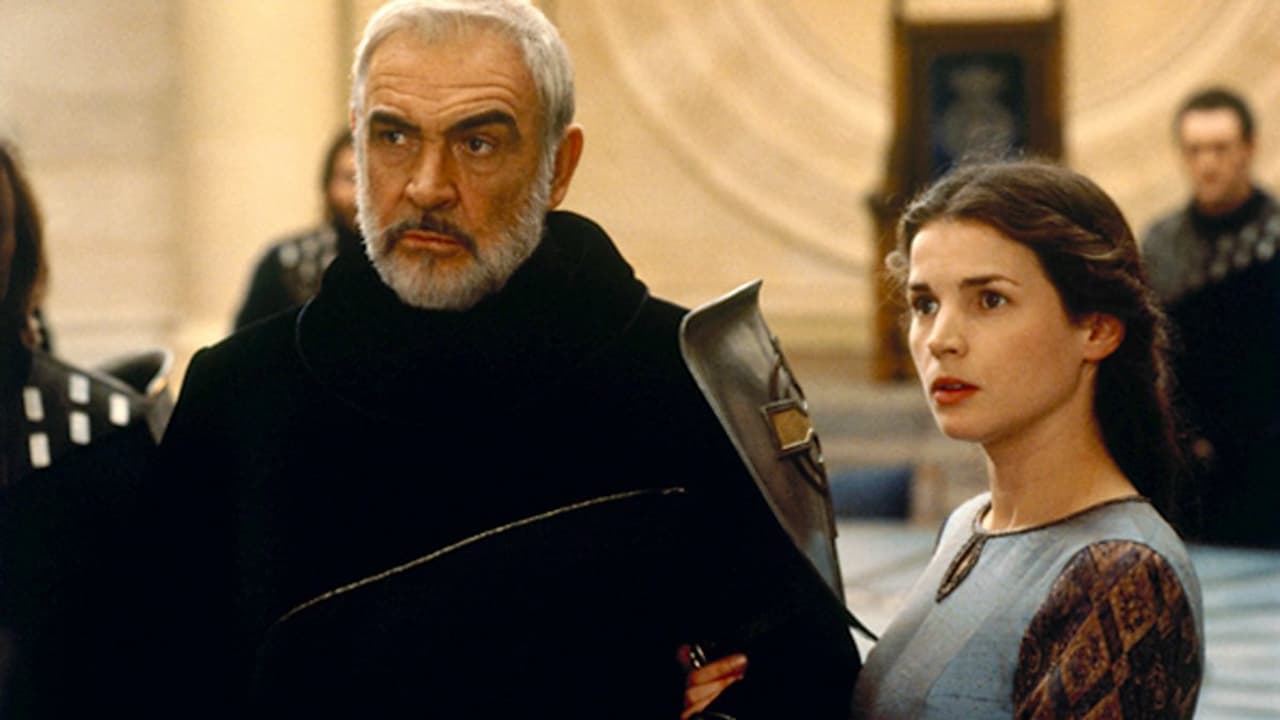
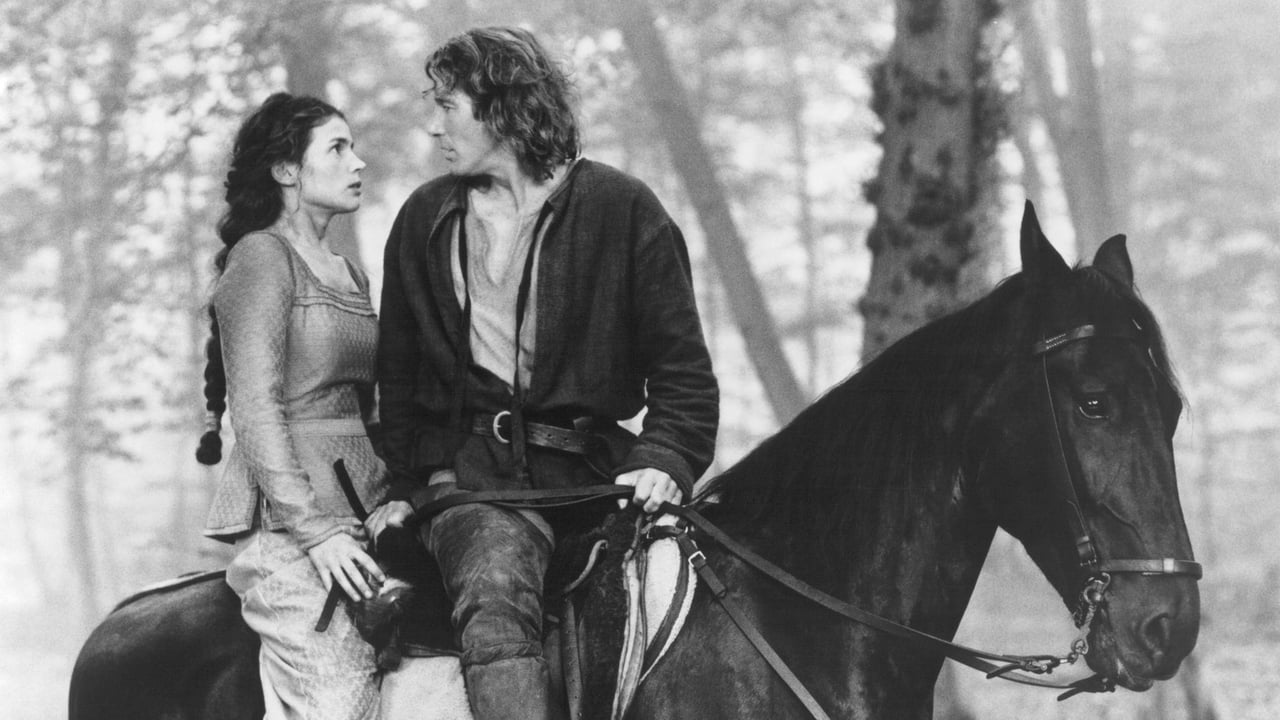
Sean Connery steps into the role of King Arthur with the effortless gravity he perfected in films like The Untouchables. He’s the anchor here, bringing a weary, noble dignity to a man who realizes his dream of a peaceful Camelot is slipping through his fingers. Opposite him, we have Richard Gere as Lancelot. This was a controversial bit of casting at the time, and looking back, I can see why. Gere plays Lancelot not as a haunted knight, but as a cocky, vagabond gymnast with a flowing mane of hair that seems to have its own lighting technician. He’s incredibly charismatic, but he feels like he’s wandered in from the set of a shampoo commercial rather than a battlefield.
Between them is Julia Ormond as Guinevere. This was her big moment in the mid-90s, coming right around Sabrina and Legends of the Fall. She brings a genuine intelligence to the role, making Guinevere’s internal conflict feel earned. When she’s forced to choose between the stability and vision of Arthur and the "I’ll-jump-over-a-sharp-thing-for-you" energy of Lancelot, you actually feel for her.
Athleticism Over Agony
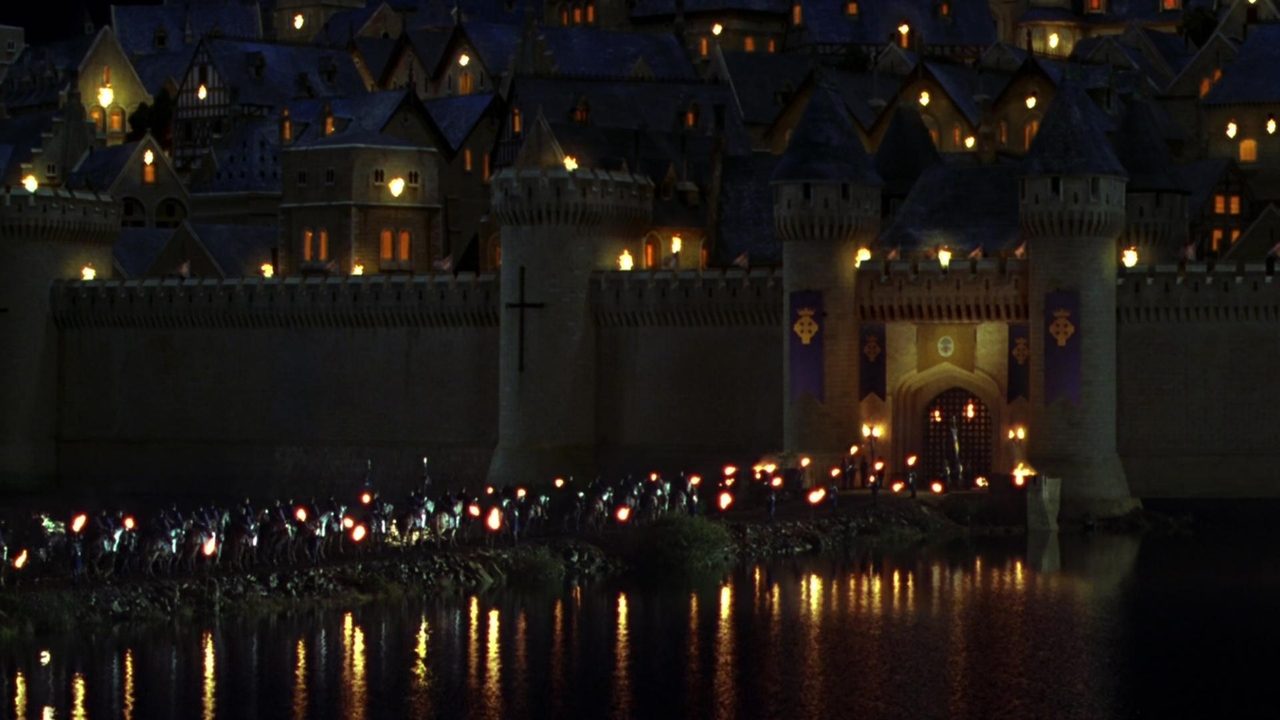
When it comes to the action, First Knight is a fascinating bridge between the old-school swashbucklers of the 1940s and the gritty realism that would take over after Gladiator. The cinematography by Adam Greenberg, who shot the gritty, metallic world of Terminator 2: Judgment Day, gives the film a crisp, almost clinical look. The action is choreographed with a focus on speed and athleticism rather than brutal impact.
The standout sequence is undoubtedly "The Gauntlet." It’s a ridiculous, mechanical obstacle course filled with spinning blades and swinging hammers that Lancelot has to navigate to prove his worth. It’s pure Jerry Zucker—it feels like something that could have been a gag in Naked Gun if it weren't played so straight. Watching Richard Gere dive and roll through these hazards is legitimately entertaining, even if it feels more like an episode of American Gladiators than a medieval trial.
The villain of the piece, Malagant, is played by Ben Cross with a sneering, scenery-chewing delight. He’s a former knight gone rogue, and he treats every line of dialogue like he’s trying to sharpen a knife with his teeth. His fortress is a jagged, dark contrast to the bright spires of Camelot, and the final siege provides some solid, large-scale practical stunt work. I especially enjoyed spotting a young Liam Cunningham (long before he was Davos Seaworth in Game of Thrones) lurking in the background as Agravaine. It’s a reminder of the incredible depth of British character actors that populated these big-budget 90s productions.
Why It Slipped Into the Shadows
So why don't we talk about First Knight as much as Robin Hood: Prince of Thieves or Braveheart? It’s partly because it’s a very "safe" movie. It lacks the grit that 90s audiences were starting to crave, and the lack of magic makes the Arthurian setting feel a bit like a costume party. It’s also incredibly earnest—there isn’t a cynical bone in its body, which can feel a bit sugary to modern tastes.
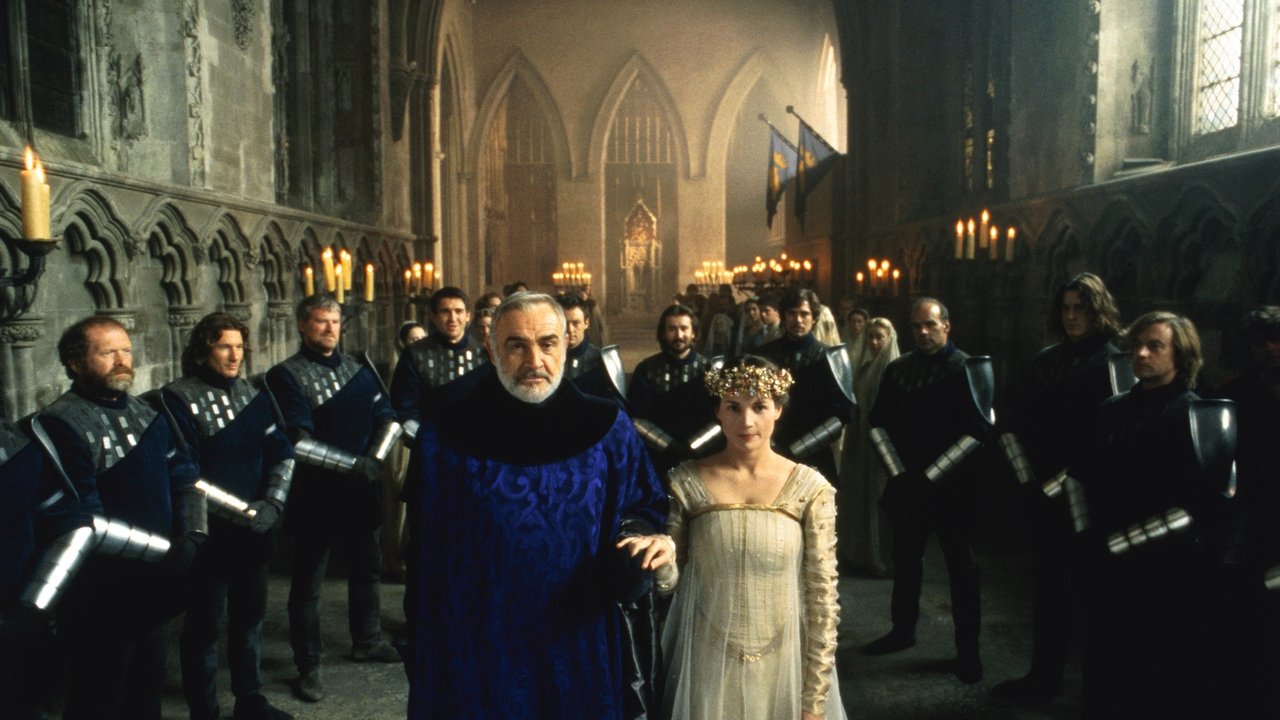
However, there is something deeply comforting about its sincerity. The score by Jerry Goldsmith is one of his most underrated, soaring with a brassy heroism that perfectly matches the film's idealized version of chivalry. It’s a movie that believes in "the law that is above us all," and in an era of anti-heroes and dark reboots, that kind of straightforward morality feels like a relic from another world.
The production values are genuinely impressive. The sets for Camelot are massive, and you can see every cent of the $55 million budget on the screen. There’s a scene where Arthur shows Guinevere the Round Table for the first time, and the sheer scale of the room, combined with the way the light hits the stone, creates a sense of wonder that CGI often struggles to replicate. It’s a movie that was built, not rendered.
First Knight is a handsome, well-acted, and ultimately lightweight take on a legend that usually demands more weight. It’s a film where the stakes are high, but the hair is always perfect and the armor never seems to get dented for long. If you’re looking for historical accuracy or a deep dive into Arthurian lore, you won’t find it here. But if you want a breezy, romantic adventure with Sean Connery being majestic and Richard Gere doing medieval parkour, it’s a perfectly pleasant way to spend two hours. It’s a reminder of a time when Hollywood thought a love triangle and some shiny swords were enough to carry a summer blockbuster.
Keep Exploring...
-
Days of Thunder
1990
-
Far and Away
1992
-
Maverick
1994
-
Wyatt Earp
1994
-
The Saint
1997
-
Six Days Seven Nights
1998
-

Alexander
2004
-
The Quick and the Dead
1995
-
The Messenger: The Story of Joan of Arc
1999
-
Pompeii
2014
-
Final Fantasy: The Spirits Within
2001
-

Sahara
2005
-
1492: Conquest of Paradise
1992
-
Centurion
2010
-
DragonHeart
1996
-
Executive Decision
1996
-

Twister
1996
-
Dante's Peak
1997
-
The Horse Whisperer
1998
-

The Perfect Storm
2000