Judge Dredd
"Justice has a face, and it looks exactly like Stallone."
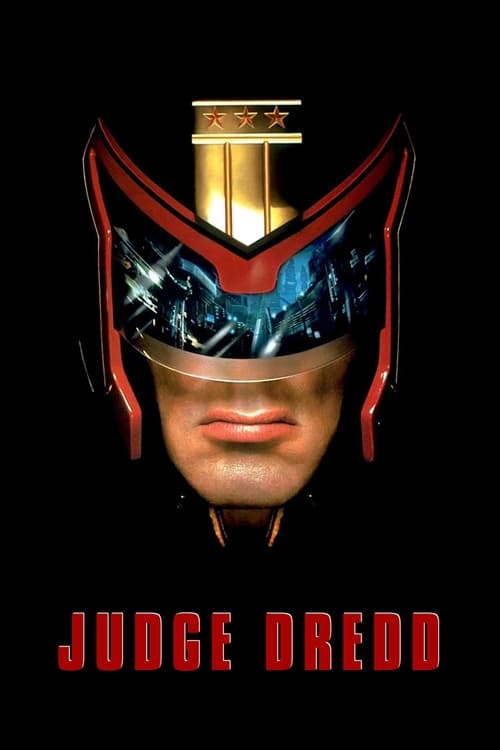
If you want to understand the chaotic energy of mid-90s blockbusters, look no further than the opening credits of Judge Dredd. We are treated to a soaring Alan Silvestri score—which, frankly, belongs in a much better movie—while the camera pans over a meticulously detailed miniature of Mega-City One. It’s a moment of pure, high-budget promise. Then, Sylvester Stallone appears, and within fifteen minutes, he takes off the helmet. For fans of the 2000 AD comic strip, that was the equivalent of watching Batman take off his mask to reveal he’s actually just a guy named Dave who really likes CrossFit.
I watched this recently while trying to assemble a flat-pack bookshelf, and I’m fairly certain I put the "G" screws into the "H" slots because I was too busy staring at the screen, wondering how Armand Assante managed to scream every single line without popping a blood vessel. It’s that kind of movie. It demands your attention not through narrative brilliance, but through sheer, unadulterated "What were they thinking?" energy.
The Versace Apocalypse
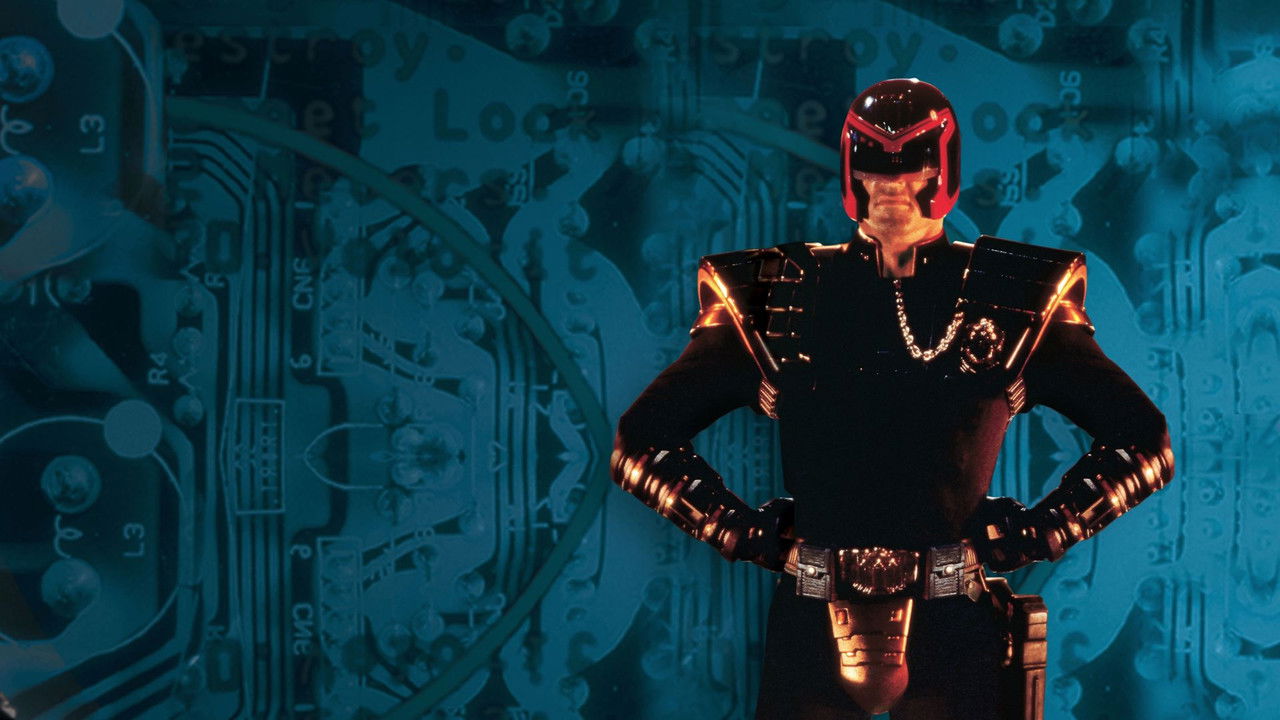
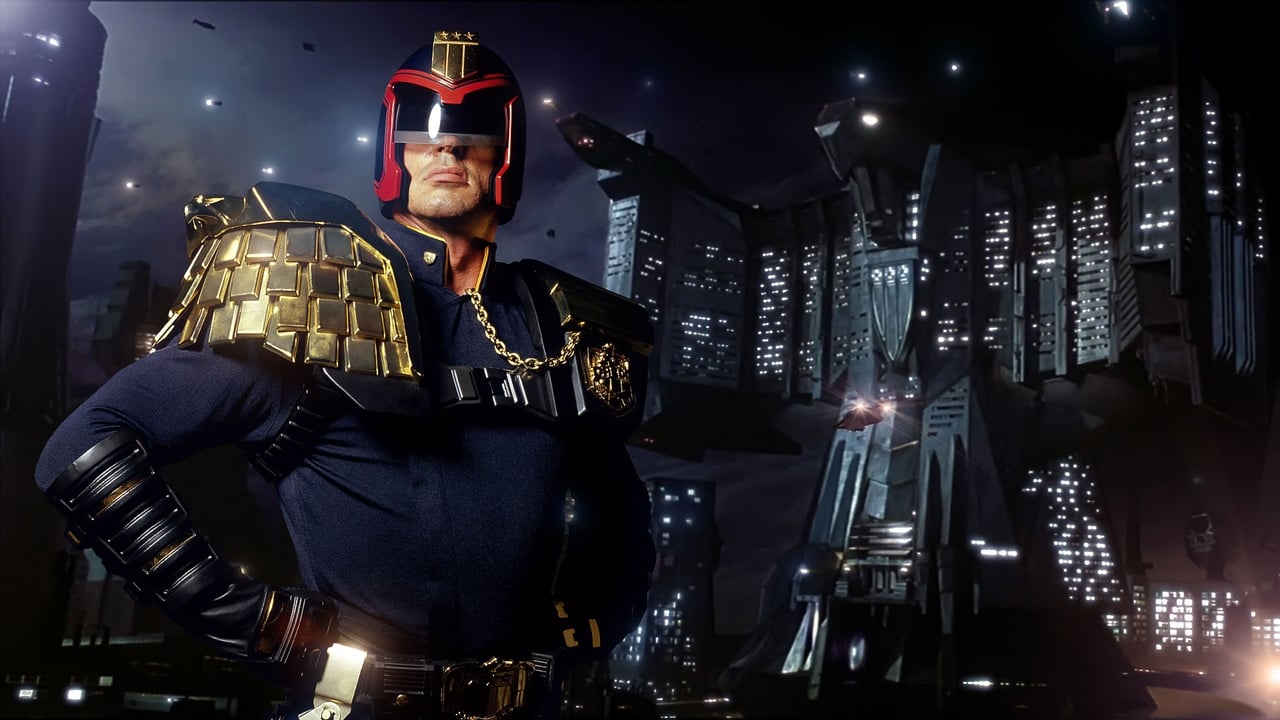
The first thing that hits you about Judge Dredd isn't the dialogue—which is mostly Stallone shouting "I am the law!"—it’s the look. In a wild bid for "fashion-forward dystopia," the production hired Gianni Versace to design the Judge uniforms. The result is a mix of fascist chic and high-fashion leather, complete with giant gold eagle pauldrons that look like they’d give the wearer a permanent neck injury.
Yet, looking back, the practical production design is staggering. This was 1995, the cusp of the CGI takeover, but director Danny Cannon (who gave us I Still Know What You Did Last Summer) insisted on massive, physical sets. The street scenes feel cramped, grimy, and lived-in. When the ABC Warrior—a giant, clanking robot from the comics—appears on screen, it has a physical weight that modern digital effects struggle to replicate. It was a fully functional animatronic puppet, and it remains the most intimidating thing in a movie full of guys in spandex.
A Tonal Tug-of-War
The film's biggest issue, and the reason it’s relegated to the "cult oddity" bin, is its identity crisis. Danny Cannon reportedly wanted to make a gritty, dark satire that stayed true to the cynical British roots of the comic. Sylvester Stallone, fresh off the success of Cliffhanger and Demolition Man, wanted a lighthearted action vehicle. You can see the seams tearing throughout the runtime.
One minute, you have Max von Sydow (of The Seventh Seal fame) delivering a Shakespearean monologue about the nature of justice, and the next, Rob Schneider is falling into a vat of recycled food. Rob Schneider’s comic relief feels like a mandatory tax we all had to pay for cinema in the 1990s, and here, he is at his most taxing. He plays Herman 'Fergee' Ferguson, a cowardly hacker who follows Dredd around like a lost puppy. Every time the movie starts to build a genuine sense of dread or sci-fi atmosphere, Schneider pops up to make a joke about his bowels, and the tension evaporates.
Then there’s Armand Assante as Rico, the villainous brother of Dredd. Assante isn't just acting; he’s performing a one-man opera. His performance is so over-the-top it orbits the moon and comes back for a second pass. It’s glorious. Between him and Stallone’s signature lip-curl, the movie becomes a battle of who can dominate the frame with the most facial muscle movements.
Behind the Gavel
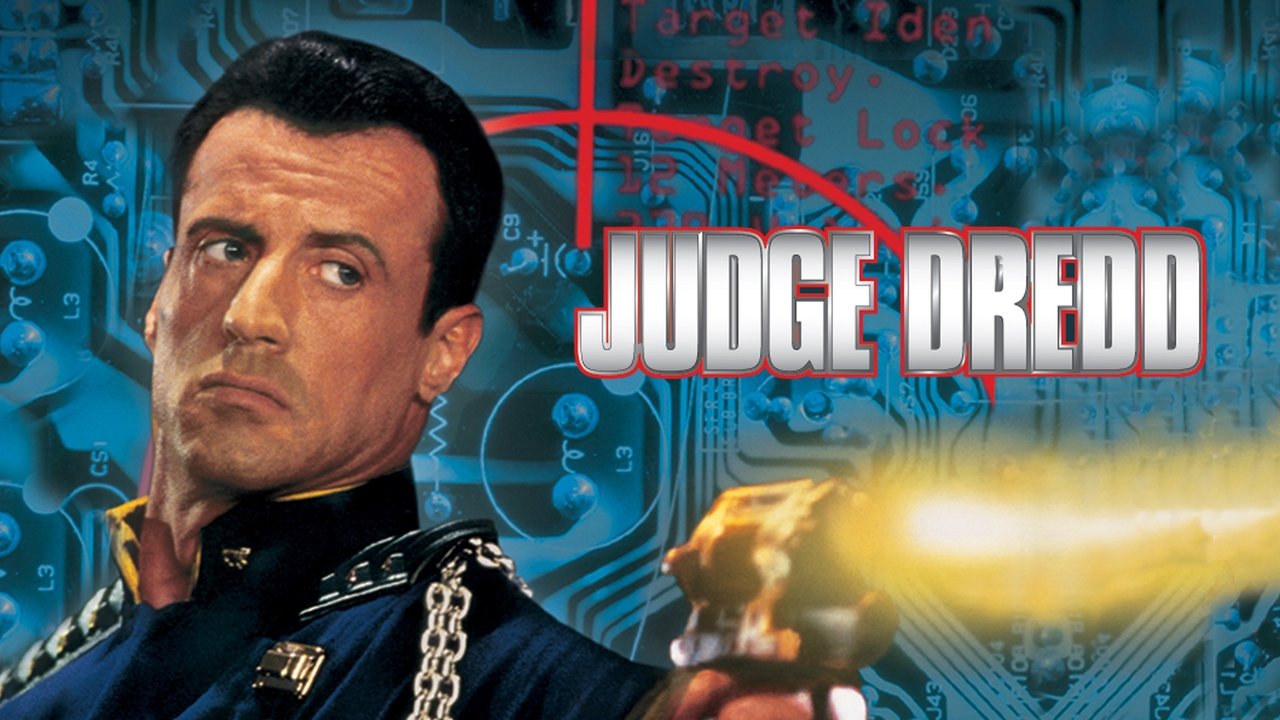
The production was famously troubled. Stallone and Cannon fought constantly, with Stallone reportedly demanding script changes to make the character more "heroic" and less "faceless executioner." This led to the cardinal sin: Dredd spends roughly 80% of the movie without his helmet. In the comics, Dredd’s face is never shown; he is an idea, a faceless extension of the state. In the movie, he’s just Sly in a tight suit.
Interestingly, the film was originally rated R, featuring far more gruesome violence in line with the source material. However, the studio—Cinergi—became nervous about the $90 million budget and hacked it down to a PG-13 to appeal to kids and sell Lawgiver water pistols. You can still see the ghosts of that harder film in the Mean Machine sequence, where a cyborg cannibal family attacks Dredd in the wasteland. It’s creepy, weird, and feels like it belongs in a different, better movie.
Despite its flaws, there’s an earnestness to the 1995 Judge Dredd that I find missing in today’s polished, green-screened blockbusters. There is a tangible craft in the costumes, the miniatures, and the props. It captures a specific moment in Hollywood history where studios were willing to throw massive amounts of money at weird, niche sci-fi properties before the "Marvel Formula" standardized the genre.
If you’re looking for a faithful adaptation of the character, go watch the 2012 Dredd with Karl Urban. But if you want a vibrant, loud, and unintentionally hilarious snapshot of 90s excess, this is your ticket. It’s a movie that failed to be a masterpiece but succeeded in becoming a fascinating disaster that’s impossible to look away from. Grab some popcorn, ignore the plot holes, and just enjoy the sight of Diane Lane trying to stay professional while a man in a Versace eagle suit shouts about his feelings. It’s not the law, but it’s definitely a good time.
Keep Exploring...
-

Demolition Man
1993
-
Waterworld
1995
-
Alien Resurrection
1997
-
Godzilla
1998
-
Hollow Man
2000
-
The 6th Day
2000
-
Jumper
2008
-
Predator 2
1990
-
RoboCop 2
1990
-
Small Soldiers
1998
-
Deep Blue Sea
1999
-
Beverly Hills Cop III
1994
-
Evolution
2001
-
The Time Machine
2002
-
The Tuxedo
2002
-
Hulk
2003
-
Terminator 3: Rise of the Machines
2003
-
The Matrix Revolutions
2003
-
AVP: Alien vs. Predator
2004
-
Blade: Trinity
2004