Mallrats
"Stink-palms, Stan Lee, and the art of doing nothing."

In 1994, Kevin Smith was the golden boy of the "Sundance Generation." He had shot Clerks for twenty-seven grand in a convenience store where he actually worked, and suddenly, he was the voice of a generation that didn't particularly feel like talking. Then came 1995. Armed with a $6 million budget from Gramercy Pictures—which felt like James Cameron money compared to his debut—Smith delivered Mallrats.

The critics sharpened their knives. It bombed so spectacularly at the box office that Smith famously apologized for it at an awards show shortly after. Looking back at it now, through the hazy lens of three decades and the eventual death of the American mall, it’s clear the "sophomore slump" narrative was a bit of a reach. Mallrats is essentially a high-budget Looney Tunes short written by a guy who just discovered comic books and dirty jokes, and I mean that as a massive compliment.
I recently re-watched this on a laptop with a screen so dim I could barely see the actors, while my cat persistently tried to chew through my headphone wires, and honestly? The low-stakes, lo-fi energy of the film still felt perfectly at home.
The Gospel According to Brodie Bruce
The plot is thinner than a 1995 food court napkin. Two guys, T.S. (Jeremy London) and Brodie (Jason Lee), get dumped by their girlfriends on the same day. To cope with the existential dread of being twenty-something and single, they go to the mall. That’s it. That’s the movie. They wander, they harass the locals, and they eventually plot to win their women back during a televised dating show being filmed in the atrium.
While Jeremy London plays the "straight man" lead with the charisma of a lukewarm Orange Julius, the movie is utterly stolen—nay, hijacked—by Jason Lee. This was his transition from professional skateboarder to actor, and his performance as Brodie Bruce is a revelation of comedic timing. He delivers Smith’s hyper-verbose, vulgar dialogue with a rhythmic snap that most classically trained actors couldn't touch. Whether he’s debating the anatomical logistics of a superhero's "super-sex" or perfecting the "stink-palm" (a disgusting prank I’m fairly certain ruined a few of my own high school handshakes), Lee is the engine that keeps this thing from stalling.
And then there’s Ben Affleck. Before he was Batman or an Oscar-winning director, he was Shannon Hamilton, the manager of Fashionable Male and an all-around dirtbag. Affleck plays a bully with such oily, arrogant perfection that you almost want to see him win. He represents the "corporate" mall world that our slacker heroes are rebelling against, even if their rebellion mostly involves sitting on benches and eating cookies.
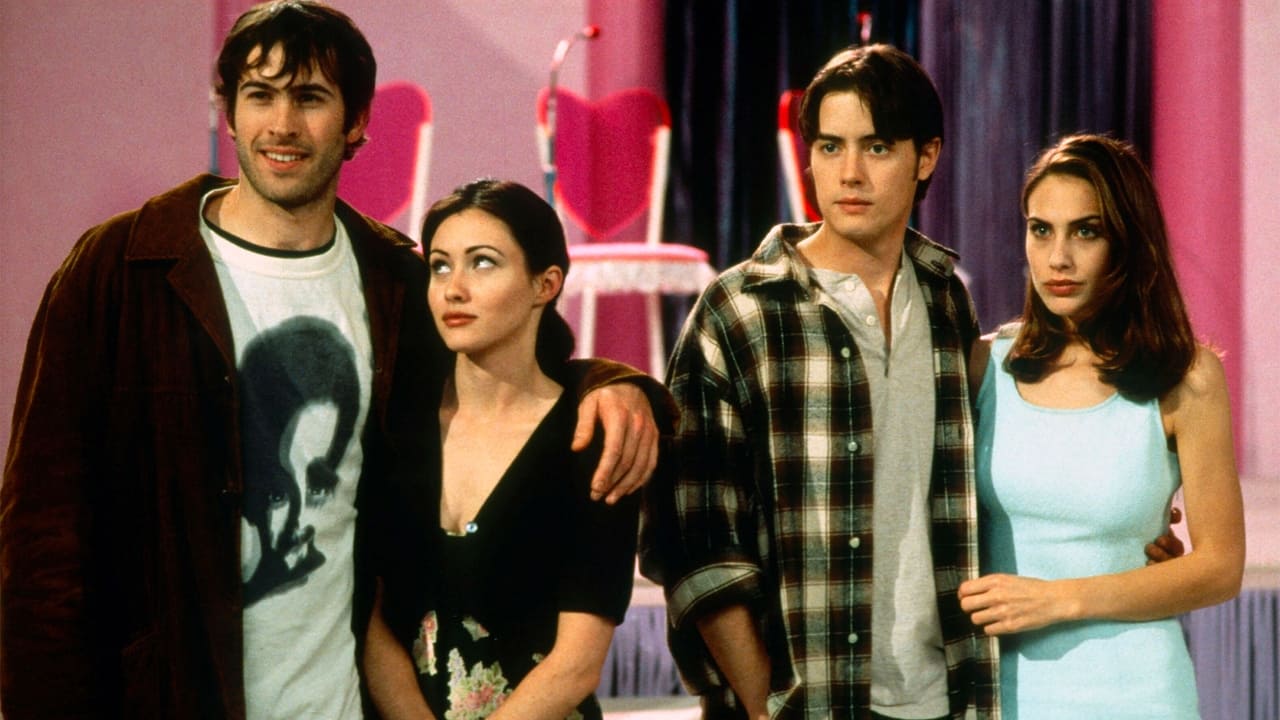
A Time Capsule of a Forgotten Kingdom
Watching Mallrats today is like visiting a museum of a dead civilization. The mall was once our town square, our social media, and our Tinder all rolled into one. Smith captures that fluorescent-lit purgatory with a strange kind of reverence. We see the "Magic Eye" posters that everyone swore they could see a sailboat in (I never could, and I’m still bitter about it), the frantic energy of the KB Toys-style storefronts, and the bizarre micro-celebrity of the mall Easter Bunny.
Technically, the film is a fascinating bridge. It has the flat, bright cinematography of a mid-90s sitcom—David Klein (who also shot Clerks and later Homeland) gives it a clean, commercial look that felt like a betrayal to indie purists at the time, but now just feels like a cozy aesthetic. It was also one of the first films to treat comic book culture as a legitimate lifestyle rather than a punchline. When Stan Lee shows up for a cameo to give Brodie relationship advice, it wasn't a corporate mandate for a multi-billion dollar franchise; it was a geeky filmmaker inviting his hero to hang out.
The humor is undeniably "of its era." Some of the gags about gender and social etiquette have aged like milk left out in the sun, but the core of the film—the "guy-talk" and the aimless wandering—retains a certain sweetness. It’s a movie that trusts its audience to find a man obsessively trying to see a hidden image in a poster for ninety minutes inherently funny.
The DVD Afterlife
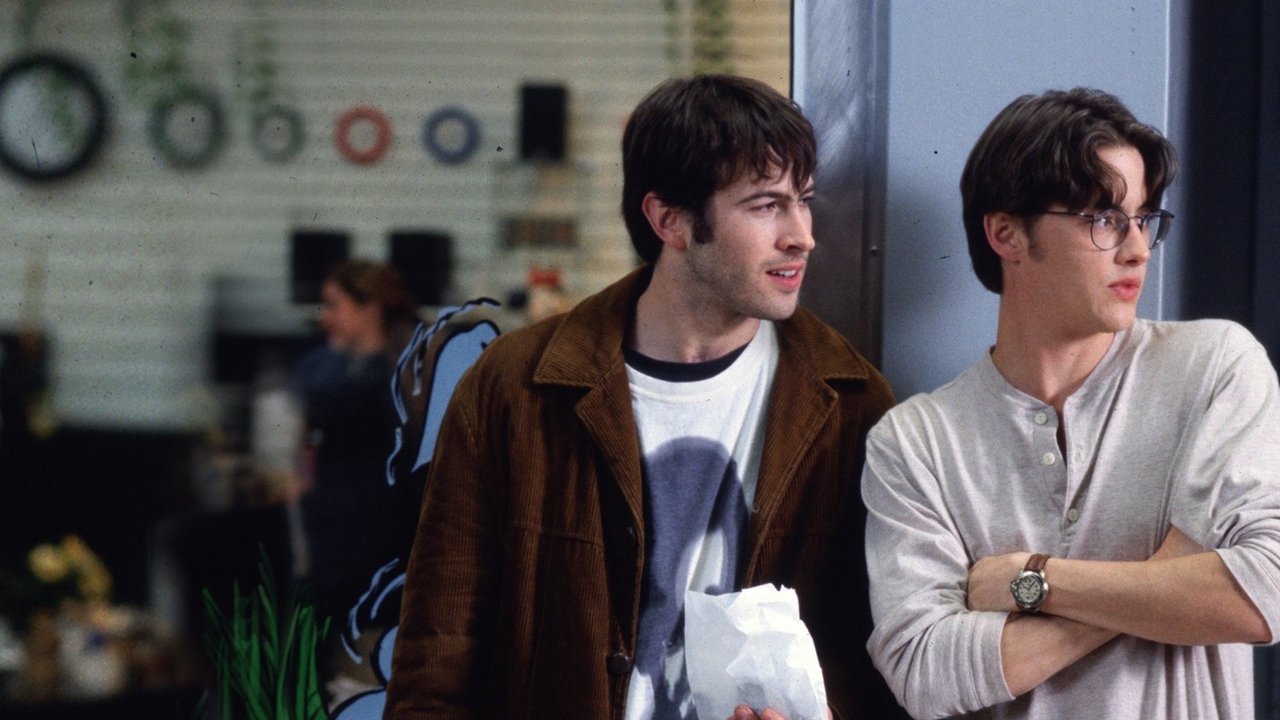
If you're wondering why a movie that failed so hard in theaters is currently sitting on your "cult classic" shelf, thank the DVD revolution. Mallrats was a staple of early home video culture. Kevin Smith was a pioneer of the "Special Edition," filling discs with bloopers, behind-the-scenes footage, and commentary tracks that were often funnier than the movies themselves.
That’s how I discovered it. I didn’t see Mallrats in a theater; I saw it on a borrowed disc in a basement, listening to the cast talk about how Shannen Doherty (who plays Rene) was actually a total pro despite her "bad girl" tabloid reputation. The film survived because it was the ultimate "hangout" movie. You don't watch Mallrats for the cinematography; you watch it because you want to spend an hour and a half with people who talk about Star Wars and breakfast cereal as if they are matters of life and death.
Mallrats isn't a masterpiece, and it doesn't try to be. It’s a loud, messy, occasionally brilliant ode to the days when having nothing to do was a full-time job. It’s the cinematic equivalent of a pretzel from the food court: it might be mostly dough and salt, and you might feel a little guilty afterward, but in the moment, nothing hits the spot quite like it. If you’ve ever spent a Saturday afternoon circling a parking lot looking for the "prime" spot, this one’s for you.
Keep Exploring...
-

Chasing Amy
1997
-
Jersey Girl
2004
-

Clerks II
2006
-
Dogma
1999
-
Jay and Silent Bob Strike Back
2001
-

Zack and Miri Make a Porno
2008
-

Clerks
1994
-
A Goofy Movie
1995
-
Grosse Pointe Blank
1997
-

EverAfter
1998
-
Out of Sight
1998
-
Blast from the Past
1999
-

Never Been Kissed
1999
-

The Little Rascals
1994
-

Practical Magic
1998
-

Shakespeare in Love
1998
-
Kate & Leopold
2001
-

S1m0ne
2002
-

Under the Tuscan Sun
2003
-
First Daughter
2004