Outbreak
"One cough is all it takes."
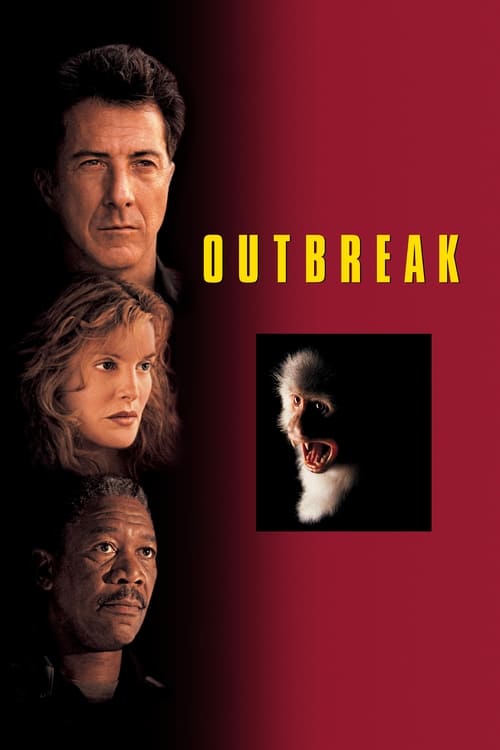
I vividly remember the first time I saw Outbreak. It was 1996, and I was watching a rented, slightly fuzzy VHS tape while eating a bowl of dangerously cold Chef Boyardee ravioli. There’s a scene early on where a sick man coughs in a crowded movie theater, and the camera follows the microscopic droplets as they drift into the open mouth of a laughing teenager. I stopped chewing mid-bite. To this day, if someone so much as clears their throat in a cinema, I reflexively pull my shirt over my nose. That is the power of Wolfgang Petersen’s 1995 medical thriller: it turns the mundane act of breathing into a high-stakes suspense sequence.
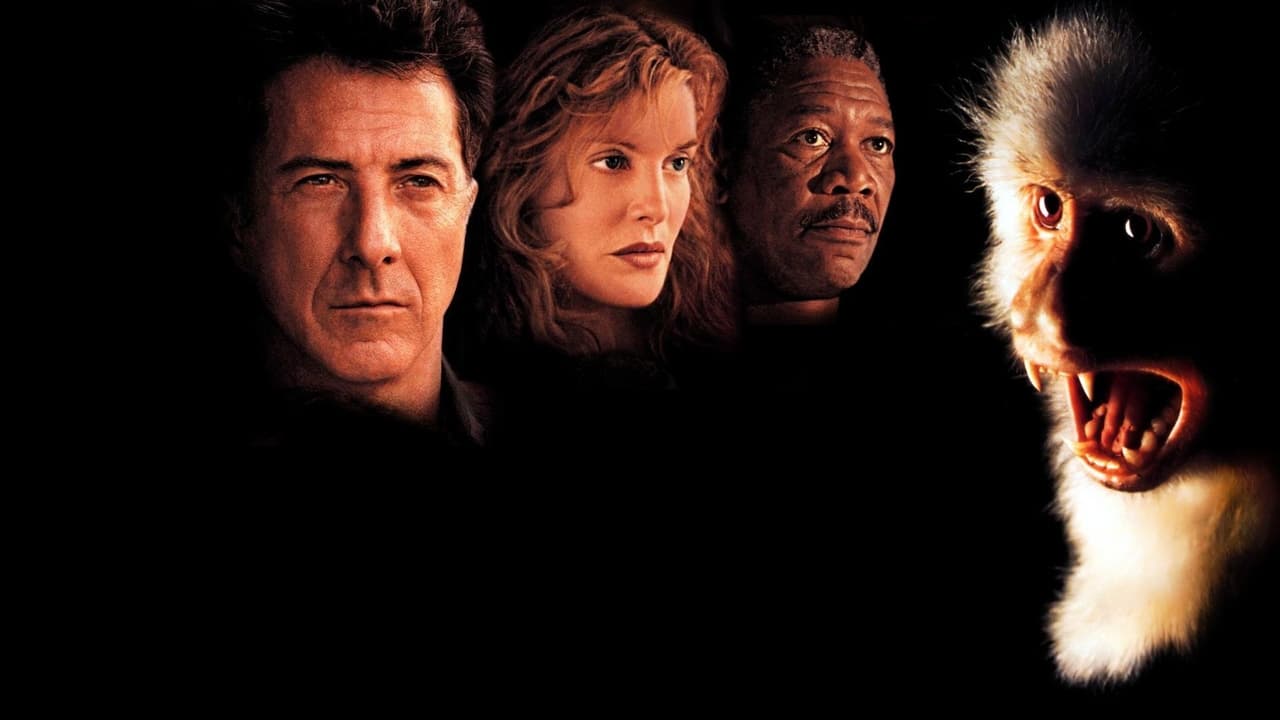
Coming out in the mid-90s, Outbreak arrived at the perfect cultural intersection. We were obsessed with "The Hot Zone" (the terrifying non-fiction book about Ebola), yet we weren't quite ready for the grim realism of something like Steven Soderbergh’s Contagion (2011). We wanted our pandemics with a side of helicopter chases and Dustin Hoffman defying military orders. Looking back, Outbreak is a fascinating relic of a time when Hollywood believed every problem—even a microscopic virus—could be solved by a hero in a flight suit and a well-timed explosion.
A Pandemic with Pacing
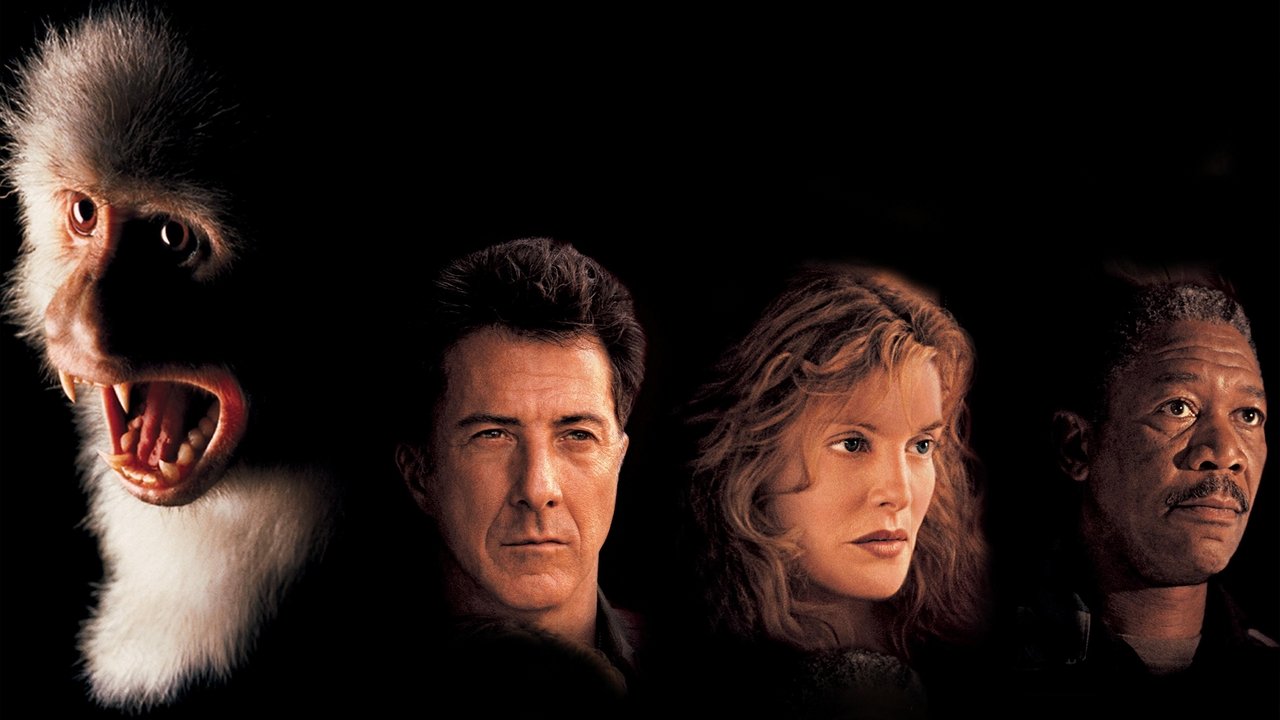
Most medical dramas involve people looking at petri dishes and sighing. Petersen, who previously gave us the claustrophobic tension of Das Boot and the sleek action of In the Line of Fire, has no interest in staying in the lab. He treats the Motaba virus like a slasher villain. It’s fast, it’s invisible, and it’s ruthless. The way the film tracks the "index case"—a smuggled capuchin monkey named Betsy—from a Korean freighter to a pet shop in Cedar Creek, California, is a masterclass in narrative momentum.
The stakes are divided between the microscopic and the monumental. On one hand, you have Rene Russo as Robby Keough, a CDC scientist trying to track the spread on the ground. On the other, you have Donald Sutherland as General McClintock, a man so committed to military cover-ups that he’s basically playing the human equivalent of a mustache-twirl. Sutherland is wonderful here; he treats the prospect of firebombing an entire American town with the same casual indifference I use when deciding whether to order fries.
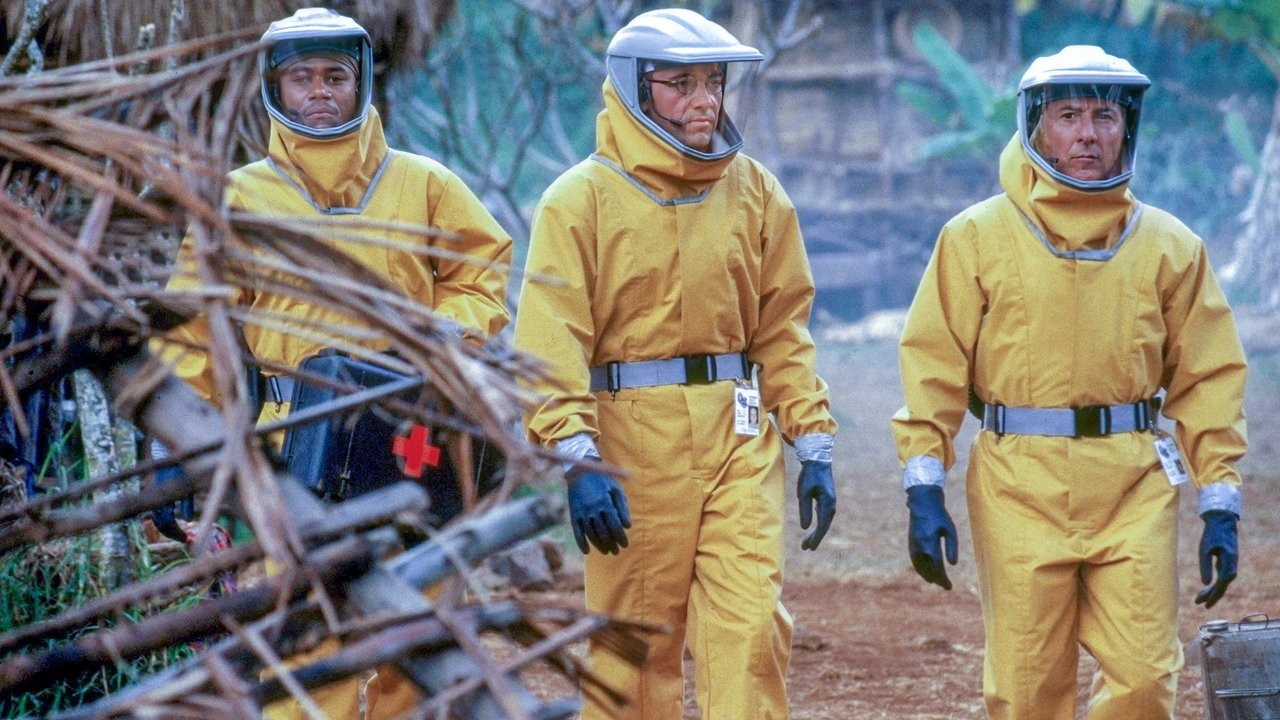
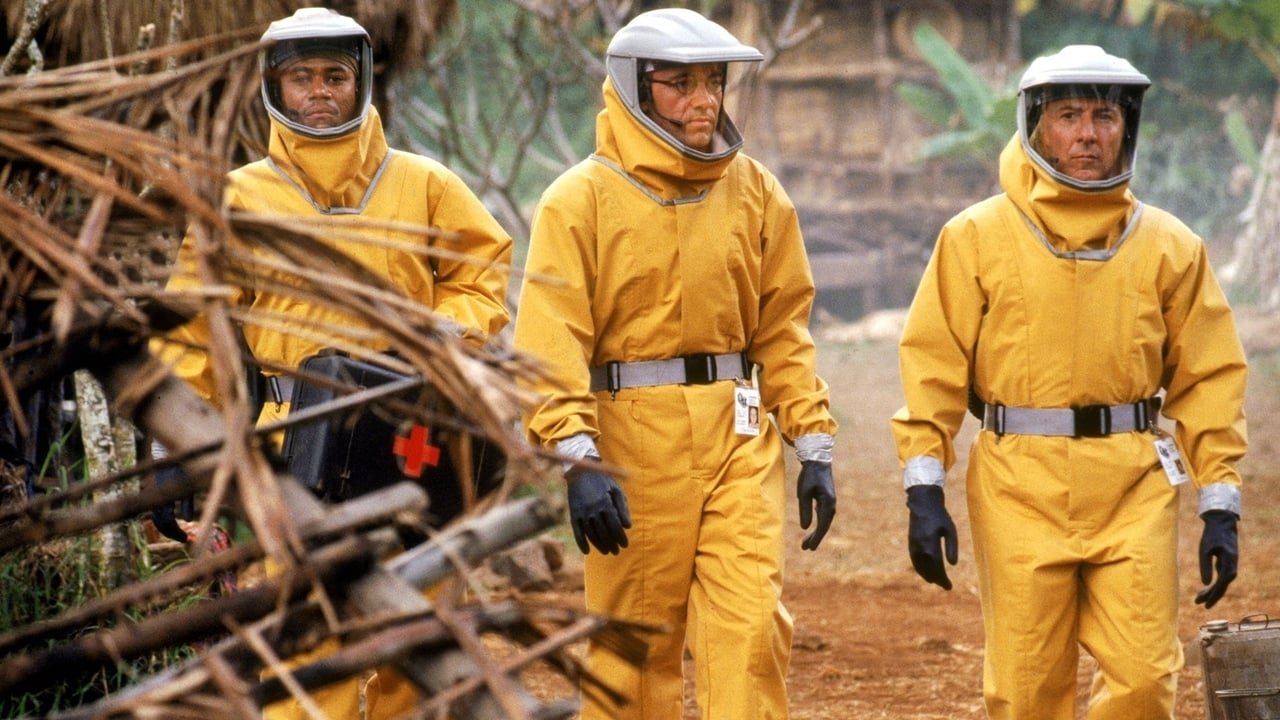
The film’s middle act, where the town of Cedar Creek is placed under martial law, captures that mid-90s anxiety about government overreach perfectly. The sight of tanks rolling down suburban streets and soldiers in yellow hazmat suits patrolling picket fences was chilling then, and honestly, it hits even harder in a post-2020 world. However, Petersen keeps the "action" in "action-thriller" by having Dustin Hoffman’s Sam Daniels and Cuba Gooding Jr.’s Major Salt steal a helicopter to hunt down a monkey. It’s absurd, it’s scientifically questionable, and it’s exactly what I want from a $50 million blockbuster.
The Hoffman Factor
Casting Dustin Hoffman as an action lead was a choice that raised eyebrows in 1995. He wasn't the first pick—the studio originally wanted Harrison Ford, who likely would have played Sam Daniels with a weary, "get off my plane" grit. Instead, Hoffman brings a twitchy, intellectual intensity to the role. He’s a guy who wins arguments by talking faster than everyone else, which makes him a great foil for Morgan Freeman’s General Billy Ford.
Freeman is doing his classic "voice of reason" act, but with a compromised moral compass. He’s caught between his friendship with Daniels and his loyalty to the stone-cold McClintock. Meanwhile, a young Kevin Spacey provides the much-needed cynical comic relief as Casey Schuler. Spacey’s performance is a reminder of how good he was at playing the smart-aleck who’s secretly terrified, and his exit from the film remains one of the most effective "oh no" moments of 90s cinema.
The film’s technical craft is top-tier for its era. Michael Ballhaus, the legendary cinematographer who worked with Scorsese, uses sweeping camera movements to emphasize the scale of the quarantine. The early-90s digital effects—specifically the "inside the body" shots showing the virus attacking cells—look a bit like a screensaver today, but at the time, they were groundbreaking. They helped visualize an invisible threat, making the stakes "real" for an audience that might not understand virology but certainly understood that "red blobs eating green blobs" meant bad news.
The Monkey Business
If there’s a MVP of Outbreak, it’s Betsy the monkey. Interestingly, Betsy was a bit of a 90s superstar; the same capuchin (actually named Katie) played Marcel on Friends. Watching her transition from Ross Geller’s roommate to a biological weapon of mass destruction is quite the career arc.
The production of Outbreak was actually a race against time. A rival project based on "The Hot Zone" was in development at the same time, set to star Robert Redford and Jodie Foster. Petersen’s team worked at a breakneck pace to beat them to the screen, and they won so decisively that the other project was scrapped entirely. This "sprint to the finish" energy is felt in every frame. The movie doesn't have a slow bone in its body. Even when Dustin Hoffman in a flight suit looks less like a colonel and more like a very intense suburban dad on a high-stakes camping trip, you're too swept up in the ticking clock to care.
Outbreak isn't a documentary, and it’s certainly not "smart" sci-fi, but it is an incredibly effective piece of entertainment. It manages to take a terrifying, invisible reality and dress it up in the colorful, loud language of a Hollywood blockbuster. It’s a film that knows exactly what it is: a high-octane thriller where the monster is a sneeze and the hero is a guy who refuses to follow the rules. In an age of sprawling cinematic universes, there’s something deeply satisfying about a self-contained, two-hour panic attack that ends with a monkey and a sense of relief.
Keep Exploring...
-
In the Line of Fire
1993
-
Air Force One
1997
-

Poseidon
2006
-
Rise of the Planet of the Apes
2011
-
Dawn of the Planet of the Apes
2014
-
Volcano
1997
-
Deep Impact
1998
-
The 6th Day
2000
-
Clear and Present Danger
1994
-
Armageddon
1998
-

The Perfect Storm
2000
-
The Hunger Games
2012
-
Elysium
2013
-
Patriot Games
1992
-
Universal Soldier
1992
-
The Fugitive
1993
-
Star Trek: Generations
1994
-
Timecop
1994
-
The Net
1995
-
Star Trek: First Contact
1996