Rumble in the Bronx
"Broken bones, woodchippers, and the Bronx... in Canada."

If you look closely at the background during the rooftop chase in Rumble in the Bronx, you’ll notice something strange about the New York skyline: it has massive, snow-capped mountains. As someone who spent a very confusing weekend in Queens once, I can tell you with absolute certainty that the Bronx does not, in fact, border the Canadian Rockies. I watched this again last Tuesday while eating a slightly stale bag of pretzel sticks, and I spent half the runtime just marveling at the sheer audacity of Stanley Tong Gwai-Lai trying to pass off Vancouver as the Five Boroughs.
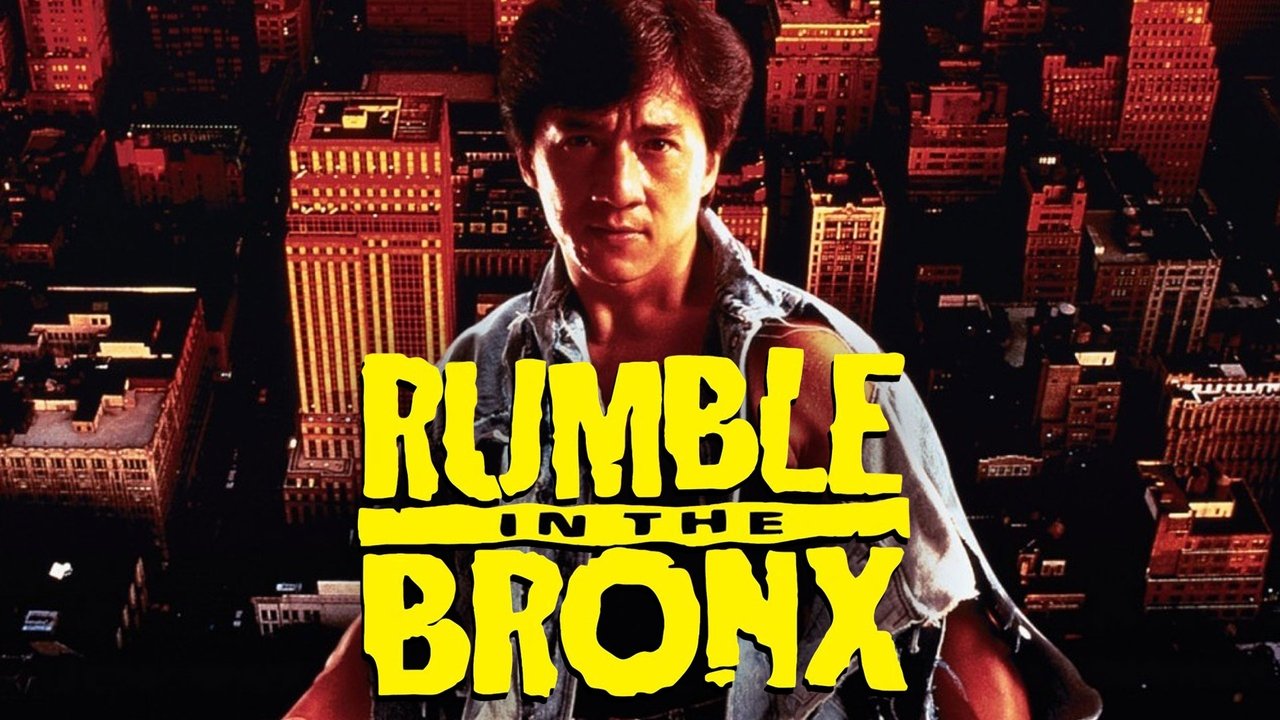
But that’s the magic of Rumble in the Bronx. It’s a film that operates on a level of logic that is entirely its own, a glorious bridge between the gritty, stunt-heavy insanity of 1980s Hong Kong cinema and the more polished, sterilized Hollywood blockbusters that would eventually claim Jackie Chan. This was the movie that finally "broke" Jackie in America, and looking back, it’s easy to see why. It’s a 106-minute sugar rush of physical genius, questionable fashion, and a plot that feels like it was written on a napkin during a particularly rowdy lunch.
The Physics of a Human Looney Tune
The story, if we’re being generous enough to call it that, follows Keung (Jackie Chan), a Hong Kong cop who flies into New York for his Uncle Bill’s (Bill Tung Biu) wedding. Uncle Bill—a man who clearly prioritized a quick exit over family loyalty—sells his Bronx market to the perpetually stressed Elaine, played by the legendary Anita Mui. Mui is a godmother of Cantopop and a powerhouse actor (see her in The Heroic Trio or Rouge), and seeing her play the "damsel in distress" who screams at the sight of a motorcycle is a bit like watching a Ferrari being used as a grocery cart. It’s beneath her, but she brings a frantic, comedic energy that balances Jackie’s earnestness.
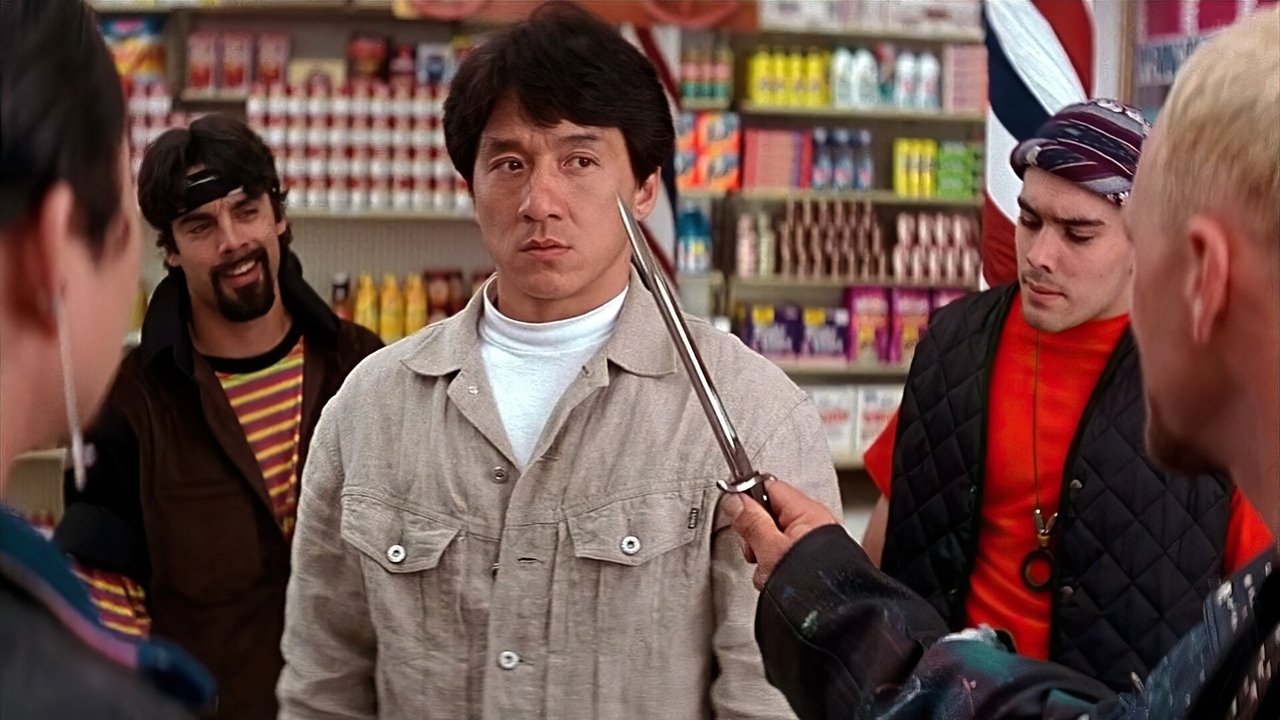
The action kicks off when a local gang of "thugs" starts terrorizing the market. I put "thugs" in quotes because these guys are a sight to behold. They look like they stole their wardrobe from a clearance rack at a 1992 Euro-trash rave. We’re talking neon vests, oversized chains, and hairstyles that defy both God and gravity. The leader, Tony (Marc Akerstream), and his crony Angelo (Garvin Cross) represent a version of street crime that only exists in the minds of people who have never actually been to a city.
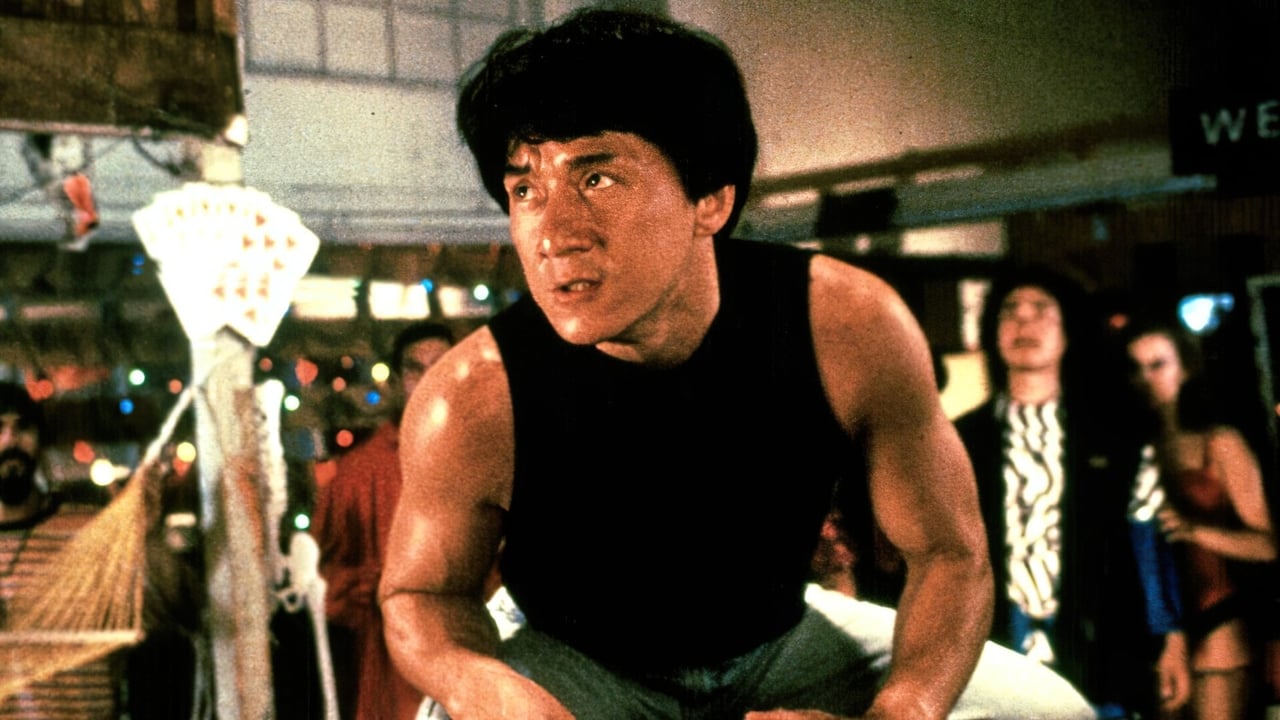
But when the fighting starts? Everything else fades away. There’s a sequence in the gang’s hideout involving skis, refrigerators, and pinball machines that reminds you why Jackie is peerless. He doesn’t just punch people; he uses the environment as an extension of his own limbs. Watching him navigate a room is like watching a master-class in spatial awareness—if that master-class also involved getting hit in the face with a shopping cart.
No Stuntmen, No Safety Net, No Problem

By 1995, Hollywood was already leaning into the CGI revolution. Jurassic Park had happened, and the digital era was looming. Rumble in the Bronx feels like a defiant, sweat-soaked middle finger to that trend. When you see Jackie jump from a parking garage roof onto a narrow balcony across the street, your brain does a little stutter because you know there isn't a green screen saving his spine.
That jump is the stuff of legend. Jackie actually broke his ankle during the production—not on the balcony jump, but during a relatively "simple" leap onto a hovercraft. If you stay for the credits (and you must, it’s a law of physics for Jackie Chan movies), you’ll see the footage of him being carted off in an ambulance. He eventually finished the movie by wearing a cast that was painted to look like a sneaker. That level of commitment—putting your literal skeleton on the line for a movie featuring a giant hovercraft—is what separates this era from the MCU-drenched landscape we live in now.
The hovercraft sequence itself is where the movie goes from "charming action-comedy" to "absolute fever dream." Why is there a giant hovercraft tearing through the streets of Vancouver-Bronx? Why does it involve stolen diamonds and a woodchipper? Don’t ask. Just enjoy the sight of a massive air-cushioned vehicle flattening a Lamborghini. It’s the kind of practical spectacle that feels heavy and dangerous in a way that digital pixels never quite manage.
A Relic of a Shifting Era
Retrospectively, Rumble in the Bronx is a fascinating time capsule. It’s the moment the West realized that the "funny guy who does his own stunts" was a legitimate global superstar. It’s also a reminder of how weirdly violent 90s comedies could be. There’s a scene involving a gang member, a woodchipper, and some very red "shavings" that feels like it wandered in from a totally different, much darker movie.
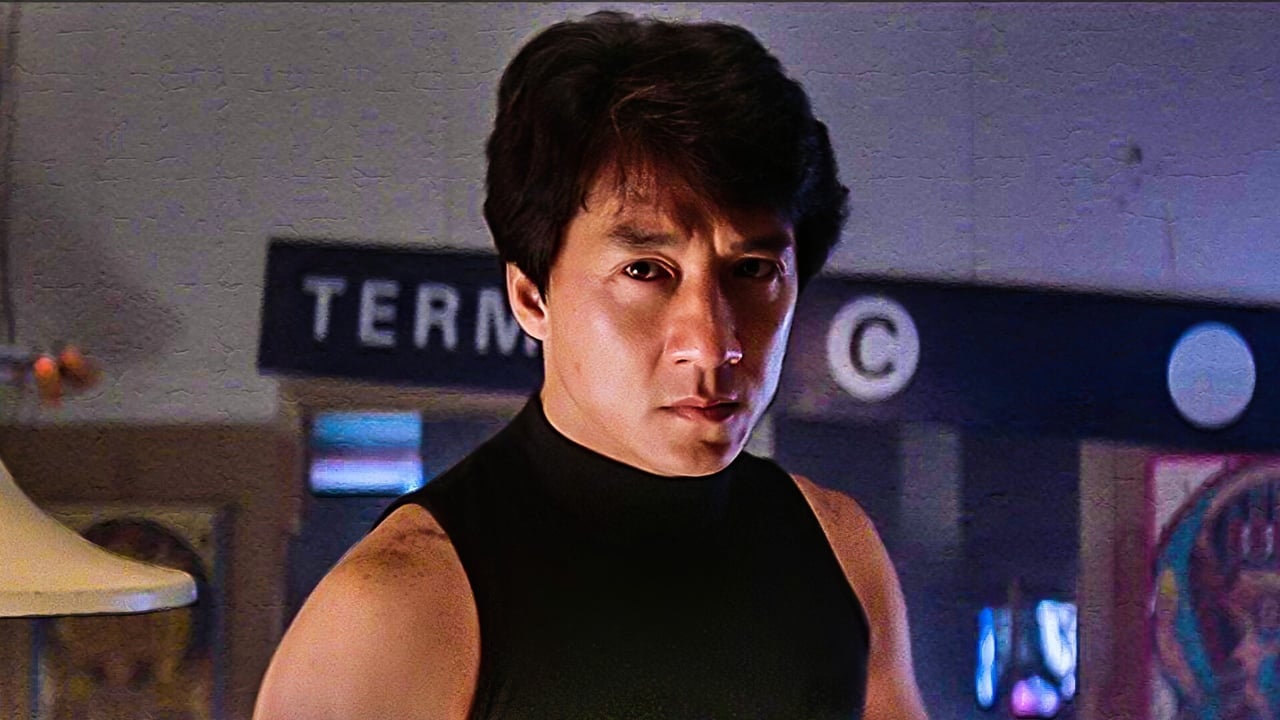
Yet, the film maintains this buoyant, almost innocent spirit. It’s a movie where the hero teaches the "bad kids" a lesson about "improving the neighborhood" after he’s done beating them with a ladder. It’s sincere, it’s colorful, and it features Françoise Yip as Nancy, who undergoes a classic 90s redemption arc from "biker babe" to "concerned friend" with the help of a few well-placed kicks.
Is the dialogue clunky? Yes, especially with the awkward dubbing that was standard for the US release. Is the plot a mess? Absolutely. But none of that matters when Jackie is on screen. There’s a rhythm to his movement that is purely musical. He’s the Buster Keaton of the grunge era, and Rumble in the Bronx remains the most accessible, high-energy entry point into his legendary filmography.
The final act of Rumble in the Bronx is essentially a series of "how did they film that?" moments that culminate in a celebratory credit roll. It’s not a masterpiece of storytelling, but as a showcase for human physical capability and the sheer joy of practical stunt work, it’s a triumph. It’s a movie that asks for nothing but your attention and rewards you with a man jumping off a building while wearing a painted-on shoe. In the landscape of 90s action, you really can't ask for more than that.
Keep Exploring...
-
The Legend of Drunken Master
1994
-
Who Am I?
1998
-
Smokin' Aces
2006
-
Shoot 'Em Up
2007
-
The Guard
2011
-
Stand Up Guys
2012
-
Another 48 Hrs.
1990
-
Lethal Weapon 3
1992
-
Bad Boys
1995
-
Rush Hour
1998
-
Lethal Weapon 4
1998
-
Grosse Pointe Blank
1997
-
Lake Placid
1999
-
Taxi 2
2000
-
The Medallion
2003
-
Blue Streak
1999
-

RED
2010
-
RED 2
2013
-
Eight Legged Freaks
2002
-
11:14
2003