The Quick and the Dead
"Win the tournament, or die trying."
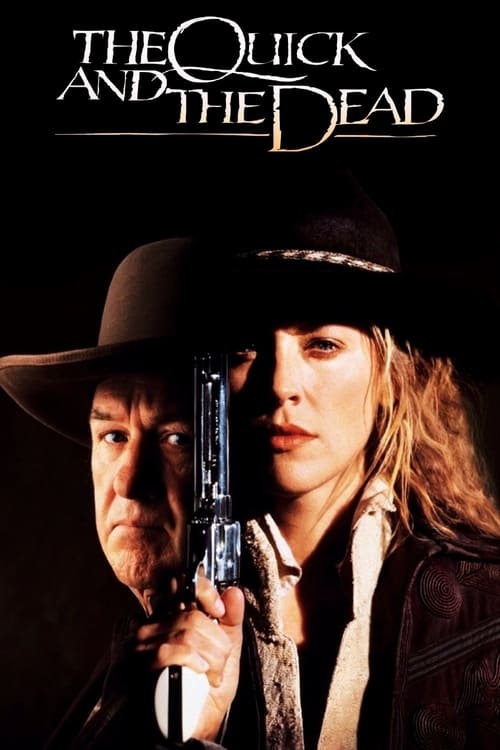
There is a moment in The Quick and the Dead where a bullet travels through a man’s head, and Sam Raimi doesn't just show us the impact—he puts the camera inside the exit wound to look at the sky. It’s the kind of stylistic flex that would get a director fired from a prestige drama, but in 1995, it was exactly what the Western genre needed to stop itself from becoming a dusty museum piece. While I sat on my couch eating a bowl of cereal that had gone dangerously soggy, I realized that this movie is basically a comic book masquerading as a Sergio Leone tribute. It’s loud, it’s garish, and it’s arguably the most fun you can have with a six-shooter without actually breaking any laws.
The Evil Dead Goes to Tombstone
By 1995, the Western was supposed to be serious. Unforgiven (1992) had stripped the mythos bare, and Dances with Wolves (1990) had turned it into a sprawling epic. Then Sam Raimi, the guy who gave us Evil Dead II and Darkman, decided to treat the frontier like a playground. He brought his signature "shaky-cam," those aggressive zooms that feel like a punch to the face, and a color palette that pops with more intensity than a Technicolor fever dream.
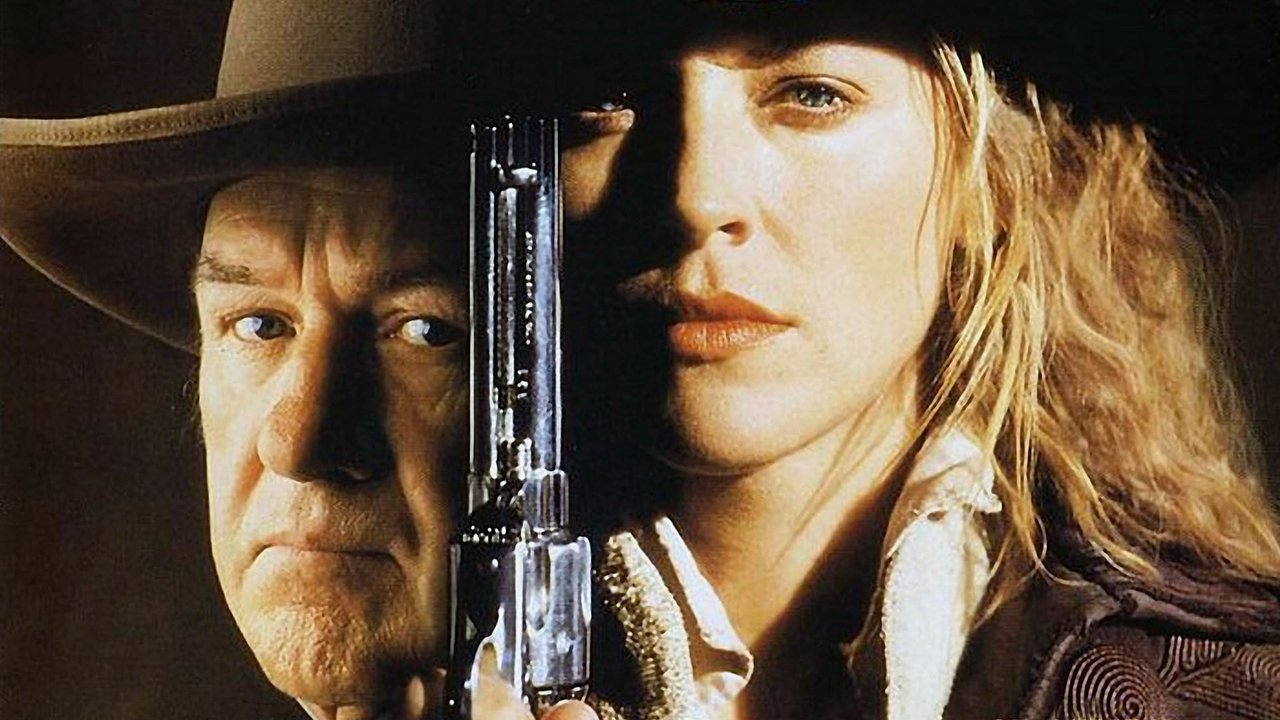
The plot is lean to the point of being skeletal: a "Lady with No Name" named Ellen, played by Sharon Stone (right at the peak of her Basic Instinct fame), rides into the town of Redemption. The town is run by John Herod, a man so evil he probably kicks puppies for cardio. Gene Hackman plays Herod, and let’s be honest, Hackman could read a grocery list and make it sound like a death threat. He’s essentially a Sith Lord in a Stetson, hosting a quick-draw elimination tournament where the only rule is that the last person standing gets the prize money (and stays alive).
A Royal Flush of 90s Talent
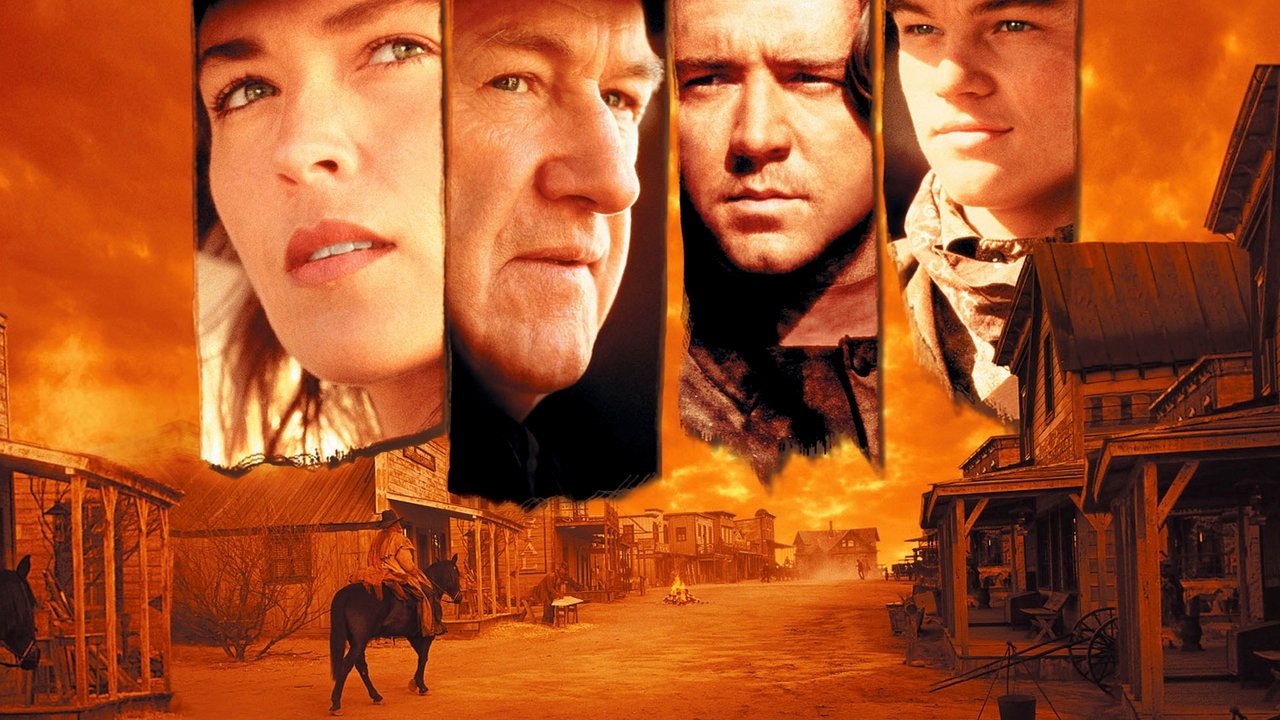
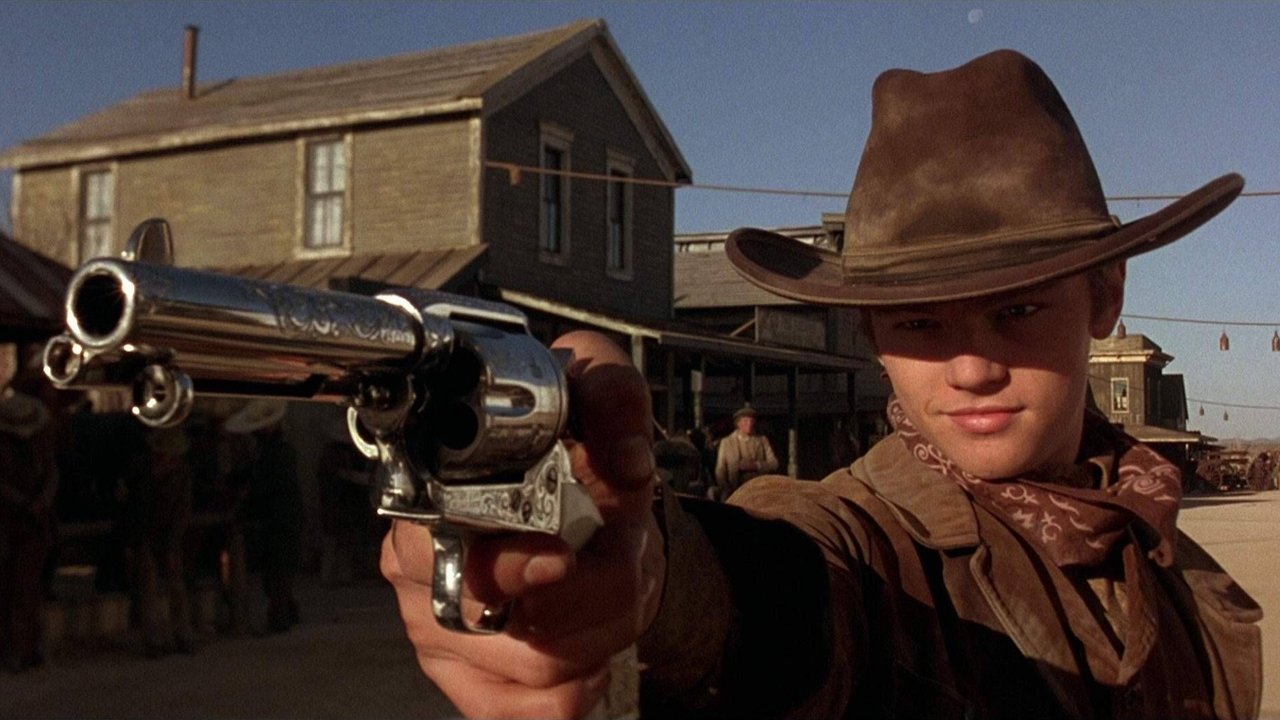
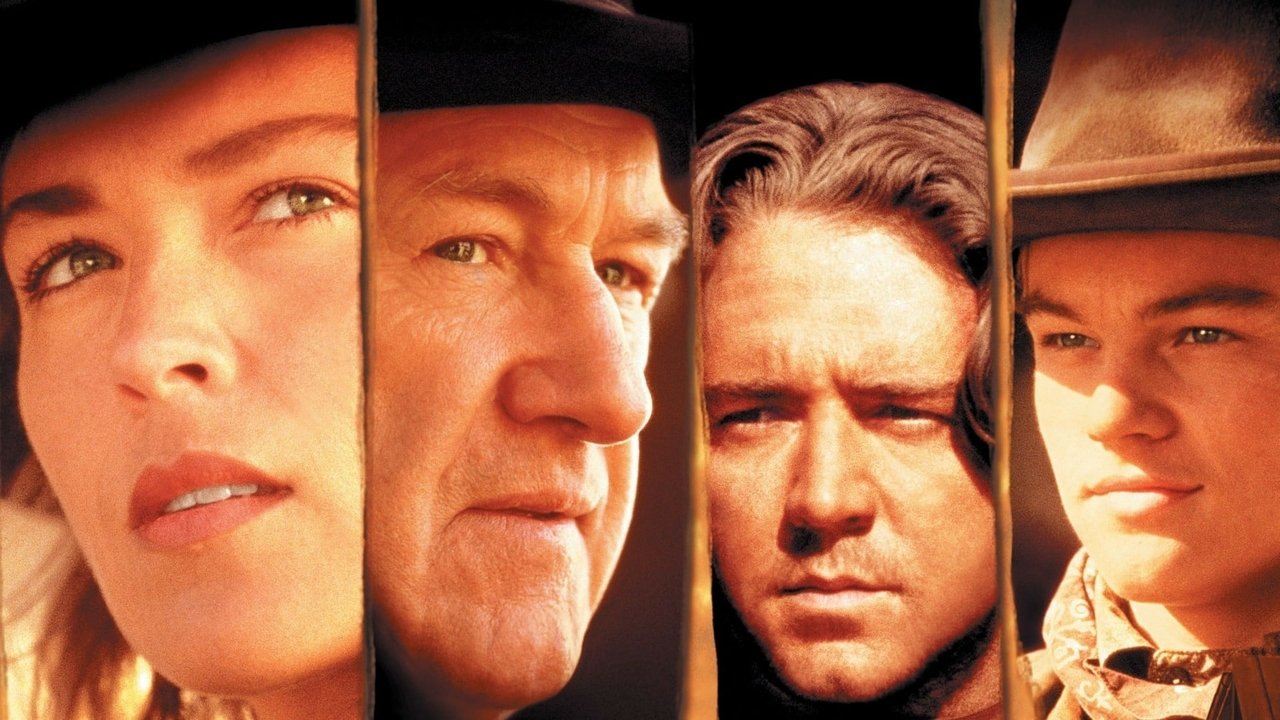
Looking back, the cast is absolutely absurd. You have Sharon Stone producing the film and essentially forcing the studio to hire a young, pre-Titanic Leonardo DiCaprio. As "The Kid," DiCaprio is all puppy-dog energy and hubris, a stark contrast to the quiet, simmering intensity of Russell Crowe in his first American role. Crowe plays Cort, a former outlaw turned pacifist priest who is forced back into the fray. Even back then, you could see the "Maximus" from Gladiator waiting to burst out of him.
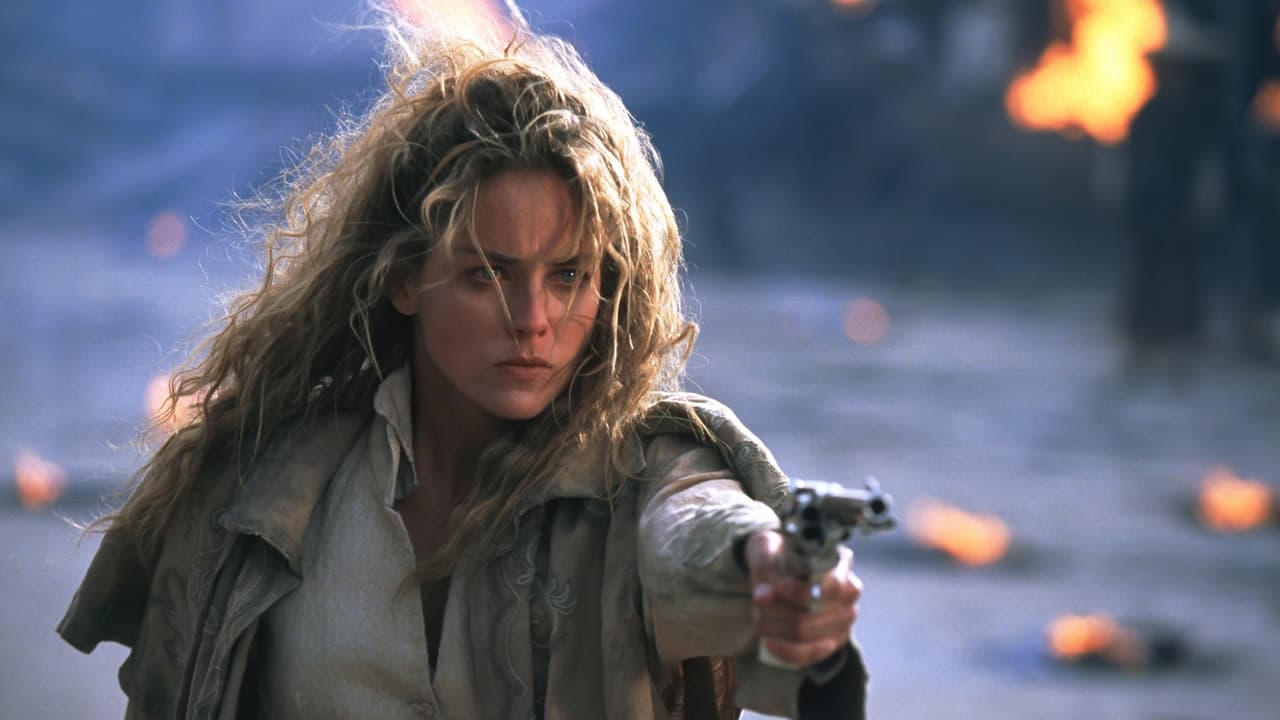
The chemistry here isn't romantic—the "romance" genre tag is a bit of a stretch—but it's atmospheric. Stone plays Ellen with a cold, traumatized shell that only cracks during the film's climactic flashbacks. I’ve always felt she was unfairly maligned for this performance; she’s playing a character who has purposefully deleted her own personality to become a killing machine. It’s a choice, not a lack of range.
The tournament structure keeps the pacing tight. Every few minutes, we get a new duel, and Raimi treats each one like a mini-boss fight in a video game. We see Tobin Bell (years before he became the face of the Saw franchise) as a flashy gunman and Roberts Blossom as the town’s weary doctor. Each duel is a masterclass in tension, using extreme close-ups of eyes, twitching fingers, and ticking clocks to build a rhythm that Alan Silvestri’s score punctuates with operatic flair.
Practical Magic and Bullet Holes
What strikes me most about rewatching this in the digital age is how tactile everything feels. This was 1995; we were on the cusp of the CGI revolution, but The Quick and the Dead still relies heavily on the physical. When a building blows up, it’s a real miniature or a full-scale pyrotechnic feat. When someone gets shot, the squibs are messy and dramatic. Dante Spinotti, the cinematographer who shot The Last of the Mohicans and later Heat, captures the dust and the heat so well you can almost feel the grit in your teeth.
There’s a legendary bit of trivia that Sharon Stone personally paid DiCaprio's salary because TriStar Pictures didn't think he was a big enough draw. It’s a reminder of a time when stars had that kind of leverage and used it to champion talent. Also, if you look closely at the background during the tournament scenes, the town of Redemption was a massive, $4 million set built in Arizona that still stands today as a tourist attraction. They didn't just find a ranch; they built a monument to 90s excess.
The film did poorly at the box office, mostly because critics at the time didn't know how to handle the "Raimi-ness" of it all. They wanted Shane, and he gave them a live-action cartoon. But viewed today, it’s a refreshing blast of style over substance that actually has a surprising amount of heart tucked away in its spurs. It’s a movie that knows exactly what it is: a flashy, violent, highly entertaining campfire story told by a director who drank way too much espresso.
In the end, The Quick and the Dead is a movie that celebrates the sheer mechanics of cinema. It doesn't want to change your life; it wants to show you a cool camera angle and a legendary villain getting his comeuppance. It’s the kind of mid-budget genre exercise we rarely see anymore—pure, unadulterated style that trusts the audience to just sit back and enjoy the smoke. If you haven't revisited this one since the days of Blockbuster rentals, it’s high time you rode back into Redemption.
Keep Exploring...
-
Darkman
1990
-
A Simple Plan
1998
-

The Gift
2000
-

Legends of the Fall
1994
-
Wyatt Earp
1994
-
Crimson Tide
1995
-
Volcano
1997
-

Double Impact
1991
-
Batman: Mask of the Phantasm
1993
-

Hackers
1995
-
Breakdown
1997
-
Grosse Pointe Blank
1997
-
Behind Enemy Lines
2001
-
Backdraft
1991
-
Far and Away
1992
-
Maverick
1994
-
First Knight
1995
-
Executive Decision
1996
-
Conspiracy Theory
1997
-
The Saint
1997