Village of the Damned
"The kids are alright... until they aren't."

If you ever wanted to see a cinematic multiverse collapse in on itself before "multiverses" were a marketing requirement, look no further than the 1995 remake of Village of the Damned. I recently revisited this one on a rainy Tuesday while my neighbor was loudly practicing the recorder—a sound that, quite frankly, fits the eerie, dissonant vibe of a John Carpenter film better than it has any right to.
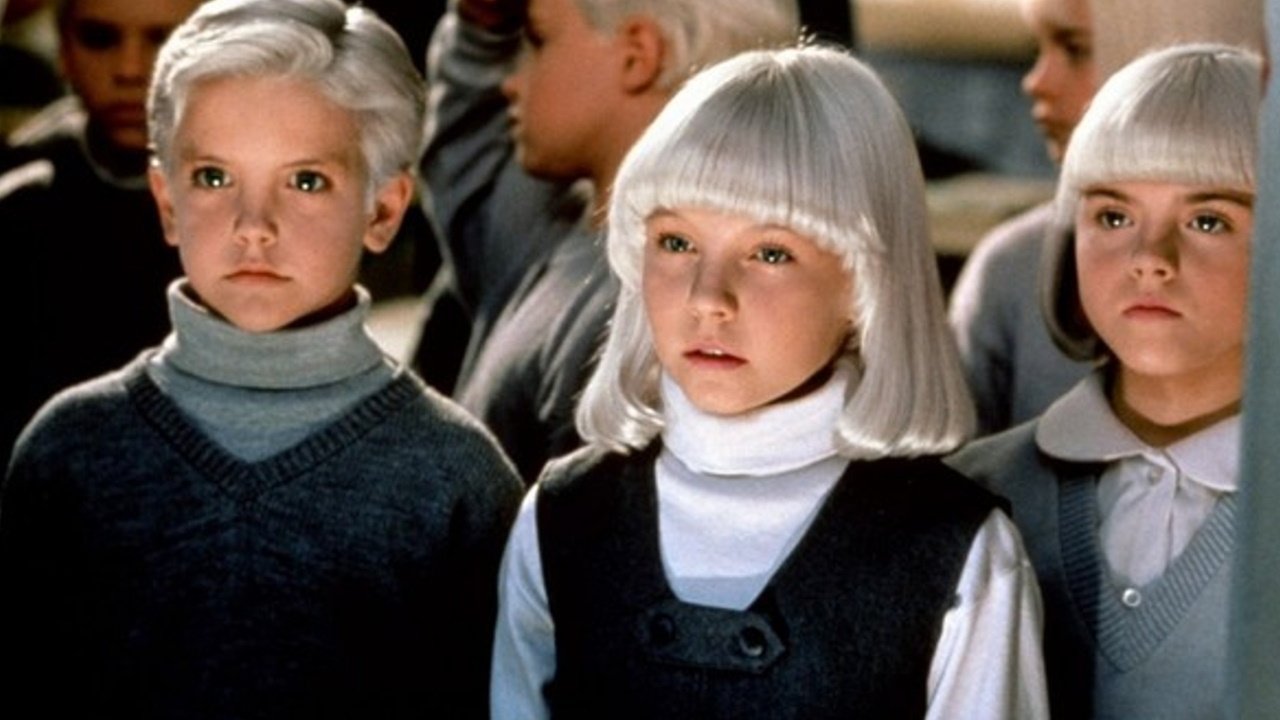
There is something inherently surreal about the cast list alone. You have Christopher Reeve (the definitive Superman) playing a local doctor, Mark Hamill (Luke Skywalker himself) as a distraught man of the cloth, and Kirstie Alley (fresh off the Cheers set) as a government scientist in a lab coat that looks like it still has the department store tags on it. It’s a 1980s fever dream captured in mid-90s amber, and watching them navigate a story about telepathic alien children is exactly as bizarre as you’d hope.
A Master in Transition
By 1995, John Carpenter—the man who gave us Halloween and The Thing—was in a strange spot. The "Master of Horror" label was starting to feel like a weight around his neck. This was the era of the big-studio pivot, where practical effects were beginning to shake hands with early CGI, and the gritty, nihilistic textures of 70s horror were being smoothed over by the gloss of 90s production values.
Village of the Damned feels caught between these worlds. On one hand, you have Gary B. Kibbe’s cinematography, which captures the coastal California town of Midwich with a clean, almost sterile beauty. On the other, you have the classic Carpenter score—pulsing, synth-heavy, and minimalist—reminding you that beneath the idyllic surface, something is rotting. It’s a remake of the 1960 British classic, but Carpenter injects it with a distinctly American brand of paranoia. The setup is legendary: the entire town falls unconscious for six hours, and months later, every woman of childbearing age is pregnant. It’s a premise that could make a stone statue feel a bit uneasy, yet the film often feels strangely restrained, like a thoroughbred horse forced to trot through a suburban parade.
Platinum Wigs and Piercing Stares
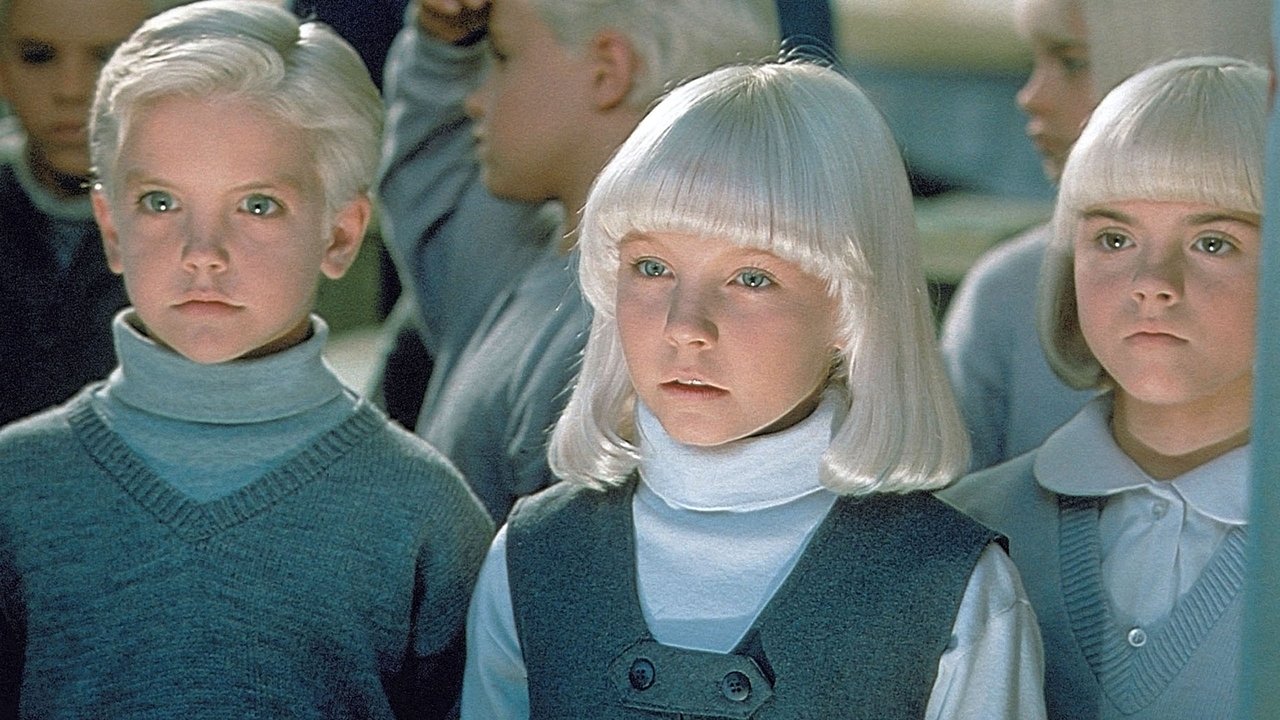
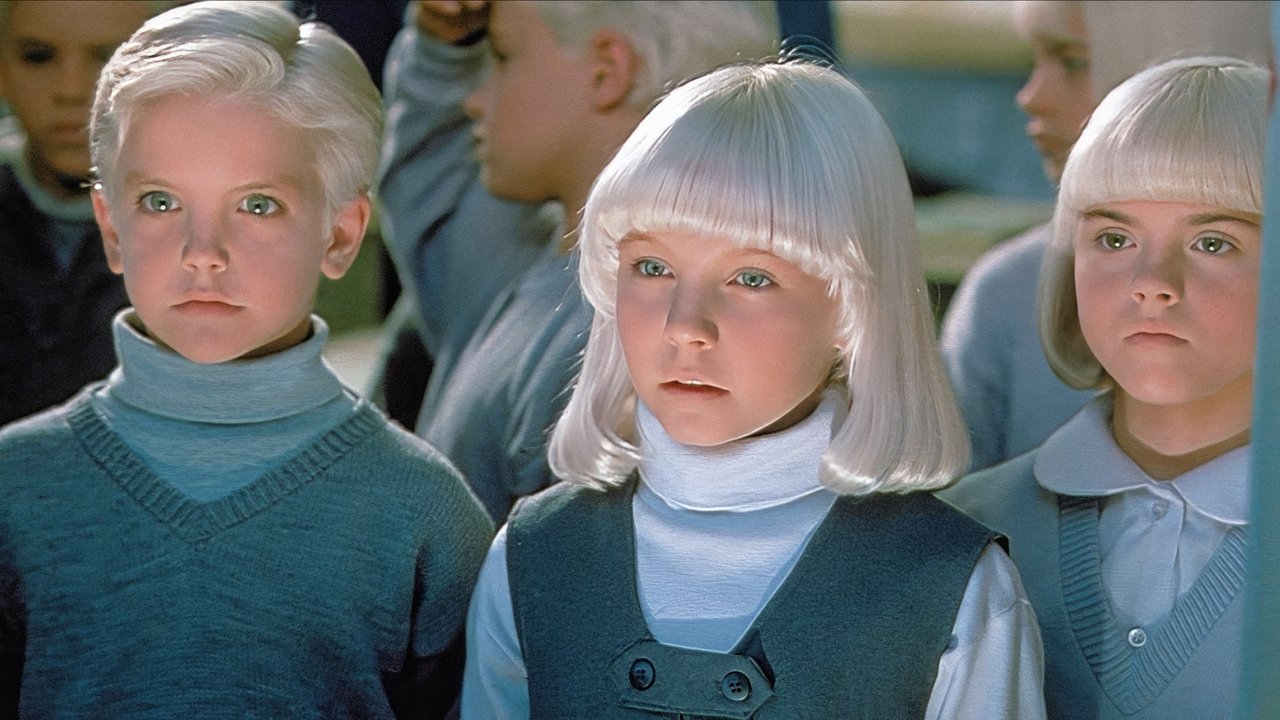
The real stars, of course, are the children. Clad in matching grey outfits with platinum blonde hair that looks like it was ordered in bulk from a discounted Halloween warehouse, these kids are the source of the film's tension. Their trick? When they get angry, their eyes glow with a digital multi-colored hue—a bit of early CGI that was likely impressive in a 1995 theater but now carries the charm of an old screensaver.
What works here isn't the spectacle, but the coldness. There is a scene involving a mother, a pot of boiling water, and a very deliberate psychic nudge that remains genuinely upsetting. Carpenter has always been great at "the siege"—the feeling of being trapped in a space where the rules have changed. Here, the siege is internal. The parents are trapped by their own biological imperatives and the terrifying realization that their offspring lack even a shred of human empathy. Kirstie Alley brings a cynical, government-agent energy to the proceedings that keeps things moving, even when the plot begins to loop.
Interestingly, this was Christopher Reeve’s final film role before the tragic horse-riding accident that paralyzed him. Watching him here is bittersweet; he possesses a quiet, steady authority that anchors the more outlandish sci-fi elements. He isn't playing a superhero, but a man trying to maintain logic in a world that has abandoned it.
The Mystery of the Box Office Bomb
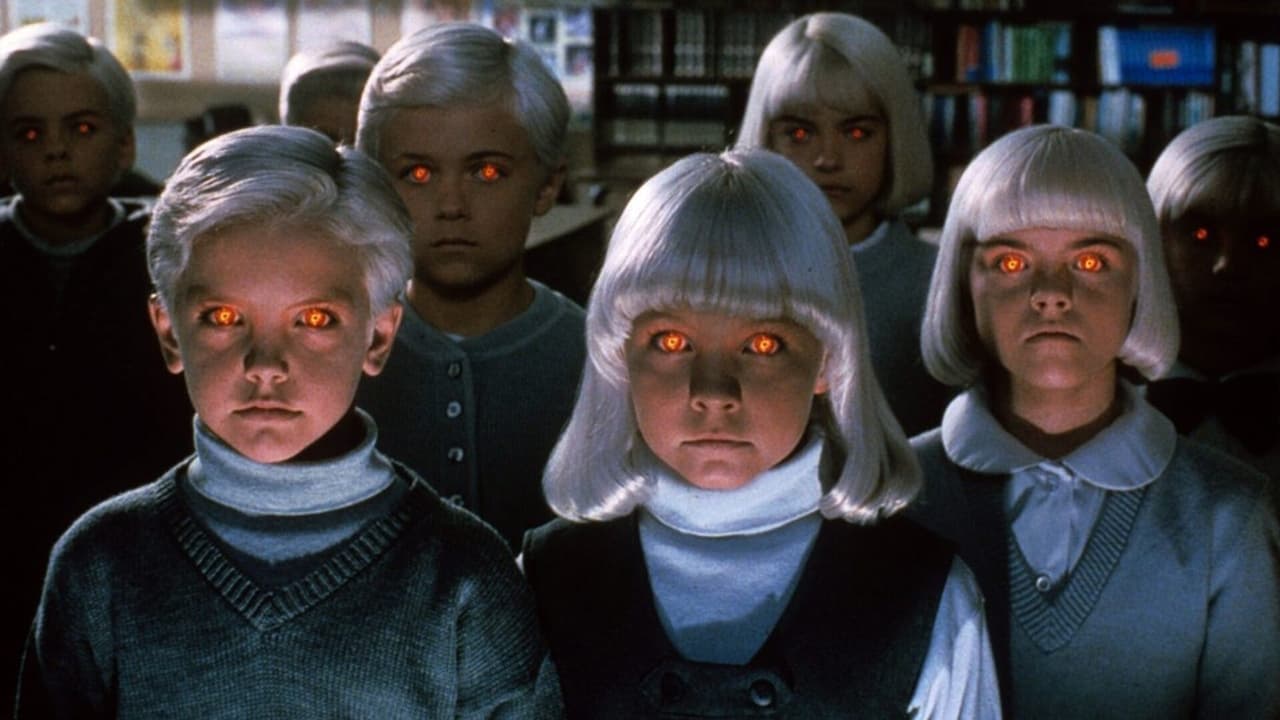
Why did this film vanish? It cost $22 million and barely clawed back $9 million. I suspect it’s because, in 1995, audiences were looking for the high-octane thrills of Seven or the blockbuster scale of Independence Day. Village of the Damned feels like a throwback—a mid-budget, atmospheric "creepy kid" movie that didn't quite fit the zeitgeist. It’s also surprisingly mean-spirited in ways that 90s studio films usually weren't, featuring a body count that includes several characters you’d expect to have "plot armor."
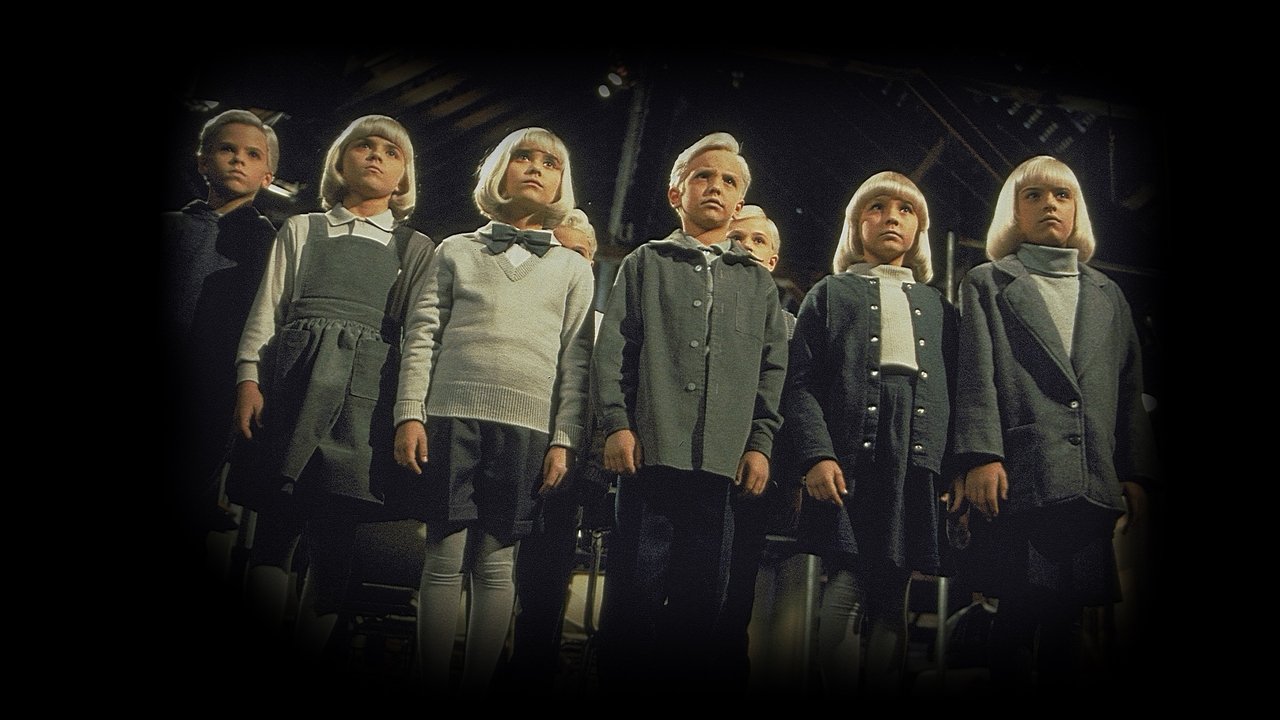
The film also suffered from the inevitable comparison to the 1960 original. While that version was a tight, black-and-white exercise in shadow and British reserve, Carpenter leans into the weirdness. He even cast Linda Kozlowski (of Crocodile Dundee fame), who gives a surprisingly grounded performance as a mother trying to find a soul in a child who has none. The hair budget alone must have been a significant portion of the financing, but it creates a visual uniformity that makes the children feel like a singular, hive-mind organism.
Ultimately, Village of the Damned is a fascinating "what-if" from a transitional period in horror history. It isn't the masterpiece that The Thing is, nor is it the cult explosion of Big Trouble in Little China, but it’s a solid, professionally made chiller that deserves a look for the cast alone. If you can get past the dated eye-glow effects and the somewhat stiff pacing, there’s a genuine sense of dread here that most modern jump-scare fests can't replicate. It’s a somber, weird, and slightly clunky artifact of 90s cinema that proves John Carpenter could find the uncanny even in a quiet California town. It’s worth a watch, if only to see Superman and Luke Skywalker try to out-stare a group of psychic toddlers.
Keep Exploring...
-
Escape from L.A.
1996
-
Lake Placid
1999
-
The Ward
2010
-
Vampires
1998
-
Quarantine
2008
-
The Cell
2000
-
Land of the Dead
2005
-

The Invasion
2007
-
Carriers
2009
-

Time Lapse
2014
-

Dreamcatcher
2003
-
Child's Play 2
1990
-
Flatliners
1990
-
Child's Play 3
1991
-
The Good Son
1993
-
Mary Shelley's Frankenstein
1994
-
Mimic
1997
-
Halloween H20: 20 Years Later
1998
-
Stigmata
1999
-
The Thirteenth Floor
1999