Waterworld
"The most beautiful disaster ever captured on film."

In 1995, the conversation around Waterworld had almost nothing to do with the movie itself and everything to do with the "Fishtar" of it all. Before a single frame hit the screen, the press had already sharpened their knives, obsessed with a budget that ballooned to a then-unheard-of $175 million. Sets were sinking in the Pacific, Kevin Costner was reportedly feuding with director Kevin Reynolds (his collaborator on Robin Hood: Prince of Thieves), and a script doctor named Joss Whedon was being flown in for what he later described as "seven weeks of hell."
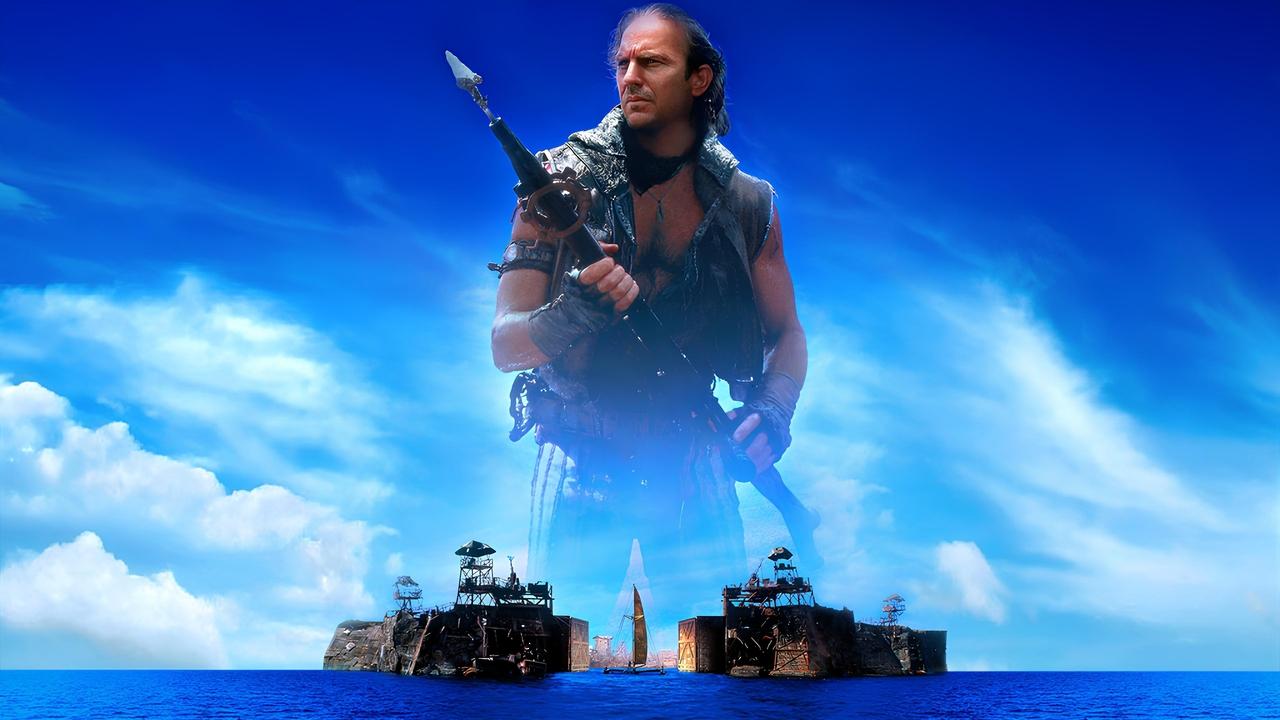
Looking back from a modern era dominated by weightless CGI oceans and green-screen landscapes, Waterworld feels less like a cautionary tale of Hollywood hubris and more like a heroic, if slightly unhinged, stand for physical filmmaking. I watched this again recently while drinking a lukewarm Capri Sun that I’d accidentally stepped on, and the slight metallic taste of the foil weirdly complimented the industrial-rust aesthetic of the film’s floating scrap-metal world.
The Tactile Thrill of a Sinking Set
What strikes me most today is how real everything feels. When the Mariner’s trimaran—a gorgeous, multi-hulled piece of engineering—cuts through the water, you feel the spray. When the "Atoll" is attacked by the Smokers, the explosions aren't digital pixels; they are massive, orange-and-black plumes of fire that look like they’re actually singeing the eyebrows of the stunt performers.
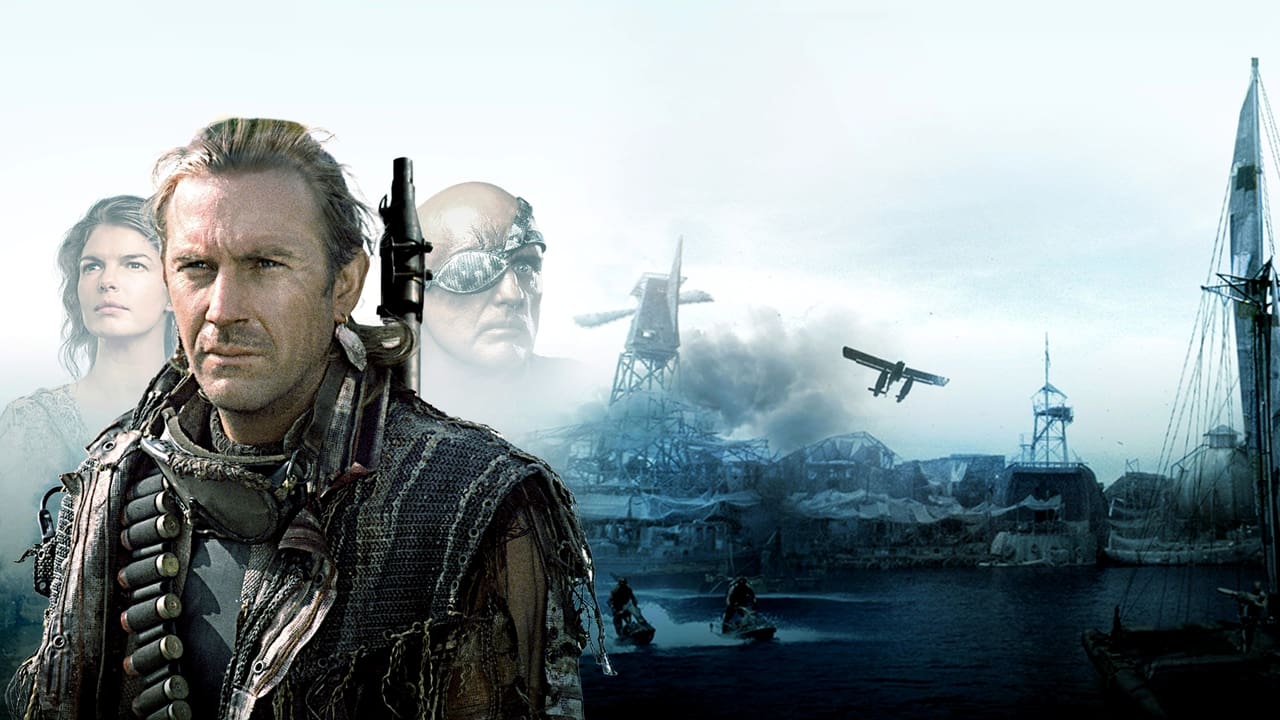
The action choreography in the Atoll siege is a masterwork of physical geography. Kevin Reynolds manages to keep the viewer oriented in a 360-degree aquatic battlefield, using high-angle shots to show the scale of the Smoker’s jet-ski fleet. There’s a rhythmic escalation to the chaos that modern blockbusters often lack. The stunt work is genuinely terrifying—Kevin Costner’s stunt double, Norman Howell, almost died from an air embolism during a deep-sea dive, and the commitment shows. Every time someone falls off a rusted catwalk or swings from a mast, there is a sense of genuine gravity and consequence. The Mariner is basically a grumpy fish-man with a personality made of kelp, but his movement—diving, climbing, and operating that complex ship—is pure physical poetry.
A Masterclass in Scenery Chewing
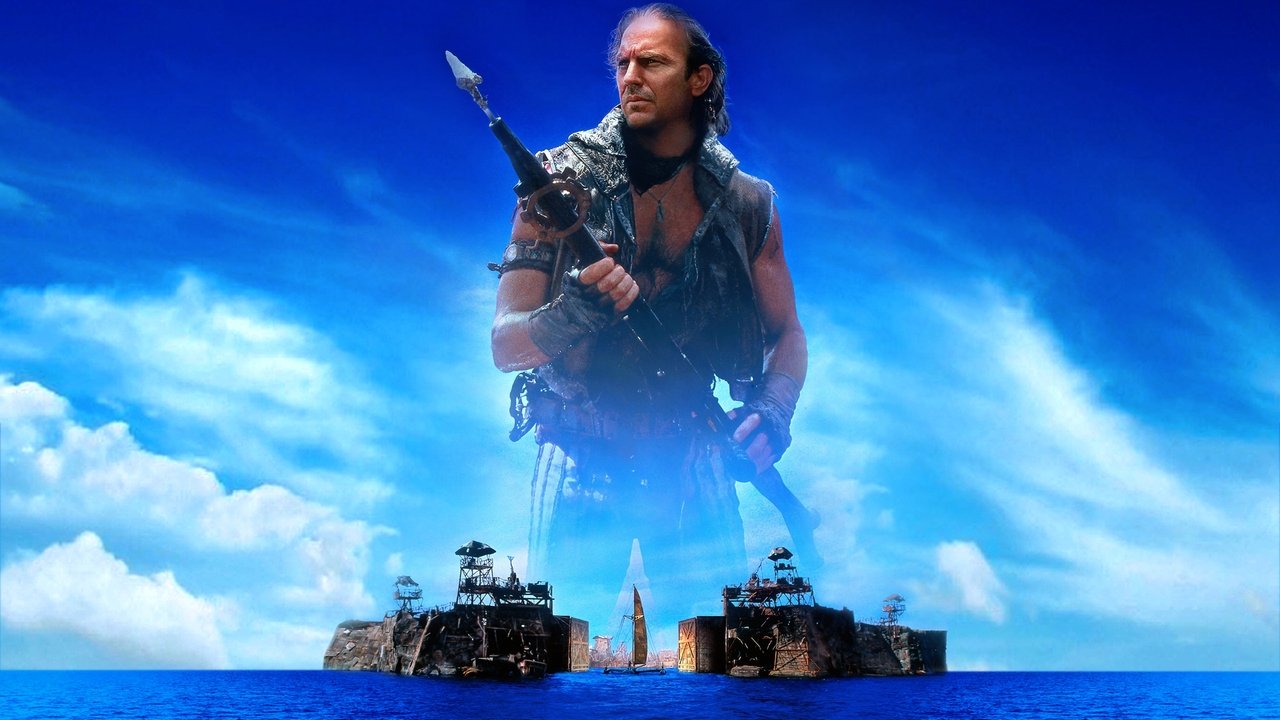
While Kevin Costner leans into a stoic, almost silent-film style of performance (complete with webbed toes and gills that flutter like a nervous pulse), Dennis Hopper is operating in an entirely different zip code. As the Deacon, the leader of the oil-chugging Smokers, Hopper delivers a performance that makes his turn in Speed (1994) look subtle. He is the film’s chaotic heartbeat.
Watching him give a motivational speech to a deck full of soot-covered goons while holding a cigarette in one hand and a golf club in the other is pure joy. He understands exactly what kind of movie he’s in. Hopper is having more fun than any man should have while standing on a sinking ship, and his chemistry with the supporting cast—including a young Tina Majorino as Enola and Jeanne Tripplehorn as Helen—provides a necessary counterweight to Costner’s brooding. Jeanne Tripplehorn (of Basic Instinct fame) does what she can with a somewhat thankless "damsel" role, but she brings a grit to Helen that makes her feel like a survivor rather than just a plot device.
The "Ulysses" Effect and Cult Redemption
The version most people saw in theaters was a lean, sometimes confusing 135 minutes. However, the film's transition into a cult classic was bolstered by the "Ulysses" cut—a three-hour television edit that fleshes out the world-building and the Smokers’ bizarre hierarchy. It turns out David Twohy (who would later give us the excellent Pitch Black) and Peter Rader had a much more detailed vision for this soggy dystopia than the theatrical cut suggested.
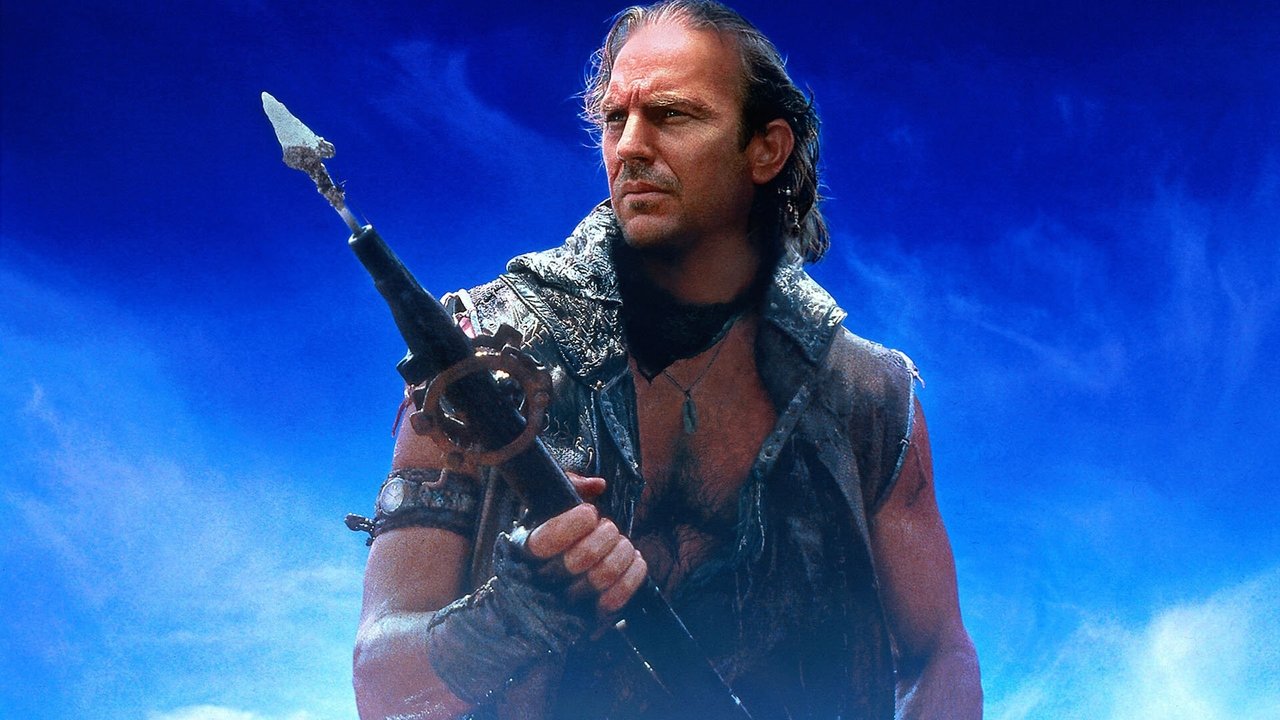
We see the evolution of 90s filmmaking here: the transition from the practical "big-stunt" era of the 80s to the digital frontier. While Jurassic Park (1993) proved CGI could work, Waterworld was one of the last gasps of a Hollywood willing to build a 1,000-ton floating city just to blow it up. The cinematography by Dean Semler (who won an Oscar for Dances with Wolves) captures the endless blue of the horizon with a clarity that makes you feel the dehydration. It’s a gorgeous, dusty, salty mess of a movie.
The film's legacy has finally drifted away from its balance sheet and back toward its ambition. It’s an imaginative, high-stakes adventure that isn't afraid to be weird—how many other blockbusters feature a protagonist who drinks his own filtered urine in the first five minutes? It isn't perfect, but it is undeniably singular. If you haven't revisited the Atoll lately, give it another go; it’s a lot more fun when it’s not your $175 million on the line.
Keep Exploring...
-

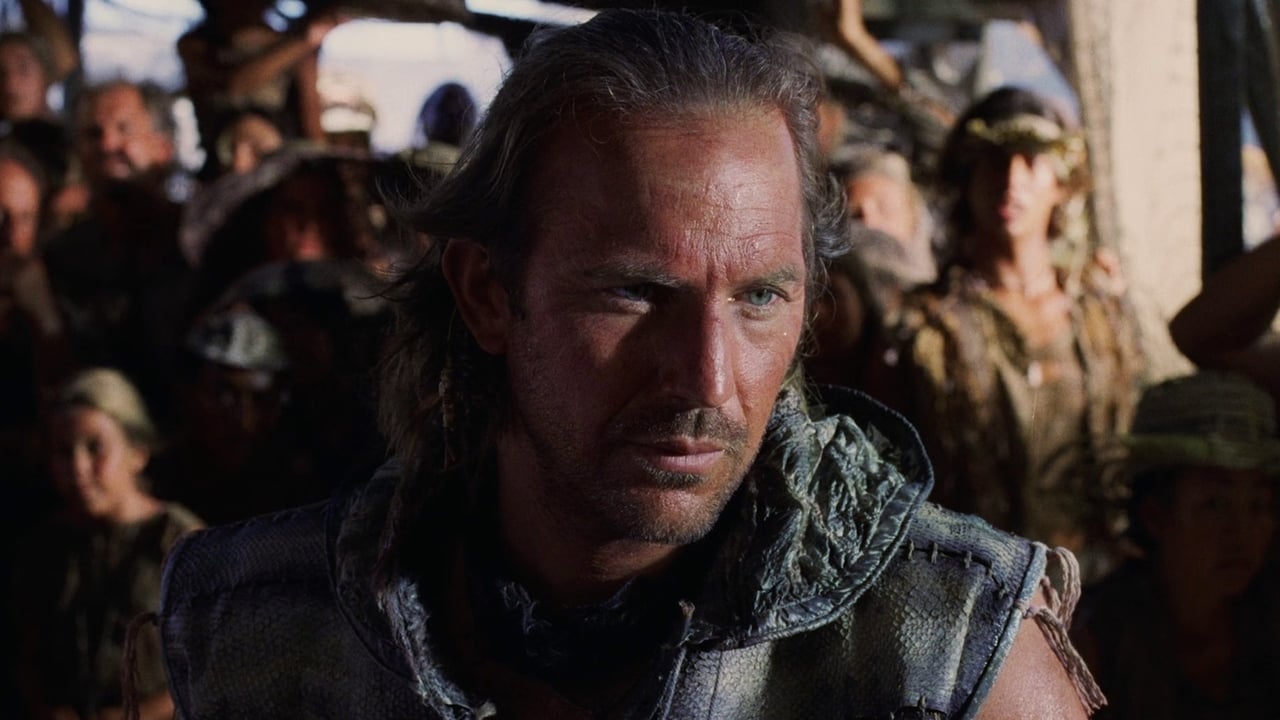
Robin Hood: Prince of Thieves
1991
-
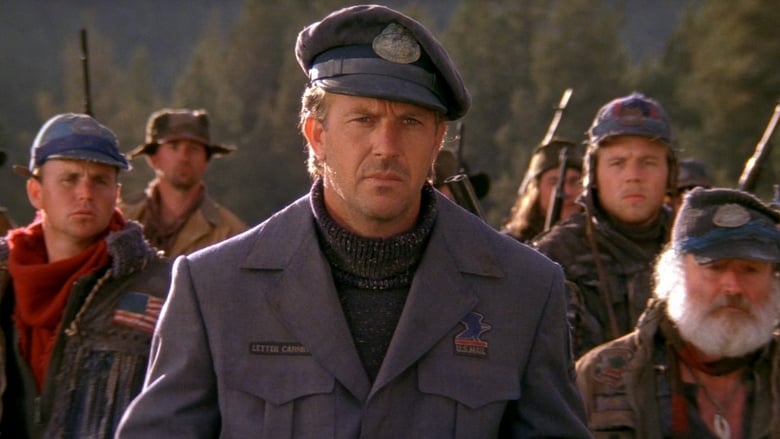
The Postman
1997
-

Starship Troopers
1997
-
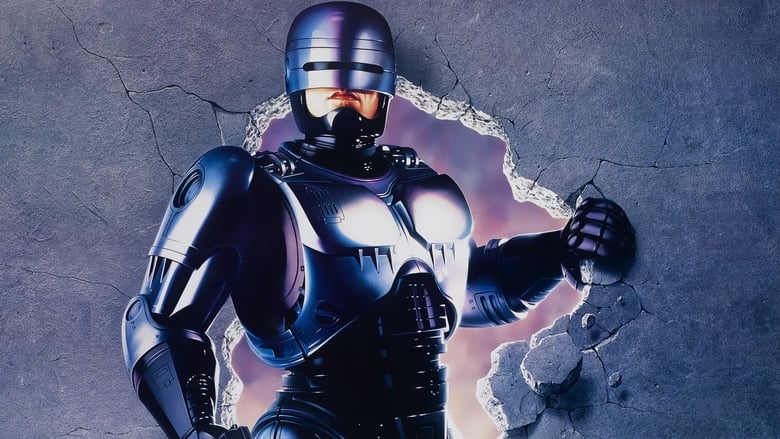
RoboCop 2
1990
-

Small Soldiers
1998
-
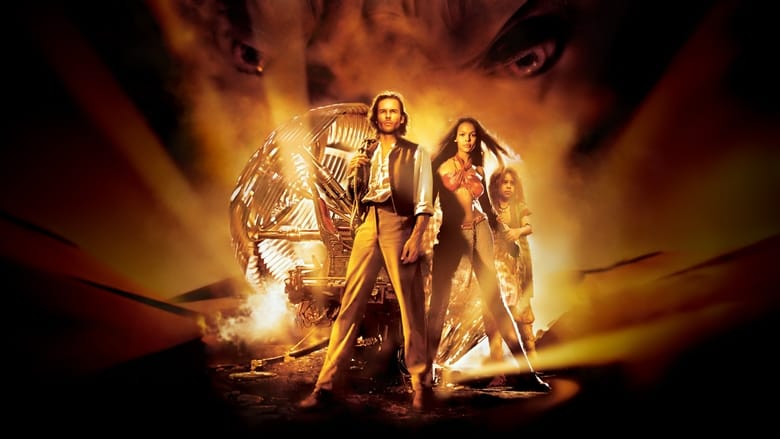
The Time Machine
2002
-
Hulk
2003
-
The Matrix Revolutions
2003
-
AVP: Alien vs. Predator
2004
-
The Island
2005
-
Superman Returns
2006
-

X-Men: The Last Stand
2006
-
Fantastic Four: Rise of the Silver Surfer
2007
-
Babylon A.D.
2008
-
Jumper
2008
-
The Incredible Hulk
2008
-

G.I. Joe: The Rise of Cobra
2009
-
TRON: Legacy
2010
-

Captain America: The First Avenger
2011
-
I Am Number Four
2011