A Time to Kill
"Justice has a color in the heat of Mississippi."
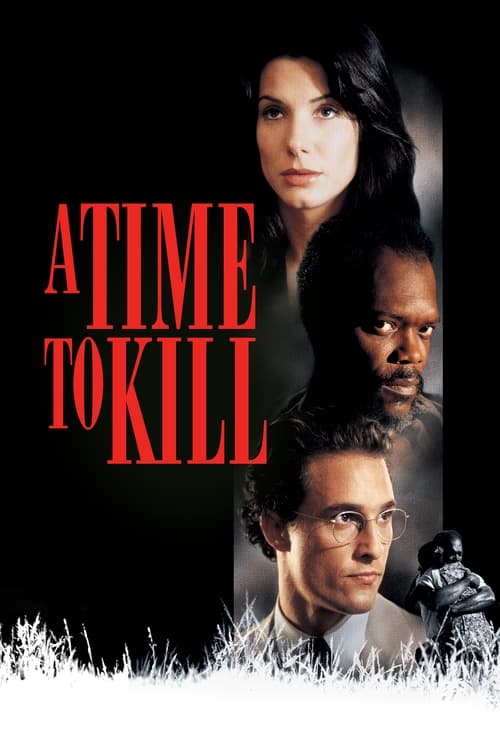
There is enough perspiration in A Time to Kill to power a small hydroelectric plant. Watching it today, I’m struck by how much 1996 felt like the last gasp of the "Big Legal Thriller"—those humid, star-studded event movies where the courtroom was a battlefield and the dialogue was written to be shouted toward the back of the rafters. While I was rewatching this, my cat decided to knock a half-empty glass of lukewarm sweet tea onto my rug, and honestly, the sticky, slightly uncomfortable mess it left behind felt like the perfect sensory accompaniment to Joel Schumacher’s vision of Canton, Mississippi.
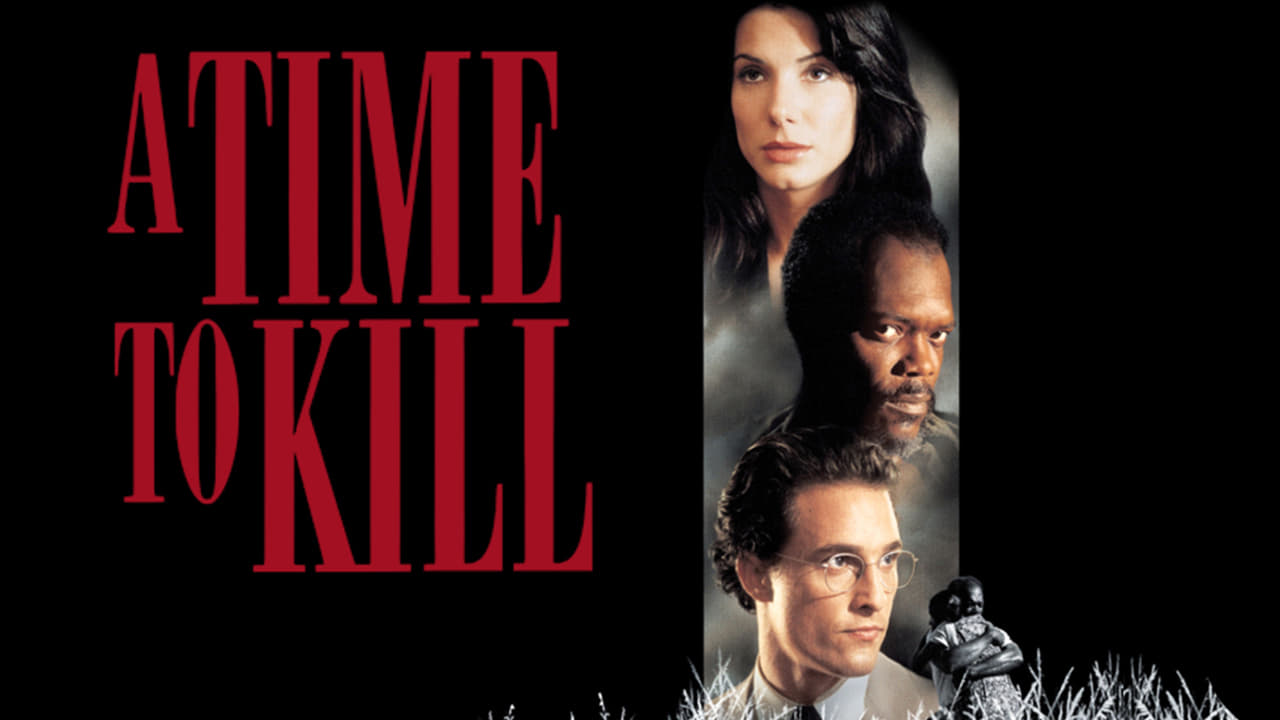
The film doesn’t ease you in; it drags you through the dirt. We open with a brutal, sickening assault on a ten-year-old girl, followed by her father, Samuel L. Jackson’s Carl Lee Hailey, taking a M16 to the men responsible in the middle of a courthouse. It’s an opening that demands a stance. There’s no room for the polite, detached legal maneuvering of an episode of Law & Order. This is primal stuff, and Schumacher—a director often criticized for his neon-drenched theatricality in the Batman franchise—proves here that he can handle gravity when he isn't worried about putting nipples on a Batsuit.
A Star is Born in a Linen Suit
Before this film, Matthew McConaughey was the "Alright, alright, alright" guy from Dazed and Confused. After this, he was a titan. As Jake Brigance, the young, hungry defense attorney with a moral compass and a very impressive collection of breathable blazers, McConaughey carries the weight of a $40 million production on his shoulders with an ease that’s almost irritating. McConaughey’s legal strategy is essentially a legalized Jedi mind trick that only works because he’s crying in a very expensive-looking linen suit.
But he isn't alone. The cast is a "Who’s Who" of 90s excellence. Sandra Bullock, fresh off the success of Speed, plays Ellen Roark, a law student who provides the intellectual engine (and the necessary outsider perspective) to the defense. Then you have Kevin Spacey as Rufus Buckley, the predatory prosecutor. Spacey plays the role with a reptilian coldness that makes your skin crawl; he’s the personification of a system that cares more about winning than doing what’s right. Toss in Donald Sutherland as a boozy, disbarred mentor and Ashley Judd as Jake’s resilient wife, and you have an ensemble that simply wouldn't be assembled for a mid-budget drama today. In the current landscape, this would be a six-part miniseries on a streaming platform, stretched thin and padded with filler. In 1996, it was a lean, mean, 149-minute theatrical powerhouse.
The Grisham Juggernaut

Looking back, it’s hard to overstate just how much John Grisham dominated the decade. A Time to Kill was actually the first book he wrote, but it didn't get the big-screen treatment until after The Firm and The Pelican Brief had already turned his name into a global brand. This film was a massive commercial bet that paid off, raking in over $152 million worldwide—roughly $300 million in today’s money. That is a staggering amount for a film that deals heavily with the KKK, racial lynching, and the morality of vigilante justice.
The production was a magnet for trivia. Apparently, McConaughey wasn't even the first choice; the studio wanted a massive name like Kevin Costner or Woody Harrelson. It was Grisham himself who saw McConaughey’s screen test and insisted on the newcomer. It’s also one of the rare films to feature both Donald Sutherland and his son, Kiefer Sutherland (who plays a truly detestable Klansman), though they famously don't share a single scene. The marketing was inescapable; I remember the posters being everywhere, emphasizing the "Time You'll Never Forget" tagline. It was a cultural event that sparked genuine watercooler debates about whether Carl Lee was a murderer or a hero.
The Weight of the Message
Does it hold up? For the most part, yes, but it’s a difficult watch. The film captures a specific post-Civil Rights anxiety that felt very present in the mid-90s. The depiction of the KKK is intentionally grotesque, bordering on caricature, yet the film balances this with the very real, grounded performances of the Hailey family. Samuel L. Jackson delivers a performance that should have been in the Oscar conversation; his "Yes, they deserved to die and I hope they rot in hell!" is a top-tier cinematic explosion.
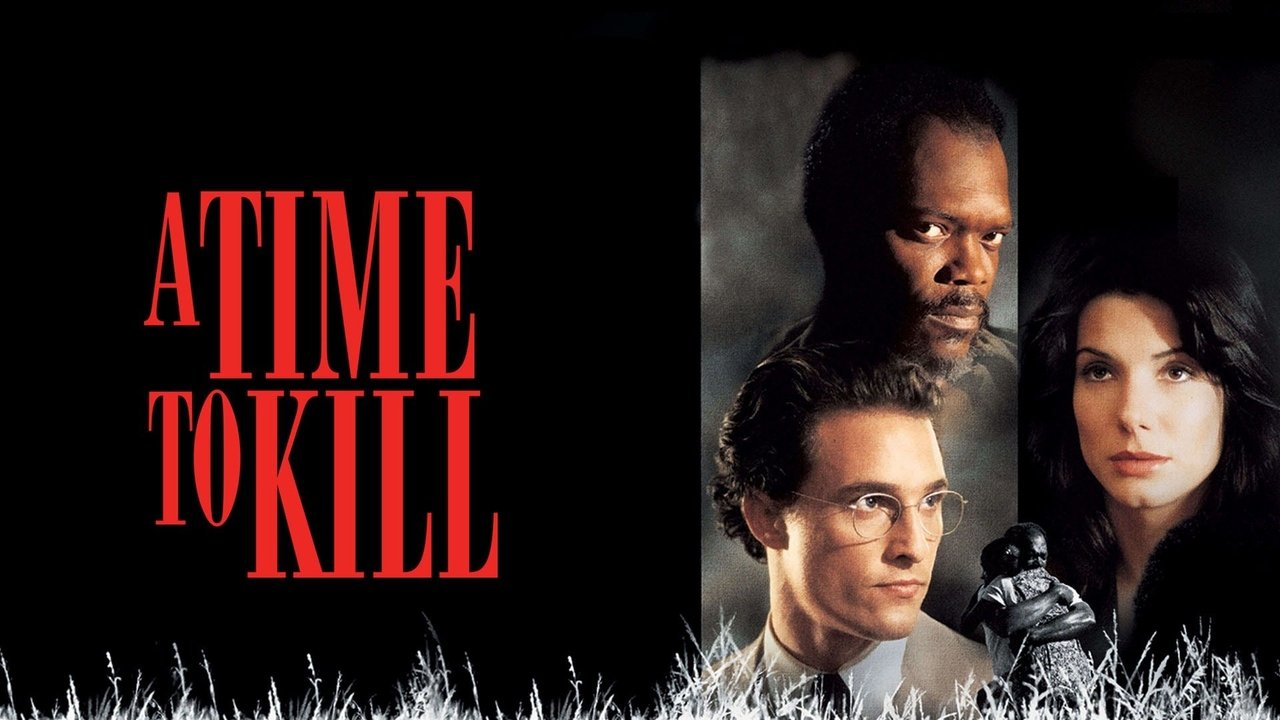
The film’s climax hinges on a closing argument that is both manipulative and undeniably effective. It asks the jury (and us) to bridge a racial gap by stripping away visual identity, a move that feels very much of its era—well-intentioned, slightly simplistic, but emotionally shattering. Schumacher lets the camera linger on the faces of the jurors, allowing the silence to do the heavy lifting that the script occasionally over-explains. It’s a drama that earns its tears, even if it has to wring them out of you with a heavy hand.
Ultimately, A Time to Kill is a reminder of why we used to go to the movies in the summer for things other than superheroes. It’s a big, sweaty, morally complex story told with high-gloss production values and top-tier acting. It doesn't offer easy answers, and it doesn't shy away from the ugliness of its subject matter. If you can handle the intensity, it remains one of the most gripping legal thrillers of its decade, anchored by a performance that proved Matthew McConaughey was always destined for more than just being a stoner icon.

Keep Exploring...
-

Falling Down
1993
-
The Client
1994
-
Cape Fear
1991
-
A Perfect World
1993
-
Primal Fear
1996
-

Sleepers
1996
-
Donnie Brasco
1997
-
The Talented Mr. Ripley
1999
-

Traffic
2000
-
The Lincoln Lawyer
2011
-
The Usual Suspects
1995
-

Jackie Brown
1997
-

Mystic River
2003
-

Inside Man
2006
-
The Town
2010
-
Patriot Games
1992
-

The Negotiator
1998
-
The Silence of the Lambs
1991
-
Bound by Honor
1993
-
Carlito's Way
1993