Courage Under Fire
"The truth is the hardest ground to hold."
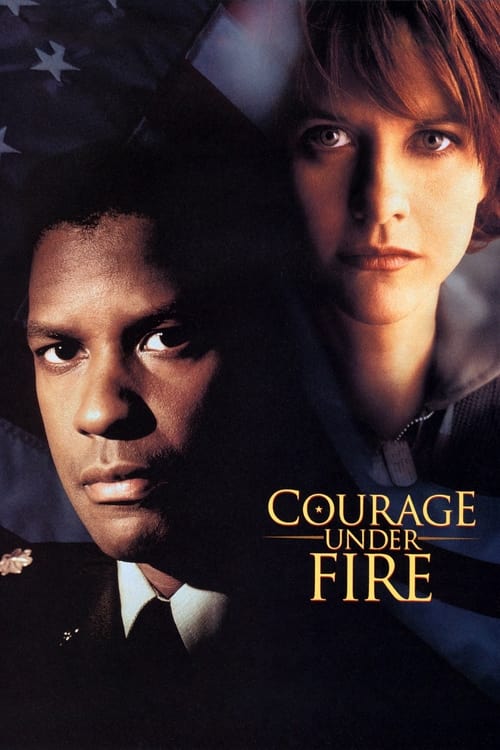
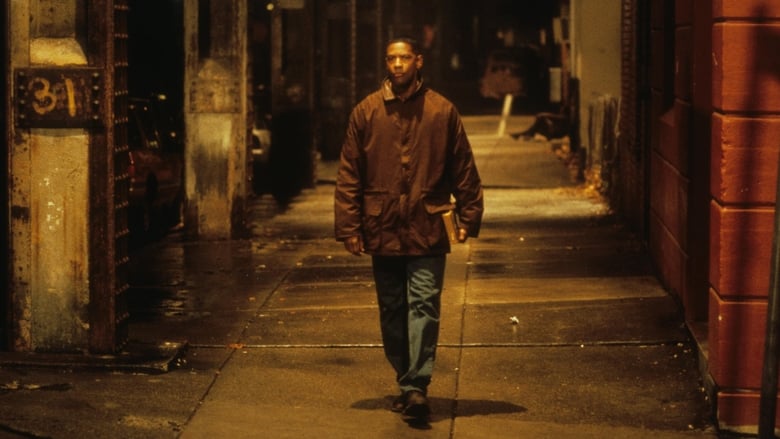
There is a specific kind of silence that only Denzel Washington can inhabit. It’s not just a lack of noise; it’s a heavy, pressurized atmosphere where you can practically hear his conscience grinding gears behind his eyes. In the mid-90s, Denzel was the undisputed king of the "man with a heavy soul" archetype, and 1996’s Courage Under Fire might be the purest distillation of that energy. I watched this again recently on a Tuesday night while nursing a lukewarm cup of peppermint tea that had a single, stubborn leaf floating in it, and honestly, that sense of slight discomfort felt entirely appropriate for a film that refuses to let its characters—or its audience—off the hook.
Directed by Edward Zwick (who previously guided Denzel to an Oscar in Glory), this isn't your standard flag-waving military procedural. It’s a Rashomon-style mystery wrapped in desert camouflage, arriving at a time when Hollywood was still trying to process the "clean" image of the 1991 Gulf War. It’s also a fascinating relic of the pre-CGI era, where if you wanted a tank battle, you actually had to find some tanks and blow them up in the dirt.
The Rashomon of the Desert
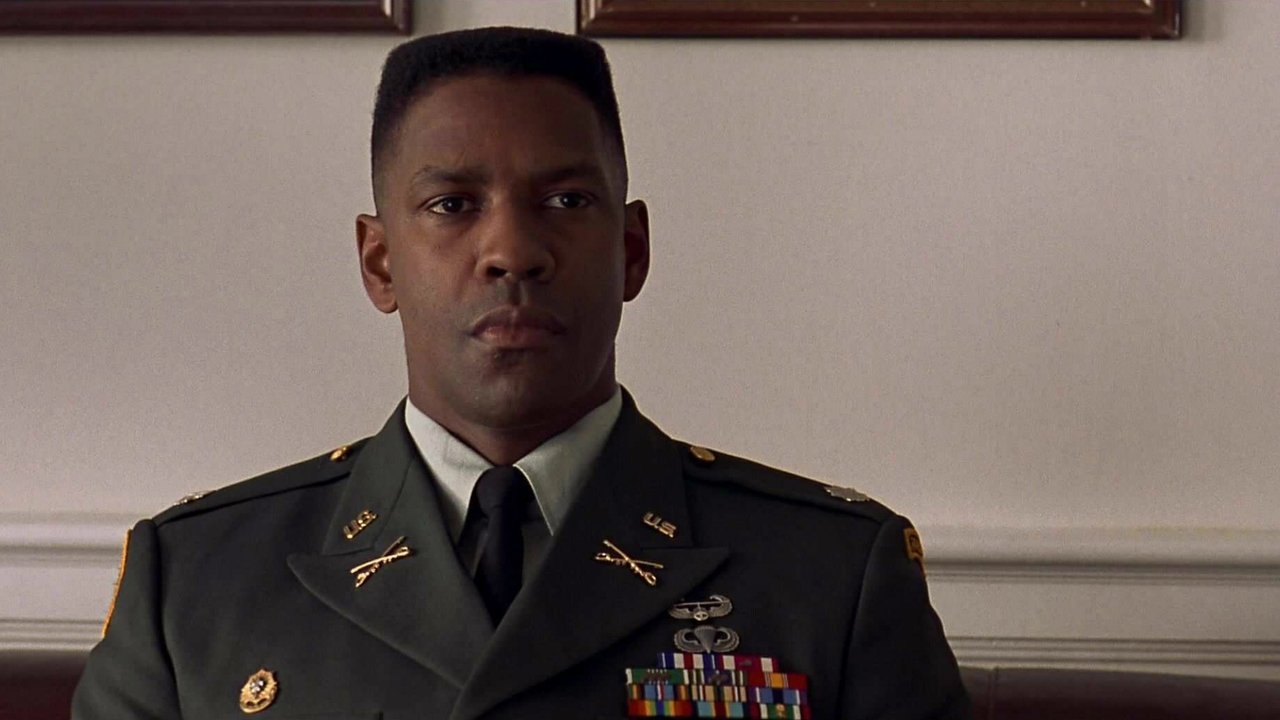
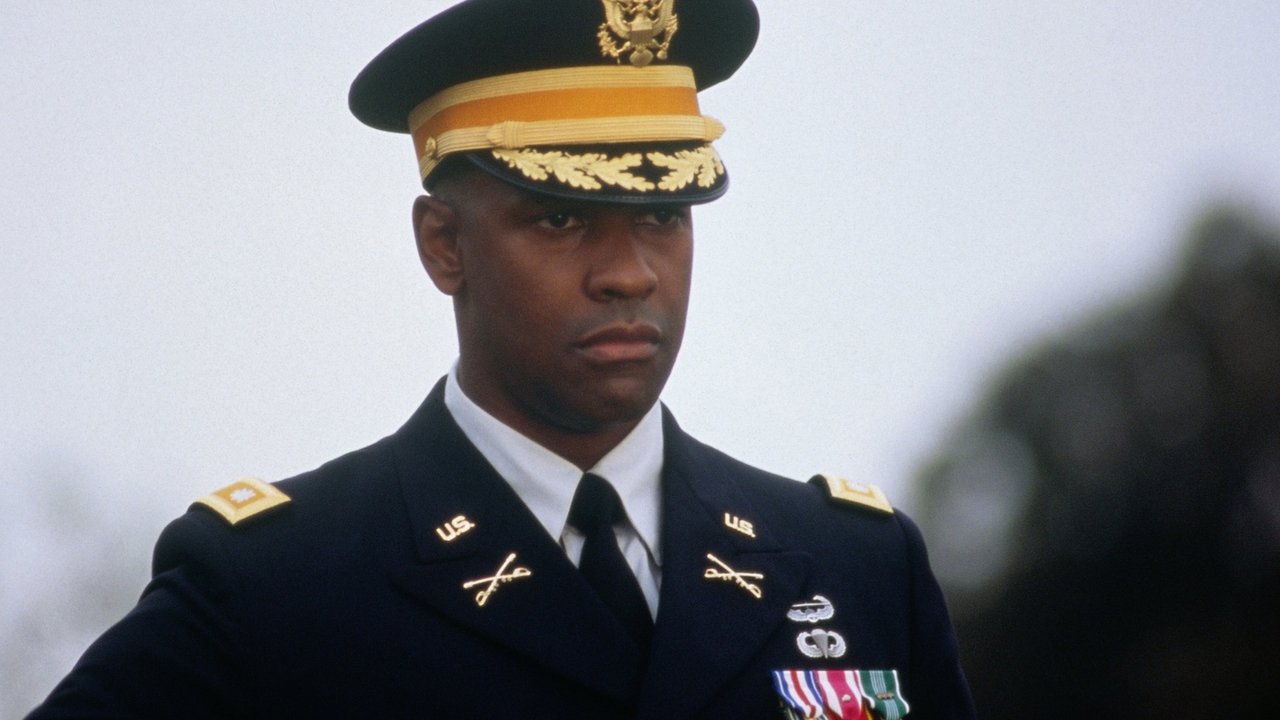
The setup is deceptively simple: Lieutenant Colonel Nathaniel Serling (Denzel Washington) is a man being eaten alive by a "friendly fire" incident he presided over during Desert Storm. To keep him busy and out of the headlines, the Army assigns him to investigate the worthiness of Captain Karen Walden (Meg Ryan) for a posthumous Medal of Honor. If approved, she’d be the first woman to receive it for combat valor.
What starts as a rubber-stamping exercise quickly turns into a psychological minefield. As Serling interviews the survivors of Walden’s downed Huey—played by a twitchy, phenomenal Lou Diamond Phillips and a skeletal Matt Damon—their stories don't just differ; they collide. One version of Walden is a saintly hero; another is a terrified coward. The film isn't just asking what happened on that ridge; it’s asking if the "truth" is something the military—or the American public—actually wants to hear.
Casting Against the Grain
In 1996, Meg Ryan was the undisputed queen of the romantic comedy. Casting her as a grease-smeared, M16-wielding pilot was a massive gamble. Looking back, Meg Ryan’s Southern accent is a bit like a Sunday school teacher trying to sound tough, but her performance works because of the film's structure. Since we only see her through the fragmented, biased memories of the men she commanded, her performance should feel slightly disconnected and inconsistent. She’s playing four different versions of the same woman, and she nails the desperation of a commander who knows her crew is losing faith in her.
Then there’s Matt Damon. This was a year before Good Will Hunting turned him into a superstar, and he famously lost 40 pounds for the role of Ilario, the medic haunted by what he saw. He looks gaunt, fragile, and utterly broken. It’s a physical transformation that signaled he wasn't just another pretty face in the "Class of '96" Hollywood roster. Lou Diamond Phillips also deserves his flowers here; as Staff Sergeant Monfriez, he vibrates with a terrifying, defensive machismo that acts as the perfect foil to Denzel’s quiet, simmering grief.
A Masterclass in Practical Grit
Before the industry traded grit for green screens, Edward Zwick and legendary cinematographer Roger Deakins (The Shawshank Redemption, Blade Runner 2049) created a visual language for the Gulf War that still feels immediate. The night battles are chaotic and terrifying, lit by the harsh, artificial glow of flares and burning oil. There’s a weight to the machinery here that modern war films often lack.
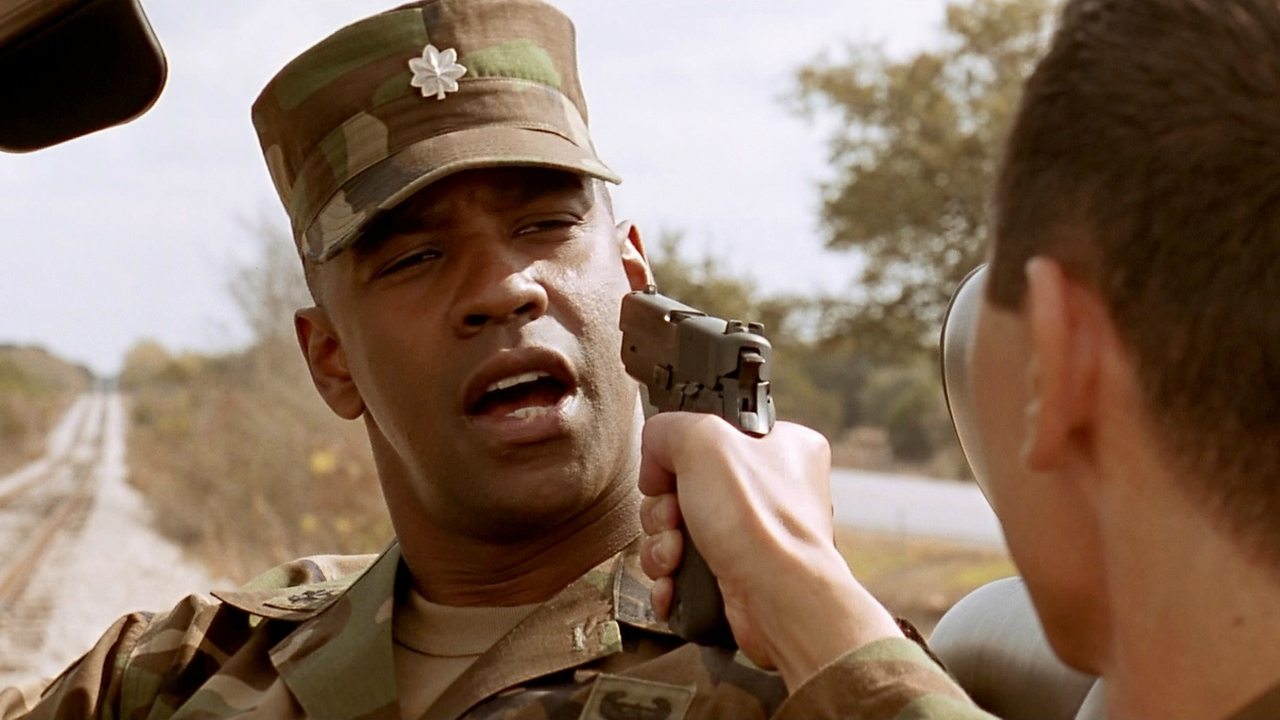
The production trivia is actually quite telling: the U.S. military famously refused to cooperate with the production because the script dealt with "friendly fire" and a potential cover-up. The production ended up having to buy British Centurion tanks and "dress them up" with plastic molds to look like American M1 Abrams. You’d never know it, though. The action sequences have a tactile, bone-rattling quality that keeps the stakes high even when the film shifts back to Denzel sitting in a dimly lit office.
The score by James Horner (Titanic) is another 90s hallmark. It’s full of those mournful trumpets and tragic swells he was known for, which might feel a bit manipulative by today's standards, but in the context of a 90s prestige drama, it hits exactly the right notes of melancholy and honor.
The Legacy of the "Middle-Class" Movie
Revisiting Courage Under Fire made me realize how much I miss this specific kind of movie—the $40-60 million adult drama that doesn't need a superhero or a multi-film "universe" to justify its existence. It’s a movie about morality, bureaucracy, and the crushing weight of a guilty conscience.
In a post-9/11 world, our war movies became more cynical, more visceral, or more overtly political. But Courage Under Fire occupies a unique middle ground. It respects the military while remaining deeply suspicious of the institutions that run it. It’s a film that understands that the 90s were the last decade where a movie about military bureaucracy could actually feel like a high-stakes thriller. It’s not just a "war movie"; it’s a noir mystery where the desert is the dark alley and the truth is the dame that might just ruin everyone.
This remains one of the smartest dramas of its decade, anchored by a performance from Denzel Washington that reminds you why he’s a titan of the craft. It balances big-budget spectacle with intimate psychological trauma without ever losing its stride. If you haven't seen it since the days of pan-and-scan VHS rentals, give it another look—it’s aged better than most of its contemporaries.

Keep Exploring...
-
The Siege
1998
-
Crimson Tide
1995
-
Defiance
2008
-

The Manchurian Candidate
2004
-
K-19: The Widowmaker
2002
-
The Player
1992
-

Legends of the Fall
1994
-
The Client
1994
-
Breakdown
1997
-
Kiss the Girls
1997
-
Wild Things
1998
-
Arlington Road
1999
-

The Gift
2000
-
Behind Enemy Lines
2001
-
Gosford Park
2001
-
Joy Ride
2001
-
The Pledge
2001
-
The Bone Collector
1999
-
Fallen
1998
-
Conspiracy Theory
1997