Crash
"Chrome, skin, and the ultimate collision of desire."
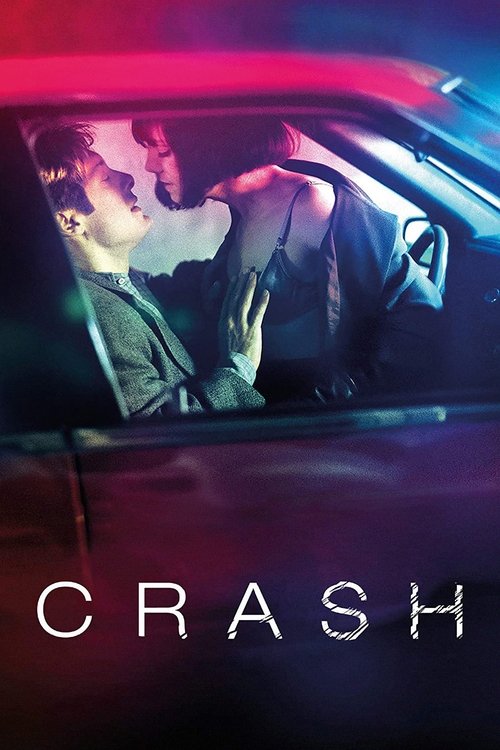
There are two types of people in this world: those who hear the title Crash and think of a heavy-handed 2004 drama about Los Angeles race relations, and those who hear it and immediately think of James Spader looking longingly at a mangled fender. If you belong to the former group, consider this your warning. David Cronenberg’s 1996 masterpiece isn't interested in moral lessons or social harmony. It’s a cold, clinical, and perversely beautiful exploration of what happens when human sexuality collides—literally—with the machine age.

I watched this most recent time while eating a bag of slightly stale sourdough pretzels, and I realized that the crunch of the pretzels was a disturbingly fitting foley effect for the onscreen carnage. It’s that kind of movie; it gets under your skin and stays there, making you hyper-aware of your own physical presence in a world made of sharp edges and hard plastic.
A Symphony of Twisted Metal
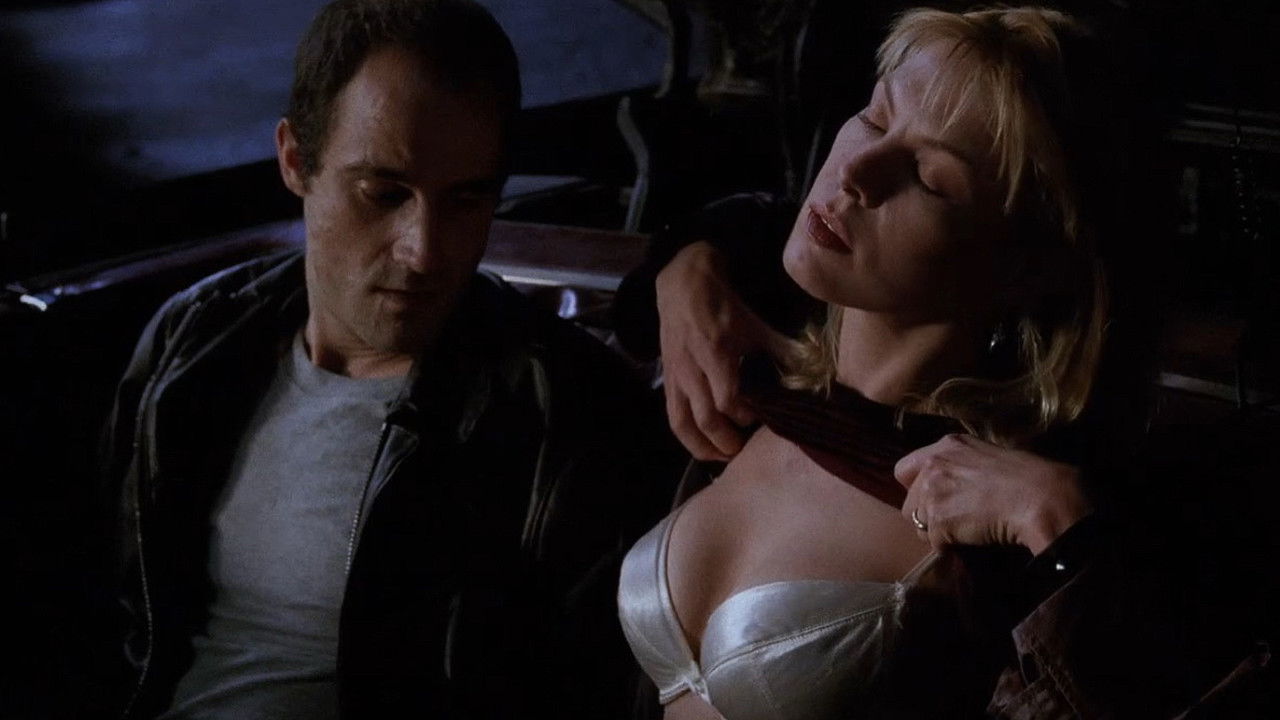
The plot is deceptively simple, based on the J.G. Ballard novel that was long considered "unfilmable." James Spader plays a television commercial producer named James Ballard who, after a near-fatal head-on collision, finds his libido reawakened by the trauma. He and his wife, played with an icy, detached elegance by Deborah Kara Unger, are already in a sexually stagnant marriage where they recount their infidelities like they’re reading grocery lists. The accident introduces them to Helen Remington (Holly Hunter) and the enigmatic Vaughan (Elias Koteas), a "scientist" who stages famous celebrity car crashes as performance art.
Watching this movie feels like being trapped in a luxury car dealership with a group of people who are definitely not allowed near the floor models. There is a stillness to the performances that is deeply unsettling. James Spader has always been the king of the "high-functioning creep," but here he’s more of a blank slate being written upon by the jagged lines of a dashboard. Meanwhile, Elias Koteas is the film's dark heart. As Vaughan, he prowls the midnight highways in a beat-up 1963 Lincoln Continental like a predator looking for a very specific kind of prey. He doesn't want to kill; he wants to witness the moment where the soul meets the bumper.
The Ted Turner Sabotage
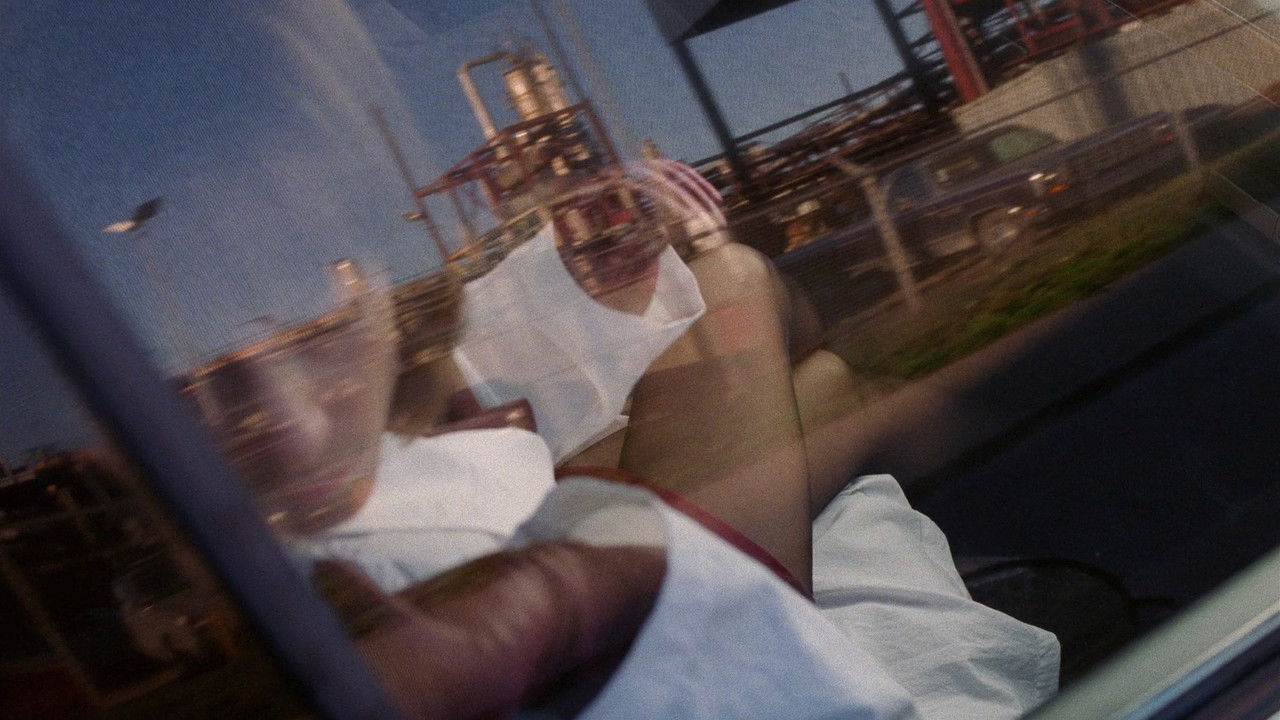
If you’re wondering why you haven't seen this on a standard "90s Greats" list, it’s because Crash was essentially buried at birth. When it premiered at Cannes, it didn't just win a Jury Prize; it caused a literal riot. Some critics hailed it as a stroke of genius, while others—most notably Francis Ford Coppola, who was the jury president—apparently loathed it.
The real hurdle, however, was Ted Turner. At the time, Turner’s company owned New Line Cinema (and its Fine Line Features wing), and he was reportedly so repulsed by the film's content that he attempted to block its North American release entirely. It was delayed for nearly a year, eventually limping into theaters with an NC-17 rating, which was the kiss of death for mainstream distribution in the mid-90s. Before the era of streaming and digital democratization, an NC-17 rating meant you weren't getting ads in major newspapers or shelf space at Blockbuster. It became a ghost, a film spoken about in hushed tones by "Body Horror" aficionados and Cronenberg completists.
The Beauty of the Sterile
What keeps Crash from being mere "shook-value" cinema is its incredible craft. This isn't a messy, blood-soaked slasher. It is shot by Peter Suschitzky with a metallic, silver-blue palette that makes skin look like chrome and chrome look like skin. Howard Shore, the man who gave The Lord of the Rings its epic soul, provides a score here that is entirely composed of electric guitars, harps, and percussion. It sounds like the humming of an engine or the vibration of a guardrail.
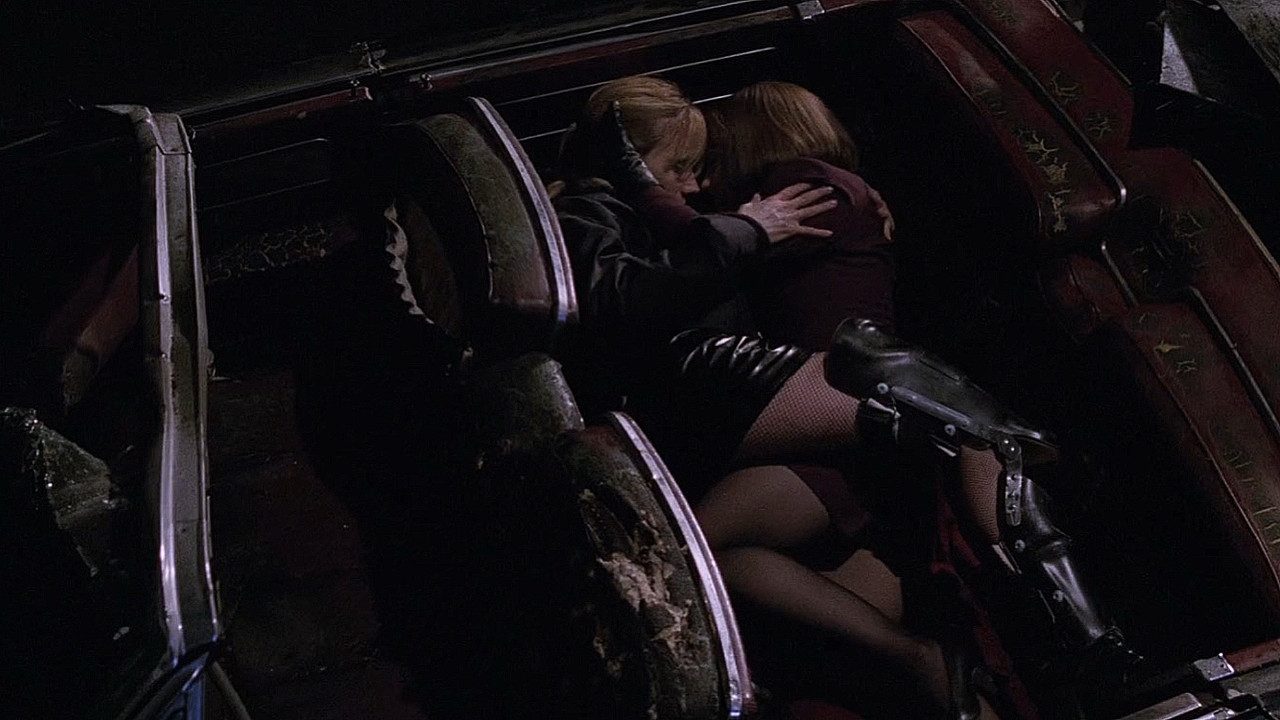
The film is a "drama" in the sense that it tracks the evolution of a marriage, but the emotional beats are replaced by mechanical ones. It’s a film that manages to make a car wash feel more obscene than a back-alley transaction. Cronenberg isn't judging these people. He’s observing them like a biologist watching a new species emerge. In an era where CGI was beginning to dominate—think of the digital dinosaurs in Jurassic Park (1993) or the liquid metal of Terminator 2—Cronenberg stayed stubbornly, painfully practical. Every dent in the metal and every scar on Rosanna Arquette’s leg feels earned and heavy.
Looking back, Crash feels like a prophetic warning about our relationship with technology. We spend more time touching our screens and sitting in our cars than we do touching other human beings. Cronenberg just took that intimacy to its logical, terrifying conclusion.
This isn't a "fun" Friday night watch, but it is an essential one for anyone who wants to see what cinema looks like when it’s stripped of all its polite pretenses. It’s a cold, hard, and strangely poetic look at the scars we carry and the ways we try to feel something in a numbing world. If you can track down the 4K restoration, do it—just maybe skip the snacks.
Keep Exploring...
-
Spider
2002
-
Naked Lunch
1991
-

A History of Violence
2005
-
Cosmopolis
2012
-
eXistenZ
1999
-
Crimes of the Future
2022
-

Maps to the Stars
2014
-
Fallen
1998
-

Ginger Snaps
2001
-
Payback
1999
-
Barton Fink
1991
-

Double Impact
1991
-
Candyman
1992
-
The Hand That Rocks the Cradle
1992
-
The Player
1992
-
The Good Son
1993
-
The Client
1994
-
The River Wild
1994
-

Hackers
1995
-
Strange Days
1995