Eraser
"Big guns, bad pixels, and peak Arnold."
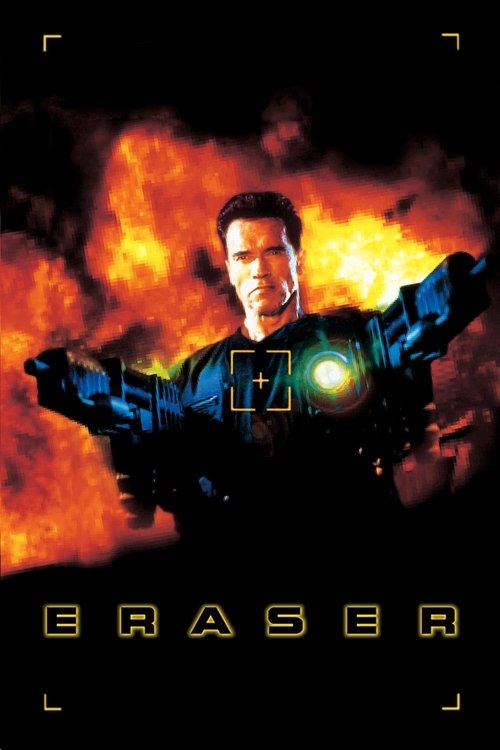
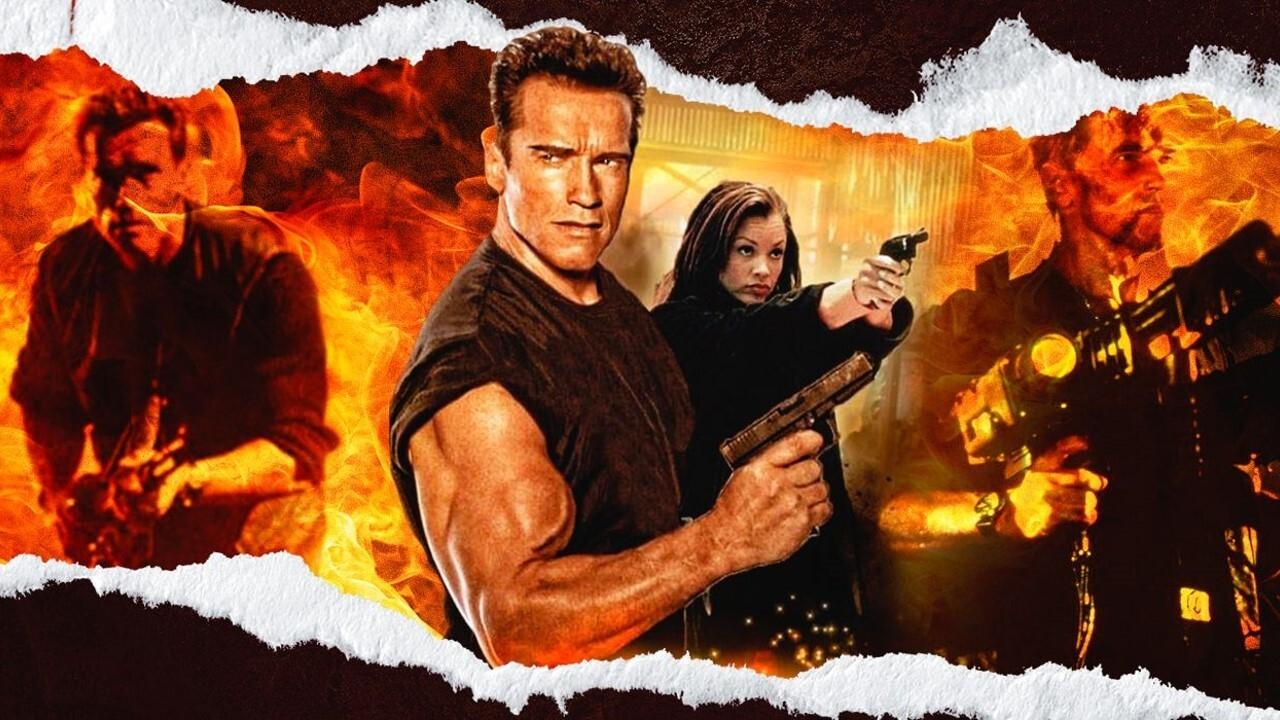
In the sweltering summer of 1996, Hollywood was convinced that the next great threat to global security wasn’t a nuclear suitcase or a biological plague, but a handheld gun that could shoot aluminum slugs through solid steel at the speed of light. It was the era of the "high-tech" thriller, a brief window where we transitioned from the greasy, muscle-bound machismo of the ‘80s into the sleek, gadget-obsessed paranoia of the pre-millennium. At the center of this transition stood Arnold Schwarzenegger, clutching two glowing railguns and trying his best to look like a man who understood how a computer worked.
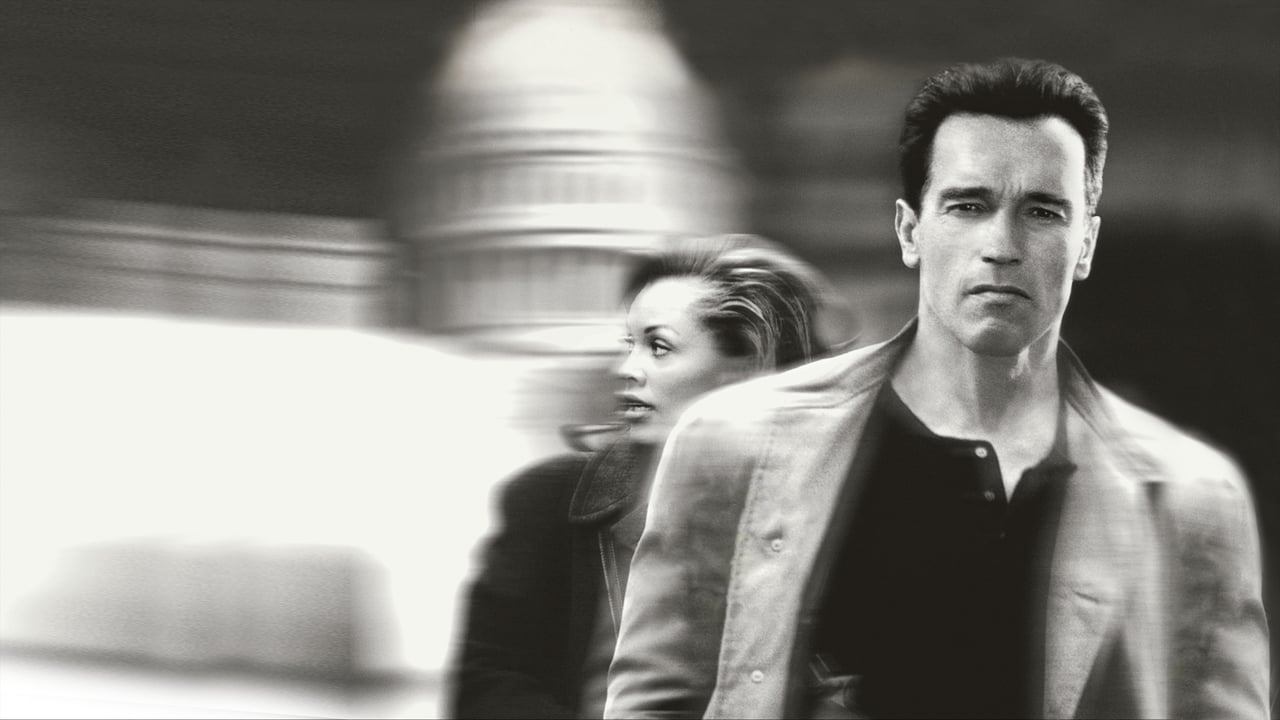
I recently revisited Eraser while nursing a mild head cold, wrapped in a blanket that smelled faintly of old cedar, and I realized that this movie is the ultimate bridge between two worlds. It’s a film where Arnold still does Arnold things—like jumping out of a plane without a parachute to catch up to a falling parachute—but it’s also a film deeply fascinated by the emerging digital frontier. It’s a snapshot of a time when "Silicon Valley" was becoming a buzzword and "erasing" someone meant more than just a bullet to the head; it meant deleting their digital footprint.
The High-Tech Muscle of the 90s
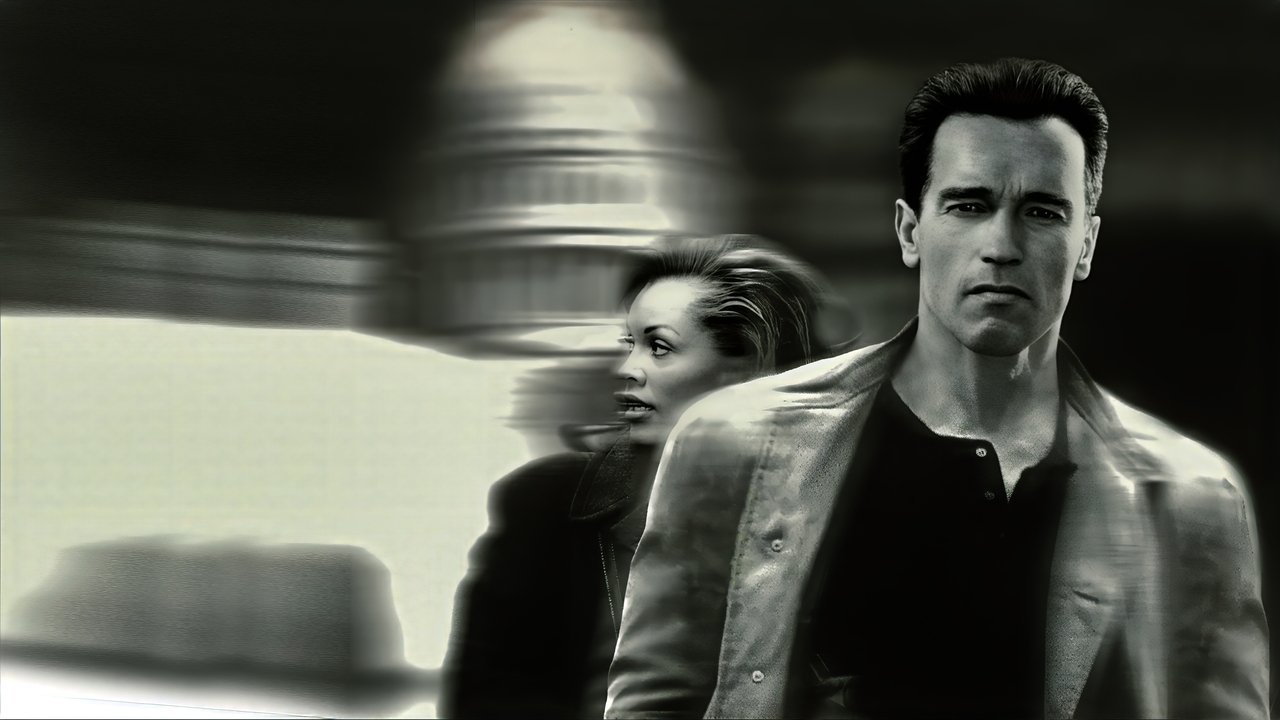
Director Chuck Russell—fresh off the success of The Mask (1994) and the nightmare fuel of A Nightmare on Elm Street 3: Dream Warriors (1987)—brought a specific kind of kinetic energy to Eraser. He understood that an Arnold movie in the mid-90s needed to feel bigger than a standard police procedural. The plot, involving a whistleblower named Lee Cullen (Vanessa Williams) who uncovers a conspiracy to sell top-secret electromagnetic weaponry to terrorists, is really just a clothesline for some of the most "90s" action set pieces ever committed to celluloid.
The centerpiece of the film’s "tech" is the railgun. Watching it now, the X-ray scope effect—where the shooter can see a glowing skeleton through a wall—is a perfect example of early CGI ambition. It’s clunky, it’s neon-bright, and it looks like the visual interface of a high-end bowling alley scoreboard from 1997. Yet, there’s a tactile charm to it. Unlike the weightless digital effects we see in modern blockbusters, the railguns in Eraser feel heavy. When they fire, the sound design by the legendary Alan Silvestri (who also provides a pulse-pounding, brass-heavy score) makes it feel like the world is being torn apart.
Stunts, Crocs, and James Caan
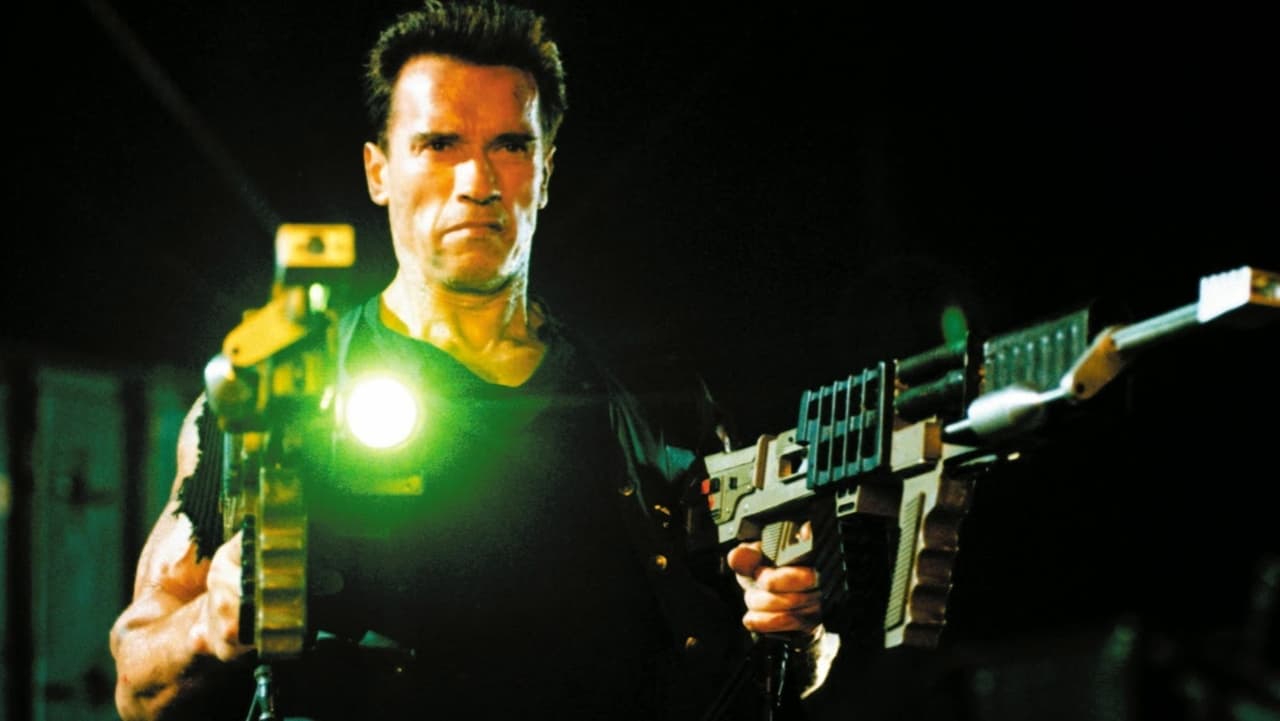
What really holds Eraser together, surprisingly, isn't the technology—it’s the cast. James Caan is having the time of his life as the villainous Robert Deguerin. He brings a gritty, old-school toughness that contrasts beautifully with Schwarzenegger’s stoic, invincible WitSec hero. Caan doesn't just play a bad guy; he plays a guy who thinks he’s the hero of a much more realistic movie, which makes him legitimately menacing.
Then there are the crocodiles. In an infamous sequence at the zoo, Arnold ends up in a pit of CGI reptiles. Looking back, this scene is a fascinating artifact of the "CGI Revolution" mentioned in our era context. These crocs were created by the wizards at ILM, and while the physics are a bit "floaty," the scene’s absurdity is its greatest strength. When Arnold shoots a crocodile and delivers the deadpan line, "You're luggage," it’s a moment of pure, unadulterated cinema joy. It’s a reminder that before the MCU turned every joke into a self-aware wink, Schwarzenegger was the king of the straight-faced pun.
The stunt work also deserves a shout-out. The plane sequence, where Arnold is chased by his own jet while falling through the sky, was a massive undertaking. It’s a blend of green screen, practical models, and high-altitude stunt work that still manages to induce a bit of vertigo. It represents that mid-90s sweet spot where directors were using every tool in the shed—analog and digital—to see what would stick.
A Forgotten Piece of the Arnie Puzzle
Why has Eraser fallen into a bit of a memory hole compared to True Lies (1994) or Total Recall (1990)? Part of it is the timing. It arrived just as the "Lone Hero" archetype was being challenged by the more cerebral, ensemble-driven thrills of Mission: Impossible (released just a month earlier). It also faced a minor identity crisis; the production had to digitally change the name of the villainous corporation from "Cyrex" to "Cyrez" late in the game because the real-world Cyrix Corp wasn't too thrilled about being portrayed as international arms dealers.
Despite the hurdles, the film was a massive financial success, proving that the world wasn't quite done with the Schwarzenegger brand of justice. It’s a film that celebrates the craft of the action movie before it became entirely synthesized. You can feel the heat of the explosions and the grit of the shipyard climax. It’s a "meat and potatoes" action flick served with a side of high-concept garnish.
Eraser is a loud, proud, and unapologetically fun relic of the Clinton era. It’s a film that asks you to believe that a man can outrun a jet engine and that the FBI has secret "Eraser" vans filled with glowing blue lights, and honestly, I was more than happy to oblige. If you’re looking for a Friday night movie that delivers exactly what it promises on the poster, you can’t go wrong with this one. It’s a reminder that sometimes, the best way to protect the future is to blow up the present with a very large, very loud railgun.
Keep Exploring...
-
The 6th Day
2000
-
Striking Distance
1993
-

The Long Kiss Goodnight
1996
-
Conspiracy Theory
1997
-
Along Came a Spider
2001
-
The Score
2001
-
Breakdown
1997
-
Blood Work
2002
-

Basic
2003
-

Paycheck
2003
-
Sky Captain and the World of Tomorrow
2004
-

The International
2009
-

Collateral Damage
2002
-

Under Siege 2: Dark Territory
1995
-
The General's Daughter
1999
-

Space Cowboys
2000
-
The Losers
2010
-
True Lies
1994
-

Sabotage
2014
-
In the Line of Fire
1993