Executive Decision
"Forty million lives. One unexpected exit."
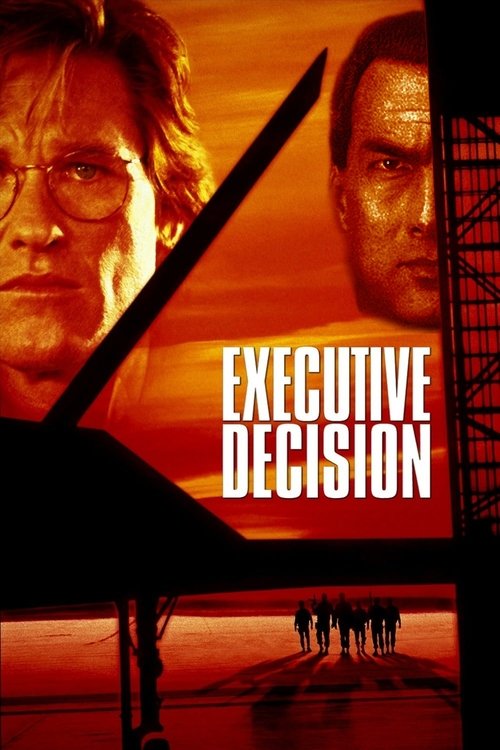
In the mid-90s, the "Die Hard in a [Location]" subgenre was reaching its saturation point. We’d already had Die Hard on a bus (Speed), Die Hard on a boat (Under Siege), and even Die Hard in a hockey rink (Sudden Death). So, when posters for Executive Decision started appearing in 1996, the collective groan from the back of the cinema was almost audible. We thought we knew exactly what we were getting: Steven Seagal squinting at terrorists, breaking a few limbs, and whispering some gravelly justice while Kurt Russell provided the "intellectual" side-eye.
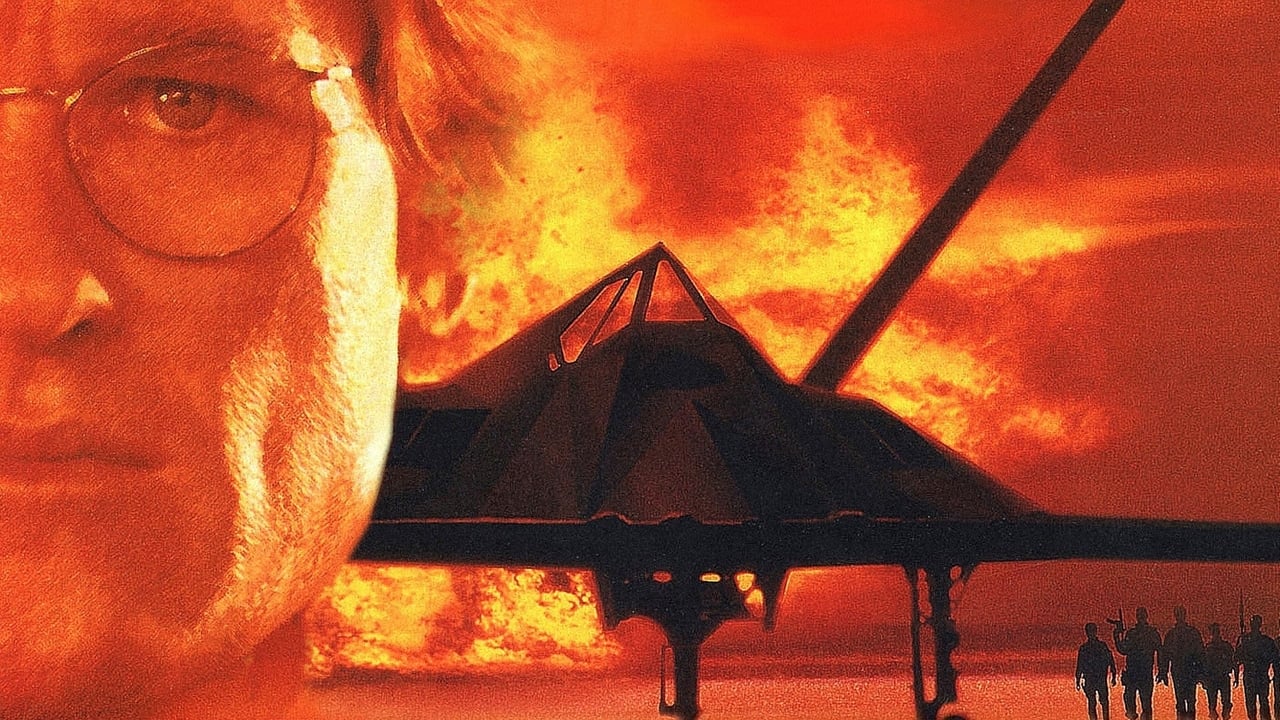
Then the movie actually started, and director Stuart Baird—a legendary editor who cut Lethal Weapon and Die Hard 2—pulled the rug out from under us so hard it left carpet burns. I watched this on a Tuesday night while nursing a slightly bruised ego from a failed DIY shelf project, and honestly, seeing Oliver Platt struggle with a circuit board made me feel much better about my own ineptitude.
The Great Seagal Bait-and-Switch
The genius of Executive Decision lies in its audacity to kill off the perceived lead in the first twenty minutes. In 1996, Steven Seagal was an untouchable action deity. Seeing him sacrifice himself—getting sucked out of a depressurized docking sleeve five miles above the Atlantic—was the 90s equivalent of Janet Leigh stepping into the shower in Psycho. It signaled to the audience that the safety rails were gone. This wasn’t going to be a movie where a lone wolf punches his way to the cockpit; it was going to be a claustrophobic procedural about a bunch of terrified nerds and soldiers trapped in the "attic" of a Boeing 747.
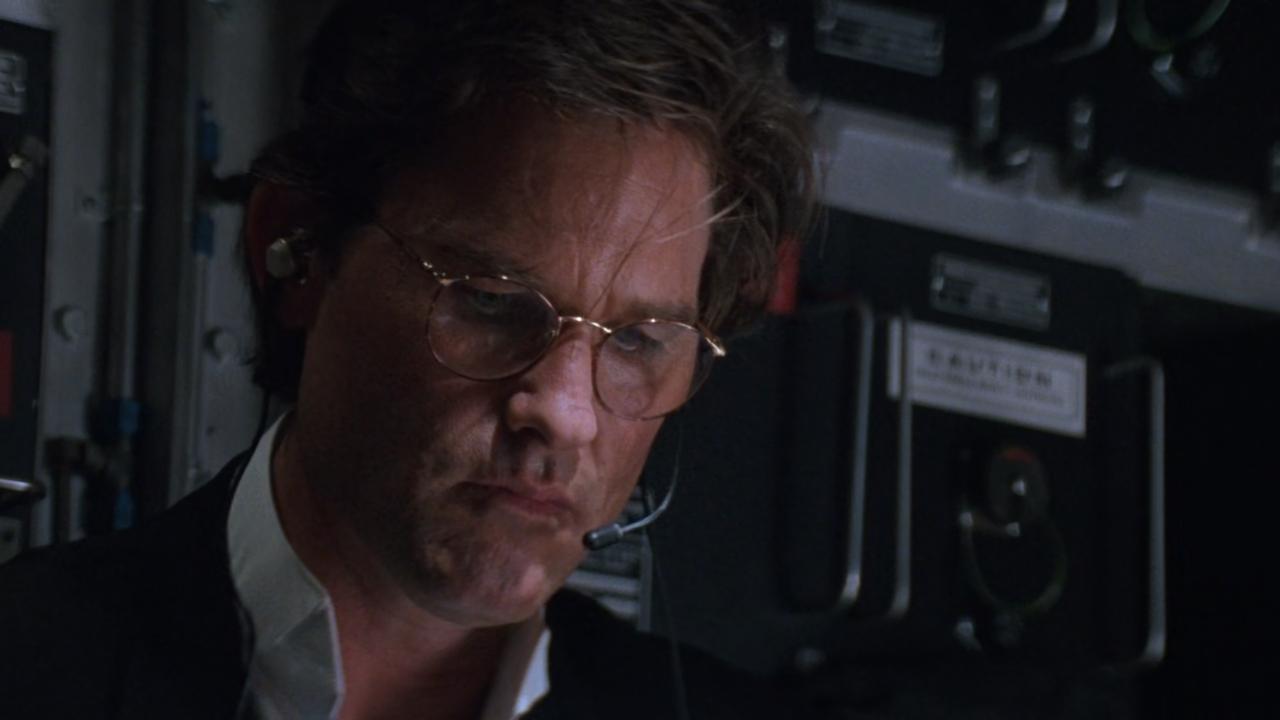
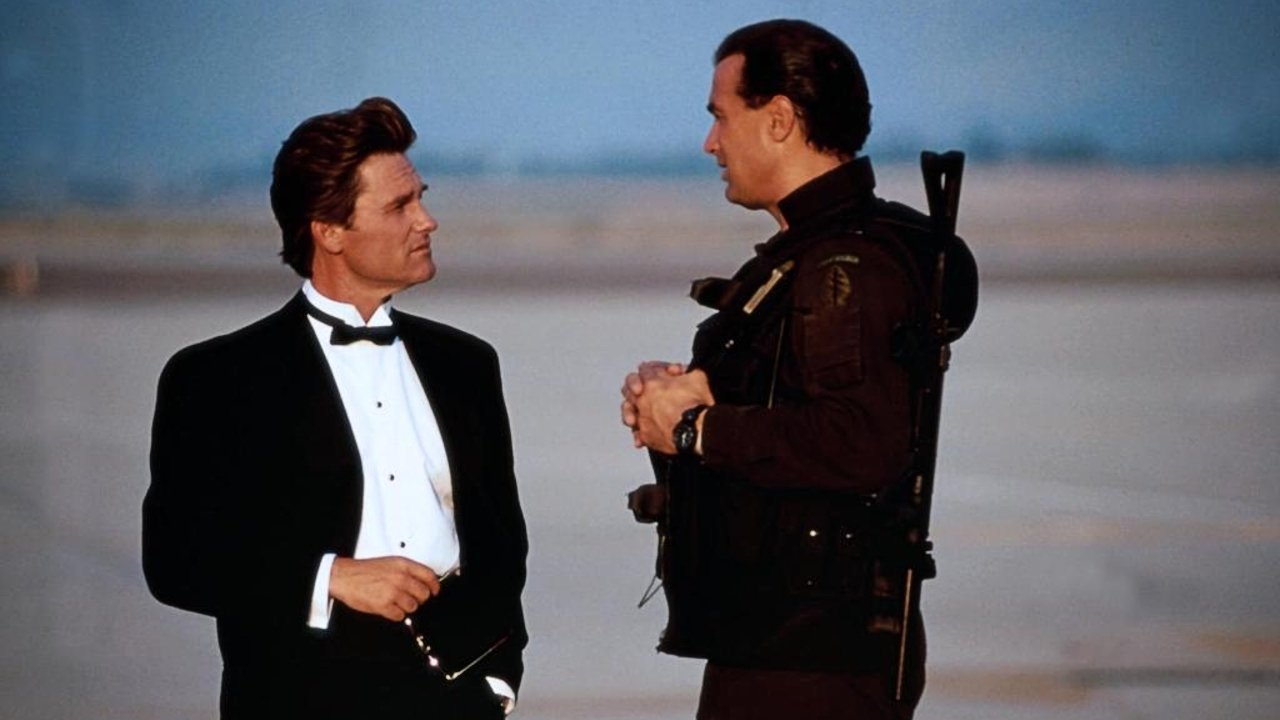
Kurt Russell plays David Grant, an intelligence consultant who is essentially the "guy in the chair" forced into the field. He’s wearing a tuxedo for half the movie because he was snatched from a black-tie gala, and he looks spectacularly out of place next to the spec-ops grit of John Leguizamo (Rat) and Joe Morton (Cappy). Russell is the king of the "competent but overwhelmed" protagonist. He doesn't suddenly become Rambo; he just tries to remember his flight lessons while everyone around him is sweating through their fatigues.
Precision Engineering and Sweaty Palms
While the 90s were flirting heavily with the CGI revolution, Executive Decision is a masterclass in the sunset of practical effects. The "Remora" – the experimental F-117X stealth plane used to board the 747 mid-flight – was a massive physical model. There’s a weight and a metallic groan to the sequences where the two planes dock that modern digital effects struggle to replicate. You can practically smell the hydraulic fluid.
Baird uses his editing background to turn the belly of a plane into a labyrinth. For a solid hour, the film is essentially a high-stakes heist movie where the "vault" is the cabin floor. It is objectively the most stressful game of 'Operation' ever filmed. Every time a soldier moves a ceiling tile or Oliver Platt's Cahill (an aerospace engineer who has no business being there) has to breathe, you’re waiting for the terrorists to hear a floorboard creak.
The tension is amplified by Jerry Goldsmith’s score, which eschews the patriotic bombast of the era for something more percussive and anxious. It’s a "thinking person’s" action movie that honors the technical jargon. When Joe Morton is paralyzed early on, the burden of diffusing a bomb—a device so complex it looks like a high-end motherboard from hell—falls to the least qualified people on the team. It turns the "red wire or blue wire" trope into a twenty-minute panic attack.
The Ensemble that Soars

We have to talk about Halle Berry. Long before she was an Oscar winner or a Storm, she was Jean, the flight attendant who becomes the team's eyes and ears inside the cabin. It’s a role that could have been a thankless "damsel" part, but Berry plays it with a sharp, terrified intelligence. The scenes where she has to subtly signal the hidden soldiers while being scrutinized by the lead terrorist, Nagi (played with cold, fanatical intensity by David Suchet), are some of the film’s best.
The chemistry between the guys in the crawlspace is what keeps the engine humming. John Leguizamo provides the cynical edge, but Oliver Platt is the secret weapon here. His performance as the civilian who is genuinely, visibly terrified—yet refuses to quit—is the most relatable thing in the movie.
Looking back, Executive Decision feels like a relic of a time when Hollywood trusted a "team" more than a "superhero." It’s a film about experts doing their jobs under impossible pressure. It captures that pre-9/11 innocence where a plane hijacking could still be the backdrop for a fun, popcorn-munching thriller, but it treats the logistics with more respect than almost any of its contemporaries. Steven Seagal's best performance is the one where he stops talking five miles above the Atlantic, and the movie is all the better for it.
If you missed this one or dismissed it as just another "Die Hard" clone, it’s time to book a flight. It’s a tight, expertly paced thriller that understands that a ticking clock is more effective when the people trying to stop it are actually human. It’s the ultimate competence porn for anyone who likes their action movies served with a side of engineering diagrams and 90s tuxedoes.

Keep Exploring...
-
Backdraft
1991
-
Escape from L.A.
1996
-

U.S. Marshals
1998
-
Breakdown
1997
-
Star Trek: Nemesis
2002
-
Dante's Peak
1997
-
Walking Tall
2004
-
Maverick
1994
-
Assassins
1995
-
Crimson Tide
1995
-
Daylight
1996
-
Conspiracy Theory
1997
-
The Saint
1997
-
Volcano
1997
-

Star Trek: Insurrection
1998
-
The Siege
1998
-
Payback
1999
-

Space Cowboys
2000
-
Vertical Limit
2000
-

Final Fantasy: The Spirits Within
2001