Primal Fear
"The truth is whatever you can make them believe."
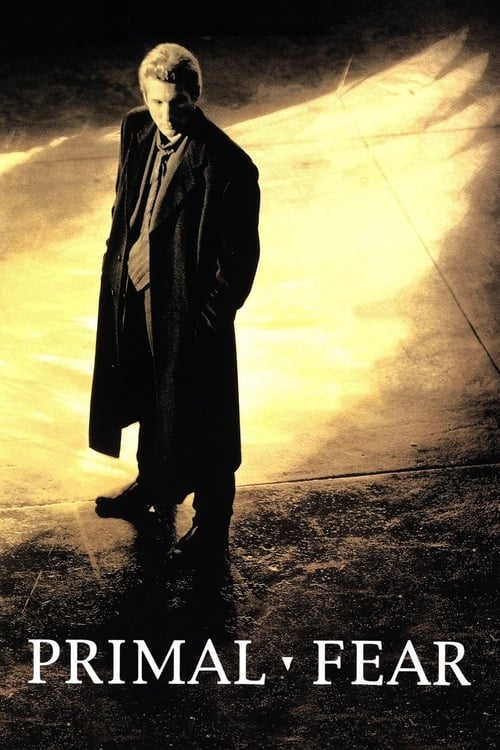
In the mid-90s, the legal thriller was the undisputed king of the multiplex. If you weren't watching a courtroom drama based on a John Grisham novel, you were probably watching one that wished it was. But Primal Fear (1996) always felt like it had a sharper edge than its peers. It wasn’t interested in the noble pursuit of justice or the "little guy" taking on a corrupt corporation. Instead, it invited us into the expensive, mahogany-clad world of Martin Vail, a man who views the law not as a moral compass, but as a high-stakes poker game where the loudest bluffer wins.
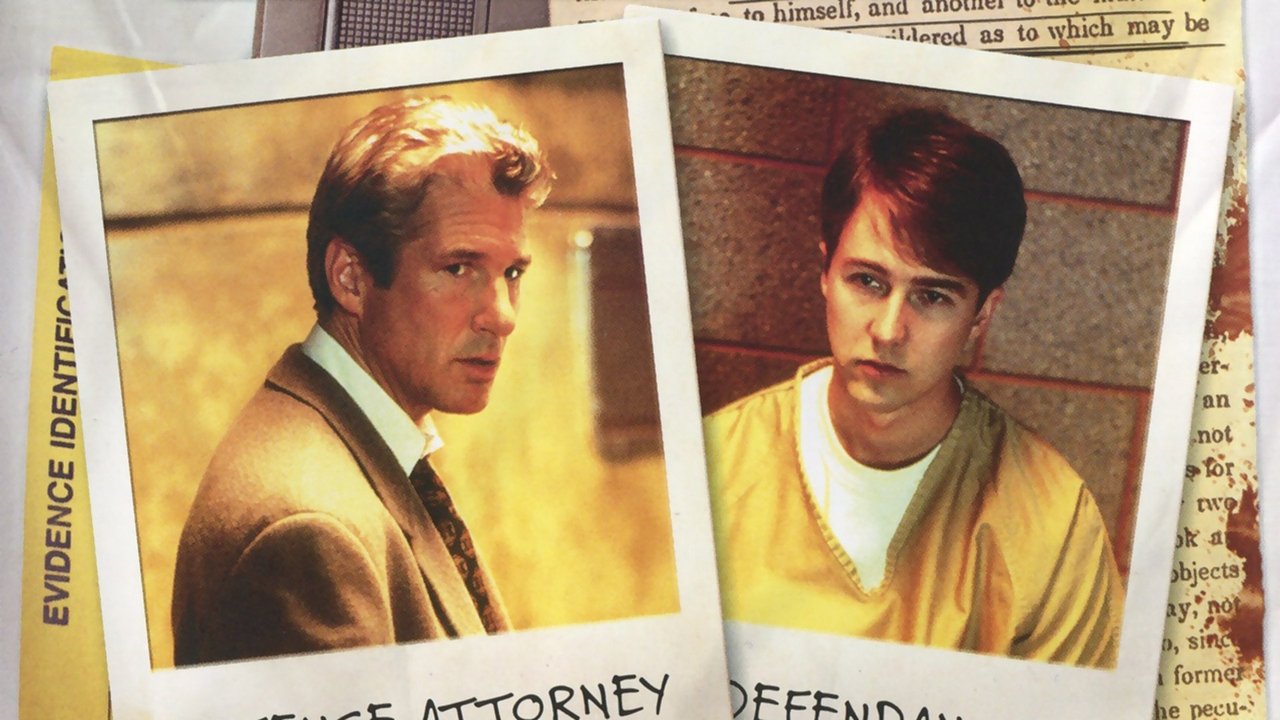
Richard Gere plays Vail with a slick, predatory grace that feels like it was tailor-made for his mid-career peak. He’s the kind of defense attorney who invites news cameras into his office and treats a "not guilty" verdict like a touchdown dance. When he takes on the pro bono case of Aaron Stampler—a stuttering, terrified altar boy found covered in the blood of Chicago’s beloved Archbishop—he isn’t doing it out of the goodness of his heart. He’s doing it for the "Time" magazine cover. I watched this again last Tuesday while trying to descale my Keurig, and I ended up with vinegar-scented coffee because I forgot the machine was running during the cross-examination. The film has that effect; it demands you pay attention to the sleight of hand.
The Gospel of the Ego
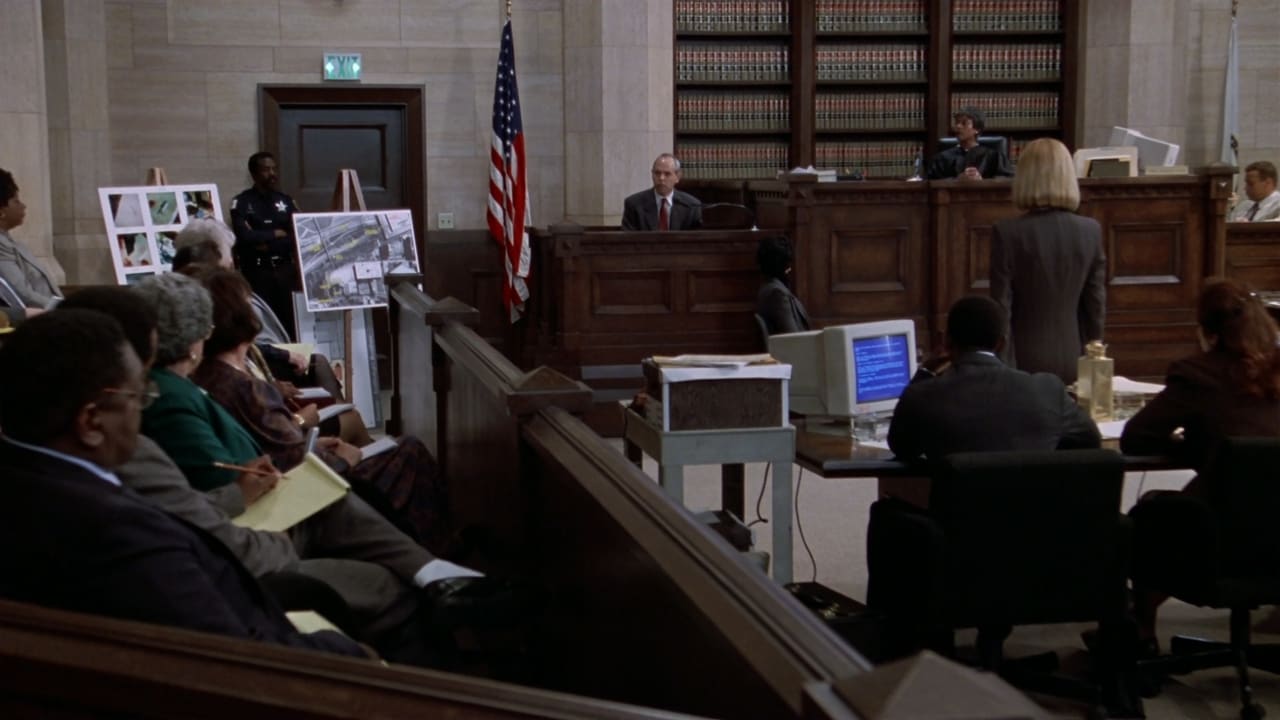
The film’s atmosphere is thick with that specific 90s Chicago gloom—lots of shadows, rain-slicked streets, and wood-paneled courtrooms that look like they’ve seen a century of bribes. Director Gregory Hoblit, fresh off his success with NYPD Blue, brings a grounded, procedural grit to the proceedings. He understands that for the drama to work, the world around it has to feel heavy and real.
The plot weaves a web of Vatican-level scandal, municipal corruption, and sexual deviancy that would feel exploitative if the performances weren't so locked in. Laura Linney stands her ground as Janet Venable, the prosecutor and Vail’s former flame, providing a necessary friction to Vail’s arrogance. Their chemistry isn't built on romance, but on mutual professional exhaustion. Meanwhile, the supporting cast is a "who’s who" of "that guy" actors—John Mahoney, Frances McDormand, and Alfre Woodard—all adding layers of legitimacy to a story that occasionally threatens to lean into melodrama.
A Star is Born in a Stutter
We have to talk about Edward Norton. It’s rare to witness a literal "star is born" moment in real-time, but Norton’s debut here is exactly that. Legend has it he beat out over 2,000 actors for the role of Aaron Stampler after Leonardo DiCaprio turned it down, and frankly, it’s hard to imagine anyone else pulling off the transformation. Norton plays Stampler with a heartbreaking fragility, his stuttering vulnerability making the audience (and Vail) feel an almost paternal need to protect him.
But then there’s Roy. As the case progresses, we learn that Aaron might be suffering from Dissociative Identity Disorder, housing a violent, foul-mouthed alter-ego named Roy who claims to have committed the murder. The shifts between the two are seamless and terrifying. Norton’s transition between personalities feels like a physical glitch in the film itself. He doesn't just change his voice; his entire facial structure seems to reorganize. It’s a performance that earned him an Oscar nomination and effectively set the bar so high he spent the next decade trying to jump over it again.
The 90s Legal Machine
From a production standpoint, Primal Fear was a massive win for Paramount. With a $30 million budget, it went on to gross over $102 million worldwide—the kind of return on investment that studios today usually only see from guys in capes. It was a "watercooler movie" before social media existed, driven by word-of-mouth about "The Ending." Paramount’s marketing was clever, focusing on the "two faces" tagline, which perfectly captured the tech-anxious, identity-shifting mood of the late 90s.
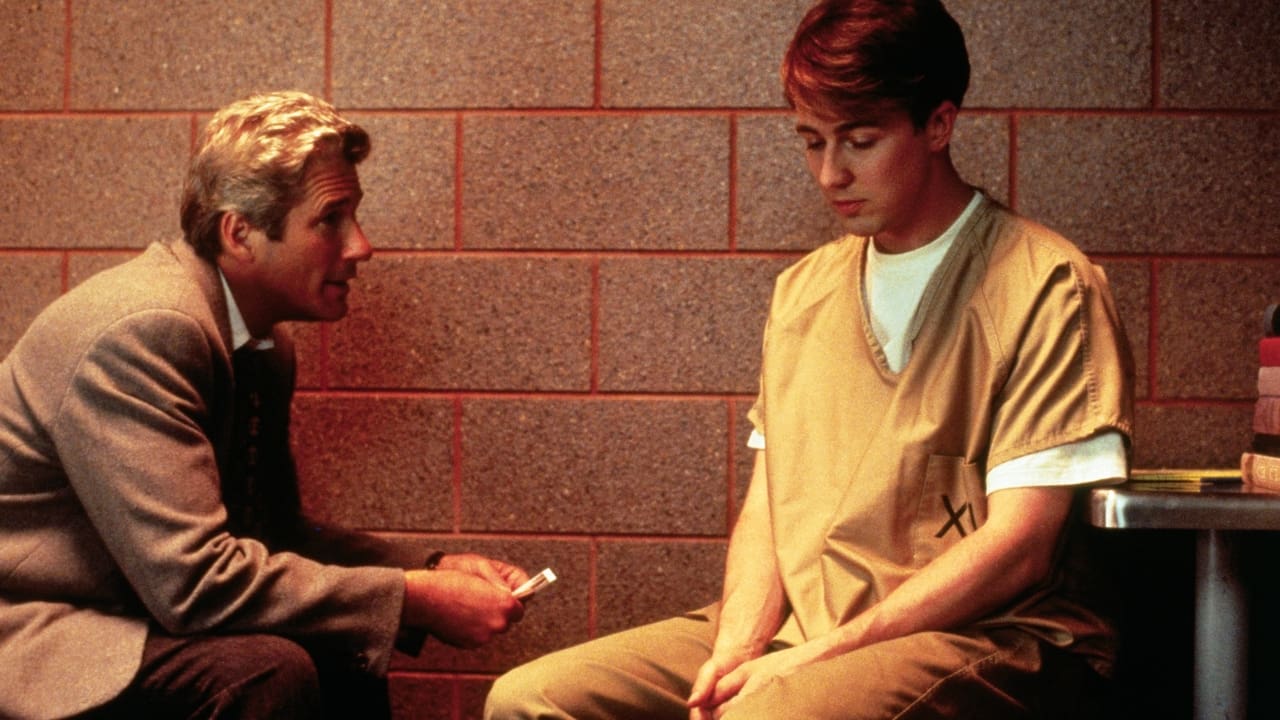
Looking back, the film holds up remarkably well because it doesn't rely on dated technology or CGI. It relies on the human face and the lies people tell. The score by James Newton Howard (who would go on to score The Dark Knight) is understated and ominous, never telling you how to feel, but keeping you perpetually uneasy. It’s a reminder of an era when a $100 million hit could be built entirely on dialogue, character motivation, and a singular, devastating twist.
The brilliance of Primal Fear isn't just in the shock of its final moments, but in how it deconstructs the archetype of the "brilliant lawyer." By the time the credits roll, Martin Vail realizes that for all his talk about the law being a game, he’s the only one who didn't realize how high the stakes actually were. It’s a cynical, dark, and utterly compelling thriller that proves the most dangerous thing in a courtroom isn't the evidence—it's the person you choose to believe.
Keep Exploring...
-
Mystic River
2003
-
In the Line of Fire
1993
-
L.A. Confidential
1997
-
Arlington Road
1999
-
Frequency
2000
-
The Girl with the Dragon Tattoo
2009
-
Fallen
1998
-
Cape Fear
1991
-
A Perfect World
1993
-
Se7en
1995
-
A Time to Kill
1996
-

Sleepers
1996
-
Donnie Brasco
1997
-
The Talented Mr. Ripley
1999
-

Traffic
2000
-
Lucky Number Slevin
2006
-
Unbreakable
2000
-
Infernal Affairs
2002
-
Tell No One
2006
-
Ghost
1990