The People vs. Larry Flynt
"The First Amendment never looked so filthy."
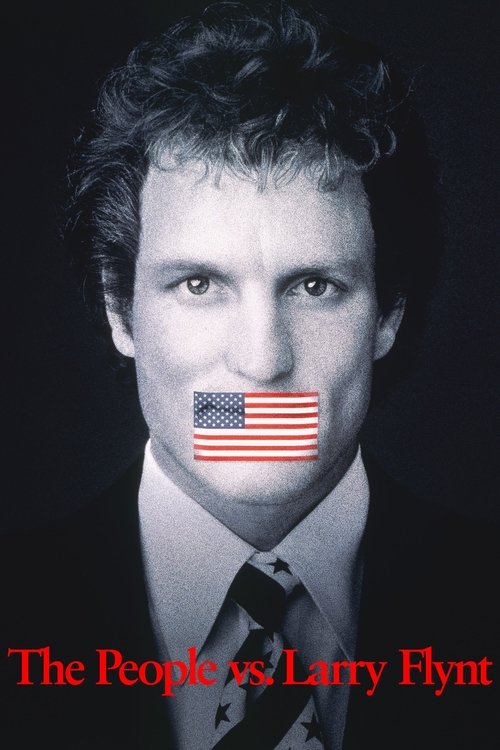
There is a specific kind of American hero that we only seem to produce in the gutter: the loudmouthed, unapologetic scoundrel who accidentally trips over a profound truth while trying to make a buck. In 1996, director Miloš Forman decided that the most important man in America wasn't a politician or a saint, but a guy who published pictures of naked women next to cartoons of the Easter Bunny. The People vs. Larry Flynt is a loud, messy, and surprisingly poignant look at the decade’s most polarizing figure, and looking back at it now, it feels like a dispatch from a much more optimistic time for the "marketplace of ideas."

I watched this recently on a laptop with a dying battery while wrapped in a very scratchy wool blanket, and honestly, the physical discomfort felt appropriate for a movie about a man who spent half his life in a gold-plated wheelchair and the other half in a courtroom.
The Gospel According to Hustler
The film follows the rise of Larry Flynt, played with a frantic, infectious grin by Woody Harrelson. We see his origins as a Kentucky moonshiner turned strip-club owner who realizes that the "girlie magazines" of the era (like Playboy) were far too sophisticated for the average Joe. Larry wanted pink; he wanted sweat; he wanted the kind of vulgarity that made the "moral majority" lose their collective minds.
What makes the script by Larry Karaszewski and Scott Alexander so effective is that it doesn't try to sanitize Flynt’s business. It acknowledges that Hustler was, by most standards, pretty gross. But it uses that grossness as a litmus test for liberty. The film asks a question that felt vital in the mid-90s: Do we only protect the speech we like, or are we brave enough to protect the stuff that makes us want to shower? Harrelson is a force of nature here, capturing Flynt’s transition from a hedonistic huckster to a paralyzed, pain-addicted crusader without ever losing that glint of "I know something you don't" in his eyes.
A Riot of Performances

While Harrelson is the engine, Courtney Love is the soul of this movie. Playing Althea Leasure, Larry’s fourth wife and fellow traveler in debauchery, Love delivers a performance that makes you wonder why her film career didn’t become a permanent fixture of Modern Cinema. She isn't just playing a "junkie wife" archetype; she brings a raw, vibrating vulnerability to the screen that feels entirely uncalculated. Courtney Love is a better actress than half the people with Oscars on their mantels, yet she largely disappeared from the A-list after the 90s. The chemistry between her and Harrelson is tragic and beautiful—two people who found the only other person in the world who wouldn't judge them for their appetites.
Then you have Edward Norton as Alan Isaacman, the lawyer tasked with defending a man who seems determined to go to jail. Coming off his breakout in Primal Fear, Norton plays the straight man with a weary dignity. He represents us—the audience who might find Flynt’s magazine repulsive but finds the idea of government censorship even scarier. Seeing a young Brett Harrelson play Larry’s brother Jimmy adds a nice layer of familial realism, while James Cromwell provides the perfect icy foil as the moralistic Charles Keating.
The Cost of Being Free
Forman, a director who knew a thing or two about state-sponsored oppression (having lived through both Nazi and Communist regimes in Czechoslovakia), brings a lightness to the heavy themes. He treats the courtroom scenes not as dry legal proceedings, but as theater. There’s a puckishness to the direction that keeps the 130-minute runtime moving.
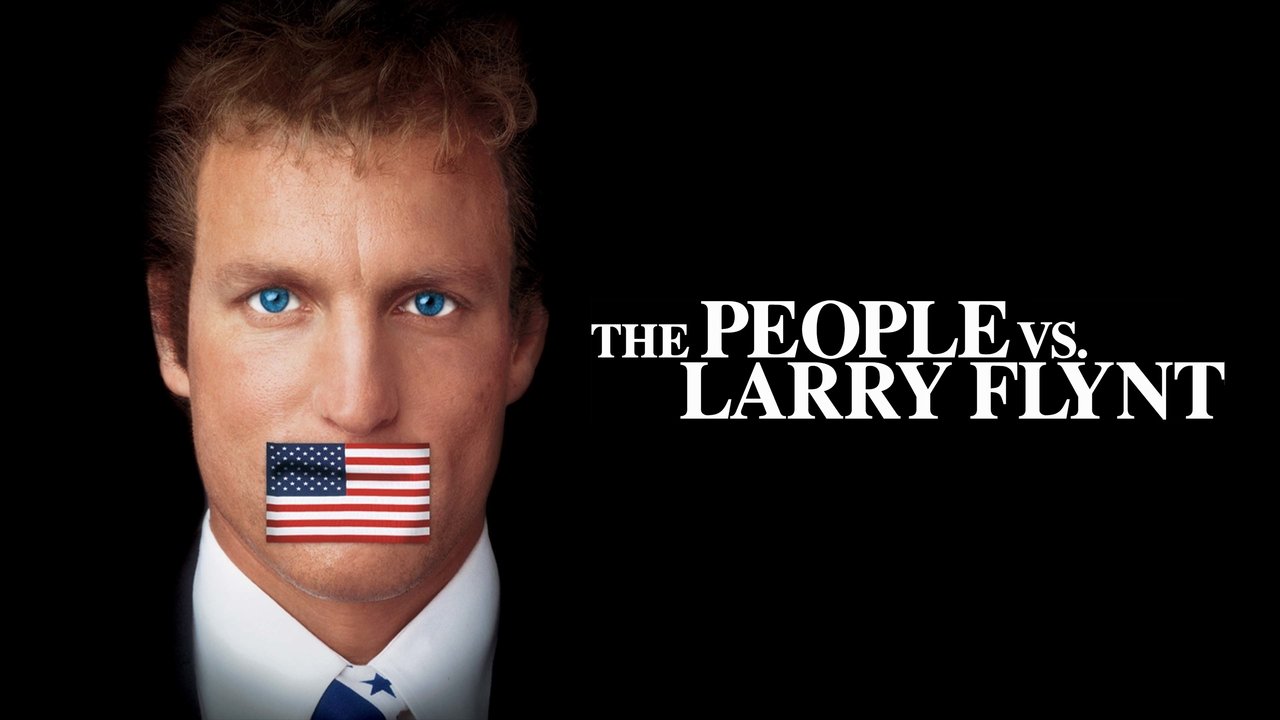
However, looking back through a 21st-century lens, the film’s portrayal of the pornography industry feels remarkably quaint. In the 90s, the battle was over paper and ink. Today, in the era of the infinite scroll and the total democratization of "smut," Flynt’s struggle feels like a relic. Yet, the legal precedent he set—specifically the Supreme Court case involving Jerry Falwell—remains the bedrock of American satire. The movie occasionally treats porn as a harmless punchline while ignoring the factory floor of the industry, but its focus is strictly on the legal and personal toll of notoriety.
The production design perfectly captures the transition from the shag-carpeted 70s to the sleek, cynical 80s. You can almost smell the stale cigarettes and cheap perfume in the early scenes. It’s a film that earns its emotional beats, particularly in the final act where Larry’s physical decay mirrors the chaotic state of his empire.
The People vs. Larry Flynt is a rare biopic that manages to be both a riotous comedy and a sobering drama. It’s a testament to a time when Hollywood was willing to spend $36 million on a movie where the hero is a "scumbag" who wins not by becoming a better person, but by refusing to apologize for who he is. It’s bold, brilliantly acted, and serves as a reminder that the First Amendment wasn't written for the polite; it was written for the people who refuse to shut up. If you haven't revisited this 90s gem lately, it’s time to see why Larry Flynt was the most unlikely founding father we ever had.
Keep Exploring...
-

Man on the Moon
1999
-

White Men Can't Jump
1992
-
A Little Princess
1995
-
Dead Man
1995
-

Rounders
1998
-
Natural Born Killers
1994
-
Barton Fink
1991
-

Double Impact
1991
-
The Doors
1991
-
The Fisher King
1991
-
A River Runs Through It
1992
-
Candyman
1992
-

Chaplin
1992
-
Glengarry Glen Ross
1992
-
Malcolm X
1992
-
My Cousin Vinny
1992
-
The Hand That Rocks the Cradle
1992
-
The Mighty Ducks
1992
-

The Muppet Christmas Carol
1992
-
The Player
1992