Anastasia
"Forget what you know, remember who you are."
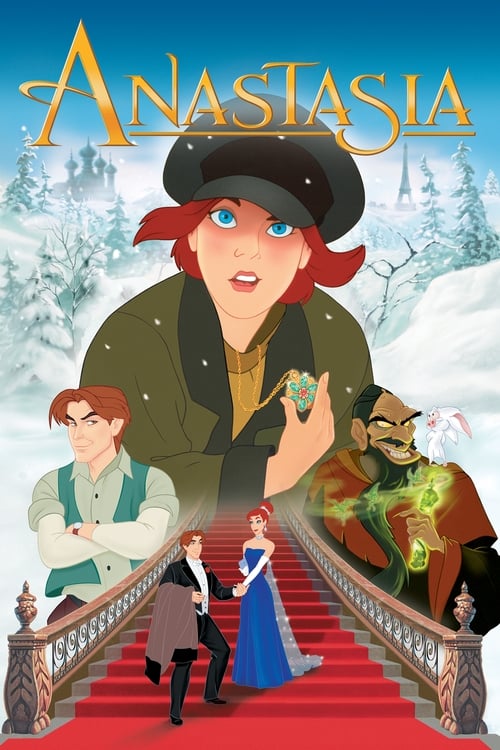
I spent a significant portion of my childhood engaged in a heated, playground-caliber debate over whether Anastasia was a Disney movie. It had the songs, the sidekicks, and the "Princess" branding, but there was always something slightly skewed about it—a darker shadow in the corners of the frames, a more cynical edge to the romance. I watched it again recently on a Tuesday afternoon while my neighbor was loudly practicing the bagpipes, and despite the discordant background noise, the film’s peculiar magic held up remarkably well. It turns out that being "not-Disney" is exactly what makes this film a fascinating artifact of the late-90s animation wars.
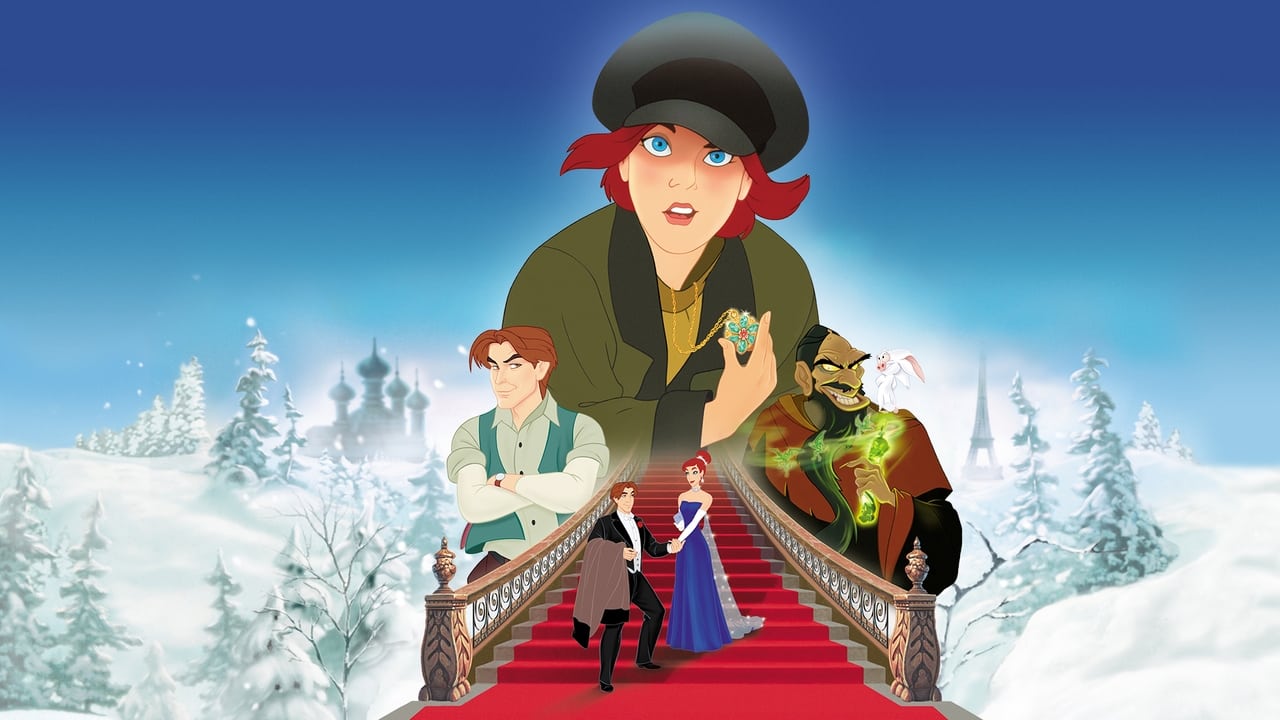
The Great Animation Arms Race
To understand why Anastasia feels the way it does, you have to look at the man behind the curtain: Don Bluth. A former Disney animator who famously led a "Great Exodus" of talent from the House of Mouse in the late 70s, Bluth (along with co-director Gary Goldman, who gave us The Land Before Time) spent his career trying to prove that animation could be grittier, weirder, and more textured. By 1997, 20th Century Fox handed him $53 million to take a swing at the Disney Renaissance formula.
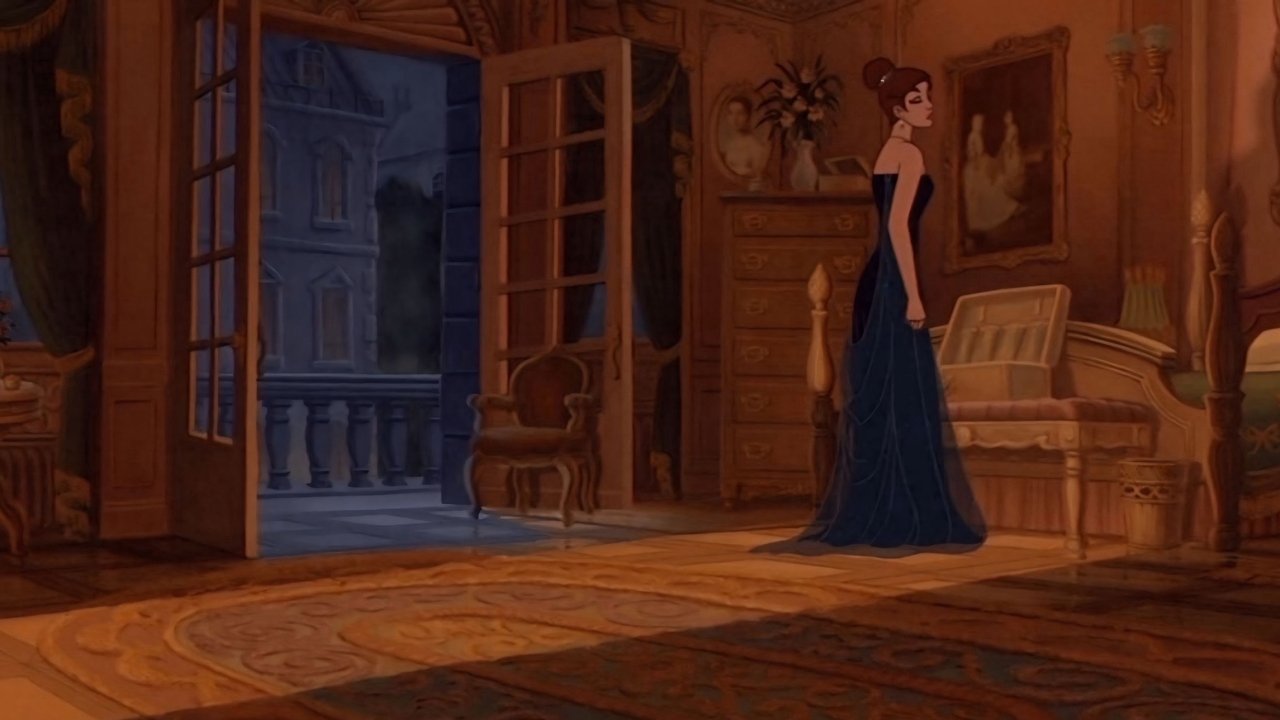
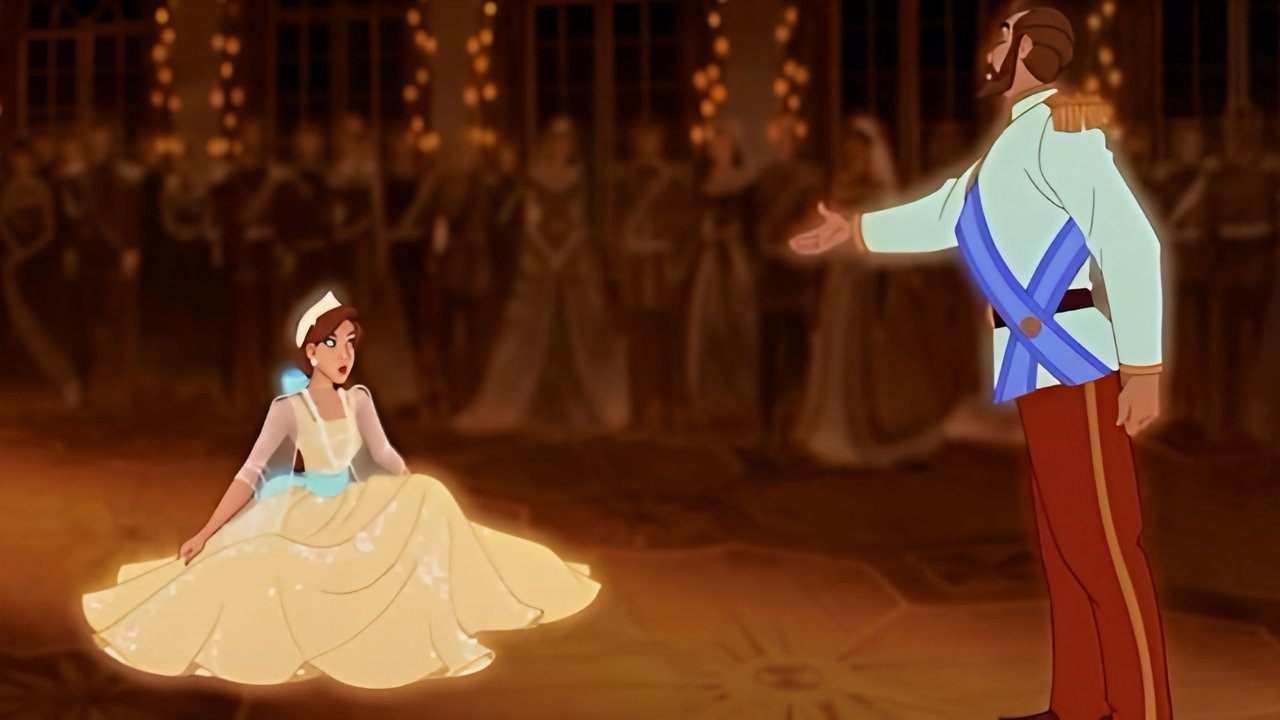
The result is a film that looks and feels like a lush, hand-drawn dream, but one with a distinct layer of Russian-tea-stained grit. Looking back, the animation is a stunning bridge between eras. You can see the early CGI—specifically in the swirling depth of the ballroom scenes and the terrifying train wreck sequence—blending with traditional cels. It doesn’t always mesh perfectly, but there's a tangible weight to the world that modern, sterile digital animation often lacks. It feels like a story being told through a stained-glass window that’s seen some things.
A Princess Grappling with the Void
While it’s marketed as a family adventure, Anastasia is secretly a movie about the terror of a blank slate. Most princesses want to escape their lives; Anya (Meg Ryan) is desperate to find hers. There’s a genuine intellectual melancholy to her journey. She isn't looking for a prince; she’s looking for a footnote in a history book that proves she existed before the orphanage. Meg Ryan brings a certain "90s Rom-Com" spunkiness to the role, but she’s grounded by John Cusack's Dimitri, who might be history’s most charismatic gaslighter.
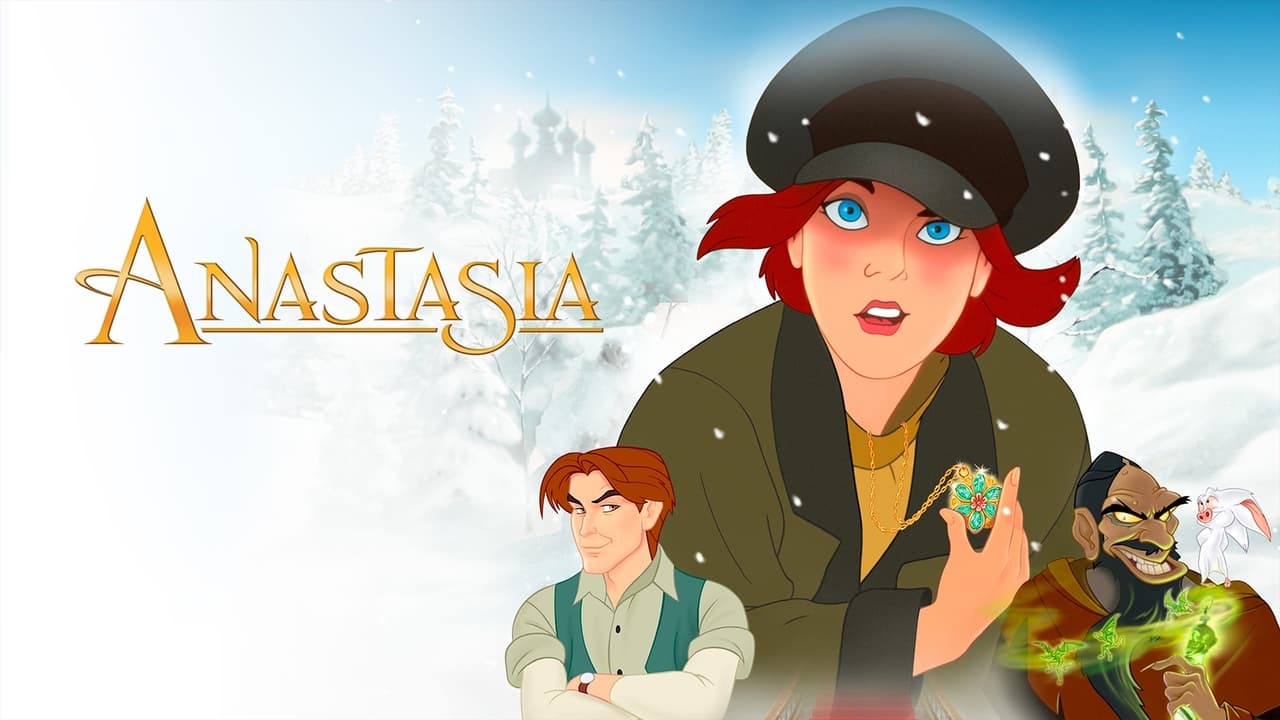
The dynamic between them is surprisingly mature for a "family" film. They aren't singing about love at first sight; they’re bickering over train tickets and societal expectations. It’s a "road movie" structure that uses the physical journey from the ruins of St. Petersburg to the glitz of Paris as a metaphor for Anya’s internal reconstruction. Is she actually the Grand Duchess, or is she just a very convincing projection of everyone else's hopes? The film toys with the idea that identity is a performance—a theme that feels remarkably resonant in our current era of curated digital personas.
The Corpse-Wizard and the Bat
We have to talk about Rasputin. Christopher Lloyd voices the "Mad Monk" as a literal rotting corpse who keeps losing body parts. It is Disney-lite with a side of corpse-wizard, and it is glorious. While the historical Grigori Rasputin was a complex, tragic figure of political intrigue, the movie turns him into a green-glowing sorcerer living in a void. It’s a wild tonal departure from the "finding my family" plot, yet it works because it provides a physical manifestation of the trauma Anya is trying to outrun.
Then there’s Bartok, voiced by Hank Azaria. Usually, the comic relief sidekick is the part where I check my watch, but Bartok is genuinely funny in a dry, self-aware way. Apparently, Azaria improvised a significant amount of his lines, giving the character a "Vaudeville-performer-stuck-in-a-minion-body" energy. The fact that he eventually got his own direct-to-video spin-off (Bartok the Magnificent) is the ultimate testament to his cult status.
The Mystery Behind the Magic
One of the coolest details about the production is how much they leaned into the "mystery" of the real-life Anastasia Romanov. For decades, the world actually believed she might have survived the Bolshevik revolution, and the film leans into that collective hope. It’s a fairy tale built on a tragedy, which gives it a weight that Cinderella just doesn't have. Interestingly, the legendary Bernadette Peters voices Sophie, and she brings a Broadway-level theatricality to the Paris sequences that makes the "Journey to the Past" feel earned.
The soundtrack by David Newman and Lynn Ahrens is arguably the film’s strongest weapon. "Once Upon a December" isn't just a catchy tune; it’s a haunting, circular melody that acts as a psychological trigger for the protagonist. It’s the kind of songwriting that understands the assignment: create a sense of nostalgia for a place the audience has never been.
Anastasia remains the gold standard for how to challenge a monopoly. It took the Disney blueprint and added a dash of historical existentialism and a whole lot of heart. It’s a film that respects its audience’s intelligence enough to acknowledge that the past can be scary, but that finding your way home—wherever that may be—is the greatest adventure of all. It’s a cult classic that has survived the transition from VHS to streaming because its core question remains universal: Who are we when the lights go out and the music boxes stop playing?
Keep Exploring...
-
Treasure Planet
2002
-
Hercules
1997
-

The Emperor's New Groove
2000
-
The Road to El Dorado
2000
-
Spirit: Stallion of the Cimarron
2002
-

Sinbad: Legend of the Seven Seas
2003
-

The Polar Express
2004
-
Brave
2012
-
Rise of the Guardians
2012
-
The Book of Life
2014
-
Porco Rosso
1992
-

The Cat Returns
2002
-
Shrek
2001
-
Legend of the Guardians: The Owls of Ga'Hoole
2010
-
Titan A.E.
2000
-
Raya and the Last Dragon
2021
-
The Secret of NIMH
1982
-

Aladdin
1992
-
DuckTales: The Movie - Treasure of the Lost Lamp
1990
-
Tarzan
1999