Con Air
"A flying circus of testosterone, explosions, and mullets."
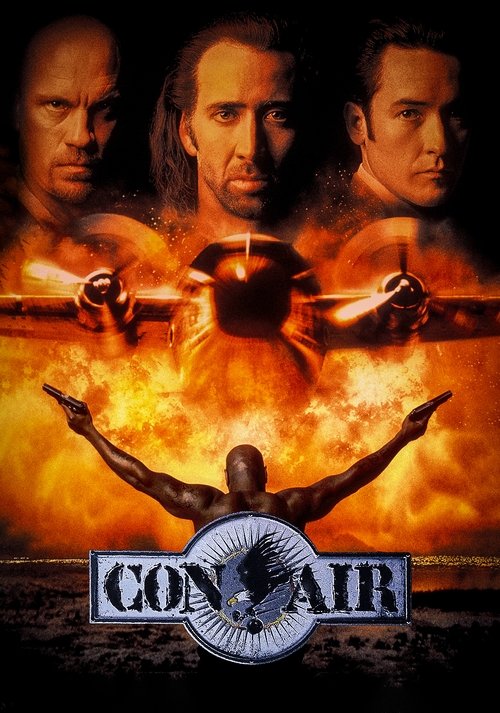
There is a specific brand of 1990s lunacy that we simply don’t see anymore, and it usually involves a Jerry Bruckheimer production. It’s that glorious window where the budgets were massive, the practical effects were terrifyingly real, and Nicolas Cage was allowed to make "choices." I’m talking about the kind of movie where a man can survive a mid-air plane hijacking, a Las Vegas crash landing, and a motorcycle chase through a construction site, all while maintaining a pristine, wind-swept mullet. I watched this again recently while eating a slightly-too-cold slice of pepperoni pizza, and honestly, the grease on the box felt like the perfect sensory accompaniment to the oily, high-octane spectacle of Con Air.
The Most Overqualified Cast in History
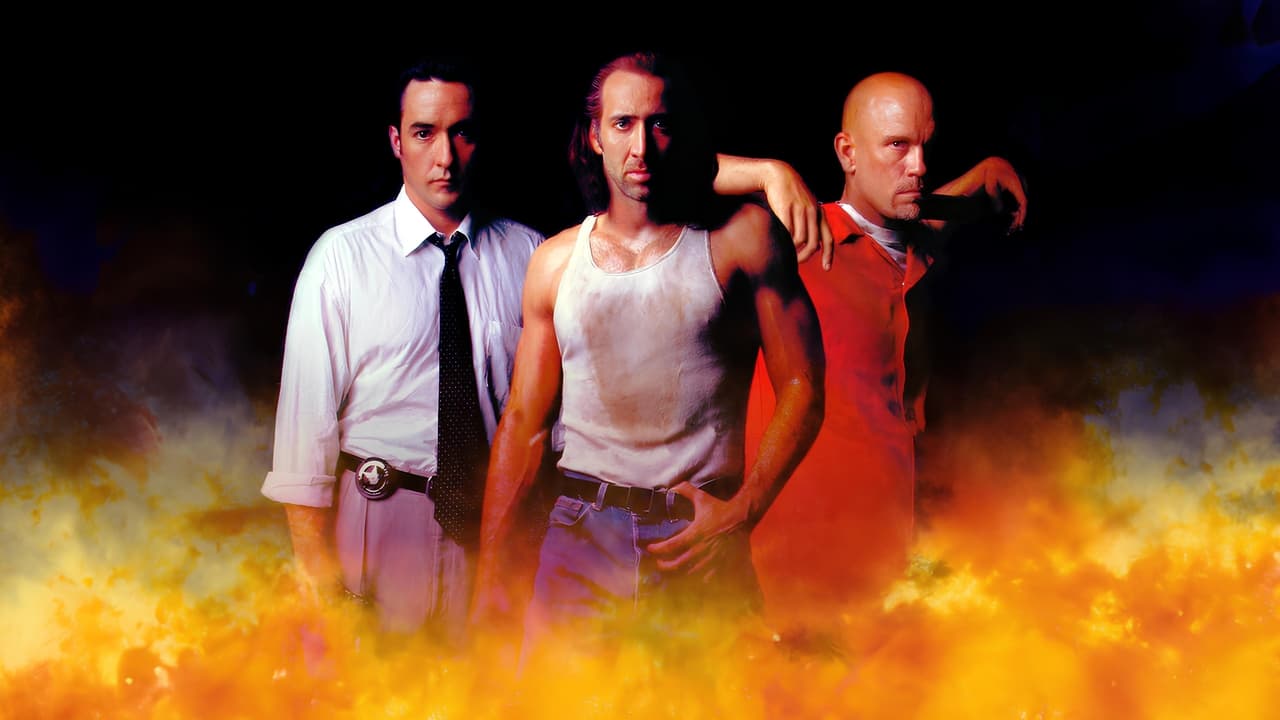
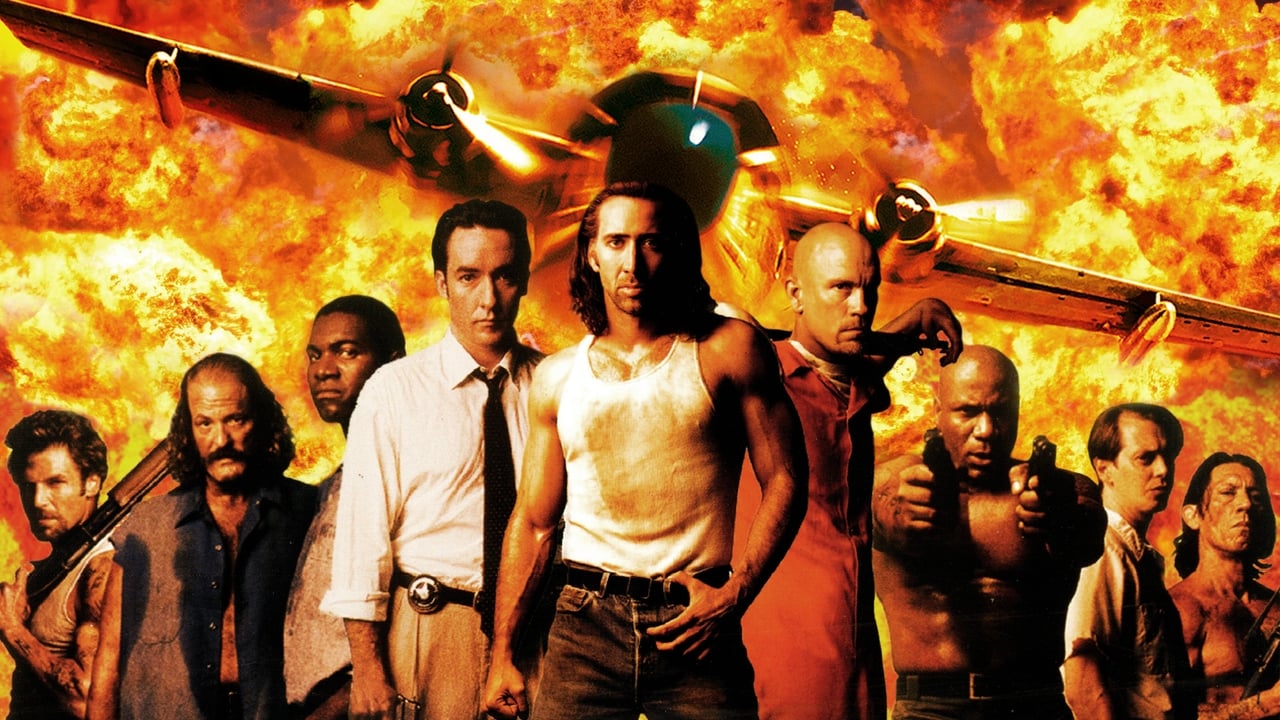
Looking back at 1997, it’s staggering to see who signed up for this. You have John Malkovich (who had just done In the Line of Fire) playing Cyrus "The Virus" Grissom with the kind of Shakespearean menace usually reserved for a stage at the Old Vic. Then there’s Ving Rhames, fresh off Pulp Fiction, and Steve Buscemi doing a riff on Hannibal Lecter that is genuinely creepier than anything in a standard horror movie.
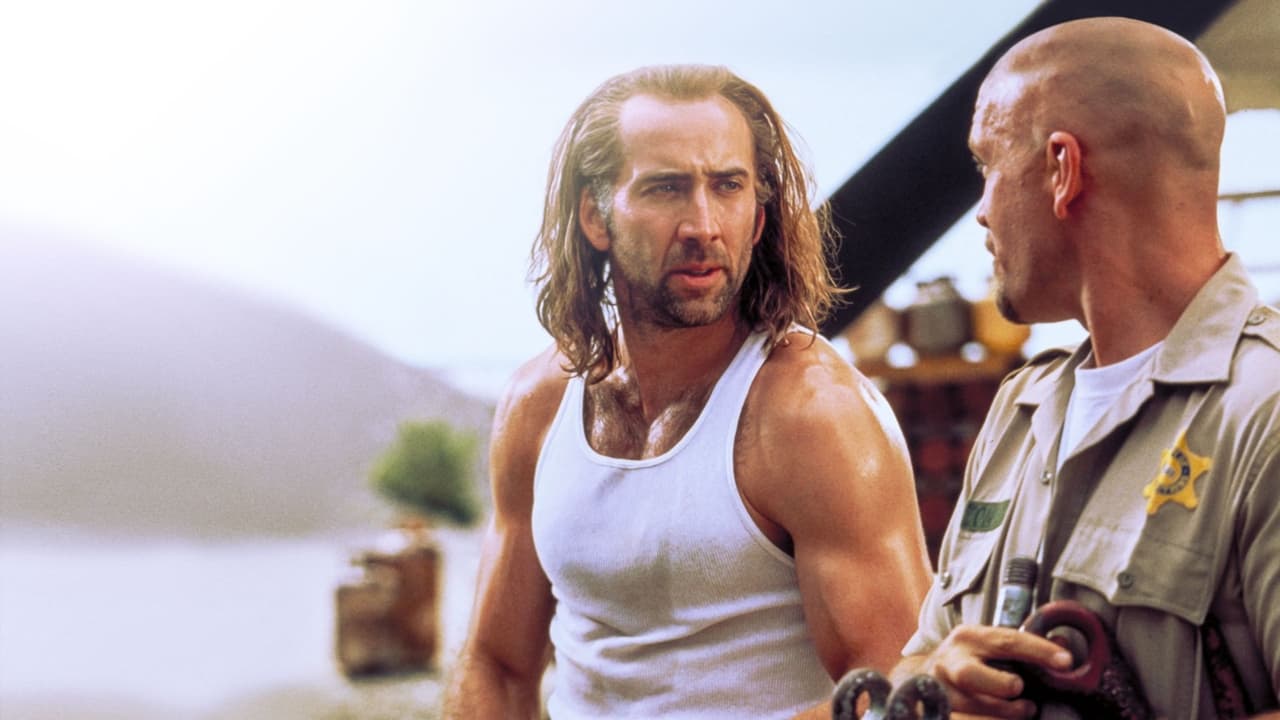
And at the center of this hurricane of machismo is Nicolas Cage as Cameron Poe. His Southern accent is, to put it lightly, a fascinating experimental art project. It’s a drawl that sounds like it was filtered through a harmonica and a bucket of molasses. But that’s the magic of the era; we didn't want realism. We wanted Cage looking intensely at a stuffed bunny while things exploded behind him. Cage actually did a lot of his own stunt work here, including the sequence where he’s sprinting away from a wall of fire—a move he’d refined a year earlier in Michael Bay’s The Rock.
The chemistry between the inmates is where the cult status really lives. You’ve got Dave Chappelle as Pinball, providing the kind of frantic energy that only 90s Chappelle could, and Mykelti Williamson (who everyone knew as Bubba from Forrest Gump) as the sickly "Baby-O." It’s a cast that feels like someone threw a handful of darts at a "Greatest Actors of the Decade" board and decided to keep whoever the darts hit.
Physics? Where We’re Going, We Don’t Need Physics
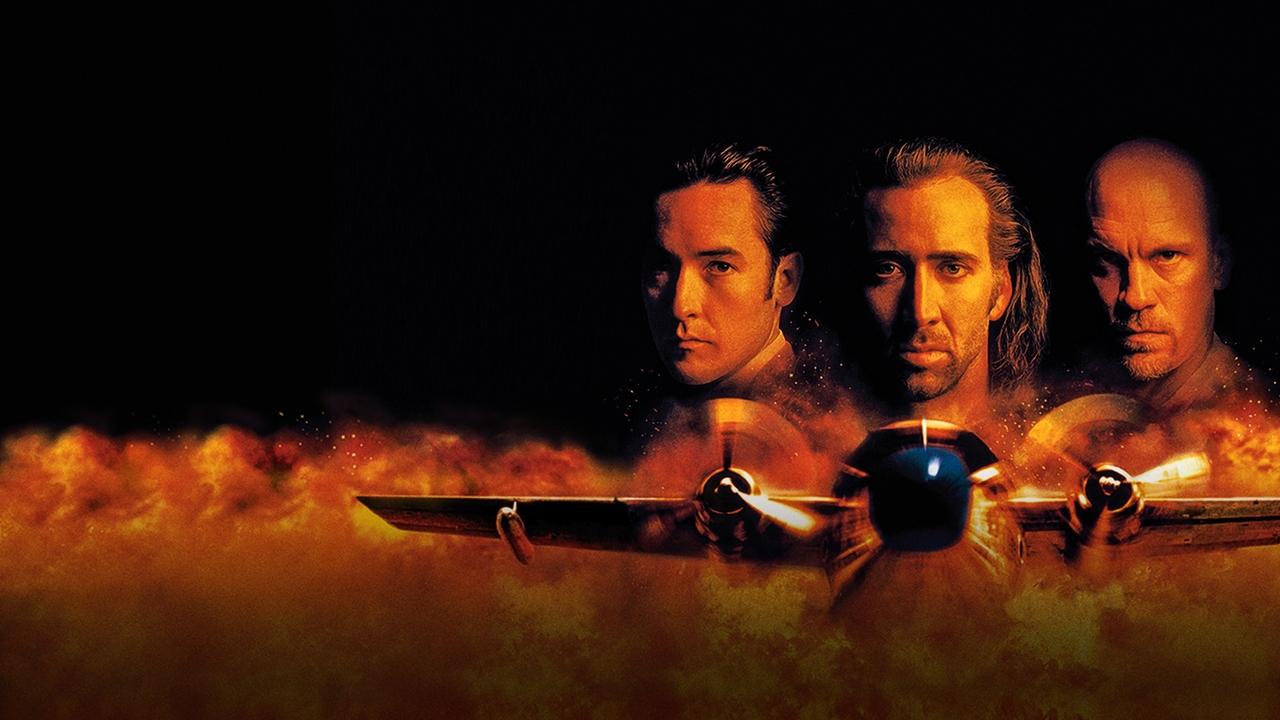
Director Simon West (who later gave us Lara Croft: Tomb Raider) treated the laws of gravity as mere suggestions. The "Jailbird" transport plane—a C-123 Provider for the aviation nerds—is essentially a character itself. The action choreography is a masterclass in 90s escalation. Every time you think the movie has peaked, someone hitches a car to the back of the plane or crashes a fire truck.
What I find most refreshing reassessing this today is the lack of digital "safety." When you see that plane plow through the lobby of the Sands Hotel in Las Vegas, you’re seeing an actual plane being dragged through a real set. The production actually used the scheduled demolition of the Sands as a backdrop, which is the most Bruckheimer thing I’ve ever heard. There’s a weight to the destruction here that modern CGI struggles to replicate. It’s loud, it’s messy, and it feels like people were in actual danger. John Cusack, playing the bureaucratic foil Agent Vince Larkin, spends most of the movie in a pair of sandals, which I’m convinced was a personal protest against the film’s overwhelming amount of combat boots.
The Stuff You Missed (Or Forgot)
If you dig into the DVD extras or old production notes, the "behind-the-scenes" energy was just as chaotic as the film. John Malkovich was famously frustrated during filming because the script was being rewritten daily. Apparently, he used to joke that he had no idea what his character was doing from one scene to the next. You can actually see that frustration manifesting as a brilliant, unpredictable irritability in Cyrus the Virus.
Then there’s the music. Mark Mancina and Trevor Rabin’s score is basically just guitars screaming for two hours. It’s the ultimate "driving too fast on the highway" soundtrack. And we have to talk about the song: LeAnn Rimes and Trisha Yearwood both fought over "How Do I Live," a power ballad that somehow became the emotional anchor for a movie about serial killers on a plane. It’s the most baffling tonal juxtaposition in cinema history, and yet, when Poe finally reunites with his wife at the end, it weirdly works.
The film also captures that pre-9/11 innocence regarding air travel. The idea of a group of "pure predators" taking over a government plane was seen as a fun "what if" scenario rather than a national nightmare. It belongs to a time when we could laugh at a plane crashing into a casino because the stakes felt purely cinematic.
Con Air isn't trying to be The Godfather. It’s trying to be the loud guy at the party who tells a great story and then jumps off the roof into the pool. It’s a relic of an era when movies were allowed to be loud, dumb, and incredibly expensive all at the same time. It’s the peak of the "High Concept" thriller, where the premise is so simple you can explain it in five words: Criminals take over a plane.
If you haven't revisited this in a few years, do yourself a favor. Turn your brain off, ignore the questionable Southern accents, and just enjoy the sight of Steve Buscemi having a tea party with a little girl while the world burns around him. It’s a masterpiece of glorious excess that reminds me why I fell in love with the movies in the first place—sometimes you just want to see the bunny put back in the box.
Keep Exploring...
-
Gone in Sixty Seconds
2000
-
The Mechanic
2011
-
The Jackal
1997
-
Lethal Weapon 4
1998
-
Ronin
1998
-

The Negotiator
1998
-
The General's Daughter
1999
-
Spy Game
2001
-
Swordfish
2001
-
RED 2
2013
-
Desperado
1995
-
From Dusk Till Dawn
1996
-
The Boondock Saints
1999
-
Along Came a Spider
2001
-

Lara Croft: Tomb Raider
2001
-
8MM
1999
-
S.W.A.T.
2003
-

16 Blocks
2006
-

The Fast and the Furious: Tokyo Drift
2006
-
The Taking of Pelham 1 2 3
2009