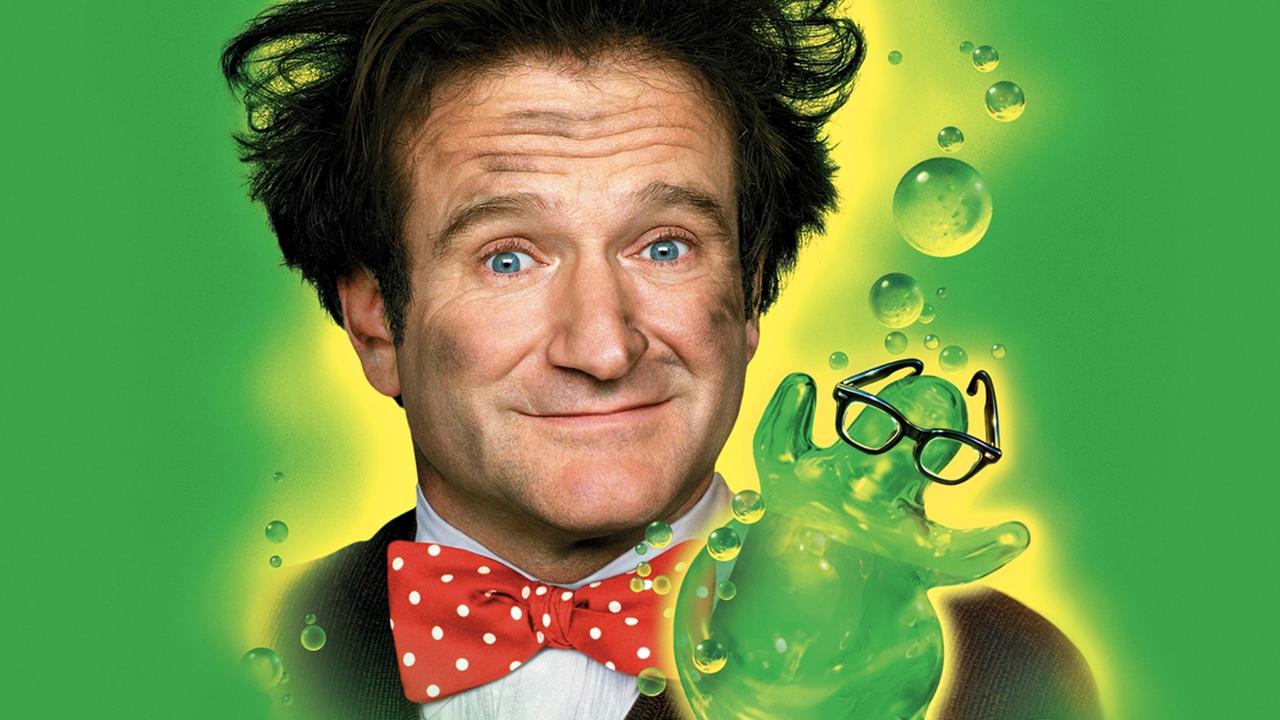
Flubber
"Science has never been this sticky."

In the mid-to-late 90s, Hollywood was obsessed with a very specific aesthetic: neon-colored, semi-sentient goo. Between Nickelodeon Gak, the slime on Figure It Out, and the rise of digital liquid effects in films like Terminator 2, the world was primed for a protagonist made of translucent green rubber. Enter Flubber, a film that sits at a fascinating crossroads of 90s blockbuster culture. It’s a remake of the 1963 Disney classic The Absent-Minded Professor, but filtered through the frantic energy of a Robin Williams performance and the burgeoning power of Industrial Light & Magic.
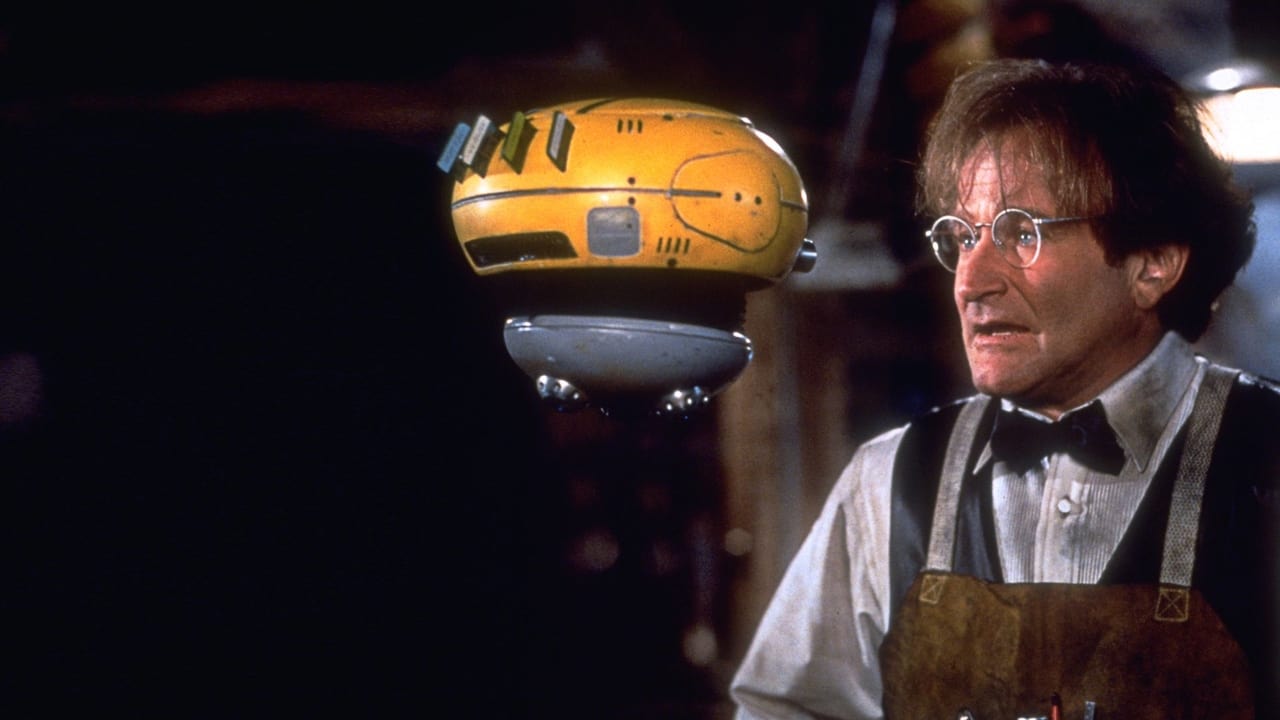
I watched this most recently while nursing a mild head cold, and I have to say, the "Flubber Mambo" sequence—where a dozen CGI blobs perform a choreographed dance—felt like a fever dream I wasn’t entirely sure I wanted to wake up from. It’s a moment that perfectly encapsulates the era’s "because we can" approach to digital effects.
The Digital Elasticity of the 90s
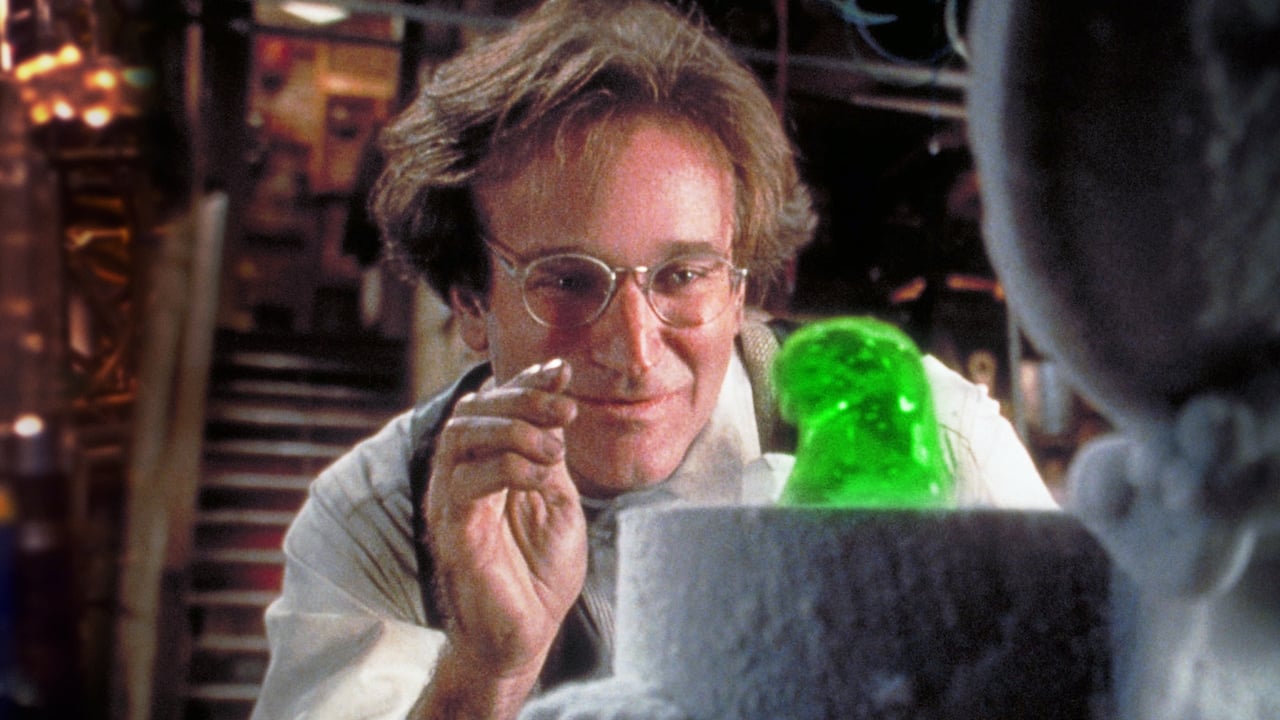
Looking back, Flubber is a perfect time capsule of the CGI revolution. Following the success of Jurassic Park (1993) and Toy Story (1995), studios were desperate to find ways to use digital characters to do things practical effects never could. The Flubber itself is a marvel of 1997 tech; it’s squashy, stretchy, and has a physical presence that actually holds up surprisingly well. Unlike the stiff puppets of the 60s, this Flubber could split into dozens of pieces, take the shape of a middle finger (if it wanted to), and move with a liquid grace.
Director Les Mayfield (Encino Man) and producer/writer John Hughes (Home Alone) leaned heavily into the slapstick potential of the substance. When Robin Williams’ Professor Brainard applies the goo to the bottom of his shoes or a bowling ball, the movie transforms into a live-action cartoon. It’s pure kinetic energy, often at the expense of physics or narrative logic, but that was the mandate of 1997 family cinema: spectacle first, questions later.
Williams, Robots, and a Touch of Melancholy
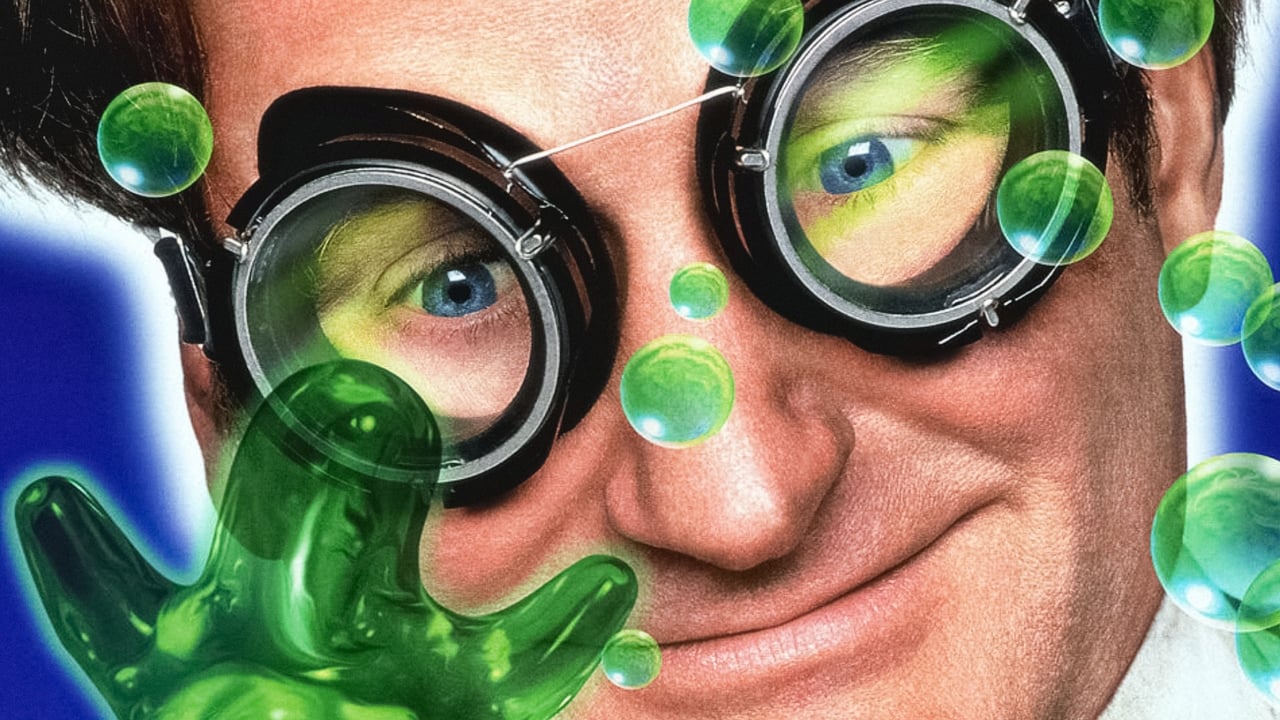
The real engine here is Robin Williams. While the film often forces him to play the "straight man" to a ball of green goo, Williams brings that trademark warmth to Professor Philip Brainard. He’s the quintessential absent-minded genius, so lost in his equations that he manages to miss his own wedding to Marcia Gay Harden's Sara Jean Reynolds three times. Marcia Gay Harden is doing a lot of heavy lifting here, playing a character whose patience level is frankly superhuman.
Then there’s Weebo. Brainard’s floating robotic assistant is a masterclass in 90s character design. She’s voiced by Jodi Benson (the voice of Ariel in The Little Mermaid) and serves as the emotional core of the movie. The sentient robot sub-plot is actually a heartbreaking tragedy disguised as a kid’s movie. Weebo is secretly in love with Brainard, creating a digital "human" version of herself on her screen to express her feelings. When the villains—led by a delightfully hammy Christopher McDonald and a menacing Clancy Brown—inevitably cause havoc, the stakes feel surprisingly high for a movie about bouncy slime.
Behind the Goo: Stuff You Didn’t Notice
The production of Flubber was a massive undertaking for Disney, bridging the gap between their old-school live-action history and their digital future. Here are a few things that make the film’s cult status stick:
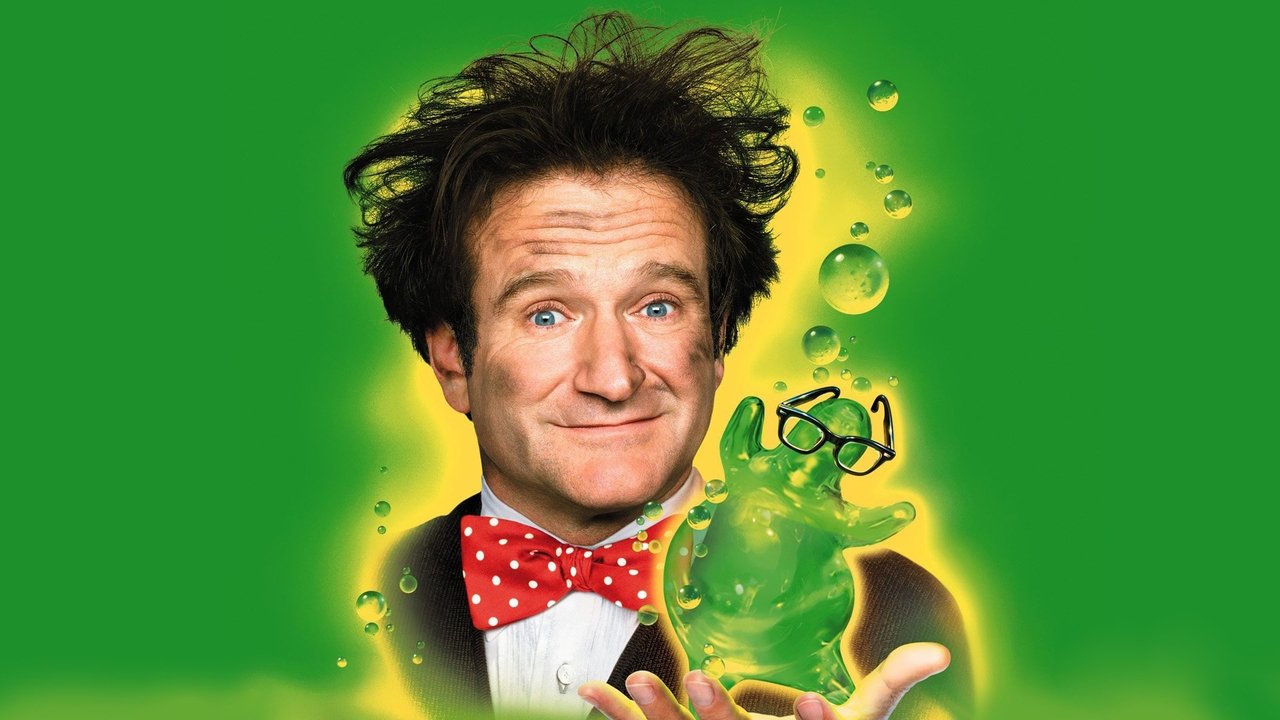
The Original Connection: Nancy Olson, who played the female lead in the original 1963 film, has a cameo as a secretary at the Ford Motor Company. The Hughes Touch: John Hughes rewrote the script, and his fingerprints are all over the slapstick "home invasion" style climax where the bad guys get decimated by Flubber-enhanced projectiles. The Mambo: The famous Flubber dance sequence took nearly a year to animate. The animators at ILM used "squash and stretch" principles from traditional 2D animation to make the 3D blobs feel more alive. Christopher McDonald's Jerk Streak: Christopher McDonald was in the middle of a legendary run of playing "the guy you love to hate," coming right off Happy Gilmore (1996) as Shooter McGavin. Visual Pedigree: The cinematography was handled by Dean Cundey, the same man who shot Jurassic Park and Back to the Future*. His ability to light a scene so that CGI elements feel integrated was top-tier for the time.
Ultimately, Flubber is a film that thrives on the charisma of its lead and the novelty of its premise. It’s not trying to redefine the sci-fi genre; it’s trying to see how many times a bowling ball can bounce off a villain’s head. While the pacing can be as uneven as a glob of green slime, there’s an earnestness to the "mad scientist" trope here that feels nostalgic in an age of cynical reboots. It’s a loud, bouncy, occasionally weird movie that reminds us of a time when the biggest star in Hollywood was happy to share the screen with a digital puddle.
If you’re looking for a dose of 90s "high-concept" family fun, Flubber still has plenty of bounce left in it. It captures that specific moment when technology allowed our imaginations to get a little bit messier, and for that alone, it's worth a revisit. Just don't expect it to explain the science of how a green blob knows how to dance the mambo—some things are better left to the magic of the movies.
Keep Exploring...
-

Beethoven
1992
-
Evolution
2001
-
Osmosis Jones
2001
-

Journey to the Center of the Earth
2008
-
Planet 51
2009
-
Jimmy Neutron: Boy Genius
2001
-
Spy Kids
2001
-

Spy Kids 2: The Island of Lost Dreams
2002
-

Last Action Hero
1993
-

Baby's Day Out
1994
-

101 Dalmatians
1996
-

Jingle All the Way
1996
-

Mars Attacks!
1996
-

The Nutty Professor
1996
-

Antz
1998
-
Blue Streak
1999
-
Stuart Little
1999
-
Stuart Little 2
2002
-
The Tuxedo
2002
-

Jack
1996